
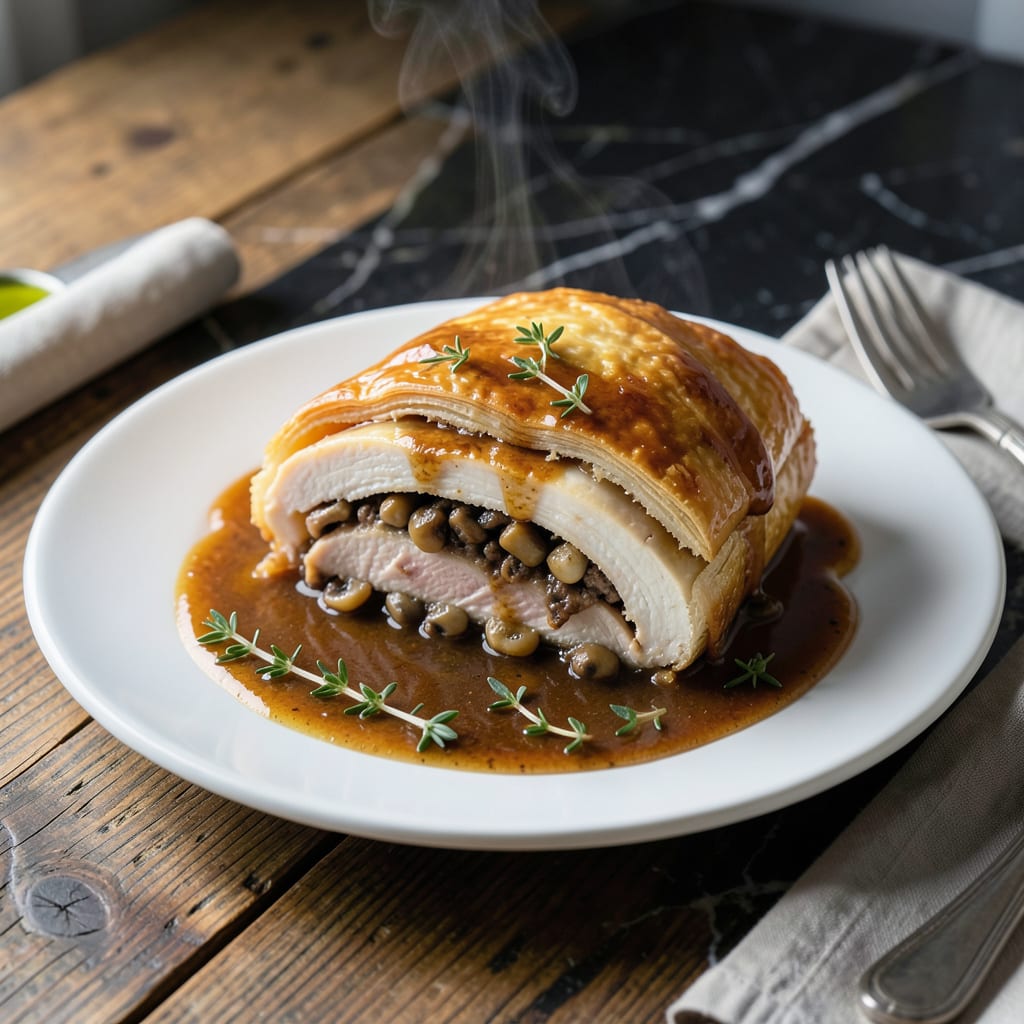
This rich, velvety sauce transforms a good Chicken Wellington into an unforgettable one. A deep mushroom reduction forms the base, elevated by a touch of cream and a splash of brandy for complexity.
Ready in under 30 minutes, this restaurant-quality sauce is surprisingly simple to make at home. It pairs perfectly with the dish and freezes beautifully for future use.
Ingredients for Chicken Wellington Sauce
Ten ingredients build this luxurious sauce with restaurant-quality depth and richness.
| Ingredient | Amount | Notes |
|---|---|---|
| Mushrooms 🍄 | 16 oz | Cremini or white, finely chopped |
| Shallots 🧅 | 2 whole | Finely minced for depth |
| Garlic Cloves 🧄 | 3 cloves | Minced to release aromatics |
| Unsalted Butter 🧈 | 4 tbsp | Divided for sautéing and finishing |
| All-Purpose Flour 🌾 | 2 tbsp | For thickening the reduction |
| Chicken Stock 🍲 | 1 ½ cups | Low-sodium preferred for control |
| Heavy Cream 🥛 | ½ cup | Full-fat for velvety texture |
| Brandy 🥃 | ¼ cup | Cognac or Armagnac works best |
| Dijon Mustard 🟡 | 1 tbsp | Adds subtle tang and complexity |
| Fresh Thyme Leaves 🌿 | 1 tbsp | Chopped, stems discarded |
[recipeingredientscaler]
The mushrooms are the foundation here. Cremini or white button work best—they release moisture then reabsorb it, creating that intense, meaty base. Whole Foods often has pre-sliced options that save time. For the brandy, any good quality cognac adds complexity without overpowering. Use low-sodium chicken stock so you control the seasoning throughout the reduction process.
No brandy? Dry white wine at the same quantity gets you close, though the flavor profile shifts slightly. Want it richer? Add an extra splash of cream at the end. Shallots can be swapped for yellow onion in a pinch, but the sweetness of shallots is ideal. For the thyme, dried works at one-third the amount, though fresh delivers a brighter, more nuanced finish.
This sauce holds well. Keeps 4-5 days refrigerated in an airtight container, or freeze for 3 months without texture loss. Reheat gently on low to preserve the velvety consistency—don’t boil or it may separate.
Why You’ll Love This Recipe
- I’ll be real: it turns leftover chicken into a fancy meal in minutes. Even my picky nephew cleans his plate.
- One-Pot Wonder: I love that I can make this sauce in a single pan—just sauté mushrooms, shallots, and garlic in butter, then thicken with flour.
- Umami Bomb: That rich, earthy depth from the mushrooms and shallots? It’s the reason I keep making this over and over.
- Dinner Saver: I’ll be real: it turns leftover chicken into a fancy meal in minutes. Even my picky nephew cleans his plate.
Step-by-Step Instructions for Chicken Wellington Sauce
Master this reduction technique for a velvety sauce that complements any Wellington perfectly.
Step 1: Sauté Aromatics and Mushrooms
Heat 2 tbsp Unsalted Butter in a heavy saucepan over medium heat. Add the 16 oz Mushrooms, 2 whole Shallots, and 3 cloves Garlic Cloves. Cook for 8-10 minutes, stirring occasionally, until the mushrooms release their moisture and it evaporates completely.
This step builds the foundation of flavor. The shallots should become translucent and the mushrooms should develop a deep, golden color. Don’t rush this—proper browning creates the complex base your sauce needs.
Step 2: Deglaze with Brandy and Build the Roux
Increase heat to medium-high and carefully add the 0.25 cup Brandy. Simmer for 2-3 minutes until the liquid reduces by half, scraping up any browned bits from the pan bottom.
Stir in the 2 tbsp All-Purpose Flour and remaining 2 tbsp Unsalted Butter. Cook for 1-2 minutes until the mixture forms a light golden roux. This thickens the sauce while adding nutty depth to the flavor profile.
Step 3: Create the Velvety Reduction
Gradually whisk in the 1.5 cups Chicken Stock, ensuring no lumps form. Bring to a gentle simmer and cook for 5-7 minutes until the sauce begins to thicken and coats the back of a spoon.
Stir in the 0.5 cup Heavy Cream, 1 tbsp Dijon Mustard, and 1 tbsp Fresh Thyme Leaves. Simmer for an additional 3-4 minutes until the sauce reaches your desired consistency—it should be thick enough to ribbon off a spoon but still pourable.
Step 4: Finish and Strain for Perfection
Remove from heat and let the sauce sit for 1 minute to allow the flavors to meld completely. Taste and adjust seasoning if needed, though the shallots and mustard should provide sufficient depth.
For an ultra-smooth texture, strain the sauce through a fine-mesh sieve before serving. This removes any mushroom pieces that didn’t break down completely, resulting in the silky finish that defines a proper Wellington sauce. Serve warm over sliced Wellington.
Pro Tips For Making Chicken Wellington Sauce
- Sauté Mushrooms First: Cook the mushrooms separately until all moisture evaporates—this prevents a watery sauce and deepens their flavor before adding shallots or garlic.
- Bloom the Garlic: Add minced garlic only after shallots soften; 30 seconds over medium heat is enough to release aroma without burning it.
- Use Cold Butter: I learned this the hard way—adding cold butter at the end (about 1 tablespoon) gives the sauce a glossy finish and richer taste.
- Simmer to Thicken: After adding flour, let the sauce simmer for 2-3 minutes stirring constantly—this cooks out the raw flour taste and thickens it properly.
Best Sauces and Condiments for These Flavors
Classic Mushroom Reduction
This is the sauce the recipe was designed for. The deep, earthy mushroom base complements the dish perfectly, with brandy adding subtle complexity. I always make extra—it freezes beautifully for up to 3 months. 🍄
Red Wine Demiglace
For a richer, more intense version, reduce 1 cup dry red wine with the stock until syrupy. The result is a deeper, more sophisticated sauce that pairs wonderfully with the chicken. Strain for a silky texture.
Creamy Tarragon Sauce
Add 1 tbsp chopped fresh tarragon along with the cream for a French-inspired twist. The anise-like flavor of tarragon brightens the dish and adds an elegant touch. I love this with a white wine pairing.
Mustard Cream Variation
Double the Dijon to 2 tbsp and add 1 tsp whole grain mustard for a tangier, more robust sauce. This works especially well if your Wellington has a ham layer. 💛
Herb-Infused Option
Swap thyme for 1 tbsp rosemary or a mix of rosemary and sage. These heartier herbs stand up to the rich dish and add a rustic, aromatic note.
Quick Pan Sauce
Short on time? Use the pan drippings from roasting your Wellington. Deglaze with ½ cup brandy and 1 cup stock, then finish with 2 tbsp cream. Simmer for 5 minutes for a fast, flavorful option.
Nutrition Facts
Frequently Asked Questions
Can I make this sauce ahead of time?
It keeps well refrigerated for 4-5 days or frozen for 3 months. Reheat gently on low to maintain the smooth texture.
What can I use instead of brandy?
Dry white wine works as a substitute in the same amount. For a non-alcoholic option, use extra stock with 1 tsp apple cider vinegar for depth.
Why did my sauce turn lumpy?
This usually happens if the flour isn’t fully incorporated. Whisk vigorously when adding stock, or strain the finished sauce through a fine-mesh sieve.
Can I use dried thyme instead of fresh?
Yes, use 1 tsp dried thyme (one-third the amount). Add it earlier in cooking to rehydrate the flavors properly.

- Jollof Rice Sauce Recipe: West African Tomato and Spice Infusion - September 25, 2026
- Japanese Rice Soup Recipe: Umami-Rich Comfort in a Bowl - September 25, 2026
- Homemade Cream Of Rice Recipe: Silk-Smooth Breakfast in Minutes - September 25, 2026