
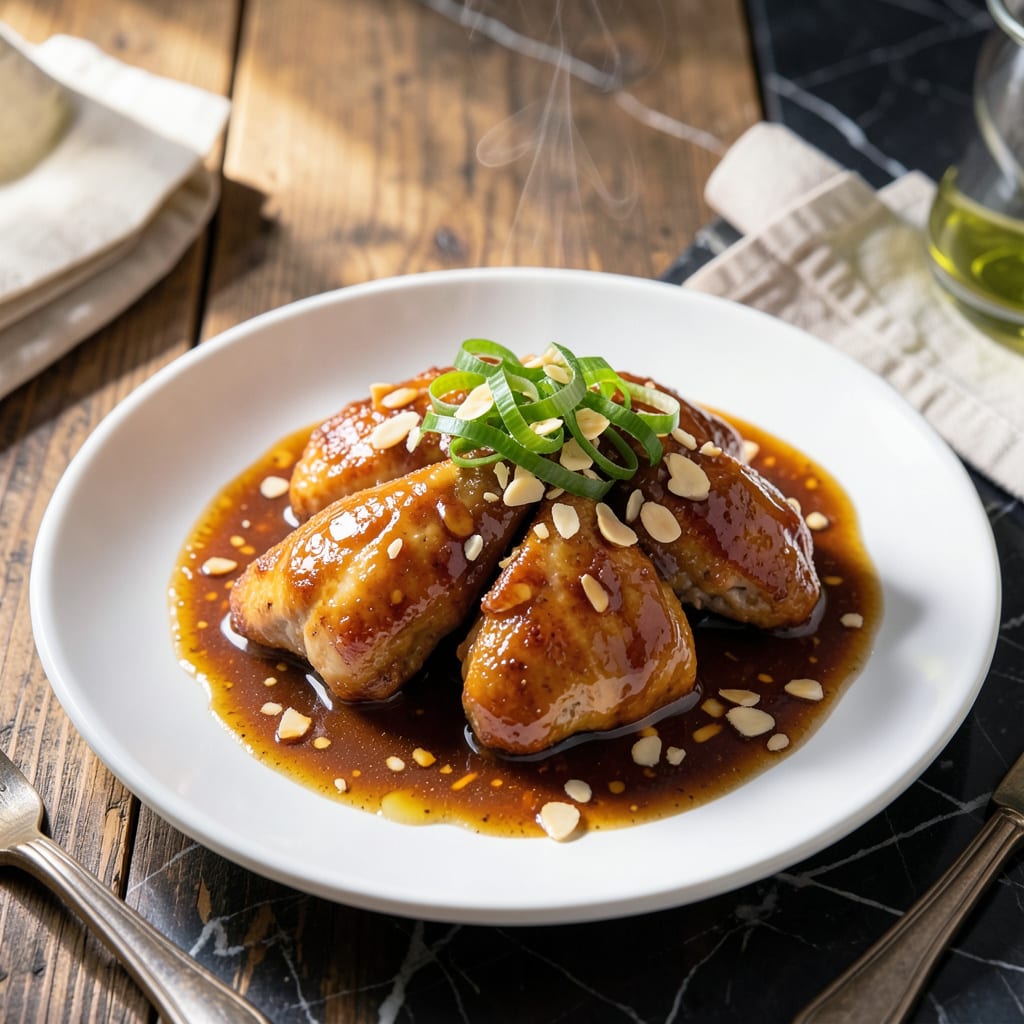
This nutty, sweet glaze transforms simple chicken into a restaurant-worthy dish with minimal effort. The sauce balances savory and sweet notes perfectly.
With just 5 ingredients and 10 minutes, you’ll have a versatile sauce that works for stir-fries, dipping, or drizzling over proteins and vegetables.
Ingredients for Chinese Almond Chicken Sauce
Eight ingredients create this rich, restaurant-quality sauce with perfect sweet-savory balance.
| Ingredient | Amount | Notes |
|---|---|---|
| Almond Butter 🥜 | ½ cup | Creamy, unsweetened preferred |
| Soy Sauce 🫕 | ¼ cup | Low-sodium for balance |
| Honey 🍯 | 3 tbsp | Raw or pure variety |
| Rice Vinegar 🍶 | 2 tbsp | Unseasoned for clean flavor |
| Garlic Cloves 🧄 | 3 cloves | Minced for even distribution |
| Fresh Ginger 🌿 | 1 tbsp | Peeled and grated |
| Sesame Oil 🫒 | 1 tsp | Toasted for nutty aroma |
| Red Pepper Flakes 🌶️ | ½ tsp | Adjust for heat preference |
[recipeingredientscaler]
The almond butter is the star—natural, unsweetened with just almonds as the ingredient. Whole Foods and Trader Joe’s carry great options without added oils or sugars. Soy sauce quality matters too; Kikkoman or San-J tamari (for gluten-free) are reliable. Fresh ginger and garlic are non-negotiable for that authentic depth of flavor.
No almond butter? Cashew or peanut butter work in a pinch (add a splash of water to thin). Swap honey for maple syrup or agave if needed. Rice vinegar can be apple cider vinegar at a 1:1 ratio. The sesame oil is potent—one teaspoon is plenty. Skip it entirely if you’re not a fan of its strong flavor.
Sauce keeps in the fridge for 1 week in an airtight container. For longer storage, freeze for up to 3 months—thaw and whisk before using. Always give it a good stir before serving, as the almond butter may settle.
Why You’ll Love This Recipe
- 5-Minute Sauce: I just whisk almond butter, soy sauce, honey, and rice vinegar in a bowl—no stove time until it hits the pan.
- Honey-Garlic Balance: That sweet honey with punchy garlic and the nutty depth from almond butter? Honestly, it’s the flavor I crave all week.
- Stirs into Anything: I’ve tossed it with chicken, drizzled over rice, even used it as a dip for veggies—my go-to for quick lunches.
- Doubles Easily: I always make a double batch. It keeps for days, and reheats like a dream for last-minute dinners.
Step-by-Step Instructions for Chinese Almond Chicken Sauce
This straightforward method ensures a perfectly balanced, glossy sauce every time.
Step 1: Bloom Aromatics in Sesame Oil
Heat a small saucepan over medium-low heat. Add the 1 tsp Sesame Oil and swirl to coat the bottom. Immediately add the 3 cloves Garlic Cloves and 1 tbsp Fresh Ginger, stir-frying for 45-60 seconds until fragrant but not browned.
Watch closely—the garlic should sizzle gently but not take on color. This brief cooking mellows the raw edge of the ginger and garlic while preserving their bright, pungent character. The sesame oil’s nutty aroma will deepen as it heats, signaling it’s ready for the next addition.
Step 2: Create the Sauce Base
Pour in the 0.25 cup Soy Sauce, 3 tbsp Honey, and 2 tbsp Rice Vinegar. Stir well to combine, then add the 0.5 tsp Red Pepper Flakes. Increase heat to medium and bring to a gentle simmer.
As the mixture heats, the honey will thin out and fully incorporate with the other liquids. The vinegar’s sharpness will temper slightly during this stage. Simmer for 2-3 minutes to allow the flavors to meld, stirring occasionally to prevent hot spots from forming.
Step 3: Incorporate Almond Butter for Creamy Consistency
Reduce heat to low. Add the 0.5 cup Almond Butter to the saucepan, a spoonful at a time. Whisk vigorously between additions until each portion fully dissolves into the liquid. The mixture will thicken noticeably as the almond butter emulsifies.
Continue whisking until the sauce achieves a smooth, glossy appearance with no visible separation. This process should take 3-4 minutes of constant stirring. The sauce will coat the back of a spoon thickly, indicating it has reached the proper consistency for clinging to chicken or vegetables.
Step 4: Adjust and Finish the Sauce
Taste and adjust seasoning if needed. The sauce should balance sweet, salty, tangy, and nutty notes with a subtle heat from the pepper flakes. If it’s too thick, thin with 1-2 tsp warm water, whisking to maintain the emulsification.
Remove from heat and let cool slightly. The sauce will thicken further as it cools. For best results, use while still warm—it will have the ideal consistency for tossing with stir-fried chicken or drizzling over vegetables. This makes enough to generously coat 1.5 pounds of chicken for 4 servings.
Pro Tips For Making Chinese Almond Chicken Sauce
- Thin the Almond Butter: I learned this the hard way—warm the almond butter with 2 tablespoons of hot water first to prevent clumpy sauce. It blends into the soy and honey like a dream.
- Mince Garlic Fine: After burning three batches, I finally figured out that finely minced garlic cooks evenly in the sauce, while big chunks turn bitter and ruin the flavor.
- Balance the Sweetness: Taste before serving and add a splash of rice vinegar if the honey overpowers—sounds weird, but it actually changes the outcome.
- Skip the Boil: Resist the urge to boil the sauce hard. A gentle simmer for 3-4 minutes keeps the almond butter from separating.
Perfect Pairings for These Flavors
Side Dish Pairings
Steamed jasmine rice is my go-to—its fragrant, slightly sticky texture soaks up the sauce beautifully. For texture contrast, try stir-fried bok choy with a splash of this sauce drizzled on top. A simple cucumber salad with rice vinegar adds a refreshing crunch. 🥗
Protein Matches
This sauce clings perfectly to stir-fried chicken thighs or tofu cubes. For a heartier meal, toss with shrimp—the nutty almond flavor complements seafood surprisingly well. I’ve even used it as a glaze for grilled pork tenderloin with great results.
Wine Pairings
A lightly chilled Riesling balances the sauce’s sweetness with its crisp acidity. For beer lovers, a pilsner like Tsintgtao or Sapporo cleanses the palate between bites. Avoid heavy reds—they’ll overpower the delicate nutty notes. 🍷
Rice Variations
Basmati rice works if you prefer a drier grain, while brown rice adds a nutty depth that echoes the almond. For a low-carb option, serve over cauliflower rice—just toss it in the sauce to coat evenly.
Nutrition Facts
Frequently Asked Questions
Can I use crunchy almond butter?
Stick with creamy for a smooth sauce, but if that’s all you have, blend the crunchy version with a splash of water first.
How do I fix a sauce that separated?
Whisk in 1 tsp warm water at a time until it comes back together. A quick blender pulse also works.
Is this sauce gluten-free?
Swap regular soy sauce for tamari, and ensure your almond butter has no additives. Then yes, it’s gluten-free.
Can I make it ahead?
It keeps in the fridge for 1 week or freezes for 3 months. Stir before using.

- Jollof Rice Sauce Recipe: West African Tomato and Spice Infusion - September 25, 2026
- Japanese Rice Soup Recipe: Umami-Rich Comfort in a Bowl - September 25, 2026
- Homemade Cream Of Rice Recipe: Silk-Smooth Breakfast in Minutes - September 25, 2026