
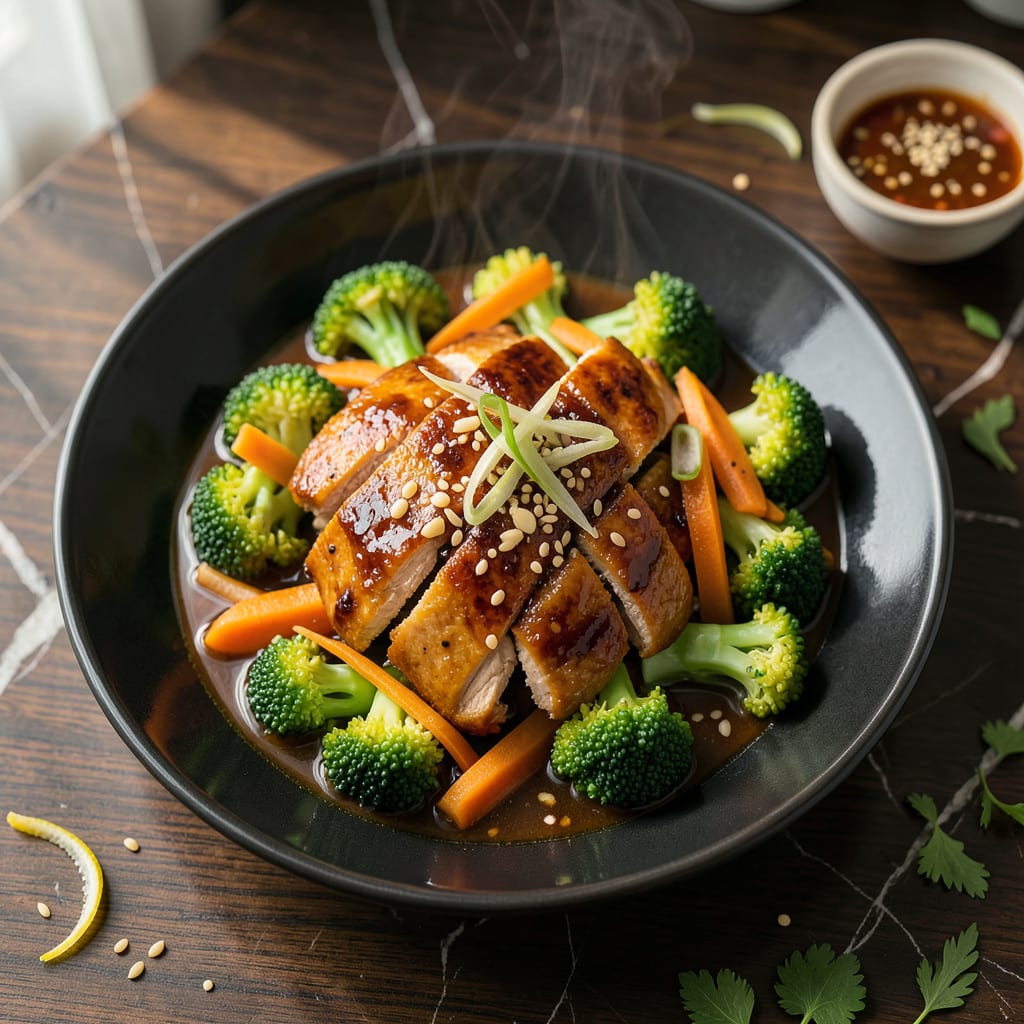
This wok-tossed dish brings together tender chicken and crisp vegetables in a savory sauce that’s quick to prepare. The high-heat stir-fry method locks in flavor while keeping the ingredients vibrant and fresh.
With simple steps and a balanced blend of soy, garlic, and ginger, this recipe delivers restaurant-quality results at home. Serve it over steamed rice for a complete, satisfying meal.
Ingredients for Chinese Chicken and Vegetables Sauce
High-heat wok cooking requires fresh, vibrant ingredients for this savory dish with tender chicken and crisp vegetables.
| Ingredient | Amount | Notes |
|---|---|---|
| Boneless Chicken Breast 🍗 | 1 ½ lb | Thinly sliced for even cooking |
| Soy Sauce 🫒 | ⅓ cup | Low-sodium preferred for balance |
| Oyster Sauce 🍶 | 2 tbsp | Vegetarian oyster sauce if needed |
| Sesame Oil 🫒 | 1 tbsp | Toasted for depth of flavor |
| Fresh Ginger Root 🌿 | 1 whole | Peeled and minced, about 1 tbsp |
| Garlic Cloves 🧄 | 4 cloves | Minced finely for sauce |
| Red Bell Pepper 🌶️ | 1 whole | Thinly sliced for crunch |
| Broccoli Florets 🥦 | 2 cups | Fresh or frozen, blanched if frozen |
| Carrots 🥕 | 2 whole | Julienned for quick cooking |
| Green Onions 🧅 | 4 whole | Sliced thin, whites and greens separated |
| Cornstarch 🌾 | 1 tbsp | Mixed with 2 tbsp water for slurry |
| Rice Vinegar 💧 | 1 tbsp | Adds subtle tang to sauce |
| Brown Sugar 🍚 | 1 tbsp | For balancing savory flavors |
| Vegetable Oil 🫒 | 2 tbsp | High smoke point for stir-frying |
| Sesame Seeds 🌰 | 1 tsp | Toasted for garnish |
[recipeingredientscaler]
For authentic flavor, oyster sauce is non-negotiable—look for Lee Kum Kee or Kikkoman brands at any Asian market or well-stocked Whole Foods. The ginger and garlic should be fresh, not powdered; the difference in aroma is dramatic. Chicken breast works best when sliced thinly against the grain for maximum tenderness. Vegetables should be uniform in size for even cooking.
Need to make it vegetarian? Swap chicken for extra-firm tofu (pressed and cubed) and use vegetarian oyster sauce. No rice vinegar? Apple cider vinegar at half the amount works. For gluten-free, use tamari instead of soy sauce. Frozen vegetables are acceptable (blanch first), but fresh delivers the best texture. Don’t skip the cornstarch slurry—it’s what gives the sauce its glossy finish.
Completed dish keeps in the fridge for 3-4 days but is best served immediately for optimal texture. Store leftover sauce separately in an airtight container for up to 1 week. Reheat gently on the stove to preserve the vegetables’ crispness. Always toast sesame seeds just before garnishing for maximum aroma.
Why You’ll Love This Recipe
- One Pan Meal: I can toss the chicken, veggies, and sauce together in a single pan—minimal cleanup, maximum flavor.
- Umami Bomb: The combo of soy sauce, oyster sauce, and fresh ginger creates a rich, savory depth that’s ridiculously good.
- Weeknight Lifesaver: Honestly, it’s my go-to for busy evenings when I need something quick but still packed with taste.
- Stretches Further: Leftovers taste even better the next day, and it’s budget-friendly with simple pantry staples.
Step-by-Step Instructions for Chinese Chicken and Vegetables Sauce
Master the wok technique for a dish that balances savory, sweet, and umami in every bite.
Step 1: Velouté the Chicken and Prepare Aromatics
Slice the 1.5 lb Boneless Chicken Breast into thin, even strips against the grain. In a bowl, toss the chicken with 1 tbsp Cornstarch until fully coated. This velveting technique ensures tender, silky meat that resists overcooking.
Peel and mince the Fresh Ginger Root to yield about 1 tbsp, then finely mince the 4 cloves Garlic Cloves. Thinly slice the Red Bell Pepper into uniform strips and julienne the 2 whole Carrots for even cooking. Separate the whites and greens of the 4 whole Green Onions and slice thinly.
Step 2: Stir-Fry Vegetables for Textural Contrast
Heat 1 tbsp Vegetable Oil in a wok or large skillet over high heat until shimmering. Add the 2 cups Broccoli Florets and stir-fry for 2-3 minutes until bright green and slightly tender. Remove and set aside.
In the same wok, add the remaining 1 tbsp Vegetable Oil and stir-fry the carrots and red bell pepper for 3-4 minutes until crisp-tender. Add the white parts of the green onions, minced ginger, and garlic, cooking for 30 seconds until fragrant. The vegetables should retain a slight bite for texture.
Step 3: Cook Chicken and Build the Sauce Foundation
Return the wok to high heat and add the coated chicken. Spread it in a single layer and let it sear undisturbed for 1 minute before stir-frying. Cook for 4-5 minutes total until the chicken is opaque and just cooked through.
Add the 0.33 cup Soy Sauce, 2 tbsp Oyster Sauce, 1 tbsp Rice Vinegar, and 1 tbsp Brown Sugar to the wok. Stir well to coat the chicken and vegetables, allowing the sugar to dissolve completely. The sauce should begin to thicken slightly as it coats the ingredients.
Step 4: Finish with Signature Aromatics and Garnish
Return the broccoli to the wok and stir-fry for 1-2 minutes to heat through and meld the flavors. Drizzle in the 1 tbsp Sesame Oil and toss to incorporate. The sauce should be glossy and lightly coating all ingredients—add a splash of water if it appears too thick.
Garnish with the green onion tops and 1 tsp Sesame Seeds. The dish should have a vibrant color contrast with the deep brown sauce clinging to the chicken and vegetables. Serve immediately over steamed rice to soak up every last bit of the flavorful sauce.
Pro Tips For Making Chinese Chicken And Vegetables Sauce
- Velvet the Chicken: Slice the chicken breast thinly against the grain, then marinate with 1 tsp soy sauce, 1 tsp cornstarch, and 1 tsp water for 15 minutes—this keeps it impossibly tender. I learned this the hard way after too many dry, rubbery stir-fry failures.
- Bloom the Ginger: Cook the minced fresh ginger in hot oil for 30 seconds before adding anything else. Sounds simple, but it actually changes the outcome by waking up those aromatic oils.
- Skip the Overcrowding: Cook the chicken in two batches if needed—dumping it all in at once steams the meat instead of searing it. After burning three batches, I finally figured out patience pays off.
- Finish with Sesame: Drizzle the sesame oil in at the very end, off the heat. My grandmother swore by this, and she was right: it preserves the nutty aroma instead of letting it burn off.
Serving Suggestions for chinese chicken and vegetables sauce
Plating with Rice
Serve this creation over steamed jasmine rice in a shallow bowl—the fluffy grains soak up the glossy sauce beautifully. I use 1 cup uncooked rice per person, cooked with a 1:1.5 rice-to-water ratio for perfect texture. The contrast of white rice against the colorful vegetables makes for an inviting presentation. 💛
Family-Style Service
For gatherings, present the dish in a large serving bowl with rice on the side. Let everyone assemble their own plates with tongs. This keeps the chicken and vegetables crisp and prevents soggy rice. I always include extra green onion tops for garnish.
Garnish Like a Pro
Sprinkle toasted sesame seeds and additional sliced green onions right before serving. A drizzle of extra sesame oil adds shine and depth. For heat lovers, offer sriracha or chili oil at the table. 🌟
Side Pairings
Hot and sour soup makes an excellent starter to this meal. The tangy broth cleanses your palate between bites. For a lighter option, try cucumber salad with rice vinegar dressing. Both complement without competing with the main dish.
Kids’ Serving Tip
For picky eaters, serve the components separately—plain rice, chicken, and vegetables. Let them mix and match. I’ve found children often enjoy the sauce best when served as a dip. The colorful veggies become more appealing when they’re in control.
Nutrition Facts
Frequently Asked Questions
Can I use chicken thighs instead of breast?
Chicken thighs stay juicier and are more forgiving with cooking times. Use 1.5 lb boneless thighs and follow the same steps. The slightly higher fat content adds richness to the sauce.
Why is my sauce too thin?
This usually means the cornstarch slurry didn’t activate properly. Mix 1 tbsp cornstarch with 2 tbsp cold water first, then add to the simmering sauce. Let it cook for 1-2 minutes to thicken.
How do I make this gluten-free?
Swap regular soy sauce for tamari and check that your oyster sauce is gluten-free. All other ingredients are naturally gluten-free. The dish will taste just as delicious!
Can I prepare ingredients in advance?
Yes! Slice all vegetables and chicken up to 1 day ahead. Store separately in airtight containers in the fridge. This makes the actual cooking process much faster.

- Jollof Rice Sauce Recipe: West African Tomato and Spice Infusion - September 25, 2026
- Japanese Rice Soup Recipe: Umami-Rich Comfort in a Bowl - September 25, 2026
- Homemade Cream Of Rice Recipe: Silk-Smooth Breakfast in Minutes - September 25, 2026