
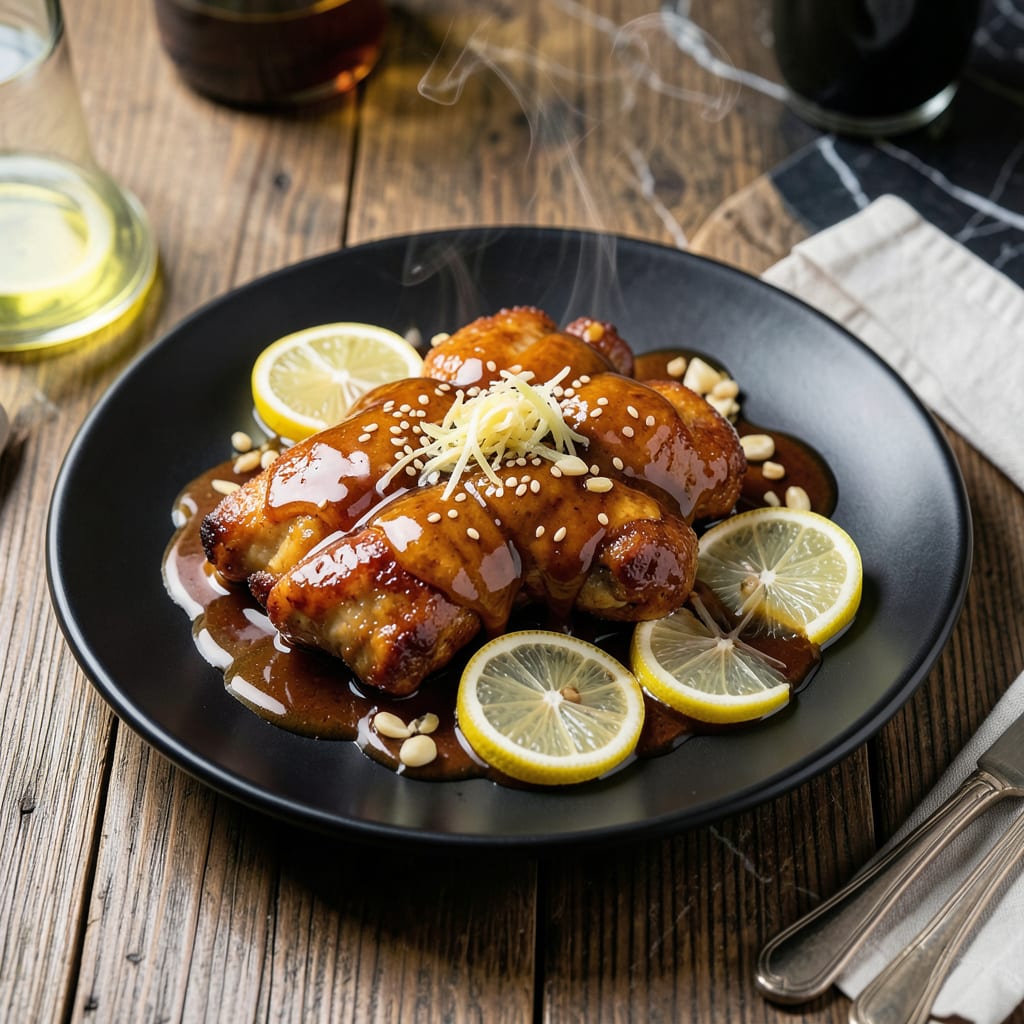
This sauce transforms ordinary chicken into a restaurant-quality dish with its perfect balance of sweetness and tang. I developed this recipe to capture that signature sticky glaze found in authentic Chinese takeout.
The secret lies in the precise ratio of honey to lemon, creating a thick, glossy sauce that clings beautifully to every piece. It takes 10 minutes to make and stores well for up to a week.
Ingredients for Chinese Honey Lemon Chicken Sauce
Transform your stir-fry with this glossy, restaurant-quality sauce in minutes.
| Ingredient | Amount | Notes |
|---|---|---|
| Honey 🍯 | ½ cup | Pure, unprocessed preferred |
| Fresh Lemon Juice 🍋 | ¼ cup | About 2-3 lemons |
| Soy Sauce 🫒 | 3 tbsp | Low-sodium for balance |
| Rice Vinegar 🫒 | 2 tbsp | Mild white variety |
| Minced Garlic 🧄 | 2 tbsp | Freshly minced preferred |
| Grated Fresh Ginger 🌿 | 1 tbsp | Fine grate for texture |
| Cornstarch 🌾 | 1 tbsp | For thickening the sauce |
| Water 💧 | 2 tbsp | Cold, for cornstarch slurry |
| Sesame Oil 🫒 | 1 tsp | Toasted for depth |
| Red Pepper Flakes 🌶️ | ¼ tsp | Optional for heat |
[recipeingredientscaler]
The honey and lemon are non-negotiable for that signature balance. Local raw honey from farmers markets adds depth, but any pure honey works. For the soy sauce, Kikkoman low-sodium is my go-to—it lets the sweetness shine without overpowering. Fresh ginger and garlic are a must; the pre-minced stuff in jars lacks the punch. Asian markets often have the best prices on rice vinegar and sesame oil.
Out of rice vinegar? Apple cider vinegar at half the amount works in a pinch. No fresh ginger? Ground ginger at one-fourth the amount (but fresh is exponentially better). If avoiding heat, skip the red pepper flakes—won’t affect the glaze. The cornstarch slurry is key for that sticky consistency; arrowroot powder can substitute at a 1:1 ratio. For a richer sauce, swap water for chicken broth (though this version keeps it vegetarian-friendly).
Sauce keeps beautifully in an airtight container. 1 week in the fridge, or freeze for 3 months (thaw and stir before using). The glaze thickens as it cools, so reheat gently with a splash of water. Always make extra—it’s versatile beyond just chicken (trust me on this).
Why You’ll Love This Recipe
- One Bowl Wonder: I just dump honey, lemon, soy sauce, and garlic in a bowl—no fancy prep or extra dishes.
- Sweet-Tangy Addiction: The honey and lemon create this glossy, finger-licking sauce that’s both sweet and zesty.
- Stir Fry to Salad: Honestly, I’ve drizzled this on chicken, tofu, even roasted veggies—it works everywhere.
- Makes Extra Easily: Double the batch and keep it in the fridge; it stays fresh for a week of quick meals.
Step-by-Step Instructions for Chinese Honey Lemon Chicken Sauce
Master this glaze with precise technique and timing for restaurant-quality results.
Step 1: Bloom Aromatics in Sesame Oil
Heat a saucepan over medium heat and add the 1 tsp sesame oil. Once shimmering, add the 2 tbsp minced garlic and 1 tbsp grated fresh ginger. Sauté for 30-45 seconds until fragrant but not browned—burnt aromatics will bitter the sauce.
This brief cooking step releases the essential oils in the garlic and ginger, creating a deep, aromatic base for your glaze. The sesame oil adds its nutty richness to complement the honey’s sweetness.
Step 2: Combine Liquids and Sweeteners
Pour in the 0.5 cup honey, 0.25 cup fresh lemon juice, 3 tbsp soy sauce, and 2 tbsp rice vinegar. Stir well to combine. Bring the mixture to a gentle simmer over medium heat—this usually takes 3-4 minutes.
The honey will begin to thin as it heats, while the lemon juice and vinegar provide the bright, tangy counterbalance to the sweetness. The soy sauce adds umami depth that makes this sauce irresistibly savory.
Step 3: Create and Add Cornstarch Slurry
In a small bowl, whisk together the 1 tbsp cornstarch and 2 tbsp water until completely smooth with no lumps. This slurry will thicken the sauce to the perfect sticky consistency.
Slowly pour the cornstarch slurry into the simmering sauce while whisking constantly. Continue cooking for 1-2 minutes until the mixture thickens to coat the back of a spoon. The sauce should be glossy and ribbony, not thin or watery.
Step 4: Finish with Heat and Rest
Stir in the 0.25 tsp red pepper flakes (if using) for a subtle kick. Reduce heat to low and let the sauce simmer for an additional 1 minute to allow the flavors to meld fully.
Remove from heat and let the sauce cool slightly—it will thicken further as it cools. The final texture should cling to chicken or vegetables beautifully, creating that signature sticky glaze that makes this dish so satisfying.
Pro Tips For Making Chinese Honey Lemon Chicken Sauce
- Simmer Gently: Once you combine the honey and lemon juice, keep the heat at a low simmer—too high and the honey will burn, leaving a bitter taste that ruins the balance.
- Bloom the Garlic: Cook the minced garlic in a little oil for about 30 seconds before adding liquids; I learned this the hard way after tasting raw garlic bits in my first few batches.
- Balance the Sweet: If the sauce tastes too sweet after adding honey, a splash of rice vinegar or extra lemon juice will cut through it—sounds obvious, but it’s easy to overcorrect.
- Strain for Smoothness: After cooking, strain out the garlic if you want a silky sauce; I skip this when I’m lazy, but the texture is noticeably better when I don’t.
Troubleshooting This Dish
Sauce Too Thin
If your sauce isn’t thickening, the cornstarch slurry might not have been cooked long enough. Return it to medium heat and simmer for an additional 1-2 minutes while stirring constantly. The mixture should coat the back of a spoon. 🌟
Sauce Too Thick
If it thickens too much, whisk in 1-2 tbsp warm water until it reaches the desired consistency. Do this gradually to avoid making it watery. The glaze should be ribbony, not glue-like.
Lumpy Sauce
Lumps usually mean the cornstarch wasn’t fully dissolved before adding. Strain the sauce through a fine-mesh sieve, then return to heat. For prevention, always whisk your slurry until completely smooth before adding.
Overly Sweet
Balance sweetness with a splash of rice vinegar or lemon juice. Start with 1 tsp and adjust. This brightens the flavor without thinning the sauce significantly.
Bitter Taste
Burnt garlic or ginger will make your sauce bitter. Always sauté aromatics on medium heat for just 30-45 seconds until fragrant but not browned. If it happens, start fresh—there’s no fixing burnt flavors.
Sauce Separating
If the sauce separates after cooling, simply reheat gently while whisking. Adding a tiny bit of cornstarch slurry (½ tsp) can help re-emulsify it. This often happens when the sauce cools too quickly. 💡
Nutrition Facts
Frequently Asked Questions
Can I use bottled lemon juice?
Fresh is best for bright flavor, but bottled works in a pinch. Use 1 tbsp less as it’s more concentrated. The sauce may lack some complexity but will still be tasty.
How do I adjust the sweetness?
Reduce honey by 1-2 tbsp and add 1 tsp vinegar to balance. For more sweetness, add honey gradually—taste as you go to avoid overpowering the tang.
Can I make this sauce ahead?
Yes! It stores well for up to 1 week in the fridge. Reheat gently with a splash of water to restore the glossy texture. Avoid freezing as it can alter the consistency.
What if my sauce is too tangy?
Add 1 tbsp honey or a pinch of sugar to mellow the acidity. Stir well and taste before adding more—you want balance, not cloying sweetness.

- Jollof Rice Sauce Recipe: West African Tomato and Spice Infusion - September 25, 2026
- Japanese Rice Soup Recipe: Umami-Rich Comfort in a Bowl - September 25, 2026
- Homemade Cream Of Rice Recipe: Silk-Smooth Breakfast in Minutes - September 25, 2026