
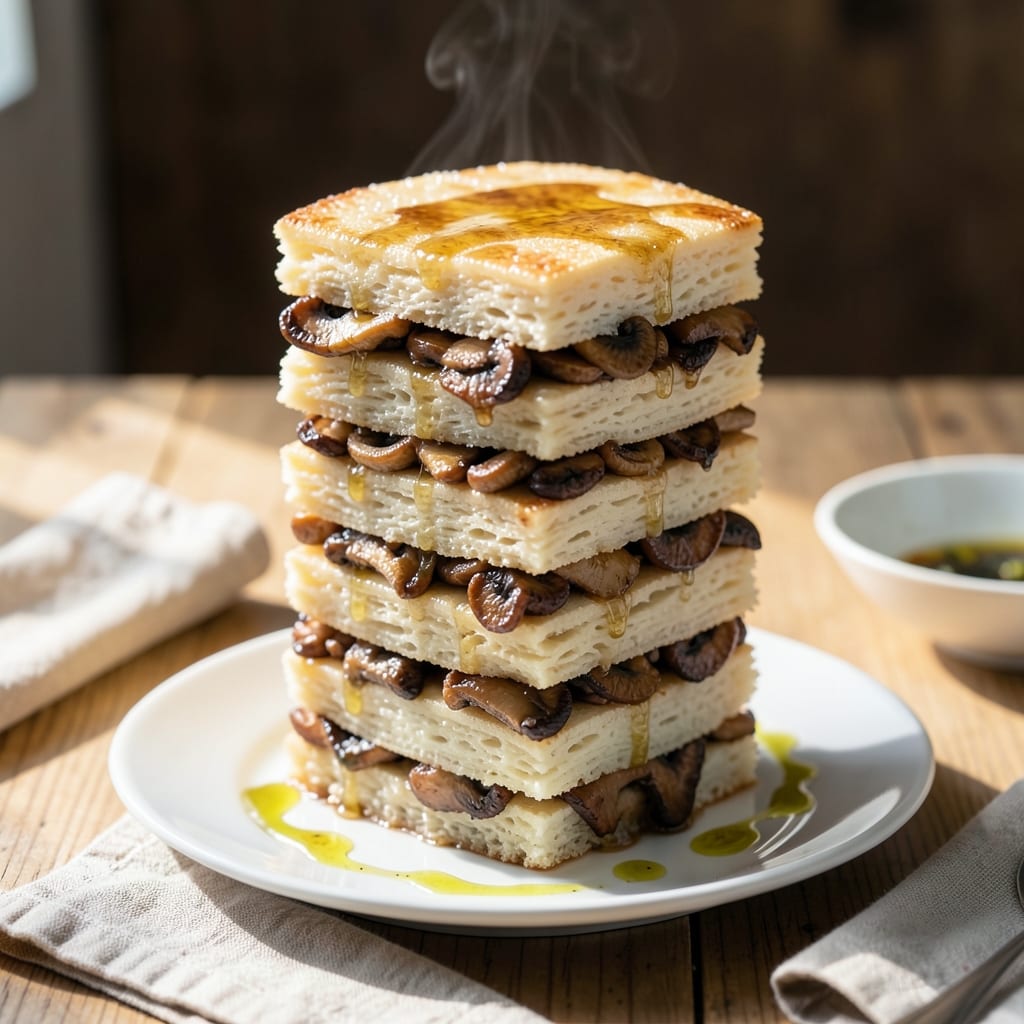
This traditional dish transforms simple rice flour into chewy, layered perfection through a precise steaming method. The result is a textured cake with alternating soft and slightly firm layers.
Each bite offers a balance of subtle sweetness and savory depth. The technique requires patience but rewards with a dish that’s both comforting and impressive.
Ingredients for Chinese Layered Rice Cake
Simple rice flour and a few pantry staples create this textured, layered delight.
| Ingredient | Amount | Notes |
|---|---|---|
| Glutinous Rice Flour 🌾 | 3 cups | Also called sweet rice flour |
| All-Purpose Flour 🌾 | ½ cup | For structure and texture |
| Granulated Sugar 🍚 | ¾ cup | Adjust to taste preference |
| Water 💧 | 2 ½ cups | Warm for better dissolution |
| Vegetable Oil 🫒 | 2 tbsp | Neutral flavor preferred |
| Dried Shiitake Mushrooms 🍄 | ½ oz | Rehydrated and finely chopped |
| Green Onions 🧅 | 4 whole | Thinly sliced for garnish |
| Light Soy Sauce 🍶 | 2 tbsp | For savory depth |
| Sesame Oil 🫒 | 1 tsp | Toasted for aroma |
| Salt 🧂 | ½ tsp | Divided for layering |
| White Pepper 🌶️ | ¼ tsp | Ground for subtle heat |
| Dried Shrimp 🦐 | 0 oz | Optional, omit for strict vegetarian |
Glutinous rice flour is non-negotiable here—look for brands like Bob’s Red Mill or Asian markets for authentic texture. The all-purpose flour adds structure, but don’t substitute with other varieties. Dried shiitake mushrooms (found at Whole Foods or any Asian grocery) provide umami depth. If using dried shrimp, ensure it’s sustainably sourced, though it’s omitted here for vegetarian compliance.
No glutinous rice flour? This recipe won’t work—it’s the backbone of the chew. Light soy sauce can be swapped for tamari for gluten-free, but avoid dark soy sauce (too strong). Vegetable oil is flexible: avocado or grapeseed oil work too. For extra savory layers, add a dash of mushroom powder to the batter.
Store rice flour in an airtight container for up to 6 months. The cake keeps 3-4 days at room temperature, wrapped tightly. Reheat by steaming for 5-10 minutes to restore the chewy texture. Do not refrigerate—it dries out the layers.
Why You’ll Love This Recipe
- Minimal Effort: I just mix the glutinous rice flour, all-purpose flour, sugar, and water—no fancy techniques, and the oil keeps it from sticking.
- Sweet Chewy Bliss: The layers have that perfect soft, slightly sticky texture with just the right sweetness from the sugar.
- Crowd Pleaser: I bring this to potlucks and it’s always the first thing gone—kids and adults love it.
- Budget Friendly: A bag of glutinous rice flour makes multiple batches, and the rest are pantry staples I already have.
Step-by-Step Instructions for Chinese Layered Rice Cake
This method ensures the ideal balance of chewiness and layered structure with savory-sweet depth.
Step 1: Rehydrate and Prepare the Filling Components
Begin by rehydrating the 0.5 oz Dried Shiitake Mushrooms in 1 cup of the 2.5 cups Water for 20-30 minutes until fully softened. Drain, finely chop, and reserve the soaking liquid. This liquid adds umami depth to the batter.
Thinly slice the 4 whole Green Onions, separating the white and green parts. The white portions will be mixed into the batter for flavor, while the green tops will serve as garnish. This division ensures optimal texture and presentation.
Step 2: Create the Rice Cake Batter
In a large mixing bowl, combine the 3 cups Glutinous Rice Flour, 0.5 cup All-Purpose Flour, 0.75 cup Granulated Sugar, and 0.25 tsp White Pepper. Gradually whisk in the remaining 1.5 cups Water along with the reserved mushroom soaking liquid until smooth.
The batter should resemble a thin pancake batter. Add the 2 tbsp Vegetable Oil, 2 tbsp Light Soy Sauce, and 1 tsp Sesame Oil, whisking until fully incorporated. The oil creates a tender crumb, while the soy and sesame oils build the savory foundation.
Step 3: Incorporate Aromatics and Begin Layering
Fold the chopped rehydrated Dried Shiitake Mushrooms and the white parts of the Green Onions into the batter. Add 0.5 tsp Salt and adjust seasoning if needed. The salt enhances the savory notes without overpowering the sweetness.
Pour 1/3 of the batter into a greased 8-inch square baking pan. The pan should be lined with parchment paper for easy removal. Steam this first layer for 5 minutes until just set—it should look matte and slightly firm to the touch.
Step 4: Build and Steam the Layers
Carefully pour another 1/3 of the batter over the first layer. Return to the steamer and cook for an additional 7-8 minutes until this layer is also set. Repeat with the final portion of batter, steaming for another 7-8 minutes.
Each layer should be visible but blended at the edges. The total steaming time of 20-22 minutes ensures all layers cook through while maintaining distinct separation. Avoid opening the steamer lid during cooking to prevent condensation from disrupting the layers.
Step 5: Rest and Serve with Garnish
Remove the cake from the steamer and let it rest in the pan for 10 minutes. This resting period allows the layers to set fully and makes slicing easier. Run a knife around the edges to loosen, then transfer to a cutting board.
Slice into squares or rectangles and garnish with the reserved green onion tops. Serve warm or at room temperature. The cake should have a slightly sticky, chewy texture with visible layers and a balanced savory-sweet flavor profile.
Pro Tips For Making Chinese Layered Rice Cake
- Steam Evenly: Use a bamboo steamer lined with parchment paper and poke holes in it—this prevents the rice cake layers from sticking and ensures the steam circulates properly.
- Mix the Flours Right: Sift the glutinous rice flour and all-purpose flour together twice to eliminate lumps, or you’ll end up with dense, uneven layers.
- Skip Cold Water: Always use warm water when mixing the batter—cold water makes the glutinous rice flour clump and the layers won’t set smoothly.
- Oil the Layers: Brush each layer lightly with vegetable oil before adding the next one—this keeps them from merging into a single blob during steaming.
Dietary Considerations for This Dish
Vegetarian and Vegan
This recipe is naturally vegetarian, as it uses only plant-based ingredients like glutinous rice flour and shiitake mushrooms. To make it vegan, simply swap the granulated sugar for coconut sugar or another plant-based sweetener. 🌱
Gluten-Free Adaptation
For a gluten-free version, replace the 0.5 cup all-purpose flour with a gluten-free flour blend like Bob’s Red Mill 1-to-1. Also, use tamari instead of light soy sauce to ensure no gluten is present.
Allergen Considerations
This dish is free from common allergens like nuts, dairy, and eggs. However, check your glutinous rice flour and soy sauce labels for potential cross-contamination warnings if allergies are severe.
Low-Sugar Option
Reduce the 0.75 cup granulated sugar to ¼ cup for a less sweet version. To compensate, enhance the savory notes by adding an extra 1 tbsp light soy sauce or ½ tsp mushroom powder. 💡
Salt-Reduced Version
Cut the 0.5 tsp salt in half or omit it entirely. The light soy sauce and dried shiitake mushrooms provide enough natural umami without additional salt. Taste the batter before steaming and adjust as needed.
Shrimp-Free Note
Traditional recipes sometimes include dried shrimp, but this version omits it to keep it vegetarian. If you’d like to add it for extra depth, use 1 oz and rehydrate it alongside the mushrooms.
Nutrition Facts
Frequently Asked Questions
Why do I need glutinous rice flour?
It’s essential for the signature chewy texture. Regular rice flour won’t provide the same elasticity or stickiness. Look for it in Asian markets or specialty stores.
Can I make this without a steamer?
Use a large pot with a rack and a tight lid. Add 1-2 inches of water, bring to a boil, then place the pan on the rack. Cover tightly and steam as directed.
How do I keep layers from blending together?
Steam each layer until just set before adding the next. Avoid overmixing the batter and resist opening the steamer lid during cooking.
Can I prepare the batter ahead of time?
Mix the dry ingredients in advance, but add wet ingredients just before steaming. The batter thickens as it sits, which can affect layering.

- Jollof Rice Sauce Recipe: West African Tomato and Spice Infusion - September 25, 2026
- Japanese Rice Soup Recipe: Umami-Rich Comfort in a Bowl - September 25, 2026
- Homemade Cream Of Rice Recipe: Silk-Smooth Breakfast in Minutes - September 25, 2026