
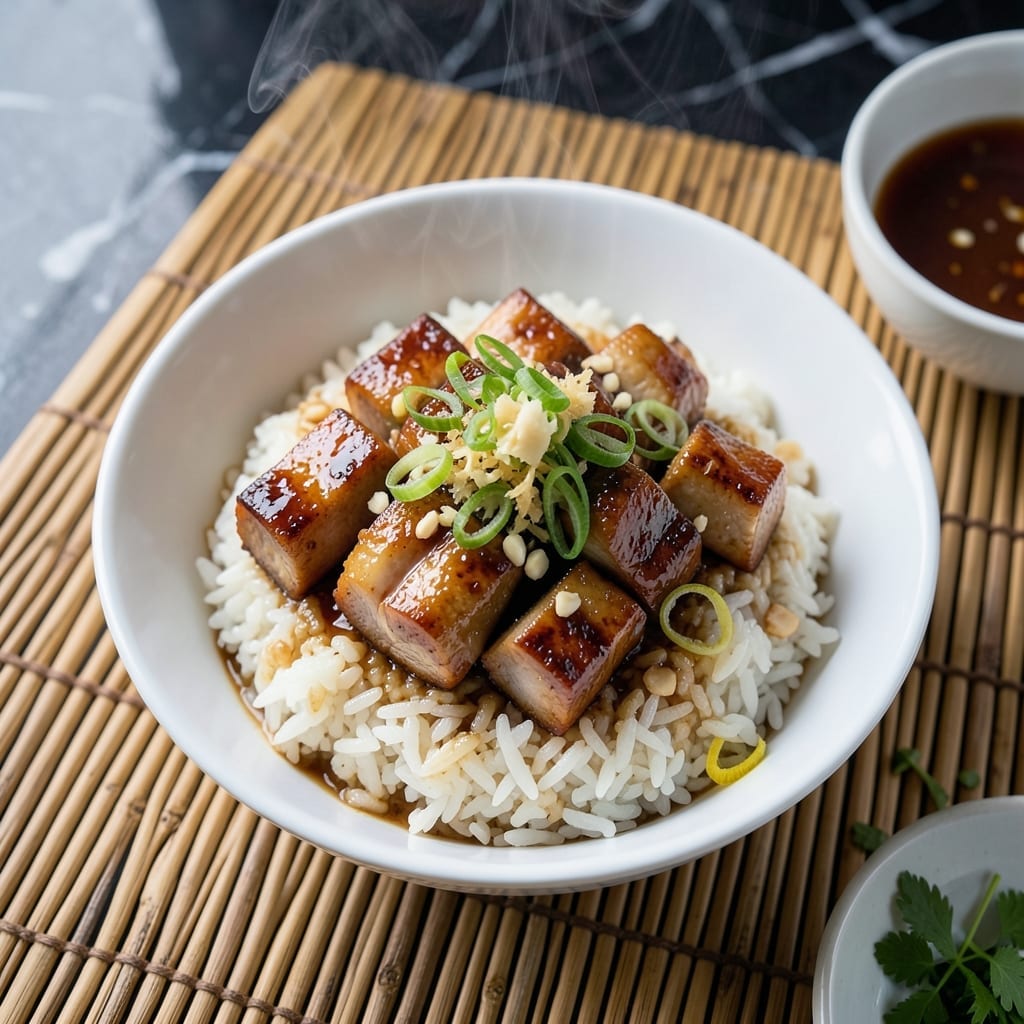
This dish transforms simple ingredients into a restaurant-quality meal with minimal effort. The key is layering marinated pork over rice before steaming, allowing the flavors to meld perfectly.
I’ve refined this technique over years of home cooking to achieve consistently fluffy grains and tender pork. The pork’s savory juices infuse the rice during cooking, creating depth of flavor in every bite.
What emerges is a one-bowl wonder with distinct layers: fragrant rice at the bottom, juicy pork pieces throughout, and a satisfying texture contrast. The method ensures even cooking without constant attention.
Perfect for weeknight dinners when you want something special without complicated steps. The results speak for themselves.
Ingredients for Chinese Pork Steamed Rice
Transform simple pantry staples into a layered, restaurant-quality one-bowl meal with these ingredients.
| Ingredient | Amount | Notes |
|---|---|---|
| Jasmine Rice 🍚 | 2 cups | Rinsed until water runs clear |
| Pork Shoulder 🥩 | 1 lb | Diced into bite-sized pieces |
| Light Soy Sauce 🫒 | 3 tbsp | Low-sodium preferred for balance |
| Dark Soy Sauce 🫒 | 1 tbsp | For depth and color |
| Oyster Sauce 🫒 | 1 tbsp | Vegetarian oyster sauce if needed |
| Shaoxing Wine 🍶 | 2 tbsp | Dry sherry as substitute |
| Granulated Sugar 🧂 | 1 tsp | Balances savory flavors |
| Sesame Oil 🫒 | 1 tsp | Toasted for aroma |
| Garlic Cloves 🧄 | 3 cloves | Minced finely for marinade |
| Fresh Ginger 🌿 | 1 tbsp | Grated or minced |
| Green Onions 🧅 | 3 whole | Thinly sliced, whites and greens separated |
| Cornstarch 🌾 | 1 tbsp | For tenderizing pork |
| Neutral Oil 🫒 | 1 tbsp | For searing pork |
| Water 💧 | 2 ½ cups | For steaming rice |
The pork selection is critical for texture. Pork shoulder offers the ideal fat-to-meat ratio, ensuring juicy, tender bites after steaming. Asian markets often carry pre-diced pork for convenience, but a well-marbled shoulder from Whole Foods or Costco works equally well. For the rice, jasmine is non-negotiable—its fragrant aroma and slightly sticky texture are essential to the dish’s integrity.
No Shaoxing wine? Dry sherry is an acceptable substitute, though the depth of flavor will differ slightly. Vegetarian oyster sauce can replace traditional oyster sauce without sacrificing umami. If light soy sauce isn’t available, reduce regular soy sauce by half to avoid overpowering saltiness. The cornstarch can be omitted, but the pork may not be as velvety (worth the extra minute to include it).
Marinated pork keeps in the fridge for up to 2 days before cooking. Leftover rice and pork reheat beautifully—store in an airtight container for 3-4 days. Freezing isn’t recommended, as it alters the rice’s texture. Always use freshly rinsed jasmine rice for the best results.
Why You’ll Love This Recipe
- One Pot Wonder: I just dump everything in the rice cooker and let it work its magic—no babysitting required.
- Umami Bomb: The mix of light soy, dark soy, and oyster sauce creates this deep, savory richness that soaks right into the rice.
- Feeds the Crew: I make a big batch on Sunday and we’re set for lunches all week—tastes even better the next day.
- Budget Stretcher: Pork shoulder is cheap, and a little goes a long way with all that flavor-packed rice.
Step-by-Step Instructions for Chinese Pork Steamed Rice
Master the technique for perfectly fluffy rice with tender, flavorful pork in every bite.
Step 1: Prepare and Marinate the Pork
In a medium bowl, combine the 1 lb Pork Shoulder with 3 tbsp Light Soy Sauce, 1 tbsp Dark Soy Sauce, 1 tbsp Oyster Sauce, 2 tbsp Shaoxing Wine, 1 tsp Granulated Sugar, 1 tsp Sesame Oil, 3 cloves Garlic Cloves (minced), and 1 tbsp Fresh Ginger (grated).
Add the 1 tbsp Cornstarch and mix thoroughly until the pork is evenly coated. I use my hands for this—it ensures the cornstarch clings to every piece, creating that signature velvety texture. Let the mixture marinate for 15-20 minutes while you prepare the rice.
This marinade step is non-negotiable. The cornstarch tenderizes the pork while the soy sauces and wine create a deep, umami-rich foundation that will infuse every grain of rice.
Step 2: Rinse and Soak the Rice
Place the 2 cups Jasmine Rice in a fine-mesh strainer and rinse under cold running water until the water runs completely clear. I find this usually takes 4-5 rinses—the water should go from cloudy to transparent. This removes excess starch, which would otherwise make your rice gummy.
Transfer the rinsed rice to your rice cooker or heavy pot. Add the 2.5 cups Water and let it soak for 10 minutes. Soaking allows the grains to absorb moisture evenly, resulting in rice that cooks uniformly and stays separate. Don’t skip this step—it’s the difference between perfect and mediocre rice.
Step 3: Sear the Pork for Maximum Flavor
Heat the 1 tbsp Neutral Oil in a wok or large skillet over medium-high heat until shimmering. Add the marinated pork in a single layer—don’t overcrowd the pan or the pork will steam instead of sear. Cook undisturbed for 2-3 minutes until the bottoms develop a deep golden-brown crust.
Stir-fry the pork for another 2-3 minutes until it’s 80% cooked through—the pieces should be opaque on the outside with just a hint of pink inside. The pork will finish cooking in the next step, so resist the urge to fully cook it now. Remove from heat and set aside.
Step 4: Layer and Steam the Rice with Pork
If using a rice cooker, spread the soaked rice in an even layer. Arrange the partially cooked pork and all its juices over the rice in a single layer. Sprinkle the 3 whole Green Onions (thinly sliced) over the top. The green parts will add a fresh aroma, while the white parts will meld into the rice.
Cook according to your rice cooker’s standard setting. If using a pot on the stove, bring to a boil, then reduce to low heat, cover, and simmer for 15 minutes. Then turn off the heat and let it steam, undisturbed, for another 10 minutes. This final steaming step is crucial—it allows the pork to finish cooking and the flavors to permeate every grain.
Step 5: Rest and Fluff for Perfect Texture
Once the cooking cycle completes, let the rice sit covered for 5-10 minutes. This resting period allows the grains to firm up and absorb any remaining moisture. When you uncover it, you’ll see the pork has released its marinade into the rice, creating a beautiful, savory infusion.
Gently fluff the rice with a fork, mixing the pork pieces throughout so every bite contains both rice and meat. The grains should be separate and tender, with the pork juicy and deeply flavorful. Serve immediately while hot—the aroma of sesame oil and green onions will be at its peak.
Pro Tips For Making Chinese Pork Steamed Rice
- Marinate Overnight: I learned this the hard way—pork shoulder needs at least 4-6 hours in the soy-oyster sauce mix to soak up real flavor, but 12 hours actually changes the outcome.
- Rinse the Rice: Skip this and your steamed rice turns gummy; a quick rinse of the jasmine until the water runs clear removes excess starch.
- Use Both Soy Sauces: Dark soy for color, light soy for saltiness—resist the urge to use just one, or your pork won’t have that deep, balanced taste.
- Steam on High: Sounds obvious, but I used to simmer the water too low and ended up with undercooked rice; keep it at a rolling boil for the full 25-30 minutes.
Troubleshooting Great chinese pork steamed rice
Rice Too Mushy
This usually happens with too much water or insufficient rinsing. Use exactly 2.5 cups water for 2 cups jasmine rice, and rinse until the water runs completely clear. I’ve found that skipping the soak can also lead to uneven cooking. 💡
Pork Too Tough
Overcooking is the main culprit. Sear the pork until just 80% done—it should still have a touch of pink inside. The steaming process will finish the cooking perfectly. Also, ensure you’re using pork shoulder for its natural tenderness.
Don’t skip the cornstarch in the marinade—it’s what gives the pork that velvety texture.
Flavor Too Bland
Under-seasoned pork or insufficient marinating time weakens the dish. Marinate the pork for the full 15-20 minutes, and don’t reduce the soy sauces. I always taste the marinade before adding the pork to ensure it’s bold enough. 🌟
Rice Undercooked
Insufficient water or heat is typically the issue. Verify you’re using 2.5 cups water and that your rice cooker or pot maintains a steady simmer. After cooking, let it rest covered for 5-10 minutes to finish steaming.
Pork Dry or Rubbery
This occurs when pork is fully cooked before steaming.
Nutrition Facts
Frequently Asked Questions
Can I use a different type of rice?
Jasmine is ideal for its fragrance and texture, but long-grain white rice works in a pinch. Avoid short-grain as it becomes too sticky. Adjust water to 1.25 cups per 1 cup rice if substituting.
Why sear the pork first?
Searing develops deep flavor through caramelization and locks in juices. The 2-3 minutes per side creates a crust that enhances the dish’s complexity during steaming.
Can I make this without a rice cooker?
Use a heavy pot with a tight lid. Bring to a boil, then simmer on low heat for 15 minutes, followed by 10 minutes off-heat steaming.
How do I store leftovers?
Keep in an airtight container in the fridge for up to 3-4 days. Reheat in a microwave with a splash of water or steam briefly to restore moisture.

- Jollof Rice Sauce Recipe: West African Tomato and Spice Infusion - September 25, 2026
- Japanese Rice Soup Recipe: Umami-Rich Comfort in a Bowl - September 25, 2026
- Homemade Cream Of Rice Recipe: Silk-Smooth Breakfast in Minutes - September 25, 2026