
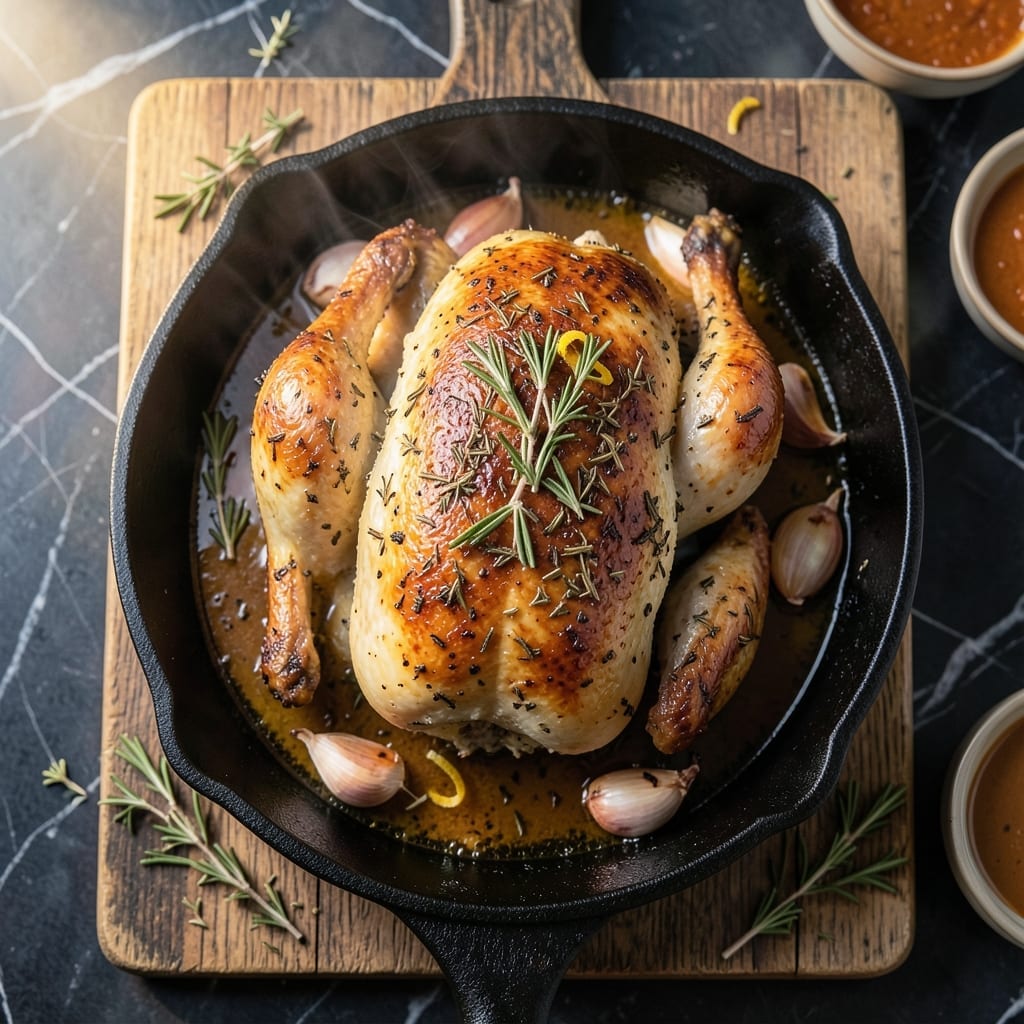
There’s something timeless about a perfectly roasted chicken with herb-crusted skin and juicy meat. This method delivers classic results every time, with minimal effort and maximum flavor.
The secret lies in a simple dry brine and high-heat roasting, which ensures golden, crispy skin while keeping the meat tender. A blend of fresh herbs and butter creates a fragrant crust that enhances, rather than overpowers, the natural taste of the chicken.
What you get is a centerpiece-worthy dish with succulent meat and a skin so crisp it shatters with every bite. The aroma alone signals a meal that’s both comforting and impressive.
Serve with roasted vegetables or a simple salad for a complete dinner. Here’s how to achieve this perfect roast chicken at home.
Ingredients for Classic Roast Chicken
A whole bird, fresh herbs, and butter create this timeless centerpiece with golden, crispy skin.
| Ingredient | Amount | Notes |
|---|---|---|
| Whole Chicken 🍗 | 4 lb | Giblets removed, patted dry |
| Unsalted Butter 🧈 | ½ cup | Softened to room temperature |
| Fresh Rosemary 🌿 | 2 tbsp | Finely chopped, stems discarded |
| Fresh Thyme 🍃 | 2 tbsp | Leaves stripped from stems |
| Fresh Sage 🌿 | 1 tbsp | Finely chopped for even distribution |
| Garlic Cloves 🧄 | 4 cloves | Minced for maximum flavor infusion |
| Kosher Salt 🧂 | 2 tbsp | Diamond Crystal preferred for dry brine |
| Black Pepper 🌶️ | 1 tsp | Freshly cracked for best aroma |
| Lemon 🍋 | 1 whole | Zested and juiced, divided |
| Yellow Onion 🧅 | 1 whole | Quartered for cavity aromatics |
| Carrots 🥕 | 2 whole | Cut into large chunks for roasting |
| Celery Stalks 🥬 | 2 pieces | Cut into large chunks for roasting |
| Olive Oil 🫒 | 1 tbsp | For basting, extra-virgin preferred |
The chicken quality is paramount. Air-chilled birds from Whole Foods or local farms yield the crispest skin and juiciest meat. For the herbs, organic bunches from the produce section pack more aroma than pre-packaged options. The butter should be European-style (82% fat) for superior browning—Plugrá or Kerrygold are reliable choices. Always check the sell-by date; fresher birds have better texture and flavor.
Short on fresh herbs? Dried herbs at one-third the amount work in a pinch, though the flavor won’t be as vibrant. No whole chicken? Bone-in, skin-on chicken thighs (about 3 lbs) can be substituted, reducing roasting time to 45-50 minutes. If you’re out of lemon, 1 tsp of white wine vinegar in the cavity adds similar brightness. The dry brine can be done the night before for deeper seasoning.
Store the chicken in its original packaging on a tray in the coldest part of the fridge—use within 2 days for optimal freshness. Leftovers keep 3-4 days refrigerated or freeze for up to 3 months. Reheat in the oven at 350°F to maintain crispness, avoiding the microwave which softens the skin.
Why You’ll Love This Recipe
- One Pan Magic: I just rub butter and herbs under the skin, pop it in the oven, and walk away—no flipping, no fuss.
- Herb Perfection: That rosemary, thyme, and sage combo makes the juiciest, most fragrant chicken I’ve ever tasted.
- Feeds Everyone: It’s my go-to for Sunday dinners, meal prep, or even a casual weeknight when I want leftovers for sandwiches.
- Budget Winner: A whole chicken costs less than buying parts, and it stretches into multiple meals without extra effort.
Step-by-Step Instructions for Classic Roast Chicken
Master the technique for a perfectly browned, herb-infused bird with crisp skin and juicy meat.
Step 1: Season and Dry Brine the Whole Chicken
Begin by patting the 4 lb Whole Chicken completely dry inside and out with paper towels. This step is crucial—any moisture left on the skin will prevent crisping during roasting.
Generously season the cavity and exterior with 2 tbsp Kosher Salt and 1 tsp Black Pepper. I distribute the salt evenly, paying special attention to the cavity and under the wings. Place the seasoned chicken on a wire rack set over a plate and refrigerate uncovered for 12-24 hours.
This dry brine method ensures the seasoning penetrates deep into the meat while drying the skin surface, which guarantees an exceptionally crispy exterior when roasted.
Step 2: Prepare the Herb Butter and Aromatics
Remove the 0.5 cup Unsalted Butter from the refrigerator 1 hour before use to soften. In a bowl, combine the softened butter with 2 tbsp Fresh Rosemary, 2 tbsp Fresh Thyme, 1 tbsp Fresh Sage, and 4 cloves Garlic Cloves (minced).
Mix thoroughly until the herbs are evenly distributed throughout the butter. This compound butter will be rubbed under and over the skin, infusing the meat with aromatic flavors as it roasts.
Prepare the aromatics by quartering the 1 whole Yellow Onion, cutting the 2 whole Carrots and 2 pieces Celery Stalks into large chunks, and zesting the 1 whole Lemon (reserve the juice for later use). These will be placed in the cavity and under the bird to enhance flavor.
Step 3: Truss and Butter the Chicken
Remove the chicken from the refrigerator 1 hour before roasting to bring it to room temperature. Truss the legs together with kitchen twine and tuck the wings under the body. This compact shape ensures even cooking and prevents the wings from over-browning.
Gently separate the skin from the breast meat with your fingers, creating a pocket. Spread about half of the herb butter mixture under the skin, directly onto the meat. Rub the remaining butter evenly over the entire exterior of the chicken. This dual application maximizes flavor infusion and promotes even browning.
Place the prepared onion, carrots, celery, and lemon zest in the cavity of the chicken. These aromatics will steam from the inside out, adding layers of flavor to every bite.
Step 4: Roast to Golden Perfection
Preheat the oven to 425°F. Place the chicken breast-side up on a rack in a roasting pan. Drizzle with 1 tbsp Olive Oil and transfer to the oven.
Roast for approximately 1 hour and 15 minutes, or until the skin is deep golden brown and crisp, and the internal temperature reaches 165°F in the thickest part of the thigh (not touching bone). Baste the chicken with the pan juices every 20-30 minutes to ensure even browning and moisture.
If the skin begins to darken too quickly, tent the bird loosely with aluminum foil. The chicken is done when the juices run clear and the thigh meat pulls away from the bone easily.
Step 5: Rest and Serve
Transfer the roasted chicken to a cutting board and let it rest for 15-20 minutes before carving. This resting period allows the juices to redistribute throughout the meat, ensuring each serving is moist and flavorful.
Carve the chicken by first removing the legs and thighs, then slicing the breast meat against the grain. Serve the carved chicken with the roasted vegetables from the pan and a drizzle of the accumulated juices for maximum flavor impact.
Pro Tips For Making Classic Roast Chicken
- Dry the Skin: Pat the chicken completely dry with paper towels before seasoning—this guarantees extra crispy skin. I learned this the hard way after years of soggy results.
- Room Temp First: Let the chicken sit out for 30-45 minutes before roasting. Sounds weird, but it works: the meat cooks more evenly and doesn’t seize up in the oven.
- Butter Under Skin: Mix your softened unsalted butter with chopped rosemary, thyme, and sage, then rub half under the skin. This isn’t the prettiest method, but it’s the tastiest.
- Rest Before Carving: Give it a solid 15 minutes under foil after roasting—yes, even if you’re impatient like me. The juices redistribute, and you’ll actually get moist meat.
Regional Styles of classic roast chicken
French Style
In France, roast chicken is often cooked with herbes de Provence—a blend of thyme, rosemary, and lavender. I add 1 tbsp herbes de Provence to the butter mixture and stuff the cavity with fennel fronds for a distinctly French aroma. The roasting temperature stays at 425°F.
Italian Approach
Italian cooks love to stuff the cavity with lemon halves, garlic heads, and fresh rosemary sprigs. I also drizzle the bird with 2 tbsp olive oil mixed with 1 tsp red pepper flakes for a subtle kick. The result is bright and aromatic. 💛
American Southern
Southern roast chicken often includes a Cajun spice rub—1 tbsp paprika, 1 tsp cayenne, and 1 tsp garlic powder mixed with the butter. I also add 1 sliced apple to the cavity for natural sweetness. Roast at 400°F for a slower, deeper flavor development.
Moroccan Spice
For a North African twist, I blend 1 tbsp ras el hanout into the butter. The cavity gets stuffed with preserved lemon and fresh cilantro. Roast as usual, but serve with a sprinkle of toasted almonds for crunch. ✨
British Sunday Roast
The British often roast chicken with breadcrumbs and sausage meat under the skin for extra moisture. I use ½ lb pork sausage mixed with ¼ cup breadcrumbs and 1 tsp sage. Roast at 375°F for a longer, more forgiving cook.
Nutrition Facts
Frequently Asked Questions
How do I know when it’s fully cooked?
Use a meat thermometer to check the thickest part of the thigh. It’s done at 165°F. The juices should run clear, not pink.
Can I use a frozen chicken?
Thaw it completely in the fridge first, which takes 24-48 hours for a 4 lb bird. Never roast from frozen—it cooks unevenly.
Why rest before carving?
Resting for 15-20 minutes lets juices redistribute. Cutting too soon causes dry meat as the juices spill out.
What if the skin isn’t crispy?
Pat the chicken extra dry before roasting. Ensure the oven is fully preheated to 425°F for best browning.

- Jollof Rice Sauce Recipe: West African Tomato and Spice Infusion - September 25, 2026
- Japanese Rice Soup Recipe: Umami-Rich Comfort in a Bowl - September 25, 2026
- Homemade Cream Of Rice Recipe: Silk-Smooth Breakfast in Minutes - September 25, 2026