
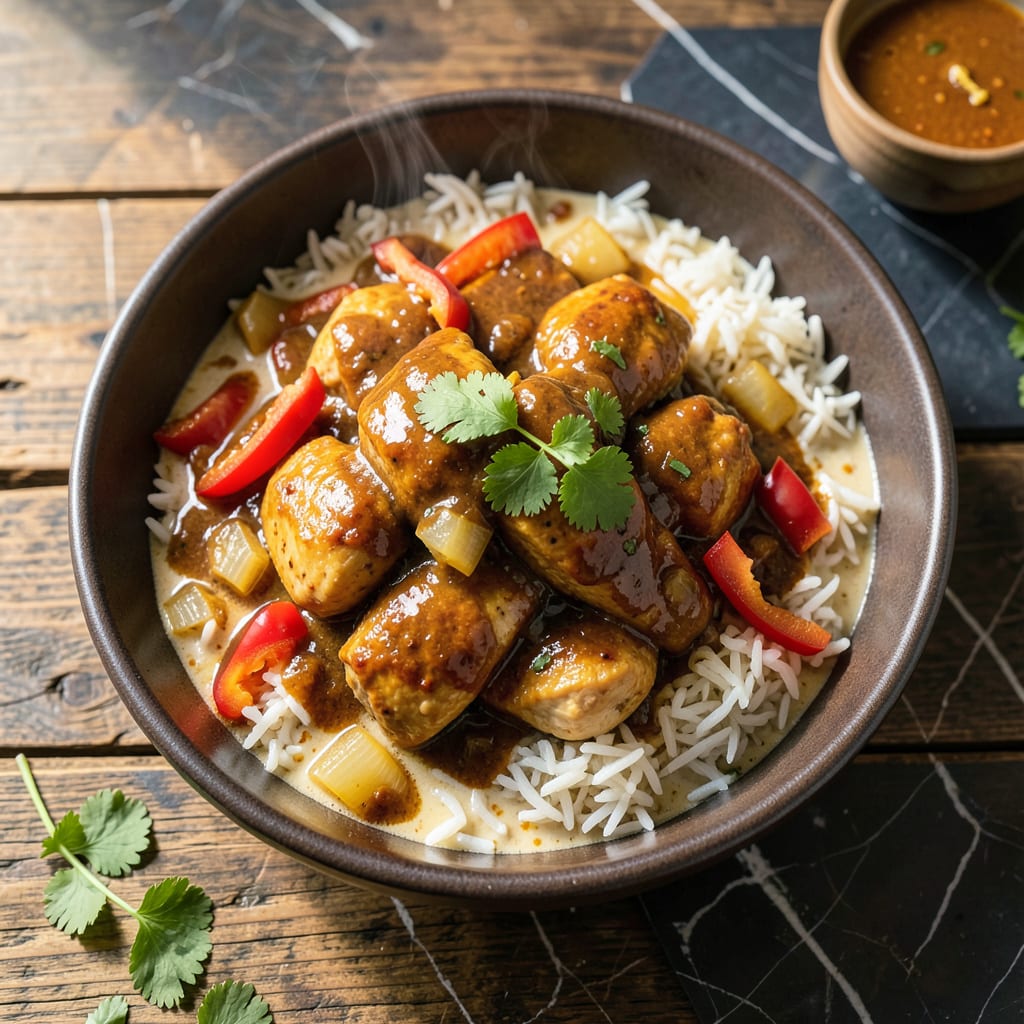
This slow cooker method brings Thai-inspired flavors to your table with minimal effort and maximum reward. The hands-off approach lets the coconut milk and spices meld together beautifully.
By the end of the cooking time, you’ll have tender chicken in a fragrant curry sauce that’s rich, creamy, and deeply satisfying. Perfect for busy weeknights.
Ingredients for Coconut Chicken Curry Slow Cooker
Thai flavors come alive with coconut milk, chicken, and spices in your slow cooker.
| Ingredient | Amount | Notes |
|---|---|---|
| Boneless Chicken Thighs 🍗 | 1 ½ lb | Skinless, trimmed of excess fat |
| Coconut Milk 🥥 | 2 cups | Full-fat for creaminess |
| Red Curry Paste 🌶️ | 3 tbsp | Thai-style preferred |
| Chicken Broth 🍲 | ½ cup | Low-sodium recommended |
| Fish Sauce 🐟 | 1 ½ tbsp | Or substitute soy sauce |
| Brown Sugar 🍚 | 1 tbsp | Light or dark variety |
| Fresh Ginger 🌿 | 1 tbsp | Peeled and minced |
| Garlic Cloves 🧄 | 4 cloves | Minced for depth of flavor |
| Yellow Onion 🧅 | 1 whole | Medium-sized, diced |
| Red Bell Pepper 🌶️ | 1 whole | Seeded and sliced |
| Lime Juice 🍈 | 2 tbsp | Freshly squeezed |
| Fresh Cilantro 🌿 | ¼ cup | Chopped, for garnish |
| Cornstarch 🌾 | 1 tbsp | Mixed with 1 tbsp water |
| Salt 🧂 | ½ tsp | Or to taste |
| Black Pepper 🌶️ | ½ tsp | Freshly ground |
[recipeingredientscaler]
The chicken is the foundation—boneless thighs stay juicy through the long cook time (breasts can dry out). Costco has great pre-trimmed thighs in bulk. For the coconut milk, Thai Kitchen or Goya full-fat cans give that rich, velvety texture. The red curry paste is non-negotiable—look for Maesri or Thai Taste brands at Asian markets or the international aisle.
No fish sauce? Soy sauce at half the amount works in a pinch. Fresh ginger is ideal, but ground ginger at one-quarter the amount saves time. The red bell pepper can be swapped for green or yellow. If you’re out of cilantro, Thai basil (if you can find it) or flat-leaf parsley adds a fresh finish. The cornstarch slurry thickens the sauce—don’t skip it unless you like a thinner curry.
Leftover curry keeps 4-5 days in the fridge and freezes beautifully for 3 months. The flavors deepen overnight, so it’s even better as leftovers. Reheat gently on the stove—microwaving can separate the coconut milk (worth the extra minute).
Why You’ll Love This Recipe
- Set and Forget: I dump everything in the slow cooker before work and come home to a house that smells like a Thai restaurant.
- Rich, Creamy Depth: The coconut milk and red curry paste blend into this velvety sauce that clings to the chicken thighs like a dream.
- Feeds the Crew: I make a double batch and it reheats beautifully for lunches—honestly, it tastes even better the next day.
- Budget-Friendly Winner: Boneless thighs stay juicy and cost way less than breasts, and a little curry paste goes a long way.
Step-by-Step Instructions for Coconut Chicken Curry Slow Cooker
This hands-off method delivers rich, aromatic curry with minimal effort.
Step 1: Sauté Aromatics for Depth of Flavor
In a skillet over medium heat, sauté the diced yellow onion, minced fresh ginger, and minced garlic cloves until softened and fragrant, about 3-4 minutes. This step builds the flavor foundation.
Add the 3 tbsp red curry paste and cook for 1 minute, stirring constantly. The paste should darken slightly and become intensely aromatic. This blooms the spices for maximum flavor in your slow cooker creation.
Step 2: Layer Ingredients in Slow Cooker
Transfer the aromatics to the slow cooker. Add the 1.5 lb boneless chicken thighs, sliced red bell pepper, 2 cups coconut milk, 0.5 cup chicken broth, 1.5 tbsp fish sauce, and 1 tbsp brown sugar. Stir gently to combine.
Season with 0.5 tsp salt and 0.5 tsp black pepper. The chicken should be mostly submerged in the liquid. This ensures even cooking and maximum flavor absorption as everything simmers together.
Step 3: Slow Cook to Tender Perfection
Cover and cook on low for 6 hours or high for 3-4 hours. The curry is ready when the chicken shreds easily with a fork and the red bell pepper is tender. The aroma will be irresistibly fragrant at this point.
I recommend checking at the 5-hour mark on low or 3-hour mark on high. If the sauce seems thin, you can leave it uncovered for the last 30 minutes to reduce slightly.
Step 4: Thicken and Finish the Sauce
Mix the 1 tbsp cornstarch with 1 tbsp water to create a slurry. Stir this into the curry during the last 30 minutes of cooking. This transforms the sauce from thin to luxuriously creamy.
The sauce should coat the back of a spoon when done. If it’s still too thin, you can repeat with another cornstarch slurry, but I find one batch perfect for this quantity.
Step 5: Add Final Bright Touches
Just before serving, stir in the 2 tbsp lime juice. This adds a crucial bright note that cuts through the richness. Taste and adjust seasoning if needed—sometimes a pinch more salt or brown sugar brings everything into balance.
Garnish with the 0.25 cup fresh cilantro and serve over steamed rice. The cilantro adds freshness that complements the deep, developed flavors from the slow cooking process.
Pro Tips For Making Coconut Chicken Curry Slow Cooker
- Brown the Chicken: Sear the chicken thighs in a pan before adding to the slow cooker—it adds a depth of flavor that skipping this step just can’t match.
- Use Full-Fat Coconut Milk: I learned this the hard way—light coconut milk makes the sauce thin and watery. Full-fat gives that rich, creamy texture you want.
- Don’t Overfill the Slow Cooker: Resist the urge to double the recipe unless you’ve got a big slow cooker. The curry needs room to simmer properly, or it’ll turn out bland.
- Add Fish Sauce Last: Stir in the fish sauce during the last 30 minutes—adding it too early can make the curry taste harsh instead of balanced and savory.
Troubleshooting coconut chicken curry slow cooker
Sauce Too Thin
If your curry seems watery, create a cornstarch slurry with 1 tbsp cornstarch and 1 tbsp cold water. Stir this into the slow cooker during the last 30 minutes of cooking. The heat will activate the cornstarch, thickening the sauce beautifully. 💡
Chicken Overcooked
Chicken thighs can dry out if cooked too long. Stick to 6 hours on low or 3-4 hours on high. If using chicken breasts instead, reduce time to 4-5 hours on low or 2-3 hours on high to prevent toughness.
Curry Too Spicy
Balance heat by stirring in 1 tbsp brown sugar or a splash of coconut milk. The sugar neutralizes capsaicin while the extra coconut milk dilutes the intensity. Taste as you go—you can always add more.
Coconut Milk Separating
If your sauce looks separated or greasy, it’s likely the coconut milk split. Simply whisk vigorously to re-emulsify. To prevent this, avoid lifting the slow cooker lid during cooking, as temperature fluctuations can cause separation.
Flavors Too Mild
Boost depth by adding 1 tbsp fish sauce or 1 tbsp red curry paste at the end. Stir well and let it cook for an additional 15-20 minutes. Fresh lime juice can also brighten and intensify the overall taste. 🌟
Vegetables Too Soft
For firmer veggies, add the sliced red bell pepper during the last 2 hours of cooking instead of at the start. This keeps them crisp-tender rather than mushy, preserving texture and color.
Nutrition Facts
Frequently Asked Questions
Can I use chicken breasts instead of thighs?
Yes, but reduce cooking time to 4-5 hours on low or 2-3 hours on high. Thighs stay juicier, while breasts can dry out if overcooked.
What if I don’t have fish sauce?
Substitute with 1 tbsp soy sauce or 1.5 tsp salt. The flavor will differ slightly, but the dish remains delicious.
Can I make this ahead and reheat?
It keeps 4-5 days in the fridge or 3 months frozen. Reheat gently on the stove to avoid coconut milk separation.
How do I adjust the spice level?
Reduce heat by adding 1 tbsp brown sugar or extra coconut milk. For more spice, stir in 1 tsp red curry paste at the end.

- Jollof Rice Sauce Recipe: West African Tomato and Spice Infusion - September 25, 2026
- Japanese Rice Soup Recipe: Umami-Rich Comfort in a Bowl - September 25, 2026
- Homemade Cream Of Rice Recipe: Silk-Smooth Breakfast in Minutes - September 25, 2026