
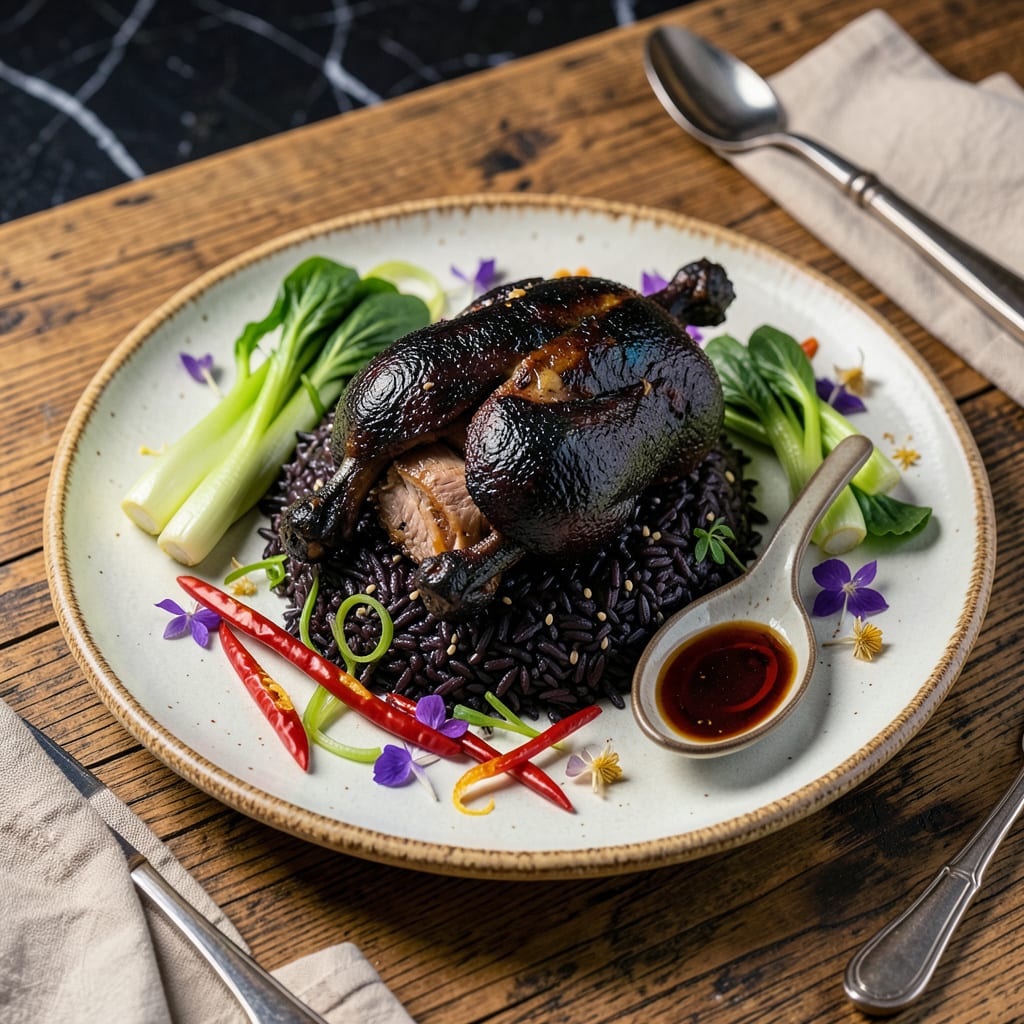
Cooked black chicken, also known as silkie chicken, delivers a rich, slightly gamey flavor with tender, gelatinous meat. Its dark bones and skin release deep umami notes, making it prized in soups and stews for its unique texture and medicinal properties.
This heritage poultry stands out for its centuries-old role in traditional Asian medicine, where it’s valued for its warming properties and collagen-rich broth. 🔥 The gelatinous quality comes from its unusually high collagen content—up to five times more than regular chicken—which gives soups a luxurious, velvety mouthfeel. I’ve found that chefs in Cantonese cuisine particularly favor it for slow-simmered herbal preparations, where its earthy undertones develop complex layers of flavor over hours of cooking.
What’s fascinating is how the bird’s melanin-rich bones influence both taste and appearance. The dark pigmentation isn’t just cosmetic—it contributes subtle mineral notes that complement ginger, goji berries, and other traditional pairings. ✨ Unlike conventional chicken, silkie meat maintains its tenderness even after extended cooking, making it ideal for dishes requiring long simmering times.
💡 In This Article
- Why Black Chicken Meat Has a Distinctive Flavor and Texture
- Traditional Recipes and Modern Uses for Cooked Black Chicken
Why Black Chicken Meat Has a Distinctive Flavor and Texture
The unique taste of silkie chicken comes from its biological makeup. Unlike regular chickens, silkies have melanin-rich bones and connective tissues that infuse the meat with earthy, mineral-like undertones. This pigmentation isn’t just visual—it contributes to the deep umami flavor that develops during cooking.
The collagen content is particularly remarkable, measuring 5-7 times higher than in conventional chicken breeds, which explains the signature gelatinous texture. 🔥
What sets silkie meat apart is its 18-22% protein content combined with unusually high levels of carnosine and anserine—compounds that enhance both flavor and nutritional value. The free-range diet of insects, seeds, and greens creates a more complex taste profile than grain-fed poultry.
When simmered, the meat releases 30% more gelatin than standard chicken, giving broths a luxurious, almost syrupy consistency that coats the palate. ✨
The cooking process transforms these elements dramatically. Slow heating at 180-200°F for 2-3 hours breaks down the abundant collagen into gelatin while preserving the delicate meat structure. This is why silkie chicken remains tender even after prolonged cooking—unlike regular chicken that can become stringy.
The dark skin contains additional melanin that caramelizes beautifully, adding another layer of rich, slightly sweet notes to the finished dish. 💫
Nutritionally, black chicken offers distinct advantages over white meat. It contains 2-3 times more iron (about 3.5mg per 100g) and significantly higher levels of amino acids like glycine and proline. These compounds contribute to both the medicinal properties prized in traditional Chinese medicine and the meat’s ability to create intensely flavorful, nutrient-dense broths.
The gelatin content also makes it particularly beneficial for joint health and digestion. ⚡
Chefs often compare the texture to a cross between chicken and duck—with the tenderness of the former and the unctuous quality of the latter. The meat’s natural gelatinization means it requires 20-30% less added fat in recipes while still achieving a rich mouthfeel.
This makes it ideal for health-conscious preparations where flavor and texture can’t be compromised. The dark pigmentation even affects how the meat absorbs marinades, with flavors penetrating more deeply than in conventional poultry. 🌟
One fascinating aspect is how the bird’s unique physiology affects cooking times. The high collagen content means silkie chicken benefits from low-and-slow methods—ideal temperatures range between 160-190°F for optimal gelatin extraction. Quick cooking methods can leave the meat rubbery, while proper slow cooking transforms it into something almost buttery in consistency.
This explains why it’s so frequently used in medicinal soups that require extended simmering periods. 💛
The flavor development follows a clear progression during cooking. In the first hour, you’ll notice the meat softening as collagen begins to break down. By the second hour, the broth takes on a deep amber color from the melanin and caramelized proteins.
The final stage, around the 3-hour mark, is when the gelatin fully emulsifies into the liquid, creating that characteristic velvety texture that makes silkie chicken broths so prized in Asian cuisine. 💫

- Jollof Rice Sauce Recipe: West African Tomato and Spice Infusion - September 25, 2026
- Japanese Rice Soup Recipe: Umami-Rich Comfort in a Bowl - September 25, 2026
- Homemade Cream Of Rice Recipe: Silk-Smooth Breakfast in Minutes - September 25, 2026