
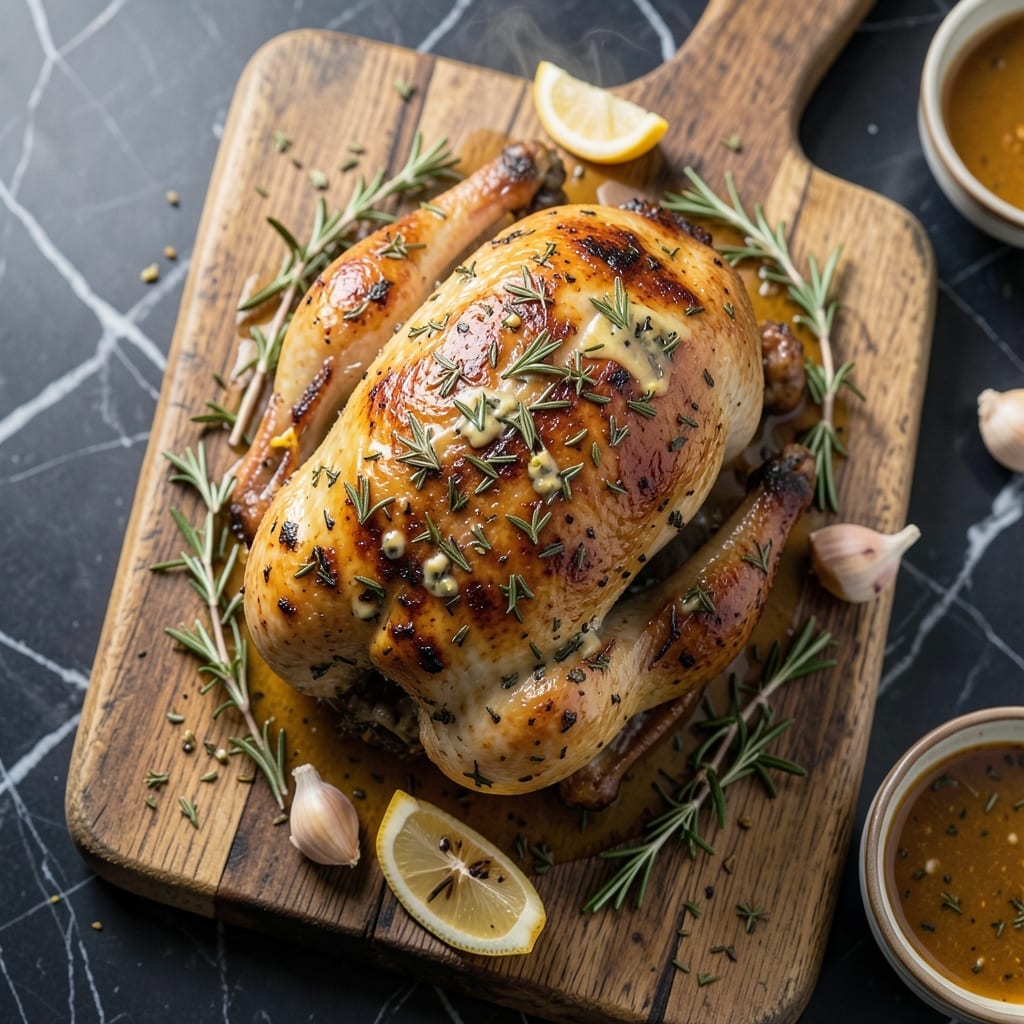
This recipe delivers crispy skin and moist meat every time. I developed it after years of experimenting with different cooking methods and seasoning blends.
The secret is a two-step cooking process: first searing the chicken at high heat to crisp the skin, then finishing in the oven to ensure even cooking without drying out the meat.
Herbs infused under the skin create layers of flavor while keeping the meat juicy. The result is perfectly golden, crispy skin with tender, moist meat underneath.
Serve with your favorite sides for a complete meal that impresses every time. This method never fails to produce outstanding results.
Ingredients for Dave’s Chicken
Quality ingredients ensure crispy skin and moist meat every single time.
| Ingredient | Amount | Notes |
|---|---|---|
| Whole Chicken 🍗 | 3 ½ lb | Pat dry thoroughly before cooking |
| Unsalted Butter 🧈 | ½ cup | Softened for herb mixture |
| Fresh Rosemary 🌿 | 2 tbsp | Finely chopped for infusion |
| Fresh Thyme 🌿 | 2 tbsp | Leaves stripped from stems |
| Garlic Cloves 🧄 | 6 cloves | Minced for herb butter |
| Kosher Salt 🧂 | 1 ½ tbsp | Diamond Crystal preferred for even seasoning |
| Freshly Ground Black Pepper 🌶️ | 1 tsp | Coarse grind for texture |
| Lemon Zest 🍋 | 1 tbsp | From 1 medium lemon |
| Olive Oil 🫒 | 2 tbsp | High smoke point for searing |
| Chicken Stock 🥣 | 1 cup | Low-sodium for controlled seasoning |
| Dijon Mustard 🟡 | 1 tbsp | For herb butter depth |
| Fresh Parsley 🌿 | ¼ cup | Chopped for garnish |
The chicken quality is non-negotiable. Air-chilled birds from Whole Foods or a trusted butcher yield superior crispiness and moisture retention. Pat the skin extremely dry—this is critical for achieving that golden, crackling finish. For herbs, organic bunches from farmers markets offer the most vibrant aromatic compounds. The butter should be European-style if possible for its higher fat content.
Substituting dried herbs? Use one-third the quantity and rehydrate in a bit of warm water first. No fresh lemon? Lime zest works in a pinch, though the flavor profile shifts slightly. For the stock, homemade is ideal, but low-sodium store-bought from Bonafide Provisions maintains quality. The Dijon can be swapped for whole-grain mustard if preferred.
Herb butter can be made 2 days ahead and refrigerated. The chicken is best cooked fresh but leftovers keep 3-4 days in the fridge. For maximum crispiness, reheat in a 400°F oven for 10-15 minutes rather than microwaving. Never store chicken in its juices—it softens the skin.
Why You’ll Love This Recipe
- One Pan Wonder: I toss the whole chicken in with butter, rosemary, and thyme, then let the oven do the work—minimal cleanup, maximum flavor.
- Herb-Butter Magic: That garlic rosemary butter under the skin? It makes the meat so juicy I don’t even need a sauce.
- Family Sunday Staple: It’s my go-to for Sunday dinner, but honestly, it’s just as good sliced into lunches all week.
- Leftovers Goldmine: Between us, the cold chicken tastes even better the next day in sandwiches or salads.
Step-by-Step Instructions for Dave’s Chicken
Here’s the method. Straightforward, tested, works every time.
Step 1: Prepare the Herb-Infused Butter
In a small bowl, combine the 0.5 cup unsalted butter, 2 tbsp fresh rosemary, 2 tbsp fresh thyme, minced 6 cloves garlic cloves, 1 tbsp lemon zest, and 1 tbsp Dijon mustard. Mix until fully incorporated and the herbs are evenly distributed throughout the butter.
The butter should be softened but not melted to properly suspend the herbs. This compound butter will infuse the chicken with aromatic flavors while keeping the meat exceptionally moist during roasting.
Step 2: Season and Prepare the Chicken
Pat the 3.5 lb whole chicken completely dry inside and out with paper towels. This is critical for achieving crispy skin. Season the cavity and exterior generously with the 1.5 tbsp kosher salt and 1 tsp freshly ground black pepper, ensuring even coverage.
Gently separate the skin from the breast and thighs, creating pockets where you’ll insert the herb butter. This step ensures the flavors penetrate deep into the meat rather than just coating the surface.
Step 3: Roast at High Temperature
Preheat your oven to 425°F. Heat the 2 tbsp olive oil in a large oven-safe skillet or roasting pan over medium-high heat. Place the chicken breast-side up in the pan and sear for 3-4 minutes until the skin begins to golden brown.
Transfer the skillet to the preheated oven and roast for 45-50 minutes, basting with pan juices halfway through. The chicken is done when the internal temperature reaches 165°F in the thickest part of the thigh and the juices run clear.
Step 4: Rest and Finish with Stock
Remove the chicken from the oven and transfer it to a cutting board. Pour the 1 cup chicken stock into the hot skillet, scraping up any browned bits to create a quick pan sauce. Let the chicken rest uncovered for 10-15 minutes before carving.
This resting period allows the juices to redistribute throughout the meat, ensuring every bite remains moist. The pan sauce will add an extra layer of flavor when served with the carved chicken.
Garnish with the 0.25 cup fresh parsley before serving. The result will be perfectly crispy skin with herb-infused, juicy meat throughout.
Pro Tips For Making Dave’S Chicken
- Start Room Temp: Pull the chicken out of the fridge 30-45 minutes before cooking—cold meat seizes up and cooks unevenly, and I learned this the hard way with dry breast meat.
- Butter Under Skin: Work your fingers under the skin to spread the butter, rosemary, and thyme directly on the meat—it crisps the skin while keeping the meat juicy.
- Don’t Overcrowd: If roasting with veggies, keep them on the sides, not under the chicken—steam from crowded pans makes the skin soggy instead of golden.
- Rest Before Carving: Give it a solid 15 minutes under foil after roasting, or all those juices you worked for will end up on the cutting board, not in the meat.
Essential Equipment for This Dish
Oven-Safe Skillet
An oven-safe skillet is non-negotiable for this recipe. I swear by my 12-inch Lodge cast iron—it sears perfectly on the stovetop and transitions seamlessly to the oven. The heavy base prevents hot spots and ensures even cooking, which is critical for that golden-brown crust. 🔥
Instant-Read Thermometer
Don’t guess—use an instant-read thermometer to hit 165°F in the thickest part of the thigh. I use a ThermoWorks Dot for its accuracy and speed. Checking the temp ensures your chicken is both safe and juicy, never overcooked.
Mixing Bowls
A medium mixing bowl makes combining the herb butter a breeze. I prefer stainless steel for its durability and ease of cleaning. The butter needs room to incorporate all the herbs and aromatics evenly.
Tongs and Basting Spoon
Use 12-inch tongs to safely flip and maneuver the chicken in the hot pan. A heat-resistant silicone basting spoon helps distribute pan juices over the bird during roasting, keeping the skin crisp and flavorful.
Cutting Board
A large, stable wooden cutting board is essential for resting and carving. I recommend maple or walnut for their gentle surface on knives. The juices will pool during resting, so a grooved board helps contain the mess.
Paper Towels
Pat the chicken extremely dry with high-quality paper towels before seasoning. This step is critical for achieving that coveted crispiness. I use Brawny Tear-A-Square for its strength and absorbency.
Nutrition Facts
Frequently Asked Questions
What’s the best way to keep the skin crispy?
Pat the chicken extremely dry before seasoning, and let it rest uncovered after cooking. Reheating in a 400°F oven for 10-15 minutes revives crispiness better than microwaving.
Can I use dried herbs instead of fresh?
Yes, but use one-third the amount and rehydrate in warm water first. Fresh herbs provide more vibrant flavor, but dried work in a pinch.
Why rest the chicken before carving?
Resting for 10-15 minutes lets juices redistribute, ensuring moist meat. Skipping this step can cause dryness as juices escape when cut.
Can I make the herb butter ahead?
The herb butter keeps for 2 days refrigerated. This also allows flavors to meld for even better results.

- Jollof Rice Sauce Recipe: West African Tomato and Spice Infusion - September 25, 2026
- Japanese Rice Soup Recipe: Umami-Rich Comfort in a Bowl - September 25, 2026
- Homemade Cream Of Rice Recipe: Silk-Smooth Breakfast in Minutes - September 25, 2026