
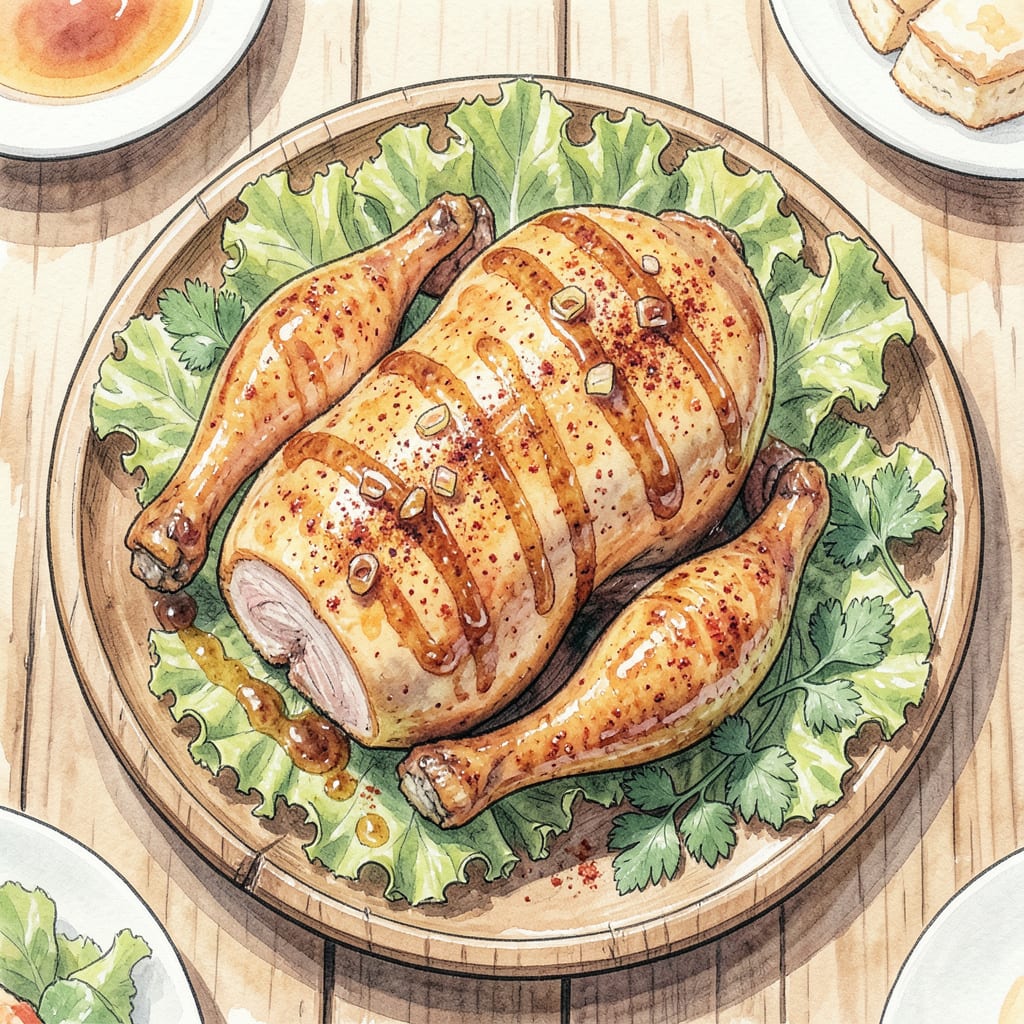
Deep frying a whole chicken yields a crispy exterior and juicy interior that’s hard to beat. The key is precise temperature control and proper preparation to achieve that perfect golden-brown crust.
By following this recipe, you’ll achieve a perfectly cooked whole chicken with a crispy outside and tender meat inside, all in under an hour. The result is a mouth-watering dish that’s sure to impress.
Ingredients for Deep Fried Whole Chicken
Crispy fried chicken starts with quality ingredients and precise prep work every time.
| Ingredient | Amount | Notes |
|---|---|---|
| Whole Chicken 🐓 | 3 ½ lb | Fresh, never frozen, 3-4 lbs |
| All-Purpose Flour 🌾 | 2 cups | For dredging chicken |
| Paprika 🌶️ | 2 tbsp | Smoked or sweet variety |
| Garlic Powder 🧄 | 1 tbsp | Not garlic salt |
| Onion Powder 🧅 | 1 tbsp | Fresh ground preferred |
| Salt 🧂 | 2 tbsp | Kosher or sea salt |
| Black Pepper 🌶️ | 1 tbsp | Freshly ground preferred |
| Buttermilk 🥛 | 2 cups | Full-fat for best results |
| Vegetable Oil 🫒 | 4 cups | For frying, about 2-3 inches deep |
| Cayenne Pepper 🔥 | ½ tsp | Optional, for some heat |
| Fresh Thyme 🌿 | 2 sprigs | For marinade flavor |
| Fresh Rosemary 🌿 | 2 sprigs | For marinade flavor |
The chicken matters here. 3-4 lb whole birds work best—any larger and the meat won’t cook through properly before the outside burns. Most grocery stores have them pre-wrapped, but if you’re feeling fancy, hit up your local butcher for a fresh kill. Look for plump, firm chickens with no funky smells. I always grab a few extra thyme and rosemary sprigs while I’m shopping—they get tossed in the buttermilk marinade for extra flavor.
No buttermilk? Milk with 1 tbsp white vinegar or plain yogurt gets you close. For the flour dredge, Penzeys has great spice blends that include paprika, garlic powder, and onion powder—saves you a step. Want more heat? Bump that cayenne to 1 tsp. The oil temperature is crucial—350°F is where you want to be. Too hot and it’s burnt outside, raw inside; too cold and it’s greasy.
Leftover fried chicken? Refrigerate within 2 hours and use within 3-4 days. Reheat in the oven at 375°F until crispy again—don’t nuke it, that’s just nasty. If you’re feeling fancy, freeze individual portions for up to 3 months—just thaw overnight in the fridge before reheating.
Step-by-Step Instructions for Deep Fried Whole Chicken
Follow these precise steps to achieve perfectly crispy exterior and juicy interior every time.
Step 1: Prepare the Brine and Marinate the Chicken
In a large bowl, combine the 2 cups of buttermilk, 2 sprigs of fresh thyme, and 2 sprigs of fresh rosemary. I like to bruise the herbs slightly with a spoon to release their oils and flavor. Add the 3.5 lb whole chicken to the marinade, making sure it’s fully submerged. If necessary, weigh it down with a plate. Cover and refrigerate for at least 8 hours or overnight.
The acidity in the buttermilk will tenderize the chicken while the herbs infuse it with aromatic flavor. I’ve found that a longer marinade time results in more tender and flavorful meat.
Step 2: Prepare the Dredge and Heat the Oil
In a large bowl, mix together the 2 cups of all-purpose flour, 2 tbsp of paprika, 1 tbsp of garlic powder, 1 tbsp of onion powder, 2 tbsp of salt, 1 tbsp of black pepper, and 0.5 tsp of cayenne pepper (if using). I like to sift the mixture through a fine-mesh sieve to ensure it’s evenly blended and free of lumps.
While the chicken is marinating, heat the 4 cups of vegetable oil in a large, deep pot or deep fryer to 375°F. Use a thermometer to monitor the temperature carefully, as it can quickly exceed the target. I prefer using a pot with at least 3-4 inches of depth to prevent oil splatters.
Step 3: Dredge and Fry the Chicken
Remove the chicken from the marinade, letting any excess liquid drip off. Dredge the chicken in the flour mixture, pressing the coating onto the bird to ensure it adheres well. I find that shaking off excess flour helps prevent the coating from becoming too thick.
Carefully lower the coated chicken into the hot oil. Fry for 8-10 minutes per pound, or until the internal temperature reaches 165°F in the thickest part of the breast and 180°F in the thigh. Maintain the oil temperature between 350°F and 375°F throughout cooking. You’ll know it’s done when the exterior is golden brown and the juices run clear.
Step 4: Rest and Serve
Using tongs or a slotted spoon, carefully remove the fried chicken from the oil and place it on a wire rack set over a rimmed baking sheet. Let it rest for 10-15 minutes before carving. This resting period allows the juices to redistribute throughout the meat, ensuring it stays juicy.
Carve the chicken into serving pieces and serve immediately. The result should be a crispy, golden-brown exterior giving way to tender, juicy meat. For the best experience, serve hot and enjoy!
Common Mistakes When Making This Recipe
Temperature Control Mistakes
One of the most critical mistakes is not maintaining the proper oil temperature. If the oil is too hot (above 375°F), the outside will burn before the inside cooks through. If it’s too cold (below 325°F), the coating will absorb too much oil, becoming greasy. I always use a thermometer to monitor the temperature closely.
Improper Dredging Techniques
Not dredging the chicken properly can lead to a poor coating.
Insufficient Resting Time
Not letting the fried chicken rest long enough can cause the juices to run out when carved. Let it rest for at least 10-15 minutes on a wire rack. This allows the juices to redistribute, keeping the meat juicy. 🔥
Overcrowding the Pot
Frying too many chickens at once can lower the oil temperature significantly, leading to uneven cooking. Fry one chicken at a time for best results. If you need to cook multiple chickens, keep the oil temperature consistent between batches.
Incorrect Internal Temperature
Not checking the internal temperature can result in undercooked or overcooked chicken. Use a meat thermometer to ensure the breast reaches 165°F and the thigh reaches 180°F. This ensures food safety and optimal tenderness.
Poor Oil Quality
Using low-quality oil or reusing oil too many times can affect the flavor and texture of your fried chicken. Use fresh vegetable oil with a high smoke point for the best results. Strain and store the oil properly after use to extend its life. 💡
Nutrition Facts
Frequently Asked Questions
What’s the best oil for deep frying a whole chicken?
Vegetable oil with a high smoke point is ideal for deep frying whole chicken. Peanut oil is also a great option as it has a mild flavor and can handle 375°F temperatures. Avoid olive oil as it has a low smoke point and can become bitter when heated.
How long does it take to deep fry a whole chicken?
Frying time depends on the chicken’s weight. As a general rule, fry for 8-10 minutes per pound. For a 3.5 lb chicken, that’s about 28-35 minutes. Always use a thermometer to check for doneness: 165°F in the breast and 180°F in the thigh.
Can I reuse the oil after deep frying a whole chicken?
Yes, you can reuse oil after deep frying, but it must be properly strained and stored. Let the oil cool completely, then strain it through a fine-mesh sieve or cheesecloth into a clean container. Store it in a cool, dark place for up to 3 months. Discard if it becomes dark or develops an off smell.
How do I prevent the coating from falling off during frying?
To keep the coating intact, make sure the chicken is dry before dredging, and press the coating onto the chicken to help it adhere. Let the coated chicken rest for 5-10 minutes before frying. This helps the coating set and stick better during frying.

- Jollof Rice Sauce Recipe: West African Tomato and Spice Infusion - September 25, 2026
- Japanese Rice Soup Recipe: Umami-Rich Comfort in a Bowl - September 25, 2026
- Homemade Cream Of Rice Recipe: Silk-Smooth Breakfast in Minutes - September 25, 2026