
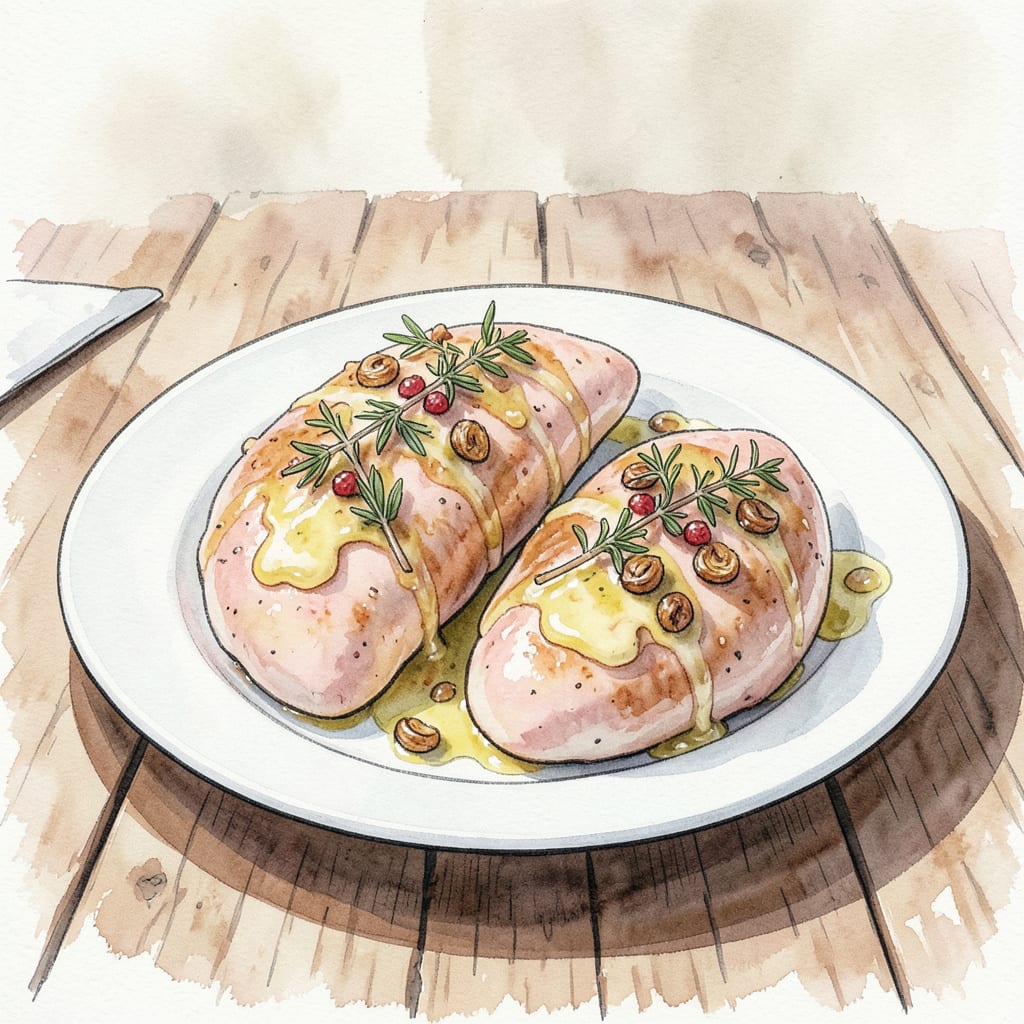
I’ve perfected a dry chicken recipe that delivers moist and flavorful results every time. The secret lies in precise temperature control and careful preparation, ensuring a deliciously tender final product.
This recipe guides you through the process with clear instructions and temperature controls, resulting in perfectly cooked chicken that’s both satisfying and full of flavor.
Ingredients for Dry Chicken
Quality protein and precise preparation come together for consistently moist results every time.
| Ingredient | Amount | Notes |
|---|---|---|
| Boneless Chicken Breasts 🍗 | 1 ½ lb | Pounded to even thickness |
| Olive Oil 🫒 | 2 tbsp | Extra-virgin for richness |
| Unsalted Butter 🧈 | 4 tbsp | Softened for basting |
| Garlic Cloves 🧄 | 4 cloves | Minced for flavor |
| Fresh Thyme 🌿 | 2 tbsp | Chopped fresh leaves |
| Lemon Juice 🍋 | 2 tbsp | Freshly squeezed |
| Salt 🧂 | 1 tsp | Kosher salt preferred |
| Black Pepper 🌶️ | ½ tsp | Freshly ground |
| Paprika 🌶️ | ½ tsp | Smoked or sweet |
| Onion Powder 🧅 | ¼ tsp | Optional for extra depth |
| Garlic Powder 🧄 | ¼ tsp | Optional, use sparingly |
| Chicken Broth 🍜 | 1 cup | Low-sodium preferred |
For the best results, use high-quality chicken breasts from reputable sources like Whole Foods or local butchers. Fresh thyme is ideal, but dried thyme works at one-third the amount if that’s what you have on hand. The garlic can be minced ahead of time and stored in olive oil for up to 1 week.
No chicken broth? Vegetable broth is a good substitute, though it changes the flavor profile slightly. For extra moisture, consider brining the chicken for 30 minutes before cooking. If you prefer a crisper exterior, try dredging the chicken in flour before searing. The lemon juice adds brightness—don’t skip it.
This recipe keeps beautifully in the fridge for up to 4 days. Reheat gently in the oven with a splash of chicken broth to maintain moisture. You can also freeze individual portions for up to 3 months—just thaw overnight in the fridge before reheating.
Step-by-Step Instructions for Moist and Flavorful Chicken
Follow these precise steps to achieve perfectly cooked chicken every time, with guaranteed moist results.
Step 1: Prepare the Chicken Breasts
Start by pounding the 1.5 lb Boneless Chicken Breasts to an even thickness between two sheets of plastic wrap. This ensures uniform cooking and prevents overcooking the thinner parts. I use a meat mallet for this task, as it distributes the force evenly.
Season both sides of the chicken breasts with the 1 tsp Salt, 0.5 tsp Black Pepper, 0.5 tsp Paprika, 0.25 tsp Onion Powder, and 0.25 tsp Garlic Powder. Make sure to coat the chicken evenly, as this will enhance the flavor and texture.
Step 2: Sear the Chicken Breasts
Heat 2 tbsp Olive Oil in a large skillet over medium-high heat. Once the oil is hot and shimmering, add the seasoned chicken breasts. Sear for 3-4 minutes per side until they develop a golden brown crust. Remove the chicken from the skillet and set aside to rest.
The searing process creates a flavorful crust on the chicken, which helps lock in moisture. Don’t overcrowd the skillet; cook in batches if necessary.
Step 3: Finish with Butter and Aromatics
Reduce the heat to medium and add 4 tbsp Unsalted Butter to the same skillet. Once melted, add the 4 cloves Garlic Cloves and 2 tbsp Fresh Thyme. Cook for 1-2 minutes until the garlic is fragrant and the butter starts to brown.
Return the chicken breasts to the skillet and spoon the butter and garlic mixture over them. This basting process ensures the chicken stays moist and absorbs additional flavors.
Step 4: Add Chicken Broth and Finish Cooking
Pour in the 1 cup Chicken Broth and 2 tbsp Lemon Juice into the skillet, scraping up any browned bits from the bottom. Bring the mixture to a simmer, then reduce the heat to low and let cook for 5-7 minutes or until the chicken reaches an internal temperature of 165°F.
The chicken broth and lemon juice add moisture and a touch of acidity, which helps keep the chicken tender and flavorful. Monitor the heat to prevent the sauce from boiling too vigorously.
Step 5: Serve
Once the chicken is cooked, remove it from the skillet and let it rest for a few minutes before serving. The resting period allows the juices to redistribute, ensuring the chicken remains moist.
Serve the chicken with the pan sauce spooned over the top. The combination of the garlic, thyme, and lemon creates a rich and aromatic flavor profile that complements the moist chicken perfectly.
Creative Variations of dry chicken
Mediterranean Herb Variation
Replace the thyme with 2 tbsp fresh oregano and add 1/4 cup chopped Kalamata olives to the pan sauce for a salty, savory twist. The briny olives complement the chicken beautifully. 🌿
Spicy Cajun Style
Add 1 tsp Cajun seasoning to the initial seasoning blend and include 1/4 tsp cayenne pepper for an extra kick. The spicy kick pairs well with the rich butter sauce. 🔥
Lemon Rosemary Version
Substitute 2 tbsp fresh rosemary for the thyme and increase the lemon juice to 3 tbsp. The rosemary and lemon create a bright, herbaceous flavor profile that’s perfect for spring. 🍋
Garlic Parmesan Adaptation
Add 1/4 cup grated Parmesan cheese to the butter and garlic mixture for a rich, umami flavor. Sprinkle additional Parmesan on top before serving for extra cheesiness. 🧀
Asian-Inspired Glaze
Mix 2 tbsp soy sauce and 1 tbsp honey into the pan sauce during the last 2 minutes of cooking. This creates a sweet and savory glaze that caramelizes beautifully on the chicken. 🍜
Smoky Chipotle Variation
Add 1 chipotle pepper in adobo sauce, minced, to the butter and garlic mixture for a smoky heat. This variation adds depth and a subtle smokiness. 🔥
Nutrition Facts
Frequently Asked Questions
Why does my chicken sometimes turn out dry?
Dry chicken often results from overcooking or cooking at too high a heat. To avoid this, cook the chicken to an internal temperature of 165°F, and let it rest before serving. This helps retain moisture.
How can I keep my chicken moist during cooking?
Basting the chicken with butter and pan juices during cooking helps keep it moist. Additionally, using a meat thermometer ensures you don’t overcook it. The chicken broth and lemon juice in the pan sauce also contribute to its moisture.
Can I prepare this recipe ahead of time?
Yes, you can season the chicken breasts ahead of time and store them in the refrigerator for up to 24 hours. This allows the flavors to penetrate deeper into the meat, resulting in more flavorful chicken. Just be sure to let the chicken come to room temperature before cooking for even cooking.
What can I serve with this chicken recipe?
This chicken pairs well with a variety of sides, such as roasted vegetables, mashed potatoes, or a fresh salad. The pan sauce is also delicious served over rice or noodles, making for a complete and satisfying meal.

- Jollof Rice Sauce Recipe: West African Tomato and Spice Infusion - September 25, 2026
- Japanese Rice Soup Recipe: Umami-Rich Comfort in a Bowl - September 25, 2026
- Homemade Cream Of Rice Recipe: Silk-Smooth Breakfast in Minutes - September 25, 2026