
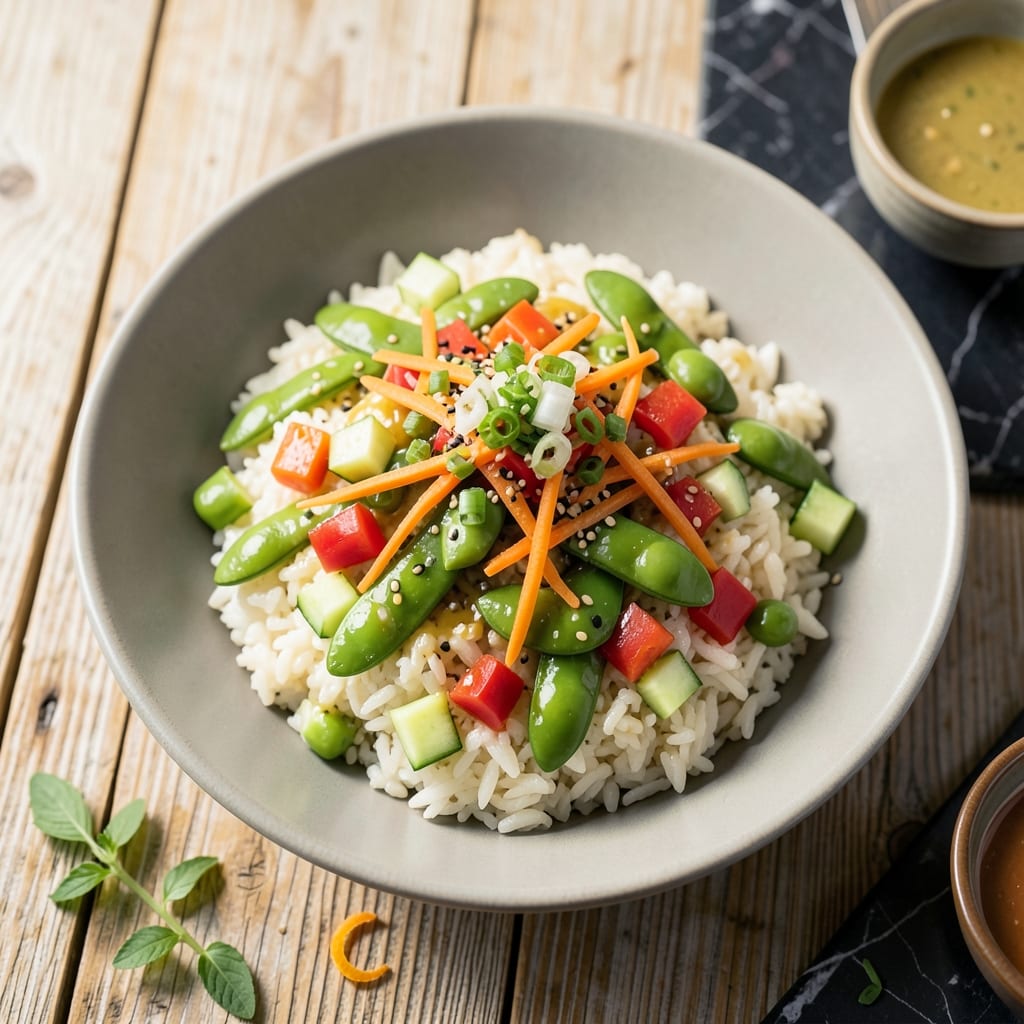
This vibrant fusion bowl combines the freshness of edamame with the heartiness of rice, creating a protein-packed meal that satisfies.
With its simple preparation and clean flavors, this dish delivers a balance of textures and nutrients in every bite. The Asian-inspired dressing ties everything together perfectly.
Ingredients for Edamame Rice Salad
Fresh vegetables, protein-rich edamame, and fragrant rice create this satisfying fusion dish.
| Ingredient | Amount | Notes |
|---|---|---|
| Sushi Rice 🍚 | 2 cups | Short-grain, rinsed thoroughly |
| Edamame 🫛 | 2 cups | Shelled, cooked, cooled |
| Red Bell Pepper 🌶️ | 1 whole | Diced into small pieces |
| Carrots 🥕 | 2 whole | Julienned or grated |
| Cucumber 🥒 | 1 whole | Seeded, small diced |
| Green Onions 🧅 | 4 whole | Thinly sliced, white and green parts |
| Fresh Cilantro 🌿 | ½ cup | Chopped, packed |
| Rice Vinegar 🍯 | 3 tbsp | Unseasoned variety preferred |
| Sesame Oil 🫒 | 1 tbsp | Toasted for depth of flavor |
| Soy Sauce 🥢 | 2 tbsp | Low-sodium or tamari |
| Maple Syrup 🍁 | 1 tbsp | Or agave for sweetness |
| Fresh Ginger Root 🌿 | 1 tbsp | Peeled, finely grated |
| Garlic Cloves 🧄 | 2 cloves | Minced or pressed |
| Sesame Seeds 🌰 | 2 tbsp | Toasted for garnish |
| Lime 🍈 | 1 whole | Zested and juiced |
The rice sets the foundation, so short-grain sushi rice is non-negotiable for the right texture. Edamame should be bright green and plump—look for it in the freezer section at Whole Foods or Trader Joe’s. Fresh is fine too (in pods) if you don’t mind shelling. For the ginger and garlic, organic produce often has more punch, but conventional works in a pinch.
No sushi rice? Jasmine rice at 1.5 times the amount works, though the texture will differ. Swap edamame for chickpeas or shelled peas if needed. The maple syrup can be agave or coconut sugar—whatever sweetener you prefer. For the soy sauce, tamari is gluten-free and has a deeper flavor. No fresh ginger? Ground ginger at one-quarter the amount will do.
This salad keeps beautifully for 3-4 days in the fridge. Store in an airtight container to prevent drying. The flavors meld and improve over time, so it’s ideal for meal prep. Do not freeze—the texture of the veggies suffers.
Why You’ll Love This Recipe
- I’ll be real: a bag of sushi rice and frozen edamame stretch farther than most salads I make.
- No-Cook Chopping: I just dice the cucumber, bell pepper, and carrots—no stove required until the rice cooks.
- Fresh Crunch: The edamame and veggies stay crisp against the sticky sushi rice, and that pop in every bite? Ridiculously good.
- Lunchbox Hero: Honestly, it’s my Monday meal prep—packs perfectly and tastes even better the next day.
Step-by-Step Instructions for Edamame Rice Salad
Master this layered process for a vibrant dish with perfect texture and balanced Asian-inspired flavors.
Step 1: Cook and Cool the Sushi Rice Base
Rinse the 2 cups Sushi Rice thoroughly under cold water until the water runs clear to remove excess starch. This prevents a gummy texture in your final dish. Cook the rice according to package instructions, then spread it on a baking sheet to cool completely.
The rice should be at room temperature before assembling—warm rice will cause the edamame and vegetables to wilt. I like to fluff it with a fork while cooling to break up any clumps and ensure even air circulation.
This cooling step is crucial for maintaining the crisp texture of your vegetables and the freshness of your herbs. The rice grains should be separate and slightly firm when properly cooled.
Step 2: Prepare the Vegetable Components
While the rice cools, dice the 1 whole Red Bell Pepper into small, uniform pieces for consistent texture. Julienne or grate the 2 whole Carrots for visual appeal and even distribution. Seed and small-dice the 1 whole Cucumber to prevent excess moisture.
Thinly slice the 4 whole Green Onions, using both white and green parts for a balance of sharp and mild onion flavor. Chop the 0.5 cup Fresh Cilantro finely, packing it down to measure accurately. The vegetables should be cut to similar sizes for a professional presentation.
Combine all prepared vegetables in a large bowl. This allows the flavors to begin mingling while you prepare the dressing. The colors should be vibrant and distinct, creating an appealing visual contrast.
Step 3: Create the Asian-Inspired Dressing
In a small bowl, whisk together the 3 tbsp Rice Vinegar, 1 tbsp Sesame Oil, 2 tbsp Soy Sauce, 1 tbsp Maple Syrup, 1 tbsp Fresh Ginger Root (peeled and finely grated), and the minced 2 cloves Garlic Cloves. The dressing should be well emulsified with no separation.
Zest and juice the 1 whole Lime, adding both to the dressing mixture. The lime zest adds aromatic brightness while the juice provides acidity to balance the richness of the sesame oil. Taste and adjust the balance if needed, though the measurements should create perfect harmony.
This dressing serves as the flavor foundation for your salad, so ensure all ingredients are fully incorporated. The mixture should be smooth and slightly thick from the grated ginger.
Step 4: Assemble and Marinate the Salad
In your large bowl with the vegetables, add the cooled 2 cups Sushi Rice and the 2 cups Edamame. Pour the prepared dressing over the mixture. Using a large spoon or spatula, gently fold everything together until evenly coated.
The rice should be thoroughly distributed among the vegetables and edamame, with no dry spots. Be careful not to overmix, which could break the rice grains or bruise the vegetables. The salad should look glossy from the dressing.
Let the mixture marinate at room temperature for 15-20 minutes to allow the flavors to develop fully. This resting time lets the rice absorb some of the dressing while the vegetables soften slightly.
Step 5: Garnish and Serve
Just before serving, sprinkle the 2 tbsp Sesame Seeds over the salad. The seeds should be toasted for maximum nutty flavor and aroma. Gently fold them in or leave them on top for visual appeal.
Give the salad one final toss to redistribute any settled dressing. The colors should remain vibrant, with the green edamame and herbs standing out against the white rice and colorful vegetables. Serve immediately for the best texture and flavor.
Each serving should have a balanced mix of rice, vegetables, and dressing. The sesame seeds add a final crunch that complements the soft rice and crisp vegetables perfectly.
Pro Tips For Making Edamame Rice Salad
- Rinse the rice: Use cold water to rinse the sushi rice until it runs clear—this removes excess starch so your salad stays light and fluffy instead of gummy.
- Blanch the edamame: Drop shelled edamame into boiling salted water for 2 minutes, then shock in ice water to lock in that bright green color and crisp texture.
- Salt while warm: Season the rice with a pinch of salt while it’s still warm—it absorbs better and means you won’t have to over-salt the salad later.
- Dice evenly: Cut the red bell pepper, carrots, and cucumber into uniform, small cubes so every bite has a balanced mix of textures and flavors.
Storing and Reheating edamame rice salad
Refrigerator Storage
Let your salad cool completely before storing. I transfer it to airtight glass containers—like Pyrex—to keep it fresh. It stays perfect at 40°F or below for 3-4 days, and the flavors actually deepen over time. ❄️
Freezing Not Recommended
Avoid freezing this dish. The edamame and cucumbers turn mushy when thawed, and the rice loses its texture. If you must freeze, portion it without cucumbers and add fresh ones after thawing for better results.
Reheating Instructions
This salad is best served cold or at room temperature. For a warm version, microwave individual portions covered with a damp paper towel for 30-45 seconds. Stir gently and repeat if needed, but avoid overheating to preserve the veggies’ crispness. 🔥
Reviving Leftovers
If the salad seems dry after storage, drizzle with 1-2 tsp of rice vinegar or a splash of lime juice. Toss gently to redistribute the dressing and refresh the flavors. A sprinkle of fresh cilantro or sesame seeds also brightens it up.
Meal Prep Tips
Store the dressing separately if prepping ahead. Combine just before serving to keep the rice and veggies at peak texture. I like to pack the salad in mason jars with dressing at the bottom for easy grab-and-go meals.
Nutrition Facts
Frequently Asked Questions
Can I use frozen edamame instead of fresh?
Thaw 2 cups frozen edamame in cold water, then drain well before using. Frozen works just as well as fresh for this recipe.
What can I substitute for sushi rice?
Use 1.5 cups jasmine rice or basmati rice as alternatives. The texture will differ slightly but the flavor will still shine.
How do I keep the salad from getting soggy?
Cool the rice completely before mixing. Store leftovers in an airtight container for up to 3-4 days.
Can I make this ahead for meal prep?
Yes! Keep the dressing separate until ready to serve. It stays fresh for 3-4 days in the fridge.

- Jollof Rice Sauce Recipe: West African Tomato and Spice Infusion - September 25, 2026
- Japanese Rice Soup Recipe: Umami-Rich Comfort in a Bowl - September 25, 2026
- Homemade Cream Of Rice Recipe: Silk-Smooth Breakfast in Minutes - September 25, 2026