
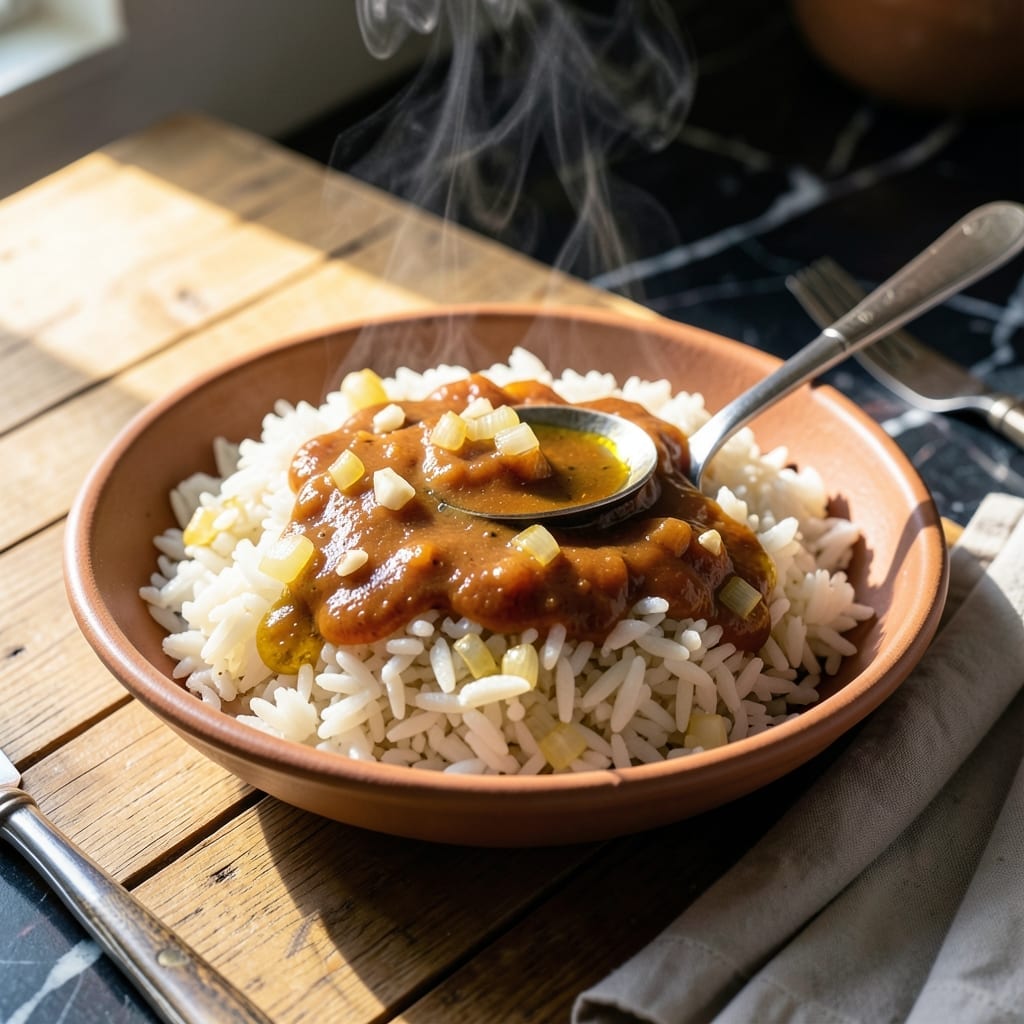
This traditional Central American rice dish brings authentic flavors to your table with simple, time-honored techniques. The recipe captures the essence of El Salvadoran home cooking through perfectly seasoned grains.
Each bite delivers a balance of savory and aromatic notes, using ingredients that stay true to its cultural roots. The method ensures fluffy, well-seasoned rice that pairs beautifully with any main course.
Ingredients for El Salvador Rice
Long-grain rice, fresh vegetables, and aromatic spices create this authentic El Salvadoran dish.
| Ingredient | Amount | Notes |
|---|---|---|
| Long-Grain White Rice 🍚 | 2 cups | Rinsed until water runs clear |
| Vegetable Oil 🫒 | 3 tbsp | Or substitute corn oil |
| Yellow Onion 🧅 | 1 whole | Finely diced for even cooking |
| Garlic Cloves 🧄 | 4 cloves | Minced to release full flavor |
| Chicken Stock 🍲 | 3 cups | Low-sodium preferred for control |
| Tomato Sauce 🍅 | ½ cup | Plain, no added seasonings |
| Green Bell Pepper 🌶️ | 1 whole | Seeds removed, finely diced |
| Ground Cumin 🌿 | 1 tsp | Toasted lightly for depth |
| Dried Oregano 🍃 | 1 tsp | Mexican oregano if available |
| Bay Leaf 🍃 | 1 whole | Removed before serving |
| Kosher Salt 🧂 | 1 ½ tsp | Adjust to taste at end |
| Ground Black Pepper 🌶️ | ½ tsp | Freshly ground preferred |
| Fresh Cilantro 🌿 | ¼ cup | Chopped, for garnish |
| Carrots 🥕 | 2 whole | Peeled and finely diced |
The rice quality is paramount for authentic texture. Long-grain white rice like Carolina or Mahatma delivers the light, separate grains characteristic of Salvadoran home cooking. Look for vibrant, firm vegetables at your local market—Latin grocers often carry the freshest produce for dishes like this. The chicken stock should be low-sodium to allow precise seasoning control.
Need to make it vegetarian? Vegetable stock works perfectly in place of chicken. No fresh cilantro? Parsley adds color without altering the flavor profile significantly. The tomato sauce can be homemade or canned—just ensure it’s unseasoned. For extra depth, toast the cumin and oregano in a dry pan for 30 seconds before adding to the pot.
Leftovers keep well in the fridge for 3-4 days and actually improve as flavors meld. Store in an airtight container. For longer storage, freeze in portions for up to 3 months. Reheat with a splash of water to restore moisture and fluff with a fork before serving.
Why You’ll Love This Recipe
- One Pot Wonder: I just dump the rice, garlic, and onion into the pot with chicken stock and let it do its thing—no stirring, no fuss.
- Savory Comfort: That golden, slightly crispy bottom layer from the oil and stock? It’s the best part of every bite.
- Feeds Everyone: Between us, this rice pairs with anything from grilled chicken to black beans, so I make it for Sunday dinner and lunch the next day.
- Pocket Friendly: Long-grain white rice and a few pantry staples stretch into a meal that costs pennies per serving.
Step-by-Step Instructions for El Salvador Rice
Master the traditional technique for consistently perfect results with authentic Central American flavor.
Step 1: Sauté Aromatics to Build Flavor Foundation
Heat the 3 tbsp Vegetable Oil in a large pot over medium heat. Add the 1 whole Yellow Onion (finely diced) and cook for 4-5 minutes until translucent and beginning to soften. This creates the aromatic base essential to the dish.
Add the 4 cloves Garlic Cloves (minced) and cook for 30 seconds until fragrant. Stir in the 1 whole Green Bell Pepper (finely diced) and 2 whole Carrots (peeled and finely diced), cooking for an additional 3-4 minutes until the vegetables soften slightly. The mixture should be fragrant and the edges of the vegetables just beginning to turn golden.
Step 2: Toast Rice and Incorporate Spices
Add the 2 cups Long-Grain White Rice (rinsed until water runs clear) to the pot and stir to coat the grains in the oil and aromatics. Toast the rice for 2-3 minutes until it becomes slightly opaque and nutty in aroma.
Sprinkle in the 1 tsp Ground Cumin, 1 tsp Dried Oregano, 1.5 tsp Kosher Salt, and 0.5 tsp Ground Black Pepper. Stir constantly for 30 seconds to bloom the spices and evenly distribute them through the rice and vegetables.
Step 3: Simmer with Liquids for Perfect Texture
Pour in the 3 cups Chicken Stock and 0.5 cup Tomato Sauce, stirring to combine. Add the 1 whole Bay Leaf to the pot. Bring the mixture to a boil, then reduce the heat to low, cover, and simmer gently for 18-20 minutes.
Resist the urge to stir during cooking. You’ll know it’s ready when the liquid is absorbed and the rice is tender with no hard center. If the top looks dry before the rice is done, add ¼ cup of water and continue cooking.
Step 4: Rest and Finish with Fresh Herbs
Remove the pot from heat and let it sit covered for 5 minutes. This resting period allows the steam to finish cooking the rice evenly and prevents it from becoming mushy.
Discard the Bay Leaf, then fluff the rice gently with a fork. Stir in the 0.25 cup Fresh Cilantro (chopped) just before serving to preserve its bright, fresh flavor. The rice should be light, separate easily, and carry the vibrant colors and aromas of the vegetables and spices throughout.
Pro Tips For Making El Salvador Rice
- Toast the Rice: Cook the rice in oil for 2-3 minutes until lightly golden before adding liquids—Sounds weird, but it works: this adds a nutty depth that plain steamed rice lacks.
- Use Warm Stock: Heat your chicken stock before adding it to the rice. I learned this the hard way—cold stock slows the cooking and can leave you with uneven texture.
- Skip the Rinse: Resist the urge to rinse the long-grain rice—you want the starch to help create that slightly sticky, cohesive texture Salvadoran rice is known for.
- Let It Rest: Once cooked, cover and let it sit off heat for 10 minutes. After burning three batches, I finally figured out this step keeps the grains separate and fluffy instead of mushy.
Common Mistakes When Making el salvador rice
Overcooking the Rice
Never skip the resting step—this dish needs 5 minutes off heat to steam perfectly. Stirring during cooking breaks the grains, turning your rice mushy instead of fluffy. I learned this the hard way my first few attempts. 💡
Skipping the Rinse
Always rinse your 2 cups Long-Grain White Rice until water runs clear. This removes excess starch that would otherwise make your rice gummy. A fine-mesh strainer works best for this step.
Incorrect Heat Levels
Keep the heat at medium for sautéing and low for simmering. Too high heat burns the aromatics, while too low heat undercooks the rice. I use a heavy-bottomed pot for even heat distribution.
Wrong Liquid Ratio
Stick to 3 cups Chicken Stock and 0.5 cup Tomato Sauce for 2 cups rice. Adding extra liquid makes it soupy, while too little leaves it undercooked. If liquid absorbs early, add only ¼ cup water at a time.
Ignoring the Bay Leaf
Always remove the 1 whole Bay Leaf before serving. Leaving it in can be a choking hazard and overpowers the dish. I tie mine to the pot handle with kitchen twine for easy removal.
Also, use fresh cilantro added just before serving—never cook it, as heat turns it bitter. ✨
Nutrition Facts
Frequently Asked Questions
Can I substitute brown rice for white?
Yes, but adjust the liquid to 3.5 cups and increase simmering time to 40-45 minutes. Brown rice needs more water and time to soften. The texture will be chewier but still flavorful.
Why rinse the rice before cooking?
Rinsing removes excess starch to prevent gummy rice and ensures separate, fluffy grains. Use cold water until it runs clear, about 3-4 washes. This step is non-negotiable for authentic texture.
How do I keep it from sticking to the pot?
Use a heavy-bottomed pot and avoid stirring during cooking. If concerned, add 1 tbsp oil to the stock. The rice will release naturally when done.
Can I make this ahead of time?
Cook and store in the fridge for up to 3 days. Reheat with 2 tbsp water per cup and fluff with a fork to restore moisture.

- Fresh Turmeric Rice Recipe: Golden Grains with Earthy Warmth - October 7, 2026
- French Onion Brown Rice Recipe: Umami-Rich Grains With Caramelized Depth - October 7, 2026
- Rice Noodle Soup Recipe: Aromatic Broth with Silky Strands - October 7, 2026