
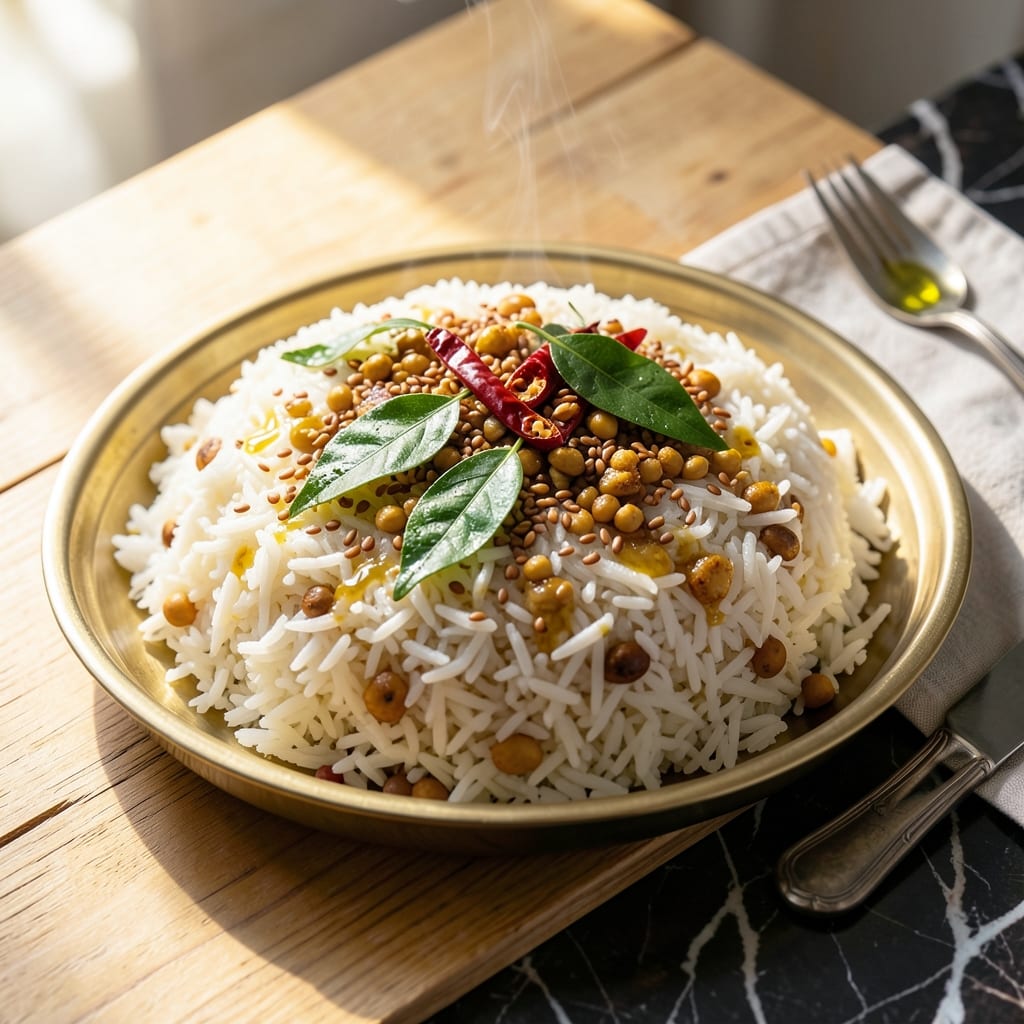
This traditional South Indian dish brings the nutty richness of sesame seeds to everyday meals. The authentic preparation method highlights the cultural significance of ellu in Tamil cuisine.
With simple ingredients and time-honored techniques, you’ll create a savory rice dish that’s been perfected through generations. The process respects the classic approach while ensuring perfect results.
Ingredients for Ellu Rice Recipe in Tamil
Simple pantry staples transform into this aromatic traditional South Indian dish with sesame seeds at its heart.
| Ingredient | Amount | Notes |
|---|---|---|
| Basmati Rice 🍚 | 2 cups | Rinsed and drained thoroughly |
| Sesame Seeds 🌰 | ½ cup | White or black variety |
| Urad Dal 🌾 | 2 tbsp | Split black gram, rinsed |
| Chana Dal 🌾 | 2 tbsp | Split chickpeas, rinsed |
| Dry Red Chilies 🌶️ | 4 whole | Broken into pieces |
| Curry Leaves 🍃 | 15 pieces | Fresh or dried |
| Asafoetida 🌿 | ¼ tsp | Hing, for tempering |
| Mustard Seeds 🌿 | 1 tsp | Black mustard seeds preferred |
| Turmeric Powder 🌶️ | ½ tsp | For color and earthiness |
| Salt 🧂 | 1 ½ tsp | Adjust to taste preference |
| Coconut Oil 🥥 | 3 tbsp | Or substitute ghee for richness |
| Peanuts 🥜 | ¼ cup | Raw or roasted, optional |
| Green Chilies 🌶️ | 2 whole | Slit lengthwise for heat |
| Fresh Cilantro 🌿 | ¼ cup | Chopped, for garnish |
The sesame seeds are non-negotiable for authenticity—Indian grocery stores like Patel Brothers or H-Mart carry the best quality. Look for plump, off-white seeds (not the tiny ones sold in bulk bins). The dal varieties matter too: urad dal provides the nutty base, while chana dal adds texture. For the coconut oil, Organic cold-pressed gives the purest flavor (worth the splurge for this dish).
No urad dal? Moong dal works at a one-to-one ratio. Short on curry leaves? Dried leaves at half the amount are acceptable (rehydrate in warm water first). The asafoetida can be skipped if unavailable, but add an extra pinch of garlic powder for depth. For heat control, remove seeds from the red chilies. Peanuts are traditional but optional—cashews add richness if you’re feeling fancy.
Store the dal and sesame seeds in airtight containers in a cool, dark place—they’ll keep for 6-12 months. Fresh curry leaves stay vibrant in the fridge for 2 weeks wrapped in a paper towel. This dish tastes even better the next day as the flavors meld. Always rinse the rice until the water runs clear to remove excess starch.
Why You’ll Love This Recipe
- One Pot Wonder: I just toss the basmati rice with toasted sesame, urad, and chana dal—no fancy steps, no extra pans.
- Nutty Crunch: The sesame seeds and dals roast to this warm, earthy flavor that makes plain rice taste like a feast.
- Festival Ready: I make this for every Tamil celebration, but honestly, it’s my lazy Sunday lunch too.
- Stretches Far: Leftovers taste even better the next day, and it feeds my whole family without breaking the bank.
Step-by-Step Instructions for Ellu Rice
This traditional method delivers authentic South Indian flavors with perfect texture and aroma.
Step 1: Prepare and Cook the Rice
Rinse the 2 cups Basmati Rice thoroughly until the water runs clear, then drain completely. This removes excess starch and prevents the grains from becoming gummy during cooking.
Combine the rice with 4 cups water and 0.5 tsp Turmeric Powder in a heavy-bottomed pot. Bring to a boil over medium-high heat, then reduce to low, cover, and simmer for 15 minutes until the water is absorbed and the grains are tender yet distinct. Turn off the heat and let it sit covered for 5 minutes.
Step 2: Temper the Spices
Heat 3 tbsp Coconut Oil in a tempering pan over medium heat. Add 1 tsp Mustard Seeds and wait for them to pop, which takes about 30-45 seconds. Immediately add 2 tbsp Urad Dal, 2 tbsp Chana Dal, 0.25 tsp Asafoetida, 4 whole Dry Red Chilies, 15 pieces Curry Leaves, and 2 whole Green Chilies.
Sauté until the dals turn light golden brown and release a nutty aroma, about 3-4 minutes. Stir frequently to prevent burning. Add 0.25 cup Peanuts and cook for another 2 minutes until they turn slightly crisp.
Step 3: Toast the Sesame Seeds
In a dry pan over low heat, toast the 0.5 cup Sesame Seeds for 2-3 minutes until they turn fragrant and lightly golden. Shake the pan occasionally to ensure even toasting. Be careful not to over-brown them, as they can turn bitter quickly.
Once toasted, remove from heat and set aside. The sesame seeds should retain a subtle crunch and a warm, nutty flavor that will complement the dish beautifully.
Step 4: Combine and Season
Transfer the cooked rice to a large mixing bowl. Drizzle the tempered spices and coconut oil mixture over the rice, ensuring even distribution. Sprinkle in the toasted sesame seeds and 1.5 tsp Salt.
Gently fold everything together with a spatula, taking care not to break the rice grains. The goal is to coat each grain with the aromatic tempering and sesame seeds while maintaining the integrity of the rice.
Step 5: Garnish and Serve
Allow the rice to sit for 5 minutes to let the flavors meld together. Just before serving, garnish with 0.25 cup Fresh Cilantro, chopped finely for a burst of freshness.
Serve warm, ensuring each portion has an even distribution of sesame seeds, peanuts, and tempered spices. This dish pairs wonderfully with yogurt or a simple vegetable side.
Pro Tips For Making Ellu Rice Recipe In Tamil
- Toast the sesame: Dry-roast the sesame seeds on medium-low heat for 2-3 minutes until golden—any darker and they’ll turn bitter. I learned this the hard way after burning two batches.
- Soak the rice: Give the basmati rice a 20-minute soak in cold water before cooking; it swells just enough to stay separate and fluffy, not mushy.
- Temper the dals: Fry the urad dal and chana dal in oil until they’re a light golden brown, not deep brown, or they’ll overpower the sesame flavor.
- Crush the chilies: Lightly crush the dry red chilies before adding them to the tempering—it releases the heat more evenly without making the dish overly spicy.
Health Benefits of This Dish
Rich in Healthy Fats
Sesame seeds are packed with monounsaturated and polyunsaturated fats, which support heart health. A 0.5 cup serving provides about 14g of healthy fats that help lower bad cholesterol. I love how this dish makes nutritious eating delicious. 💪
Protein Powerhouse
The combination of urad dal and chana dal adds about 12g of plant-based protein per serving. These legumes are also rich in fiber, which aids digestion and keeps you feeling full longer.
Calcium and Iron Boost
Sesame seeds are an excellent source of calcium and iron. Just 0.5 cup provides about 20% of your daily calcium needs and 15% of iron. This makes the dish particularly beneficial for bone health and energy levels.
Antioxidant Properties
The sesame seeds and curry leaves in this recipe are rich in antioxidants. These compounds help combat oxidative stress and inflammation in the body. Regular consumption can contribute to overall well-being.
Low Glycemic Index
Basmati rice has a lower glycemic index compared to other rice varieties, which helps maintain stable blood sugar levels. Pairing it with sesame seeds and dals further slows down glucose absorption, making this a balanced meal. 🌟
Digestion Support
The fiber from the dals and the healthy fats from sesame seeds and coconut oil support a healthy digestive system. Asafoetida, used in tempering, also aids in digestion and reduces bloating.
Nutrition Facts
Frequently Asked Questions
Can I use white sesame seeds instead of black?
Yes, both work perfectly. White sesame seeds have a milder flavor, while black ones add a deeper, earthier taste. Toast them for 2-3 minutes regardless of color.
Why do we toast the sesame seeds separately?
Toasting enhances their nutty aroma and prevents bitterness. It also ensures even distribution throughout the rice without overcooking.
What if my rice turns mushy?
Rinse the rice thoroughly and use the exact 2:1 water-to-rice ratio. Cook on low heat after boiling to maintain distinct grains.
Can I make this without a tempering pan?
Use any small pan for tempering, but ensure it’s deep enough to prevent spills when the mustard seeds pop.

- El Pollo Loco Spanish Rice Recipe: Smoky Tomato-Infused Side Dish - October 11, 2026
- Fresh Black Beans and Rice Recipe: Latin-Inspired One-Bowl Heartiness - October 11, 2026
- Empire Ghee Rice Recipe: Fragrant Basmati With Golden Clarity - October 11, 2026