
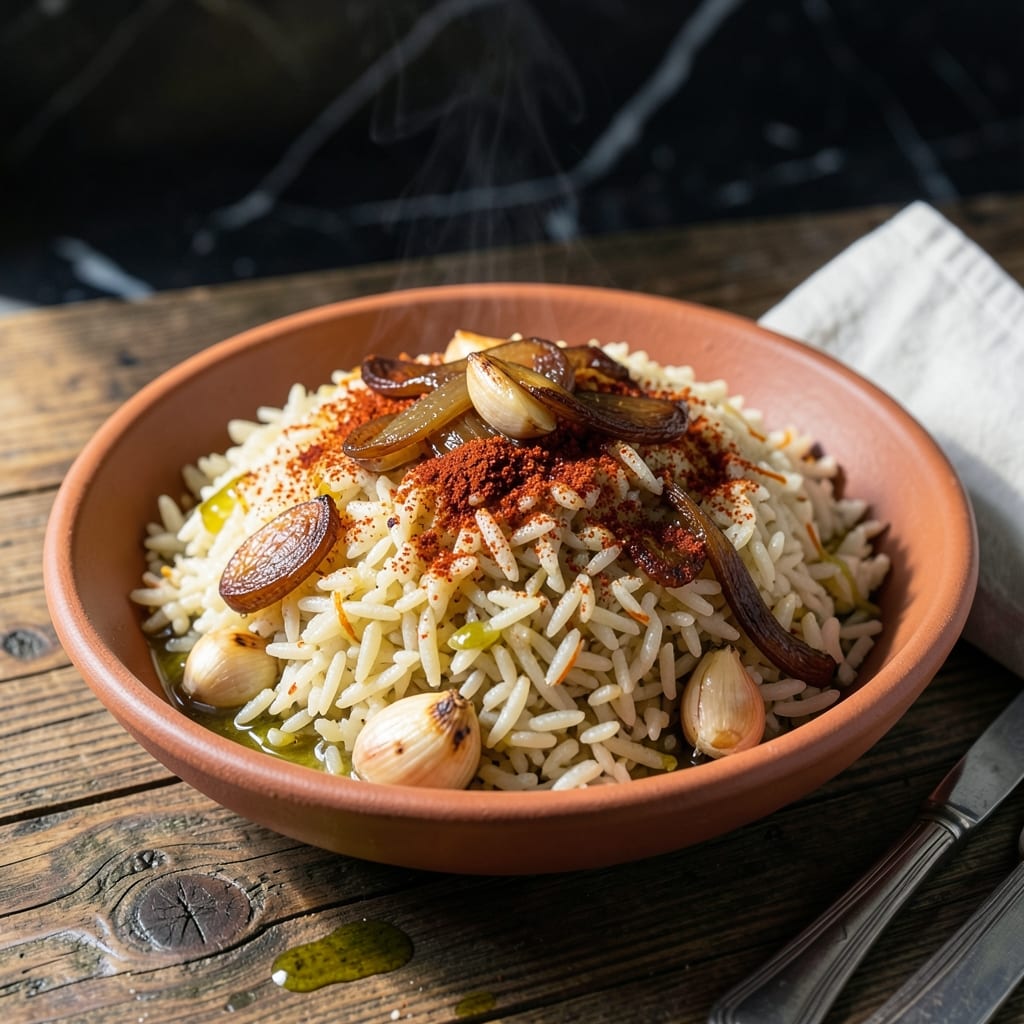
This fragrant pilaf brings the warm, aromatic flavors of Ethiopia to your kitchen table. The combination of berbere spice and tender rice creates a dish that’s both comforting and exotic.
I’ve tested this recipe in my small Boston kitchen to ensure it works in any home. The key is toasting the spices briefly before adding the rice, which deepens their rich, earthy notes.
The result is a fragrant, slightly spicy rice dish that pairs perfectly with grilled meats or stews. Each bite offers layers of warm, complex flavor that feels both traditional and accessible.
Simple ingredients and straightforward steps make this pilaf an easy way to explore Ethiopian cuisine. It’s ready in under 30 minutes and serves as a versatile side or main course.
Ingredients for Ethiopian Rice
Fragrant basmati rice meets warm Ethiopian spices for a dish that’s exotic yet approachable.
| Ingredient | Amount | Notes |
|---|---|---|
| Basmati Rice 🌾 | 1 ½ cups | Rinsed until water runs clear |
| Berbere Spice 🌶️ | 2 tbsp | Ethiopian blend, essential flavor |
| Onion 🧅 | 1 whole | Finely diced, yellow or red |
| Garlic Cloves 🧄 | 3 cloves | Minced for depth of flavor |
| Vegetable Oil 🫒 | 3 tbsp | Or substitute coconut oil |
| Vegetable Broth 💧 | 2 ½ cups | Low-sodium preferred for control |
| Tomato Paste 🍅 | 1 tbsp | For rich umami base |
| Ground Cumin 🌿 | ½ tsp | Toasted with berbere for warmth |
| Ground Coriander 🌿 | ½ tsp | Complements berbere spice blend |
| Salt 🧂 | 1 tsp | Adjust to taste after cooking |
| Fresh Cilantro 🌿 | ¼ cup | Chopped, for garnish (optional) |
| Lemon 🍋 | ½ whole | Juiced for bright finish |
The berbere spice is non-negotiable here—look for it at specialty African markets or online. I’ve had luck with Zemen or AfriGourmet brands. Basmati rice gives the right fluffy texture (jasmine works in a pinch). For the broth, Better Than Bouillon vegetable base is my go-to for depth without additives. Toasting the spices briefly before adding liquids is what transforms this from good to restaurant-quality.
No berbere? Mix 1 tsp each paprika, cayenne, and fenugreek with ½ tsp each of ginger, cardamom, and cinnamon for an approximation. Low on fresh cilantro? Parsley works, or skip it entirely. The tomato paste can be swapped for 1 tbsp tomato sauce reduced slightly. If you’re out of vegetable broth, water plus a pinch of salt works, but the flavor won’t be as rich.
Leftover pilaf keeps 4-5 days in the fridge, and the flavors actually improve overnight. Freeze in portions for up to 3 months—reheat with a splash of water to restore moisture. The berbere spice stays potent for 6-12 months in a cool, dark place.
Why You’ll Love This Recipe
- One Pot Wonder: I love that everything cooks together in a single pot—just sauté the onions and garlic, add the rice and berbere, and let it simmer.
- Flavor Bomb: The berbere spice gives this rice a warm, slightly smoky kick that’s balanced perfectly by the sweetness of the caramelized onions.
- Weeknight Hero: It’s my go-to for busy evenings—ready in 30 minutes and pairs just as well with grilled chicken as it does with lentils or roasted veggies.
- Budget Stretch: Basmati rice and a handful of pantry staples make this dish incredibly affordable, and it tastes even better the next day for lunch.
Step-by-Step Instructions for Ethiopian Berbere-Spiced Pilaf
Master this technique for perfectly fragrant rice with authentic Ethiopian flavors every time.
Step 1: Rinse and Prepare the Basmati Rice
Place the 1.5 cups Basmati Rice in a fine-mesh strainer and rinse under cold water, swirling with your hand, until the water runs completely clear. This removes excess starch that would otherwise make the rice gummy.
Drain well and set aside. I always let it sit for 5 minutes after rinsing to ensure all excess water drips off. Properly rinsed rice absorbs liquid evenly and cooks up light and fluffy, with each grain separated.
Step 2: Sauté Aromatics in Vegetable Oil
Heat the 3 tbsp Vegetable Oil in a large pot over medium heat. Add the 1 whole Onion, finely diced, and cook for 6-8 minutes until soft and golden brown at the edges. Stir frequently to prevent burning.
Add the 3 cloves Garlic Cloves, minced, along with the 2 tbsp Berbere Spice, 0.5 tsp Ground Cumin, and 0.5 tsp Ground Coriander. Cook for 1-2 minutes until the spices become fragrant and the garlic turns light golden. This blooms the spices, releasing their essential oils for maximum flavor.
Step 3: Toast Tomato Paste and Add Liquids
Stir in the 1 tbsp Tomato Paste and cook for 1 minute until it deepens in color and sticks slightly to the bottom of the pot. This step intensifies the umami base of the dish.
Pour in the 2.5 cups Vegetable Broth and 1 tsp Salt, scraping up any browned bits from the bottom of the pot with a wooden spoon. Bring the mixture to a gentle boil over medium-high heat.
Step 4: Cook Rice Until Tender
Add the drained 1.5 cups Basmati Rice to the pot and stir once to distribute the grains evenly. Reduce heat to low, cover tightly with a lid, and simmer for 15-18 minutes until all liquid is absorbed.
Resist the urge to lift the lid during cooking—releasing steam disrupts the cooking process. The rice is done when the grains are tender and small craters appear on the surface. Turn off the heat and let it sit covered for 5 minutes to steam in residual moisture.
Step 5: Fluff and Finish with Fresh Garnishes
Remove the lid and use a fork to gently fluff the rice from the bottom up, separating any clumps without mashing the grains. The result should be light, airy, and uniformly colored with the vibrant red berbere spice.
Squeeze the juice from the 0.5 whole Lemon over the rice and stir gently to combine. Sprinkle with the 0.25 cup Fresh Cilantro, chopped, if using. Serve immediately while hot, with each grain distinct yet infused with the warm, complex flavors of the spices.
Pro Tips For Making Ethiopian Rice
- Toast the Berbere: I learned this the hard way—bloom the berbere in hot oil for 30 seconds before adding onions to wake up its flavors and prevent a raw spice taste.
- Rinse the Basmati: Skip this and your rice will be gummy; rinse until the water runs clear to remove excess starch, then soak for 15 minutes for fluffier grains.
- Low and Slow Onions: After burning three batches, I finally figured out that caramelizing the onions on medium-low for 20 minutes (not rushing it) builds the sweet base this dish needs.
- Use Extra Oil: Sounds weird, but it works: use 3 tablespoons of oil instead of 2—berbere soaks it up, and the rice won’t taste dry or chalky.
Storing and Reheating This ethiopian rice
Refrigerator Storage
Let the pilaf cool for no more than 2 hours before transferring to airtight containers. In the fridge at 40°F or below, it stays fresh for 4-5 days. The flavors actually deepen overnight as the spices meld together.
Freezer Storage
This dish freezes beautifully for up to 3 months. I use quart-sized freezer bags, squeezing out excess air before sealing. Leave 1 inch of headspace for expansion, and label with the date so you
Stovetop Reheating
My preferred method: add the rice to a pot with 2-3 tbsp water or broth, cover, and heat over medium-low heat for 8-10 minutes. Stir occasionally and add more liquid if needed. This restores moisture and brings back that just-cooked texture. 🔥
Microwave Reheating
For quick meals, place a single portion in a microwave-safe bowl with a splash of water. Cover with a damp paper towel and heat on 70% power for 2-3 minutes, stirring halfway through. This prevents the rice from drying out.
Reviving Leftovers
If the rice seems dry after reheating, stir in 1 tsp lemon juice or a drizzle of vegetable oil to refresh the flavors. A sprinkle of fresh cilantro on top brings back that vibrant, just-made taste.
Nutrition Facts
Frequently Asked Questions
What can I use if I don’t have berbere spice?
Mix 1 tsp each paprika, cayenne, and fenugreek with ½ tsp each of ginger, cardamom, and cinnamon. It won’t be identical but captures the warm, complex flavor.
Can I make this with brown rice?
Yes, but increase liquid to 3 cups and simmer for 40-45 minutes. Brown rice needs more water and time to soften. Check for doneness before serving.
Why did my rice turn mushy?
Likely from lifting the lid during cooking or using too much liquid. Keep it covered and measure broth precisely. Rinsing the rice well helps too.
How do I adjust the heat level?
Reduce berbere to 1 tbsp for mild flavor or add ¼ tsp cayenne for extra kick. Taste the broth before adding rice to fine-tune spice.

- Jollof Rice Sauce Recipe: West African Tomato and Spice Infusion - September 25, 2026
- Japanese Rice Soup Recipe: Umami-Rich Comfort in a Bowl - September 25, 2026
- Homemade Cream Of Rice Recipe: Silk-Smooth Breakfast in Minutes - September 25, 2026