
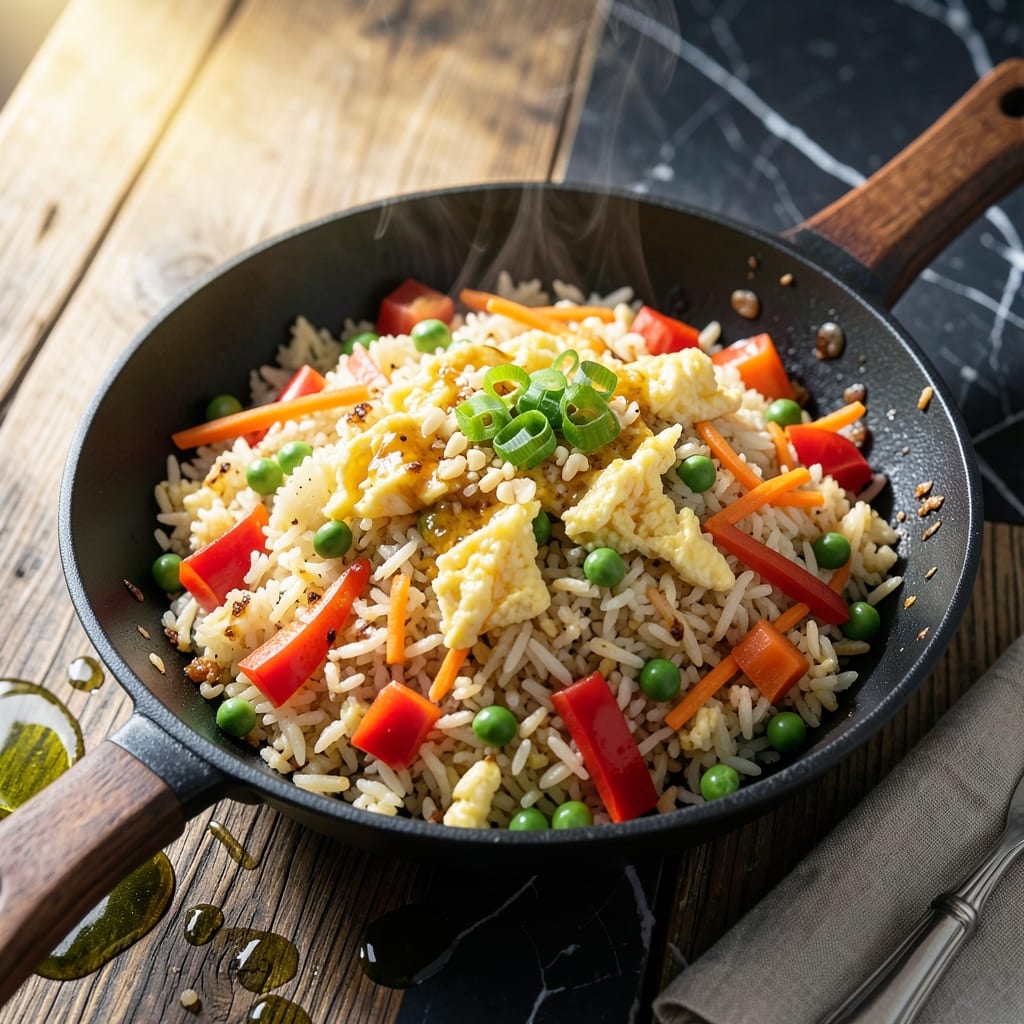
This wok-charred veggie medley delivers quick restaurant-quality results at home. High heat and constant motion create that signature smoky flavor and perfect texture.
With simple ingredients and a few key techniques, you’ll achieve consistently delicious fried rice. The process takes 20 minutes from start to finish, making it ideal for busy weeknights.
Ingredients for Fied Rice
Day-old rice and fresh veggies bring this wok-charred dish to life quickly.
| Ingredient | Amount | Notes |
|---|---|---|
| Cooked Jasmine Rice 🍚 | 4 cups | Day-old, cooled completely |
| Carrots 🥕 | 2 whole | Medium, julienned or diced |
| Bell Peppers 🌶️ | 2 whole | Assorted colors, diced |
| Green Onions 🧅 | 4 whole | Thinly sliced, whites and greens separated |
| Garlic Cloves 🧄 | 3 cloves | Minced finely |
| Frozen Peas 🌱 | 1 cup | Thawed under cold water |
| Eggs 🥚 | 3 whole | Large, beaten |
| Soy Sauce 🫒 | 3 tbsp | Low-sodium preferred |
| Sesame Oil 🫒 | 1 tbsp | Toasted, for finishing |
| Vegetable Oil 🫒 | 3 tbsp | High smoke point, divided |
| Ground White Pepper 🌶️ | ½ tsp | For authentic flavor |
| Salt 🧂 | ½ tsp | Or to taste |
| Ginger Root 🌿 | 1 tbsp | Fresh, grated |
The rice is non-negotiable—day-old, cold jasmine holds up to the wok’s heat without turning mushy. Trader Joe’s has great pre-julienned carrots and bell peppers if you’re short on time (trust me on this shortcut). For the soy sauce, Kikkoman low-sodium is my go-to; it’s consistent and doesn’t overpower. If you’re feeling fancy, a splash of oyster sauce (vegetarian if needed) adds depth, but it’s not essential.
No jasmine rice? Long-grain white works in a pinch, but avoid instant—it’s too soft. Skip the peas? Edamame or corn kernels add the same pop of color. Out of sesame oil? A pinch of toasted sesame seeds stirred in at the end gives a similar nutty note. The eggs can be omitted for a vegan take, but honestly, they’re worth the extra minute. For extra protein, diced tofu or shrimp browns up nicely.
Leftovers keep 3-4 days in the fridge and reheat like a dream in the wok or microwave. Freezing works too for up to 3 months, though the texture softens a bit. Always cool completely before storing—this prevents soggy rice. The green onions? Add fresh ones when reheating for that bright, crisp finish (don’t skip this part).
Why You’ll Love This Recipe
- One Pan Wonder: I toss everything—jasmine rice, carrots, bell peppers—into one skillet and it’s done in 15 minutes flat.
- Garlic Punch: The minced garlic cloves sizzle in the oil and turn this fried rice into a flavor bomb that hits all the right notes.
- Endless Reinventions: I’ve served it for lunchboxes, late-night snacks, and even as a side for grilled chicken—it never gets old.
- Budget Stretcher: Honestly, it’s my go-to for using up leftover rice and veggies before they go bad.
Step-by-Step Instructions for Wok-Charred Veggie Fried Rice
Here’s the method. Super quick, super easy, packed with flavor.
Step 1: Prep and Scramble the Eggs
Heat 1 tablespoon vegetable oil in a wok or large skillet over high heat until it shimmers. Add the 3 whole Eggs and scramble quickly with a spatula, breaking them into small, soft curds. They should be just set but still slightly runny.
Remove the eggs from the wok and set aside. Wipe the wok clean with a paper towel—this prevents the eggs from overcooking in the next steps. The residual heat will finish cooking them when you add them back in later.
Here’s the thing—this step sets the foundation. Soft, barely-set eggs will blend seamlessly into the dish and create that classic fried rice texture we’re after.
Step 2: Stir-Fry the Vegetables
Add the remaining 2 tablespoons vegetable oil to the wok and heat until shimmering. Toss in the 2 whole Carrots, 2 whole Bell Peppers, and the white parts of the 4 whole Green Onions. Stir-fry for 3-4 minutes until the vegetables are tender-crisp and starting to char slightly at the edges.
Add the 3 cloves Garlic Cloves and 1 tbsp Ginger Root, then stir-fry for 30 seconds until fragrant. The aroma should be intense and inviting—this is the moment that matters. Immediately add the 1 cup Frozen Peas and cook for another 1 minute to warm through.
Step 3: Combine Rice and Seasonings
Add the 4 cups Cooked Jasmine Rice to the wok, breaking up any clumps with your spatula. The rice should be dry and separate easily—this is why day-old rice works best. Stir-fry for 2-3 minutes until the rice is hot and starting to toast slightly.
Drizzle the 3 tbsp Soy Sauce evenly over the rice and vegetables. Add the 0.5 tsp Salt and 0.5 tsp Ground White Pepper. Toss everything together for another 2 minutes until the rice is evenly coated and the soy sauce has been absorbed.
Step 4: Finish with Eggs and Aromatics
Return the scrambled Eggs to the wok and fold them gently into the rice mixture. You want them to distribute evenly without breaking up too much. Cook for another 30 seconds to heat through completely.
Remove from heat and stir in the green parts of the Green Onions. Drizzle the 1 tbsp Sesame Oil over the top and toss once more to combine. The sesame oil adds that final layer of nutty aroma and ties all the flavors together.
Real talk: don’t skip the sesame oil. It’s the difference between good fried rice and the kind that makes you close your eyes and savor every bite.
Pro Tips For Making Fied Rice
- Chill the Rice: Use day-old, cold jasmine rice—fresh rice turns mushy. I learned this the hard way after my first three attempts ended up like porridge.
- High Heat First: Crank the wok or pan to smoking hot before adding oil, then keep the flame high. Sounds aggressive, but it’s the only way to get that classic wok hay flavor.
- Small Dice the Veggies: Cut carrots, bell peppers, and green onions into tiny, uniform pieces—about ¼-inch. This ensures they cook fast and evenly without turning the rice soggy.
- Pre-Mince the Garlic: Mince the garlic cloves before you start cooking, because once the pan is hot, you’ll have 10 seconds max before it burns. I skip this when I’m lazy, but the dish always tastes better when I don’t.
Troubleshooting fied rice
Mushy Rice
Fresh rice contains too much moisture, which turns your dish into a soggy mess. Always use day-old, cold jasmine rice that’s been refrigerated overnight. If you’re in a pinch, spread freshly cooked rice on a baking sheet and refrigerate for 30 minutes to dry it out. 💡
Egg Overcooking
Scrambling eggs too long in the wok makes them rubbery. Cook them just until softly set, then remove immediately. They’ll finish cooking when added back to the hot rice. I keep my heat at medium-high for this step to prevent overcooking.
Uneven Char
Low heat prevents that coveted wok-charred flavor. Crank your burner to maximum and let the wok get screaming hot before adding oil. Work in small batches if needed to maintain high heat. A carbon steel wok gives the best char.
Bland Flavor
Underseasoning is a common mistake. Don’t be shy with the soy sauce—taste as you go and adjust. I add an extra dash of Kikkoman at the end if needed. The white pepper adds authentic depth many overlook.
Vegetable Sogginess
Overcrowding the wok steams vegetables instead of stir-frying them. Cook in batches if necessary, ensuring each piece has contact with the hot surface. Your veggies should be tender-crisp with slightly charred edges, not limp.
Sticky Situation
If your rice sticks, your wok isn’t hot enough or you’re not using enough oil. Add 1 tbsp vegetable oil between batches if needed. A well-seasoned wok develops a natural non-stick surface over time. 🔥
Nutrition Facts
Frequently Asked Questions
Why use day-old rice?
Fresh rice holds too much moisture, making your dish soggy. Day-old rice dries out in the fridge, giving you that perfect, separate grain texture when stir-fried.
Can I use a regular skillet?
A wok is ideal, but a large skillet works too. Use high heat and work in batches to maintain the right temperature. A carbon steel pan gives the best char.
How do I add protein?
Cook diced chicken, shrimp, or tofu first, then set aside. Add it back with the eggs at the end to heat through. This prevents overcooking.
Why is my rice sticking?
Your pan isn’t hot enough or needs more oil. Use medium-high to high heat and add 1 tbsp oil between batches. A well-seasoned wok helps too.

- Jollof Rice Sauce Recipe: West African Tomato and Spice Infusion - September 25, 2026
- Japanese Rice Soup Recipe: Umami-Rich Comfort in a Bowl - September 25, 2026
- Homemade Cream Of Rice Recipe: Silk-Smooth Breakfast in Minutes - September 25, 2026