
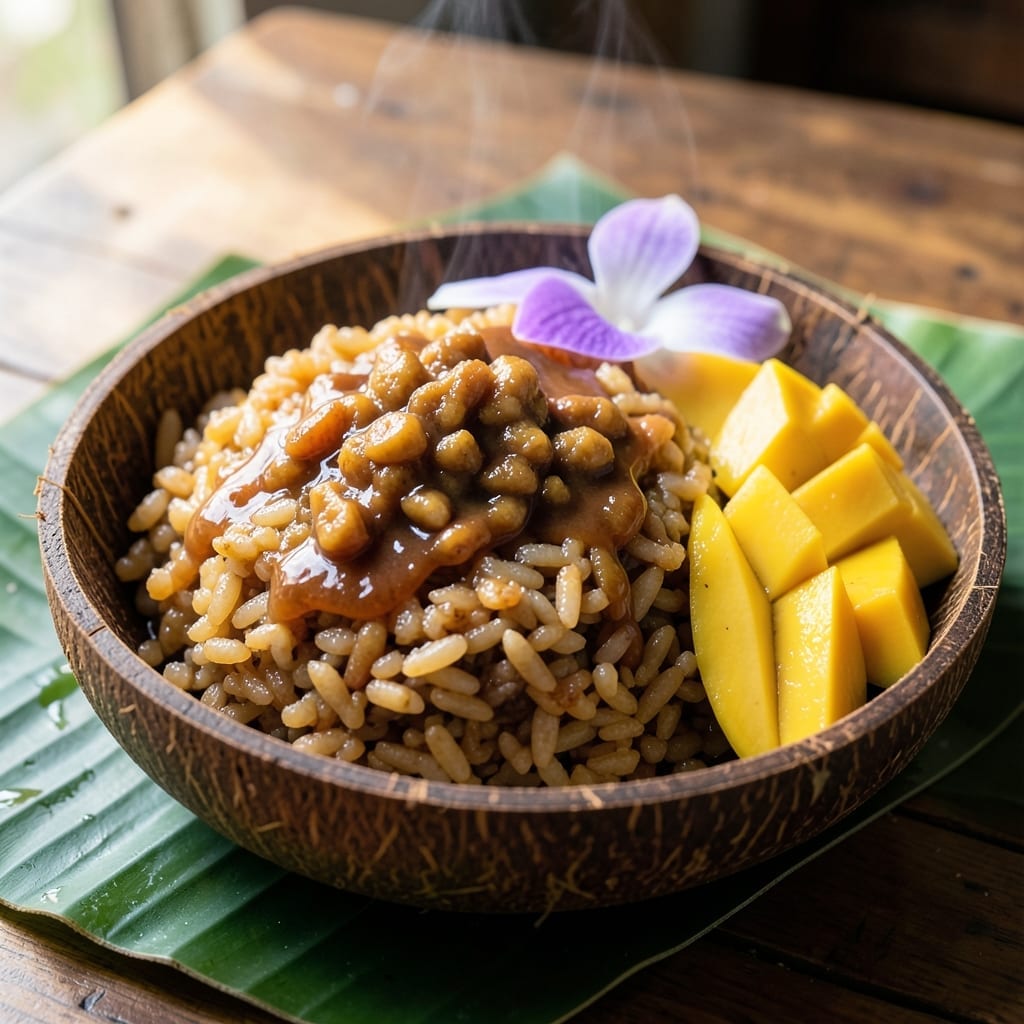
This traditional Filipino dessert brings together sticky coconut rice and sweet caramelized toppings in a simple yet elegant dish. The combination of glutinous rice and coconut milk creates a naturally sweet base that’s both comforting and authentic.
Perfect for special occasions or everyday indulgence, this recipe stays true to its roots while being easy to make at home. The key is slow cooking to achieve that signature chewy texture that makes biko irresistible.
Ingredients for Filipino Biko Sweet Rice
Sticky coconut rice meets caramelized toppings in this authentic Filipino dessert with just the right chew.
| Ingredient | Amount | Notes |
|---|---|---|
| Glutinous Rice 🍚 | 2 cups | Soaked for 4 hours minimum |
| Coconut Milk 🥥 | 2 cups | Full-fat for creaminess |
| Brown Sugar 🍚 | 1 ½ cups | Packed, for caramel topping |
| Water 💧 | 2 ½ cups | For cooking rice |
| Salt 🧂 | ½ tsp | Balances sweetness |
| Coconut Oil 🥥 | 2 tbsp | For toasting toppings |
| Vanilla Extract 🌿 | 1 tsp | Pure extract preferred |
| Pandan Leaves 🍃 | 2 pieces | Optional for aroma |
| Toasted Coconut Flakes 🥥 | ½ cup | For topping garnish |
| Condensed Milk 🥛 | ½ cup | Sweetened, for richness |
| Cornstarch 🌾 | 1 tbsp | Thickens caramel mixture |
| Lime Zest 🍈 | 1 tsp | Brightens flavor profile |
The glutinous rice is non-negotiable here—look for Thai or Filipino brands at Asian markets like Seafood City or H Mart. Soaking is essential for that signature texture; skip it and you’ll get crunchy bits instead of uniform stickiness. Coconut milk quality matters too—Chaokoh or Aroy-D are the gold standard for richness (avoid light versions). Pandan leaves add authentic aroma but can be omitted if unavailable.
No glutinous rice? Sushi rice at a 1:1 ratio works in a pinch, though the texture won’t be as elastic. Brown sugar can be swapped for muscovado for deeper caramel notes. For a lighter version, reduce condensed milk by half and add a splash of coconut cream. The toasted coconut flakes are optional but highly recommended—they add crunch and visual appeal (frozen works, just thaw first).
Biko keeps beautifully at room temperature for 2 days, covered. For longer storage, refrigerate for up to 5 days or freeze for 3 months. Reheat gently with a splash of coconut milk to restore creaminess. Always bring to room temperature before serving for the best texture.
Why You’ll Love This Recipe
- One Pot Wonder: I just dump glutinous rice, coconut milk, and brown sugar in a pot and let it simmer—no fancy techniques.
- Sticky Sweet Bliss: That combo of caramelized brown sugar and rich coconut milk? Ridiculously good with every chewy bite.
- Festive or Everyday: Here’s what sold me—it’s just as welcome at a fiesta as it is in my lunchbox on a regular Tuesday.
- Stretches Easily: A single batch feeds my whole family, and honestly, leftovers taste even better the next day.
Step-by-Step Instructions for Filipino Biko Sweet Rice
Master the technique for this traditional dessert with precise timing and layering.
Step 1: Soak and Prepare the Glutinous Rice
Begin by draining the 2 cups Glutinous Rice after its 4-hour soak. This hydration step is essential—it reduces cooking time and ensures even tenderness. Rinse the grains briefly under cold water to remove excess starch, which could make the final texture gummy.
Transfer the rice to a heavy-bottomed pot and add the 2.5 cups Water and 2 pieces Pandan Leaves. The pandan infuses a subtle floral aroma that’s iconic in Filipino desserts. Bring to a boil, then reduce to a simmer for 15 minutes until the water is mostly absorbed.
Step 2: Cook with Coconut Milk and Sugar
Once the rice is tender with minimal liquid remaining, pour in the 2 cups Coconut Milk and 1.5 cups Brown Sugar. Stir well to dissolve the sugar, then add the 0.5 tsp Salt and 1 tsp Vanilla Extract. The salt enhances the sweetness, while vanilla adds depth.
Cook over medium-low heat for 20-25 minutes, stirring frequently to prevent sticking. You’ll notice the mixture thickening and the grains becoming translucent. This slow cooking allows the rice to absorb the coconut milk fully, creating that signature sticky, creamy consistency.
Step 3: Prepare the Caramel Topping
In a separate saucepan, combine the remaining ½ cup Brown Sugar (if any was reserved) with 1 tbsp Cornstarch and ½ cup Condensed Milk. Cook over medium heat for 5-7 minutes, stirring constantly until the mixture thickens to a glossy caramel.
Off the heat, stir in the 1 tsp Lime Zest for a bright contrast to the richness. The zest cuts through the sweetness, balancing the dish beautifully. Keep this warm while the rice finishes cooking.
Step 4: Toast the Coconut Flakes and Assemble
Heat the 2 tbsp Coconut Oil in a small pan over medium heat. Add the 0.5 cup Toasted Coconut Flakes and toast for 2-3 minutes until golden brown and fragrant. Watch closely—coconut burns quickly.
To serve, spread the cooked rice in a serving dish, drizzle generously with the warm caramel topping, and sprinkle the toasted coconut flakes on top. The contrast of textures—creamy rice, silky caramel, and crunchy coconut—makes this dessert irresistible.
Pro Tips For Making Filipino Biko Sweet Rice
- Soak the Rice: I learned this the hard way—soaking glutinous rice for at least 2 hours cuts the cooking time in half and prevents that dreaded crunchy center.
- Simmer Low and Slow: After burning two batches, I now keep the heat at medium-low once the coconut milk goes in; it thickens evenly without curdling.
- Use Fresh Coconut Milk: Canned works, but fresh coconut milk makes a real difference in richness—don’t substitute with light versions or it’ll taste thin.
- Stir Often: Brown sugar loves to stick, so stir every 3-4 minutes to stop it from burning at the bottom of the pot.
Common Mistakes When Making Perfect Results
Skipping the Soak
I can’t stress this enough: never skip soaking the 2 cups glutinous rice for at least 4 hours. Dry rice takes forever to cook evenly, leaving you with hard centers and mushy outsides. Soaking softens the grains for that perfect chewy texture.
Using Low-Fat Coconut Milk
Full-fat coconut milk is non-negotiable here. Light versions lack the richness needed to create that creamy base. I always use Chaokoh or Aroy-D brands for the best results. Trust me, the difference is noticeable.
Stirring Too Little
This dish sticks easily, so stir frequently during the 20-25 minute coconut milk cooking phase. I set a timer to remind myself every 2-3 minutes. Burnt rice at the bottom ruins the whole batch and wastes your effort.
Rushing the Caramel
Patience is key with the caramel topping. Cook the brown sugar and condensed milk mixture for the full 5-7 minutes until glossy. Undercooked caramel will be thin and runny, failing to create that beautiful layered effect.
Over-Toasting Coconut
Toast your coconut flakes over medium heat for just 2-3 minutes. They go from golden to burnt in seconds. I pull them off the heat as soon as they turn fragrant and lightly browned. 🔥
Serving Too Cold
Always let your biko come to room temperature before serving. The flavors meld better, and the texture is creamier. I find that 30 minutes out of the fridge is perfect. Cold biko loses its signature stickiness.
Nutrition Facts
Frequently Asked Questions
What kind of rice should I use if glutinous rice isn’t available?
Sushi rice works as a substitute in a 1:1 ratio, though the texture won’t be as elastic. For best results, seek out Thai or Filipino glutinous rice brands at Asian markets.
Can I make this ahead of time?
Yes! Biko keeps well at room temperature for 2 days or in the fridge for 5 days. Reheat with a splash of coconut milk to restore creaminess before serving.
Why did my caramel topping turn out runny?
It likely needed more time. Cook the brown sugar and condensed milk mixture for the full 5-7 minutes until glossy and thick. Patience ensures the perfect consistency.
Is it necessary to use pandan leaves?
No, they’re optional but add authentic floral aroma. If unavailable, skip them—your biko will still taste delicious with the coconut and caramel flavors.

- Furikake Rice Seasoning Recipe: Umami-Packed Japanese Blend for Any Meal - October 7, 2026
- Knorr Vegetable Soup Mix Rice Recipe: Savory One-Pot Side Dish - October 7, 2026
- Lebanese Lentil and Rice Soup Recipe: Mujadara-Inspired Warmth in a Bowl - October 7, 2026