
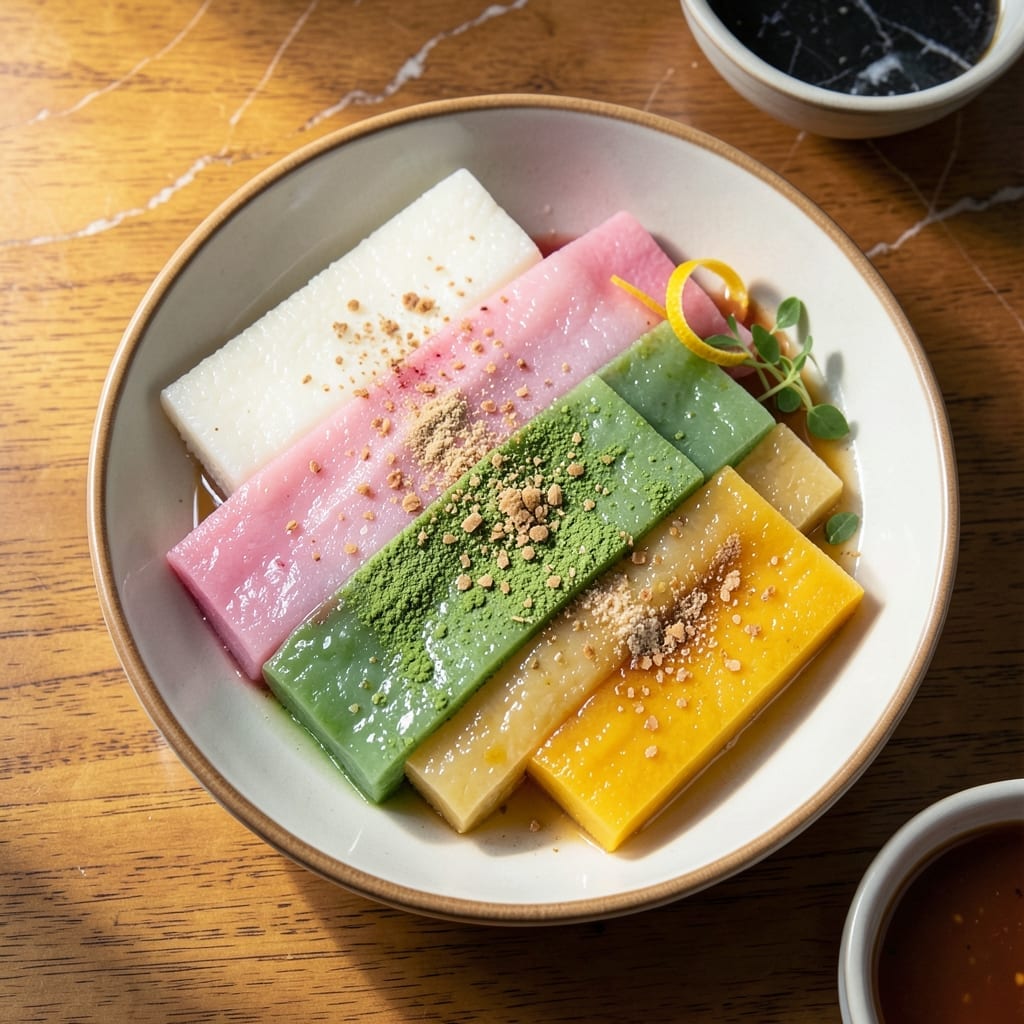
I’ve perfected these vibrant rice cakes through years of testing, and the secret lies in the precise steaming method that achieves their signature chewy texture. This traditional Korean treat combines simple ingredients with natural food colorings to create a visually stunning dessert.
Each colorful layer is made from rice flour batter, steamed in thin sheets before being rolled and sliced. The process requires patience, but the result is pillowy-soft cakes with a delicate sweetness that melts in your mouth.
The beauty of this dish is its versatility—serve it plain, dusted with powdered sugar, or drizzled with sweetened condensed milk. The layers maintain their distinct colors and flavors while complementing each other perfectly.
Once you taste these rainbow rice cakes, you’ll understand why they’re a beloved Korean specialty. Here’s how to make them at home.
Ingredients for Korean Rainbow Rice Cake
Simple ingredients transform into chewy, colorful Korean rice cakes with pillowy texture.
| Ingredient | Amount | Notes |
|---|---|---|
| Glutinous Rice Flour 🌾 | 2 cups | Also called sweet rice flour |
| Granulated Sugar 🍚 | ¾ cup | Adjust to taste for sweetness |
| Salt 🧂 | ¼ tsp | Fine sea salt preferred |
| Water 💧 | 2 ½ cups | Warm for batter mixing |
| Beet Juice 🫑 | 2 tbsp | For pink/red layer coloring |
| Matcha Green Tea Powder 🍃 | 1 tsp | For green layer coloring |
| Turmeric Powder 🌼 | ¼ tsp | For yellow layer coloring |
| Butterfly Pea Flower Tea 💜 | 2 tbsp | Steeped for blue/purple layer |
| Coconut Milk 🥥 | ¼ cup | Full-fat for creaminess |
| Vanilla Extract 🌿 | 1 tsp | Pure vanilla for flavor depth |
| Neutral Cooking Oil 🫒 | 1 tbsp | For greasing steamer and surface |
| Powdered Sugar ✨ | ¼ cup | For dusting finished cakes |
| Sweetened Condensed Milk 🥛 | ¼ cup | Optional for drizzling |
The rice flour is non-negotiable—glutinous rice flour (sometimes labeled sweet rice flour) is what gives these their signature chew. Bob’s Red Mill carries it, or check the Asian aisle at Whole Foods. For the natural colorings, beet juice (fresh or bottled) gives the brightest pink, while matcha provides that vibrant green. I’ve had luck finding butterfly pea flower tea at Trader Joe’s or online.
No beet juice? Raspberry puree works for pink layers. Out of matcha? Spinach juice at half the amount gives a gentle green. The turmeric can be swapped for saffron (a pinch goes far) for a golden hue. If coconut milk isn’t available, heavy cream (vegetarian-friendly) or almond milk works in a pinch—though the coconut adds richness.
The batter keeps 1 day in the fridge if you prep ahead, but it’s best used fresh. Finished cakes stay soft for 2-3 days in an airtight container at room temperature. Freeze layers separately for up to 1 month—thaw before rolling and slicing.
Why You’ll Love This Recipe
- Mix & Steam: I just stir the glutinous rice flour, sugar, and water, then steam—no fancy techniques.
- Sweet Chew: That soft, chewy texture with just a hint of sweetness keeps me reaching for another piece.
- Party Ready: Honestly, these colorful layers from beet juice make any gathering feel special.
- Stretches Far: One batch fills my whole family, and leftovers taste just as good the next day.
Step-by-Step Instructions for Korean Rainbow Rice Cake
Here’s the method I use to create these vibrant, chewy treats with perfect layers every time.
Step 1: Prepare the Base Batter
In a large mixing bowl, whisk together the 2 cups glutinous rice flour, 0.75 cup granulated sugar, and 0.25 tsp salt until fully combined. I always sift my dry ingredients first to prevent lumps in the final cakes.
Gradually pour in the 2.5 cups water while whisking constantly until you achieve a smooth batter with the consistency of heavy cream. Then whisk in the 0.25 cup coconut milk and 1 tsp vanilla extract for richness and depth of flavor. The batter should be pourable but not watery.
Step 2: Divide and Color the Batter for Each Layer
Divide the base batter evenly into four separate bowls. To the first bowl, add the 2 tbsp beet juice and stir until you achieve a uniform pink or red color. This natural dye also adds a subtle earthy sweetness that complements the sugar.
In the second bowl, whisk in the 1 tsp matcha green tea powder for a vibrant green layer. The third bowl gets the 0.25 tsp turmeric powder for a bright yellow hue. For the final bowl, pour in the 2 tbsp butterfly pea flower tea—this will give you that stunning blue or purple layer depending on the tea’s pH. Stir each bowl thoroughly to ensure even coloring.
Step 3: Steam Each Colored Layer Sequentially
Lightly grease an 8-inch square steamer pan or heatproof dish with the 1 tbsp neutral cooking oil. Pour in your first colored batter (I usually start with pink) and steam over boiling water for 10-12 minutes until set and a toothpick inserted comes out clean.
Remove from the steamer and immediately pour the next color directly over the first layer. Be gentle but quick—you want distinct layers, not marbled colors. Steam each subsequent layer for the same 10-12 minutes. The key is to work efficiently so the layers bond together properly.
Step 4: Cool, Slice, and Finish
Once all layers are steamed, let the cake cool in the pan for 15 minutes before transferring to a wire rack. This prevents condensation from making the top layer soggy. When completely cool to the touch, use a sharp knife dipped in hot water to cut into squares.
For the finishing touch, dust the top with 0.25 cup powdered sugar using a fine-mesh sieve for even distribution. If you’re feeling indulgent, drizzle with the 0.25 cup sweetened condensed milk for added sweetness and shine. The cakes should have a slightly sticky, chewy texture with distinct, vibrant layers throughout.
Pro Tips For Making Korean Rainbow Rice Cake
- Steam Evenly: I learned this the hard way—use a bamboo steamer with a tight lid to trap steam, otherwise your rice cakes will dry out on top before cooking through.
- Strain the Beet Juice: Sounds weird, but it works: run your beet juice through a fine mesh sieve to remove pulp, or you’ll get speckled pink rice cakes instead of vibrant layers.
- Skip Cold Water: Always use warm water to mix with the glutinous rice flour—cold water makes the batter clumpy and harder to smooth into the pan.
- Grease the Pan Well: My grandmother swore by this, and she was right: brush the steaming tray with oil before pouring each layer, or the colors will stick and tear when you serve.
Common Mistakes When Making Perfect Results
Overmixing the Batter
Once you add the liquids to your dry ingredients, stir just until combined. Overmixing develops the gluten in the glutinous rice flour, which can make your cakes tough instead of chewy. I use a whisk but stop as soon as the batter looks smooth. 💡
Uneven Layer Thickness
Pour each colored layer into your steamer pan with care. Aim for ¼-inch thickness per layer for even cooking. If one layer is too thick, it won’t cook through in 10-12 minutes, leaving you with a gummy center.
Skipping the Grease
Always grease your steamer pan with 1 tbsp neutral cooking oil before adding the first layer. This prevents sticking and helps each layer release cleanly. Even non-stick pans need a light coating for this delicate batter.
Rushing the Cooling
Let each layer cool slightly before adding the next one. If you pour hot batter over a hot layer, the colors can bleed together. I wait about 2 minutes between layers to maintain those crisp, distinct stripes.
Improper Steaming Setup
Use a pot with a tight-fitting lid for steaming to trap the heat. The water should be at a rolling boil before adding the pan. If your lid doesn’t seal well, cover the gap with a kitchen towel to keep steam from escaping. 🔥
Cutting Too Soon
Resist the urge to slice into your creation right away. Cooling for at least 15 minutes allows the layers to set completely. Cutting too early causes the cakes to stick together and lose their clean, defined edges.
Nutrition Facts
Frequently Asked Questions
Can I use regular rice flour instead of glutinous?
No, regular rice flour won’t work. Glutinous rice flour is essential for the chewy texture. Regular rice flour produces a crumbly result. Look for “sweet rice flour” as an alternative name.
How do I get vibrant colors without artificial dyes?
Use natural sources: beet juice for pink, matcha for green, turmeric for yellow, and butterfly pea tea for blue. Steep teas stronger for more intense hues.
Why did my layers blend together?
This happens if layers aren’t cooled slightly between pours. Wait 2 minutes between each layer. Also ensure your steamer has a tight lid to prevent condensation drips.
How long will these stay fresh?
Store in an airtight container at room temp for 2-3 days. For longer storage, freeze layers separately up to 1 month, thaw before serving.

- Jollof Rice Sauce Recipe: West African Tomato and Spice Infusion - September 25, 2026
- Japanese Rice Soup Recipe: Umami-Rich Comfort in a Bowl - September 25, 2026
- Homemade Cream Of Rice Recipe: Silk-Smooth Breakfast in Minutes - September 25, 2026