
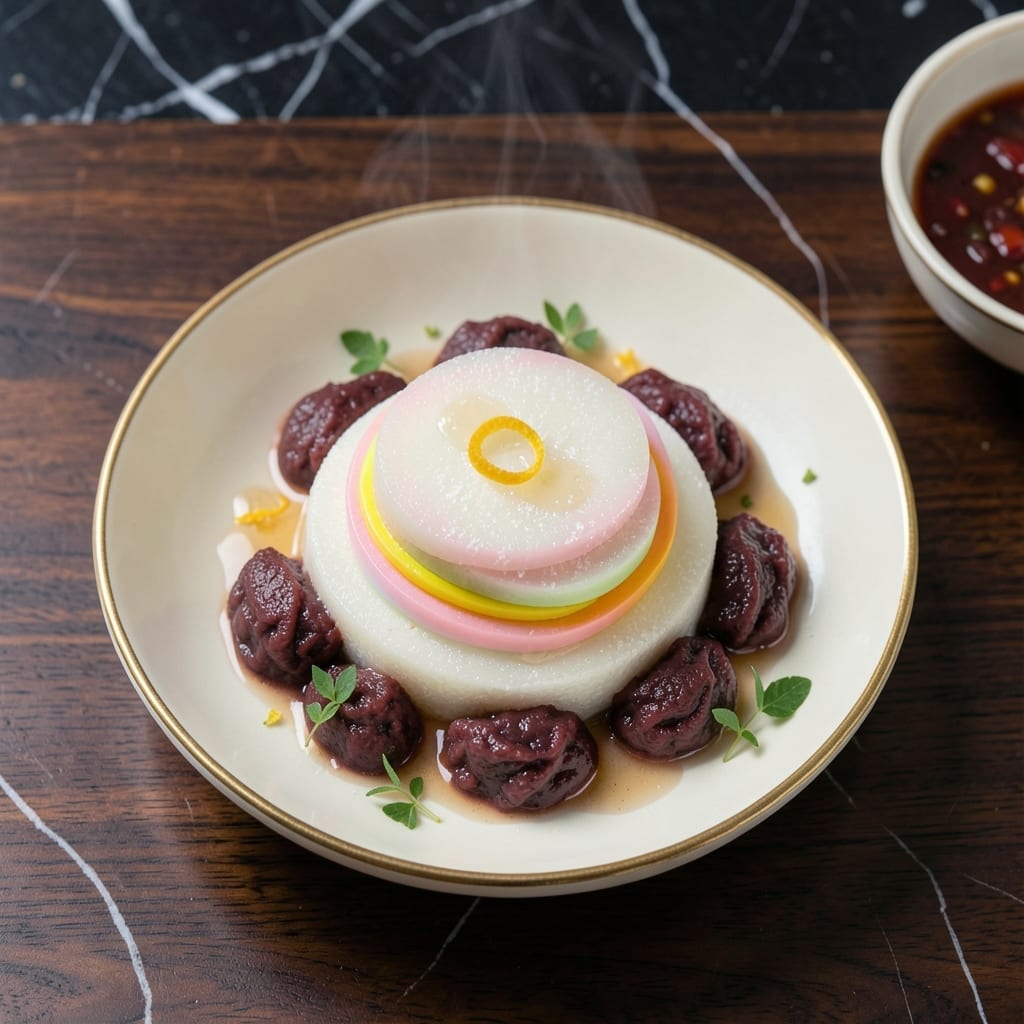
Crafting these traditional Korean rice cakes at home brings a touch of celebration to any occasion. The soft, chewy mochi exterior pairs perfectly with the sweet red bean paste filling, creating a harmonious balance of textures and flavors.
This recipe stays true to authentic methods while making the process accessible for home cooks. The key lies in achieving the right consistency for the rice dough and properly preparing the sweet bean paste center.
Each bite delivers the delicate sweetness of mochi with the earthy richness of red bean paste. The colorful presentation makes these treats as beautiful as they are delicious.
Perfect for birthdays, holidays, or whenever you want to share a taste of Korean tradition. The results are worth the effort.
Ingredients for Korean Birthday Rice Cake
Traditional glutinous rice flour and sweet red bean paste create these authentic celebratory treats at home.
| Ingredient | Amount | Notes |
|---|---|---|
| Glutinous Rice Flour 🌾 | 2 cups | Also called sweet rice flour |
| Granulated Sugar 🍚 | ½ cup | Divided for dough and filling |
| Water 💧 | 1 ¼ cups | Warm, for rice dough |
| Red Bean Paste 🟥 | 1 ½ cups | Store-bought or homemade sweetened |
| Cornstarch 🌽 | ¼ cup | For dusting work surface |
| Food Coloring 🎨 | 1 tsp | Optional for colorful dough |
| Vegetable Oil 🫒 | 1 tbsp | Neutral flavor for greasing |
| Salt 🧂 | ¼ tsp | Fine sea salt preferred |
| Vanilla Extract 🌿 | ½ tsp | Pure extract for flavor |
| Sesame Seeds 🌰 | 1 tbsp | Toasted, for garnish |
The glutinous rice flour is non-negotiable—Mochiko brand is widely available at Asian markets and some Whole Foods locations. Look for bags labeled specifically as sweet rice flour, not regular rice flour. The red bean paste should be sweetened and smooth; Korean or Japanese markets often carry high-quality versions. For best results, use paste that’s not overly chunky, as it needs to hold its shape when wrapped in the dough.
No food coloring? The dough can stay natural white (the bean paste peeks through nicely). For substitution, natural food dyes from Whole Foods or Trader Joe’s work well. If you can’t find red bean paste, sweetened black bean paste offers a similar texture with deeper flavor. The cornstarch can be swapped for potato starch in equal amounts, but avoid all-purpose flour—it won’t give the same chewy texture.
Store finished rice cakes in an airtight container at room temperature for up to 3 days, or refrigerate for 1 week. They’re best served fresh but can be gently steamed to revive texture. The dough can be made ahead and refrigerated for 24 hours before shaping.
Why You’ll Love This Recipe
- Minimal Ingredient List: I only need 5 pantry staples—glutinous rice flour, sugar, water, red bean paste, and cornstarch—to make these.
- Sweet & Earthy: The soft, chewy rice cakes with that rich red bean paste filling? Honestly, it’s the perfect balance of sweet and earthy.
- Celebration Ready: I make these for birthdays, of course, but they’re also my go-to for potlucks and weekend treats.
- Budget-Friendly Batch: A small bag of rice flour stretches into dozens of these little cakes, and they keep well for days.
Step-by-Step Instructions for Korean Birthday Rice Cake
Master the technique for these colorful mochi bites with a smooth, elastic texture and sweet filling.
Step 1: Prepare the Rice Dough Base
In a large microwave-safe bowl, whisk together the 2 cups Glutinous Rice Flour, 0.5 cup Granulated Sugar, and 0.25 tsp Salt until combined. I always sift the glutinous rice flour first to eliminate any lumps that could affect the final texture.
Gradually add the 1.25 cups Water and 0.5 tsp Vanilla Extract while whisking until smooth. The mixture should look like thin pancake batter. If you’re making colored dough, divide the batter now and stir in the 1 tsp Food Coloring to each portion.
Step 2: Steam the Dough to Perfect Elasticity
Cover the bowl with plastic wrap and microwave on high for 2 minutes. Stir the mixture vigorously with a silicone spatula—this develops the elastic mochi texture. Return to the microwave for another 1-2 minutes until the dough becomes translucent and stretchy.
I test the dough by stretching a small piece between my fingers—it should be smooth, glossy, and slightly tacky but not sticky. If it’s still gummy, microwave in 30-second intervals until properly cooked.
Step 3: Shape and Fill the Cakes
Lightly dust your work surface with the 0.25 cup Cornstarch to prevent sticking. Transfer the hot dough onto the surface and knead briefly until smooth. Divide into 16 equal pieces and roll each into a ball.
Flatten each dough ball into a 3-inch circle with your palms. Place 1 tablespoon of Red Bean Paste in the center and pinch the edges together to seal completely. Roll the filled ball between your palms to smooth the seams.
Step 4: Final Cooking and Presentation
Lightly grease a steamer basket with the 1 tbsp Vegetable Oil to prevent sticking. Arrange the filled mochi bites in the steamer, leaving space between each as they’ll expand slightly. Steam over boiling water for 8-10 minutes until the dough becomes fully translucent.
Transfer to a serving plate while warm. Lightly toast the 1 tbsp Sesame Seeds in a dry pan until fragrant and golden. Sprinkle over the rice cakes just before serving for texture and visual appeal.
Pro Tips For Making Korean Birthday Rice Cake
- Steam Evenly: Use a bamboo steamer lined with cheesecloth to prevent sticking—I learned this the hard way after scraping half the batter off my first attempt.
- Sift the Flour: Always sift the glutinous rice flour before mixing; it breaks up clumps and gives you that smooth, uniform texture in the finished cakes.
- Skip Cold Water: Use room temperature water when mixing the batter, or you’ll end up with dense, gummy rice cakes instead of the light, chewy kind everyone loves.
- Dust with Cornstarch: Roll the shaped rice cakes in cornstarch before frying to get that crisp outer layer without the filling leaking out—sounds weird, but it works.
Wine and Beer Pairings for These Flavors
Korean Pairings
Traditional makgeolli (Korean rice wine) offers a slightly sweet, milky complement to the chewy rice cakes. The effervescence cleanses your palate between bites. I love serving it chilled in metal bowls for authenticity.
Light Beer Options
A crisp Korean lager like Hite or Kloud provides a refreshing contrast to the sweetness. The light body won’t overwhelm the delicate mochi texture. Serve ice-cold for best results.
Fruity White Wine
Off-dry Riesling or Gewürztraminer pairs beautifully, with its stone fruit notes enhancing the red bean paste filling. The slight sweetness mirrors the dessert’s profile without clashing. 🍷
Sparkling Alternatives
Prosecco or other dry sparkling wines add celebration to the birthday theme. The bubbles cut through the richness while the acidity balances the sugar. Chill to 45°F before serving.
Tea Pairings
For a non-alcoholic option, barley tea or citron tea offers traditional Korean flavors. The nutty or citrus notes respectively complement the rice cakes’ sweetness. Serve warm or iced.
Dessert Wine
A glass of Moscato d’Asti enhances the dessert experience with its honeyed flavors. The low alcohol content makes it perfect for toasting. 💫
Nutrition Facts
Frequently Asked Questions
Can I use regular rice flour instead?
No, regular rice flour won’t give the same chewy texture. Glutinous rice flour is essential for that signature mochi-like consistency. It’s the starch content that creates the stretchy, elastic quality.
How do I store leftovers?
Keep in an airtight container at room temperature for up to 3 days. For longer storage, refrigerate for up to 1 week. Reheat by steaming for 2-3 minutes to restore softness.
Why did my dough tear when shaping?
This usually means the dough wasn’t cooked enough. Microwave in 30-second intervals until translucent and stretchy. Also ensure your hands and surface are well-dusted with cornstarch.
Can I make these ahead?
Yes! Prepare the dough up to 24 hours in advance and refrigerate. Shape and steam just before serving. This actually helps the flavors meld beautifully.

- Jollof Rice Sauce Recipe: West African Tomato and Spice Infusion - September 25, 2026
- Japanese Rice Soup Recipe: Umami-Rich Comfort in a Bowl - September 25, 2026
- Homemade Cream Of Rice Recipe: Silk-Smooth Breakfast in Minutes - September 25, 2026