
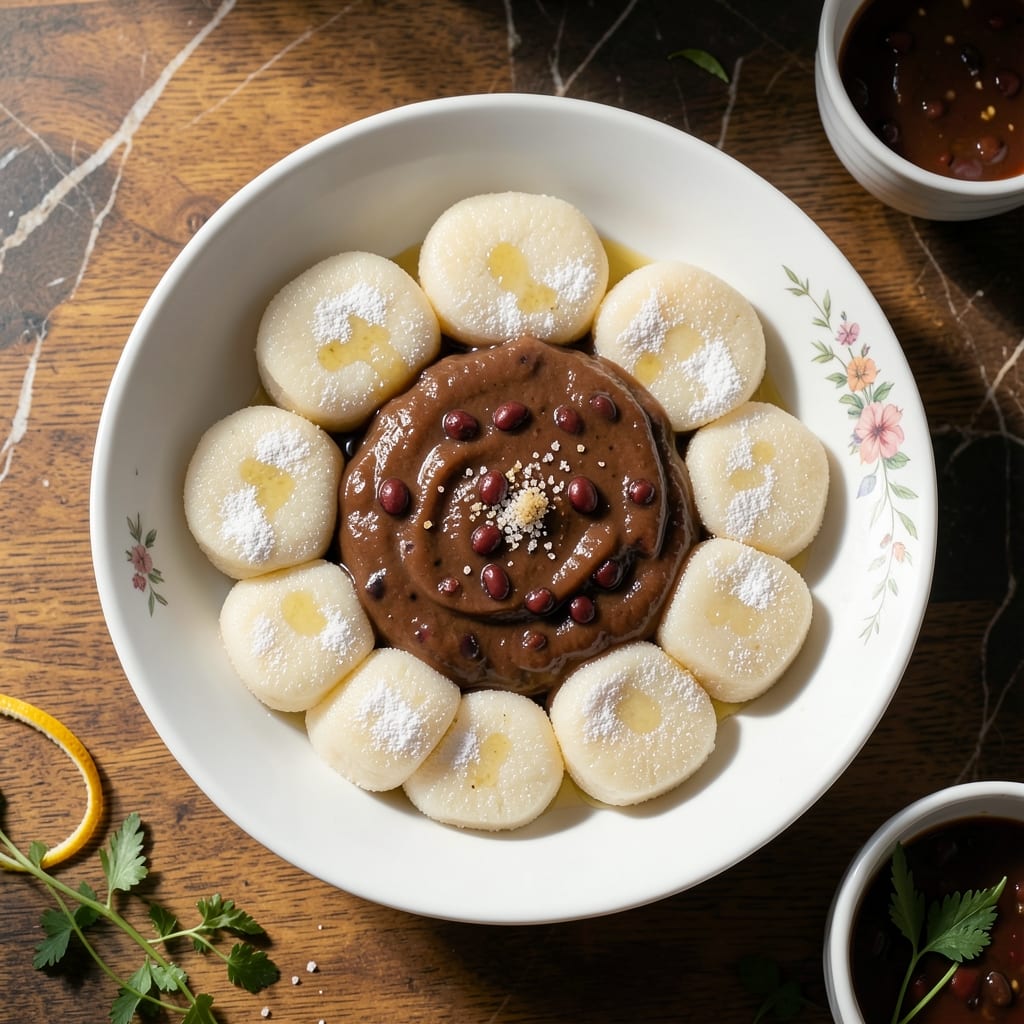
There’s something magical about the first time you bite into a perfectly made Korean red bean rice cake. The soft, chewy exterior gives way to a sweet, velvety filling that’s both comforting and indulgent.
This traditional treat, known as patbingsu or similar variations, requires just a few simple ingredients but demands precision in technique. The rice flour base creates that signature pillowy texture, while the sweet red bean paste inside provides a rich, earthy contrast.
What makes this recipe special is its balance of textures and flavors. The cakes should be tender yet slightly resistant, with a filling that’s smooth without being overly sweet. It’s a dessert that satisfies on multiple levels.
Perfect for special occasions or when you’re craving something authentically Korean. Here’s how to make them at home.
Ingredients for Korean Red Bean Rice Cake
These authentic ingredients create pillowy rice cakes with sweet, velvety red bean centers at home.
| Ingredient | Amount | Notes |
|---|---|---|
| Glutinous Rice Flour 🌾 | 2 cups | Also called sweet rice flour |
| Granulated Sugar 🍚 | ¾ cup | Divided for dough and filling |
| Red Bean Paste 🍲 | 1 ½ cups | Sweetened, store-bought or homemade |
| Warm Water 💧 | 1 cup | For activating rice flour |
| Cornstarch 🌾 | 2 tbsp | For dusting work surface |
| Neutral-Flavored Oil 🫒 | 1 tbsp | For shaping dough |
| Salt 🧂 | ¼ tsp | Fine sea salt preferred |
| Vanilla Extract 🌿 | 1 tsp | Pure extract for best flavor |
| Sesame Oil 🫒 | 1 tsp | Toasted, for authentic flavor |
| All-Purpose Flour 🌾 | ¼ cup | For dusting and texture |
Glutinous rice flour is non-negotiable here—look for brands like Mochiko or Shiratamako at Asian markets or well-stocked supermarkets. The red bean paste should be smooth and sweet; Haechi or Chungs are reliable brands. Avoid coarse red beans, as they disrupt the filling’s velvety texture. Freshness matters most with the rice flour, so check the packaging date at H Mart or online retailers.
No glutinous rice flour? Tapioca starch at a 1:1 ratio works in a pinch, though the texture will differ slightly. Out of red bean paste? Sweetened black bean paste offers a similar consistency with a deeper flavor. For a quicker version, canned sweet red beans blended with sugar can substitute, though the texture won’t be as refined. Vanilla extract can be omitted, but it adds subtle depth to the dough.
Store unused rice flour in an airtight container in a cool, dark place for up to 6 months. The red bean paste keeps for 1 week refrigerated or 3 months frozen. Shape and fill the dough just before cooking—they’re best enjoyed fresh, the same day they’re made.
Why You’ll Love This Recipe
- Five Ingredients Only: I love that this comes together with just glutinous rice flour, sugar, red bean paste, water, and cornstarch—no fancy pantry hunt required.
- Sweet-Savory Balance: The smooth red bean paste wrapped in chewy rice dough hits that perfect sweet-savory note I crave with my afternoon tea.
- Make Ahead Magic: Honestly, these keep beautifully for days, so I can prep a batch Sunday and grab one whenever the 3pm slump hits.
- Budget Friendly: Between us, a bag of rice flour and a jar of red bean paste make dozens of these for pennies—way cheaper than bakery versions.
Step-by-Step Instructions for Korean Red Bean Rice Cake
Master the technique for achieving the perfect chewy texture and balanced sweetness in this traditional treat.
Step 1: Prepare the Rice Cake Dough
In a large mixing bowl, combine the 2 cups Glutinous Rice Flour, 0.25 tsp Salt, and 0.25 cup Granulated Sugar. Gradually whisk in the 1 cup Warm Water until a smooth, slightly sticky batter forms without any lumps.
Add the 1 tsp Vanilla Extract and 1 tsp Sesame Oil, then stir to incorporate fully. The dough should be glossy and elastic, with a consistency similar to thick pancake batter. Cover the bowl with a damp towel and let it rest for 15 minutes to allow the rice flour to fully hydrate.
Step 2: Shape the Rice Cake Dough
Lightly dust your work surface with the 2 tbsp Cornstarch to prevent sticking. Divide the rested dough into 12 equal portions (about 2-inch balls). Keep unused dough covered with a damp towel to prevent drying.
Using your palms, roll each portion into a smooth ball, then flatten into a 3-inch circle. The dough should be soft but not sticky. If it adheres to your hands, dip your fingers in the remaining cornstarch.
Step 3: Fill and Seal the Rice Cakes
Place 1 tbsp Red Bean Paste in the center of each flattened dough circle. Gently pleat the edges of the dough upward, pinching to seal completely and enclosing the filling. Roll the sealed cake between your palms to smooth the surface into a uniform ball.
Ensure there are no gaps or thin spots in the dough, as these can cause the filling to leak during cooking. The finished rice cakes should be about 1.5 inches in diameter. Arrange them on a tray dusted with the 0.25 cup All-Purpose Flour to prevent sticking.
Step 4: Steam to Perfection
Line a steamer basket with parchment paper, poking small holes to allow steam to circulate. Arrange the rice cakes in a single layer with space between each to prevent sticking. Bring water to a boil in the steamer pot, then reduce to medium heat.
Steam the rice cakes for 15-18 minutes until the dough becomes translucent and the surface appears slightly glossy. Avoid opening the steamer during cooking, as sudden temperature changes can cause the dough to collapse.
Step 5: Finish with Oil and Serve
Remove the rice cakes from the steamer and let them cool for 2 minutes. Lightly brush each with the 1 tbsp Neutral-Flavored Oil to enhance shine and prevent sticking. The surface should have a subtle sheen, indicating they’re ready to serve.
Serve warm for the best texture—the exterior should be softly chewy, while the interior reveals a sweet, smooth Red Bean Paste filling. These are best enjoyed fresh but can be stored in an airtight container for up to 2 days.
Pro Tips For Making Korean Red Bean Rice Cake
- Knead the Dough: Work the glutinous rice flour mixture until smooth and elastic—about 8-10 minutes by hand. I learned this the hard way after my first batch crumbled apart during shaping.
- Use Warm Water: Always use warm water (about 100°F) when mixing the flour. Cold water makes the dough stiff and hard to work with, and I was skeptical until I tried it.
- Dust with Cornstarch: Generously dust your work surface and hands with cornstarch before shaping to prevent sticking. After ruining two batches to the counter, I finally figured this out.
- Steam Evenly: Make sure your steamer has a tight lid and keep the heat at medium-high for 20 minutes. Sounds weird, but covering the lid with a cloth catches dripping water and prevents soggy cakes.
Essential Equipment for korean red bean rice cake
Steamer Basket
A bamboo steamer is ideal for even heat distribution. Look for a 10-12 inch diameter to accommodate multiple rice cakes. I use EcoNest brand for durability. Line with parchment paper to prevent sticking.
Mixing Bowl
Use a large glass or stainless steel bowl for mixing the dough. The 3-quart Pyrex gives plenty of room for whisking without splashing. Avoid plastic, as it can retain odors from previous uses. 💡
Rolling Surface
A smooth, non-porous surface like marble or granite works best for rolling. I repurposed a large cutting board specifically for this. Dust generously with cornstarch to prevent sticking.
Kitchen Scale
Precision matters for even portions. My OXO Good Grips 11lb scale measures in gram increments for accuracy. Divide the dough into 12 equal 50g portions for consistency.
Steamer Pot
A wide, shallow pot with a tight-fitting lid maintains steady steam. I use a 5-quart stainless steel pot that fits my steamer perfectly. Ensure water level stays below the basket during cooking.
Pastry Brush
Finish your rice cakes with a light oil coating. A silicone pastry brush from Wilton applies oil evenly without absorbing it. The subtle sheen enhances both appearance and texture. ✨
Nutrition Facts
Frequently Asked Questions
Can I use regular rice flour instead of glutinous?
No, regular rice flour won’t give the same chewy texture. Glutinous rice flour is essential for that signature pillowy consistency. Tapioca starch can work in a pinch but expect a slightly different result.
How do I store leftover rice cakes?
Keep them in an airtight container at room temperature for up to 2 days. For longer storage, refrigerate for 1 week or freeze for 1 month. Re-steam to restore freshness before serving.
Why did my rice cakes crack while steaming?
Cracking usually means the dough was too dry or the filling too generous. Ensure proper sealing and don’t overfill. 1 tbsp of filling per cake is ideal. Maintain steady medium heat during steaming.
Can I make these without a steamer?
A colander or sieve over a pot of boiling water works as a substitute. Just ensure it’s stable and the water doesn’t touch the cakes. Cover tightly and steam for 18-20 minutes.

- Jollof Rice Sauce Recipe: West African Tomato and Spice Infusion - September 25, 2026
- Japanese Rice Soup Recipe: Umami-Rich Comfort in a Bowl - September 25, 2026
- Homemade Cream Of Rice Recipe: Silk-Smooth Breakfast in Minutes - September 25, 2026