
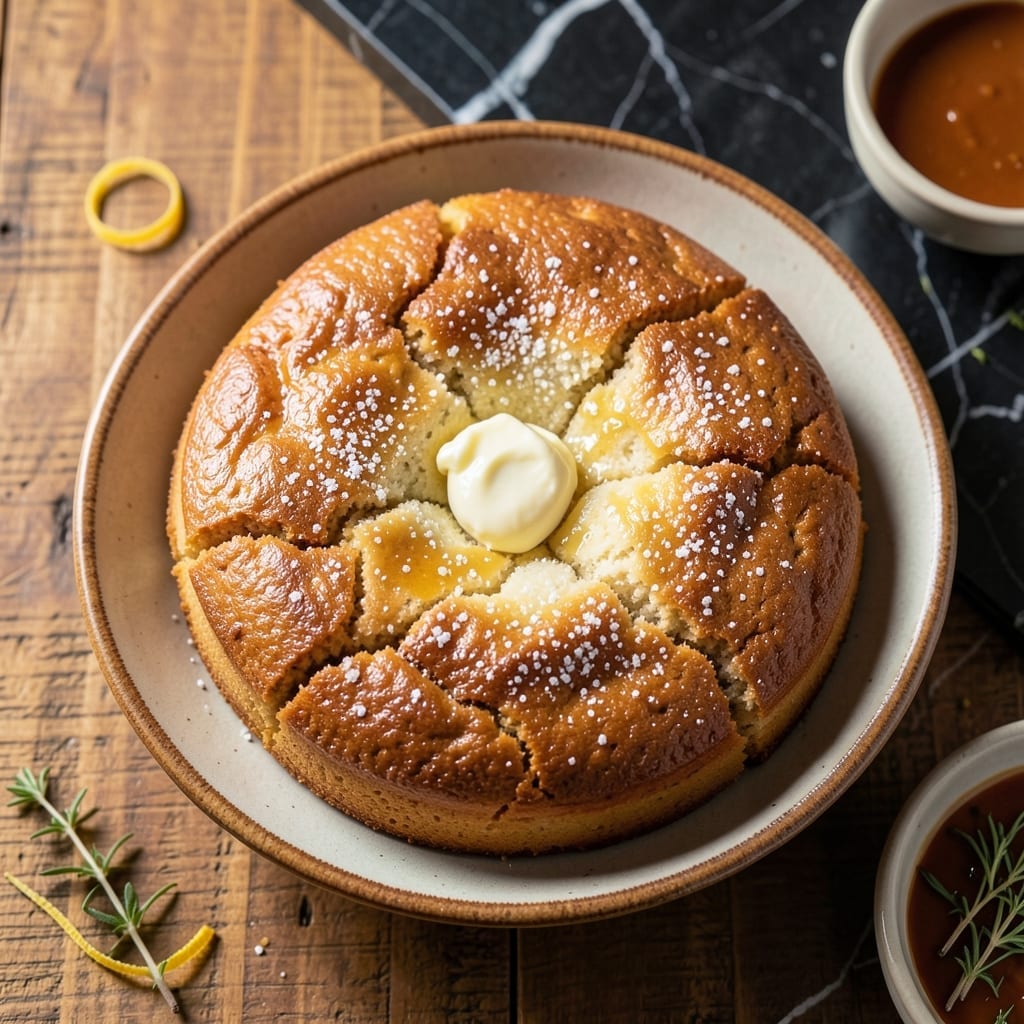
There’s something special about the warm, comforting aroma of a freshly baked Portuguese rice cake filling the kitchen. This traditional treat brings a taste of Portugal to your home with its tender crumb and delicate sweetness.
The secret lies in using simple ingredients transformed through precise methods. Rice flour creates the characteristic texture, while a touch of citrus brightens the flavor. The result is a cake that’s moist yet light, with just the right amount of sweetness.
Once baked to a golden finish, a dusting of cinnamon adds the final authentic touch. This recipe stays true to its roots while being easy to recreate in any home kitchen.
Perfect for celebrations or afternoon coffee, it delivers tradition in every bite.
Ingredients for Portuguese Rice Cake
Simple pantry ingredients create this traditional Portuguese treat with tender texture and bright citrus notes.
| Ingredient | Amount | Notes |
|---|---|---|
| Rice Flour 🌾 | 2 cups | Fine grind for best texture |
| Granulated Sugar 🍚 | 1 ½ cups | White sugar preferred for authenticity |
| Large Eggs 🥚 | 4 whole | Room temperature for even mixing |
| Whole Milk 🥛 | 1 cup | Full-fat for richness |
| Unsalted Butter 🧈 | ½ cup | Melted and cooled slightly |
| Baking Powder 🧂 | 2 tsp | Ensures proper rise |
| Vanilla Extract 🌿 | 1 tsp | Pure extract for best flavor |
| Lemon Zest 🍋 | 1 tbsp | Freshly grated for citrus brightness |
| Ground Cinnamon 🌶️ | 1 tsp | For dusting plus batter |
| Salt 🧂 | ¼ tsp | Balances sweetness |
| Powdered Sugar 🍚 | 2 tbsp | For final dusting |
Rice flour is non-negotiable here—Bob’s Red Mill is widely available and reliable. Look for super-fine grind if you can find it (the texture difference is noticeable). The milk should be whole for richness, but 2% works in a pinch. Most grocery stores carry these basics, but specialty markets often have better rice flour selections.
No rice flour? All-purpose flour plus cornstarch (1:1 ratio) is the closest substitute, though the texture won’t be identical. Fresh lemon zest is ideal but bottled works at half the amount. The butter must be unsalted—salted throws off the balance. For extra authenticity, add a pinch of ground cardamom to the batter.
Store rice flour in an airtight container for up to 6 months. The cake keeps 3-4 days at room temperature (tightly wrapped) or 1 week refrigerated. Always dust with cinnamon just before serving for that fresh-baked look.
Why You’ll Love This Recipe
- One Bowl Wonder: I just dump rice flour, sugar, eggs, milk, and butter in one bowl, mix, and pour—no fancy steps.
- Caramelized Crust: That buttery, golden top with the soft, custardy center? Honestly, it’s the reason I make this every weekend.
- Tea Time Star: It’s my go-to for brunch, dessert, or even a 3 p.m. pick-me-up with coffee.
- Budget Friendly: Rice flour and pantry staples mean I can bake this for pennies and still feel like I’ve treated myself.
Step-by-Step Instructions for Portuguese Rice Cake
This traditional method ensures a moist, tender crumb with authentic cinnamon-scented sweetness.
Step 1: Prepare the Batter Base
In a large mixing bowl, whisk together the 2 cups rice flour, 1.5 cups granulated sugar, 2 tsp baking powder, and 0.25 tsp salt until fully combined. I use a fine-mesh sieve to remove any lumps in the rice flour—this guarantees a smooth, even texture in the final cake.
Create a well in the center of the dry ingredients. This prepares the mixture to receive the wet components while preventing clumping. The rice flour’s unique properties require this careful integration to avoid a grainy result.
Step 2: Incorporate Wet Ingredients
In a separate bowl, beat the 4 whole large eggs lightly, then add the 1 cup whole milk, 0.5 cup unsalted butter (melted and cooled), 1 tsp vanilla extract, and 1 tbsp lemon zest. The butter should be warm but not hot to avoid cooking the eggs prematurely.
Pour the wet mixture into the dry ingredients’ well. Using a spatula, gently fold everything together until just combined—overmixing will develop the rice flour’s starch too much, resulting in a dense cake. The batter should be smooth but slightly thick, with no visible flour streaks.
Step 3: Bake to Golden Perfection
Pour the batter into a greased 9-inch round cake pan lined with parchment paper. Smooth the top with the spatula. Preheat your oven to 350°F and bake for 40-45 minutes, or until the top is golden brown and a toothpick inserted in the center comes out clean.
Resist the urge to open the oven door during the first 30 minutes—this prevents the cake from rising properly. The rice flour creates a delicate structure that needs steady heat. Rotate the pan halfway through baking if your oven has hot spots.
Step 4: Cool and Finish with Cinnamon Dust
Remove the cake from the oven and let it cool in the pan for 10 minutes. Then transfer it to a wire rack to cool completely. This gradual cooling prevents the cake from collapsing as the structure sets.
Once fully cooled, dust the top with the 1 tsp ground cinnamon mixed with the 2 tbsp powdered sugar. Use a fine-mesh sieve for an even, professional-looking finish. The cinnamon not only adds authentic flavor but also creates a beautiful contrast against the cake’s golden surface.
Pro Tips For Making Portuguese Rice Cake
- Preheat the pan: Start with a well-buttered, hot pan—about 350°F—so the batter sets immediately with a golden crust. I learned this the hard way after pulling out a pale, gummy cake twice.
- Warm the milk: Heat the whole milk to just lukewarm before mixing with eggs; cold milk makes the butter clump and the batter lumpy.
- Skip packed flour: Measure rice flour by spooning it into the cup, then leveling off—scooping directly from the bag packs it down and turns your cake dense.
- Butter the edges: Run a thin layer of melted butter up the sides of the pan too—this keeps the cake from sticking as it rises and makes unmolding effortless.
Serving Suggestions for portuguese rice cake
Coffee Pairing
In Portugal, this cake is traditionally served with a strong bica (espresso). The bitterness of the coffee perfectly balances the cake’s sweetness. I recommend Lavazza Qualità Oro for an authentic experience at home. 💛
Tea Alternatives
For a gentler option, pair with Portuguese chá com limão (lemon tea). The citrus notes complement the lemon zest in the cake beautifully. Use 1 tsp loose black tea per cup with a slice of fresh lemon.
Dessert Plating
Slice into thin wedges and arrange on a simple white plate. The contrast of the golden cake against the plate enhances its visual appeal. I use a serrated knife for clean cuts through the delicate crumb.
Fruit Garnishes
Fresh berries add a pop of color and tartness. Try 6-8 raspberries or ½ cup sliced strawberries arranged around the base. The acidity cuts through the richness while maintaining the traditional Portuguese aesthetic.
Port Wine Option
For special occasions, serve with a glass of tawny port. The caramel notes in a 10-year tawny like Graham’s create a luxurious pairing. Serve the port at room temperature for optimal flavor. 🍷
Afternoon Treat
This cake is perfect for afternoon coffee breaks. Serve slightly warm with a dollop of whipped cream and a sprinkle of extra cinnamon. The warmth enhances the aromatics of both the cake and the cinnamon.
Nutrition Facts
Frequently Asked Questions
Why use rice flour instead of regular flour?
Rice flour creates the authentic tender, slightly chewy texture. It’s gluten-free and absorbs moisture differently, giving the cake its characteristic light crumb. Regular flour would make it too dense
Can I make this without a stand mixer?
A whisk and strong arm work just as well. The batter comes together easily by hand—just fold gently to avoid overmixing. The key is combining wet and dry ingredients thoroughly without developing the starch too much
How do I prevent the cake from sinking in the middle?
Ensure your baking powder is fresh and don’t open the oven door during the first 30 minutes. Also, let it cool gradually in the pan for 10 minutes before transferring to a rack. Sudden temperature changes often cause collapsing
What’s the best way to store leftovers?
Keep tightly wrapped at room temperature for 3-4 days or refrigerated for up to 1 week. For longer storage, freeze slices in an airtight container for 2-3 months. Always dust with cinnamon fresh before serving

- Jollof Rice Sauce Recipe: West African Tomato and Spice Infusion - September 25, 2026
- Japanese Rice Soup Recipe: Umami-Rich Comfort in a Bowl - September 25, 2026
- Homemade Cream Of Rice Recipe: Silk-Smooth Breakfast in Minutes - September 25, 2026