
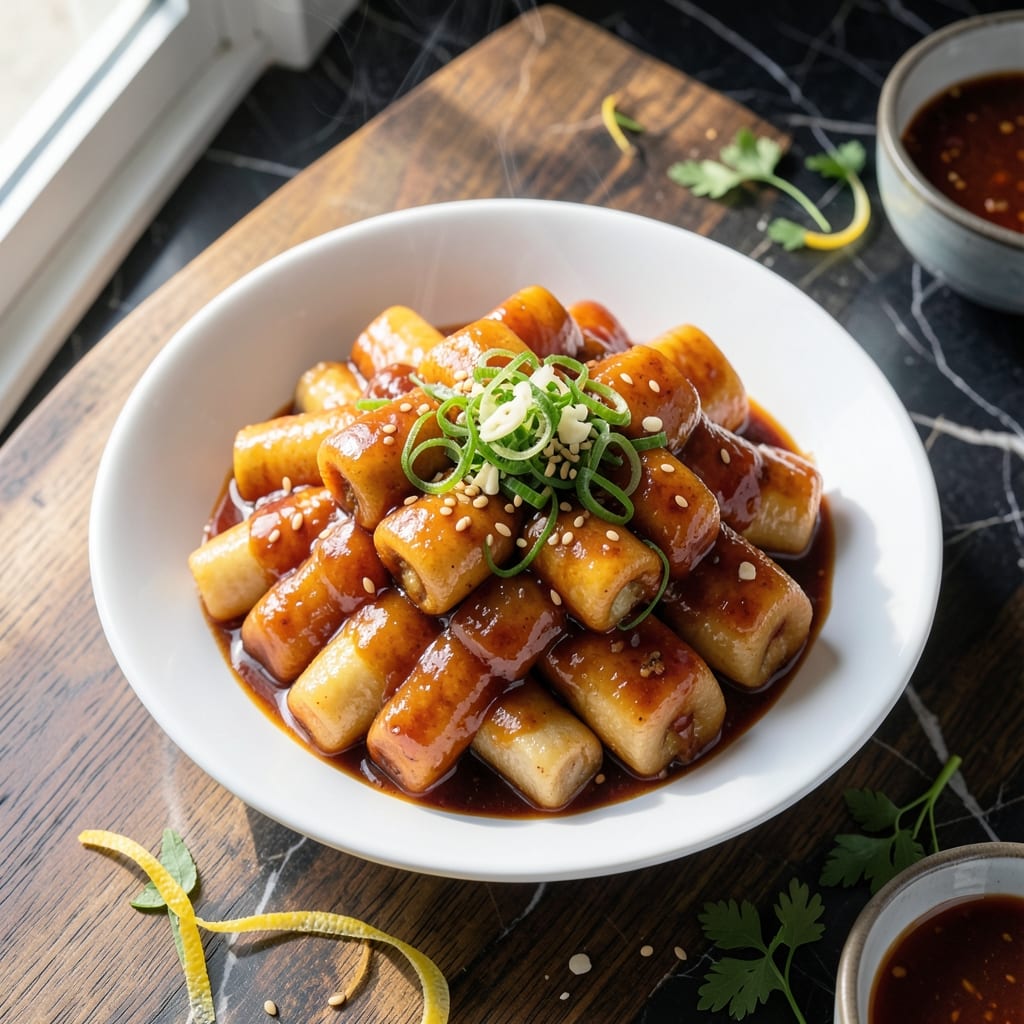
This classic Korean street food delivers the perfect balance of chewy texture and fiery flavor. The dish transforms simple rice cakes through a bold gochujang-based sauce that’s both spicy and slightly sweet.
I’ve refined this method to achieve authentic results at home without specialized equipment. The key is cooking the rice cakes just until they absorb the sauce, creating that signature glossy finish and soft yet springy bite.
What makes this version special is the depth of flavor from garlic, soy, and a touch of sugar. The sauce clings beautifully to each piece, ensuring every bite packs serious heat and complexity.
Serve it as a main or alongside other Korean favorites. The results are always satisfying.
Ingredients for Spicy Rice Cake Recipe Korean Food
These pantry staples and specialty items create bold, authentic Korean street food at home.
| Ingredient | Amount | Notes |
|---|---|---|
| Korean Rice Cakes 🍚 | 1 lb | Cylindrical tteok preferred |
| Gochujang 🌶️ | ½ cup | Korean red pepper paste |
| Soy Sauce 🫒 | 3 tbsp | Low-sodium preferred |
| Sugar 🍚 | 2 tbsp | White or brown works |
| Garlic Cloves 🧄 | 4 cloves | Minced finely |
| Green Onions 🧅 | 4 whole | Thinly sliced, white and green parts |
| Sesame Oil 🫒 | 1 tbsp | Toasted for best flavor |
| Red Pepper Flakes 🌶️ | 1 tbsp | Korean gochugaru preferred |
| Vegetable Broth 🥕 | 1 ½ cups | Low-sodium or homemade |
| Sesame Seeds 🌰 | 1 tsp | Toasted for garnish |
| Corn Syrup 🍯 | 1 tbsp | Optional for glossy texture |
| Fish Cakes 🐟 | 4 pieces | Optional protein addition |
The rice cakes are non-negotiable—look for cylindrical tteok at Korean markets or the refrigerated section of H Mart. Gochujang is the soul of this dish; Sempio or CJ brands are reliable. For soy sauce, Kikkoman low-sodium strikes the right balance. The green onions should be fresh, not wilted, and the garlic recently purchased for maximum punch.
No gochujang? Sriracha mixed with a touch of miso gets you close, but the flavor won’t be the same. Substitute brown sugar for white if that’s what you have. Vegetable broth can replace water for deeper flavor. Skip the fish cakes for a fully vegetarian version—tofu or mushrooms work as great meat-free alternatives.
Store rice cakes in the fridge (they spoil fast) and gochujang in a cool, dark place—it keeps for months. The dish reheats well, but add a splash of water to revive the sauce. Best eaten within 2-3 days.
Why You’ll Love This Recipe
- I’ll be real: a small batch feeds my family for two meals, and the leftovers taste even better.
- One Pot Wonder: I toss everything in a single pan—rice cakes, gochujang, garlic—and let the sauce work its magic.
- Sweet Heat Balance: The sugar tames the gochujang’s fire just enough, while garlic adds that deep, savory kick.
- Weeknight Lifesaver: Honestly, it’s my go-to when I need something fast but still packed with flavor.
Step-by-Step Instructions for Spicy Rice Cake Korean Food
This method ensures chewy rice cakes bathed in rich, spicy sauce with perfectly balanced flavors.
Step 1: Soak and Prep the Rice Cakes
Place the 1 lb Korean Rice Cakes in a bowl of warm water for 10-15 minutes until they soften and plump up. Drain thoroughly—they should be flexible but not mushy. This step prevents the rice cakes from becoming gummy during cooking.
While they soak, thinly slice the 4 whole Green Onions and finely mince the 4 cloves Garlic Cloves. Having these ready ensures a smooth cooking process without frantic chopping mid-recipe.
Step 2: Make the Spicy Sauce Base
In a large skillet or pot, combine the 0.5 cup Gochujang, 3 tbsp Soy Sauce, 2 tbsp Sugar, 1 tbsp Red Pepper Flakes, and 1.5 cups Vegetable Broth. Whisk until the gochujang is fully dissolved and the mixture is smooth.
Add the minced garlic and bring to a gentle simmer over medium heat. Cook for 3-4 minutes until the sauce thickens slightly and the garlic aroma mellows. Stir frequently to prevent the gochujang from sticking to the bottom.
Step 3: Cook the Rice Cakes in the Sauce
Add the drained rice cakes to the skillet, stirring gently to coat them evenly in the sauce. Pour in the 1 tbsp Corn Syrup for a glossy finish. Cook for 5-7 minutes until the rice cakes absorb the sauce and become tender.
Add the sliced green onions and 4 pieces Fish Cakes if using. The fish cakes should warm through and soak up the spicy flavors. Stir occasionally, but avoid overmixing to keep the rice cakes intact.
Step 4: Finish and Serve
Drizzle in the 1 tbsp Sesame Oil and sprinkle with 1 tsp Sesame Seeds. Stir once more to distribute the oil and seeds evenly. Cook for an additional 1-2 minutes until everything is heated through and the sauce clings perfectly to the rice cakes.
Remove from heat and let sit for 2 minutes before serving. The rice cakes will continue to absorb the sauce, making them even more flavorful. Serve hot with extra sesame seeds on top if desired.
Pro Tips For Making Spicy Rice Cake Recipe Korean Food
- Soak Rice Cakes: I learned this the hard way—dry rice cakes stay rock-hard. Soak them in warm water for 15-20 minutes before cooking, or they’ll never absorb that spicy gochujang sauce properly.
- Bloom the Gochujang: Cook the gochujang, soy sauce, and sugar together for 2-3 minutes on medium-low heat. This wakes up the flavors and mellows the raw edge of the paste.
- Skip Cold Garlic: Sounds weird, but it works: finely mince the garlic and let it sit for 5-10 minutes before adding. It takes the harsh bite out and blends better into the sauce.
- Simmer, Don’t Boil: After adding the rice cakes to the sauce, keep it at a gentle simmer—hard boiling turns the rice cakes mushy and the sauce thin. Low and slow lets them plump up just right.
Serving Suggestions for Leftovers
Traditional Presentation
Serve this dish in a shallow stone bowl (ttukbaegi) for authenticity. The hot stone keeps the rice cakes warm and enhances the chewy texture. I love how the sauce sizzles slightly when it hits the heated surface. 🔥
Garnish Like a Pro
Sprinkle extra toasted sesame seeds and thinly sliced green onions on top just before serving. For color contrast, add a few red pepper flakes or a drizzle of sesame oil. This makes the dish look as vibrant as it tastes.
Side Dish Pairings
Balance the heat with cooling sides. I recommend kimchi for tangy crunch or cucumber salad (oi muchim) for freshness. Both are traditional Korean accompaniments that complement the spiciness perfectly.
Protein Additions
For heartier meals, top with soft-boiled eggs or pan-fried fish cakes. The eggs’ creamy yolks mellow the spice, while fish cakes add a satisfying chew. I often add both for a complete meal.
Serving Temperature
This creation is best served piping hot. The rice cakes firm up as they cool, so keep them warm until ready to eat. I use a chafing dish for parties to maintain the perfect temperature. 💡
Beverage Pairings
Offer cold Korean barley tea (boricha) or soju to balance the heat. The nutty tea cleanses the palate, while soju’s crispness cuts through the richness. Both are classic choices with this street food favorite.
Nutrition Facts
Frequently Asked Questions
How do I adjust the spice level?
Start with 1/2 the gochugaru and add more gradually. The gochujang already brings heat, so taste as you go. For milder flavor, add 1 tbsp honey to balance the spice.
Can I use dried rice cakes?
Yes, but they need soaking for 2-3 hours in warm water first. Dried cakes won’t soften properly in 10-15 minutes like fresh ones. Test one to ensure it’s pliable before cooking.
Why did my sauce turn out too thick?
This happens if cooked too long. Thin it with 1/4 cup broth at a time until it coats the rice cakes smoothly. Remember, the sauce thickens slightly as it cools.
What’s the best way to store leftovers?
Keep in an airtight container for up to 3 days. Reheat with 2 tbsp water to restore the sauce’s consistency. Avoid freezing—rice cakes get mushy.

- Jollof Rice Sauce Recipe: West African Tomato and Spice Infusion - September 25, 2026
- Japanese Rice Soup Recipe: Umami-Rich Comfort in a Bowl - September 25, 2026
- Homemade Cream Of Rice Recipe: Silk-Smooth Breakfast in Minutes - September 25, 2026