
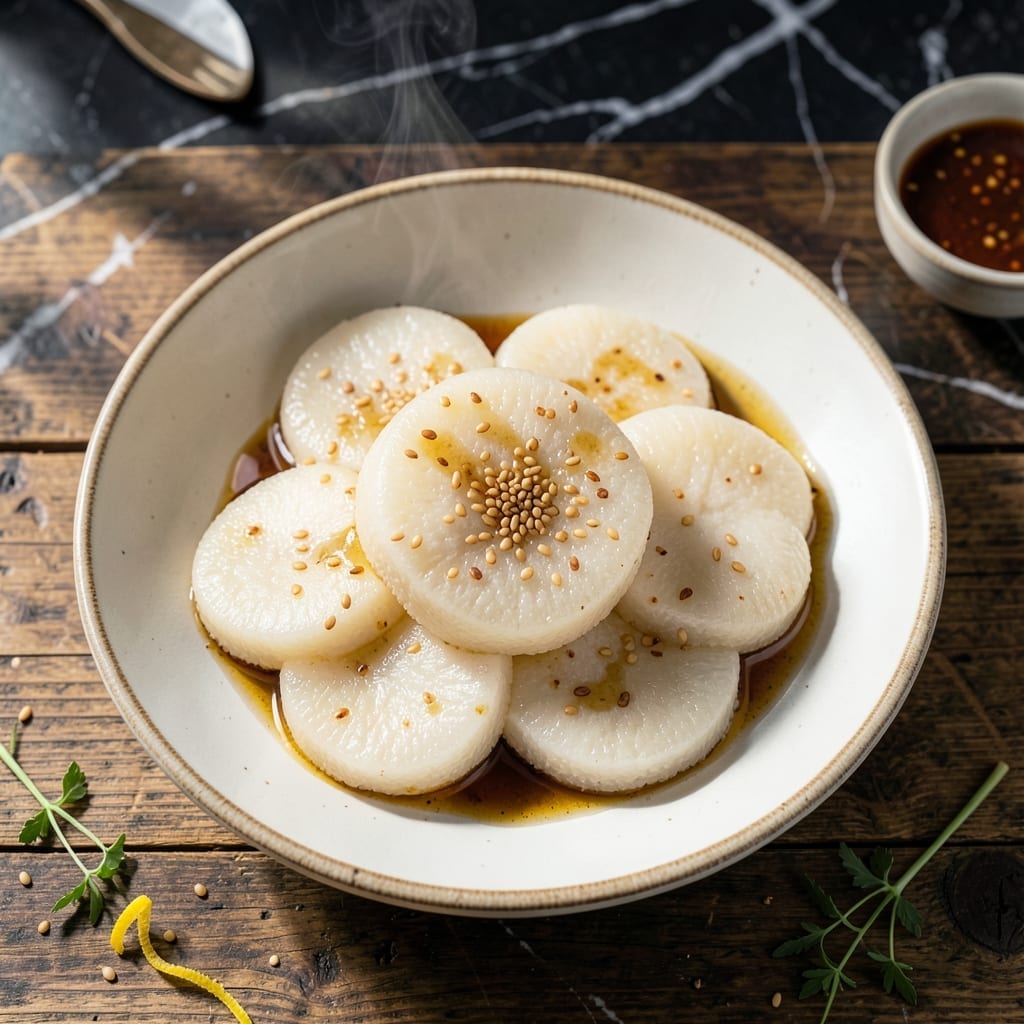
This Korean-style rice cake recipe delivers the perfect balance of crispy edges and chewy centers that define authentic street food. My version simplifies traditional methods without sacrificing texture or flavor.
The secret lies in the double-cooking technique: first steaming the rice flour batter, then pan-frying for that signature crispy exterior. Each bite offers a satisfying contrast that keeps you coming back for more.
With just a handful of ingredients and 30 minutes, you can recreate this beloved Korean treat at home. The process is straightforward but requires attention to detail for ideal results.
The finished cakes should be golden brown with a slightly crispy crust giving way to a soft, stretchy interior. Serve warm for the best experience.
Ingredients for Gcn Rice Cake
A handful of pantry staples transforms into this authentic Korean street food delight.
| Ingredient | Amount | Notes |
|---|---|---|
| Rice Flour 🌾 | 2 cups | Glutinous or sweet rice flour essential |
| Water 💧 | 1 ½ cups | Warm for even mixing |
| Salt 🧂 | ½ tsp | Fine sea salt preferred |
| Sugar 🍚 | 1 tbsp | Granulated white sugar |
| Vegetable Oil 🫒 | ¼ cup | For frying, neutral flavor |
| Sesame Oil 🫒 | 1 tsp | Toasted for authentic flavor |
| Green Onions 🧅 | 4 whole | Thinly sliced for garnish |
| Garlic Cloves 🧄 | 2 cloves | Minced for batter |
| Soy Sauce 🥄 | 2 tbsp | Low-sodium preferred |
| Gochujang 🌶️ | 1 tbsp | Korean chili paste optional |
| Sesame Seeds 🌰 | 1 tbsp | Toasted for garnish |
The rice flour must be glutinous or sweet rice flour—regular rice flour won’t work. Look for it at Asian markets or the international aisle at Whole Foods. The texture difference is non-negotiable for that chewy center. I always buy Erawan or Mochiko brands for consistent results. Warm water helps the batter come together smoothly without lumps.
No gochujang? Sriracha or gochugaru (Korean chili flakes) can substitute in a pinch. If avoiding spice, just omit it—the cakes will still be delicious. The soy sauce can be tamari for gluten-free. For extra flavor depth, add a splash of fish sauce (though omit for strict vegetarian). The sesame oil is key—Kadoya is my go-to brand.
Store rice flour in an airtight container for up to 6 months. The batter can rest 30 minutes before cooking if needed. Cooked cakes are best fresh but reheat well in a toaster oven for 2-3 days. Freeze extras for up to 1 month.
Why You’ll Love This Recipe
- One Bowl Wonder: I just mix rice flour, water, and a pinch of salt—no fancy tools, no mess.
- Sweet & Simple: The sugar caramelizes in the oil, giving it that perfect crispy-sweet bite every time.
- Breakfast or Snack: I’ve served these warm for breakfast or packed them cold for lunchboxes—both work.
- Pantry Staples: Rice flour and basic ingredients mean I can make these even when the fridge is bare.
Step-by-Step Instructions for Korean-Style Rice Cake
Master the technique for achieving that signature crispy exterior and chewy interior every time.
Step 1: Prepare the Batter with Precision
In a large mixing bowl, whisk together the 2 cups Rice Flour, 0.5 tsp Salt, and 1 tbsp Sugar until fully combined. The rice flour must be glutinous variety—this is non-negotiable for achieving the proper chewy texture in your creation.
Gradually add the 1.5 cups Water while whisking continuously to prevent lumps from forming. The batter should be smooth and thick, resembling pancake batter. Add the 2 cloves Garlic Cloves (minced) and 1 tsp Sesame Oil, then whisk again until fully incorporated. Let the batter rest for 10 minutes to allow the flour to hydrate completely.
Step 2: Cook the Rice Cakes to Golden Perfection
Heat the 0.25 cup Vegetable Oil in a large non-stick skillet over medium-high heat. Once the oil shimmers and a drop of water sizzles when flicked in, you’re ready to cook. Pour ¼ cup of batter into the pan for each cake, spreading it slightly to form 4-inch rounds.
Cook for 3-4 minutes until the edges turn golden brown and crispy, with bubbles forming on the surface. Resist the urge to flip too early—wait until the top looks mostly set. Flip carefully and cook for another 2-3 minutes until the second side achieves the same golden brown color. Transfer to a paper towel-lined plate to drain excess oil.
Step 3: Prepare the Savory Sauce
In a small bowl, combine the 2 tbsp Soy Sauce, 1 tbsp Gochujang, and any remaining Sesame Oil from the batter preparation. Whisk until smooth. The gochujang adds a subtle heat and depth of flavor that complements the crispy texture of your rice cakes.
Taste and adjust the seasoning if needed, though the balance of salty, sweet, and spicy should be perfect with these proportions. This sauce will be drizzled over the finished rice cakes, so ensure it’s well-mixed and free of lumps.
Step 4: Assemble and Garnish for Serving
Arrange the cooked rice cakes on a serving platter. Drizzle the prepared sauce generously over each cake, allowing it to soak into the crispy surface slightly. Sprinkle the 4 whole Green Onions (thinly sliced) evenly across the top, followed by the 1 tbsp Sesame Seeds for added texture and visual appeal.
Serve immediately while the rice cakes are still hot and at their crispiest. The contrast between the warm, crispy exterior and the chewy interior, paired with the savory-sweet sauce and fresh garnishes, creates the perfect bite. This dish is best enjoyed fresh, as the texture changes significantly once cooled.
Pro Tips For Making Gcn Rice Cake
- Steam Evenly: Use a tight-fitting lid and medium-low heat—after burning my first batch, I learned uneven steam makes dense, gummy spots.
- Sift the Flour: Rice flour clumps like crazy; sifting it first gives you that smooth, tender texture instead of a lumpy mess.
- Skip Cold Water: I was skeptical until I tried it, but warm water blends into the rice flour faster and prevents those stubborn dry pockets.
- Oil the Pan Well: About 1 tablespoon of vegetable oil, swirled to coat every inch—this is the only way to get the cake out clean without tearing.
Storing and Reheating Leftovers
Short-Term Storage
Let your rice cakes cool completely before storing. Place in an airtight container with parchment paper between layers to prevent sticking. They’ll keep at room temperature for 1 day, but I prefer refrigerating after 2 hours for food safety. ❄️
Refrigerator Storage
Store in the fridge for up to 3 days. The texture will soften, but a quick reheat restores some crispness. I use glass containers to maintain freshness and prevent odors from seeping in. Always let them cool first to avoid condensation.
Freezing for Later
Freeze uncooked batter in a sealed container for up to 1 month. For cooked cakes, freeze in a single layer first, then transfer to a bag. Reheat directly from frozen in a skillet over medium heat for 3-4 minutes per side.
Reheating Methods
For best results, use a toaster oven at 375°F for 5-7 minutes. This revives the crispy texture better than a microwave. If using a microwave, place on a paper towel and heat for 30-45 seconds to prevent sogginess. 🔥
Sauce Storage
Store leftover sauce separately in a small jar. It keeps in the fridge for up to 5 days. The flavors actually deepen over time, making it great for dipping or drizzling on fresh batches. Stir before using as ingredients may settle.
Nutrition Facts
Frequently Asked Questions
What makes these rice cakes crispy?
The double-cooking method creates the perfect texture. First, medium-high heat in the pan forms a golden crust, then resting on a paper towel removes excess oil.
Can I make these without gochujang?
Omit it for a milder flavor or substitute with 1 tsp sriracha. The soy sauce and sesame oil still provide plenty of taste.
Why did my rice cakes turn out gummy?
This usually means the batter was too thick or flipped too soon. Ensure the top looks set before flipping, and use exactly 1.5 cups warm water.
How do I get even browning?
Use a non-stick skillet and ¼ cup batter per cake. Keep heat at medium-high and avoid moving the cakes until ready to flip.

- Jollof Rice Sauce Recipe: West African Tomato and Spice Infusion - September 25, 2026
- Japanese Rice Soup Recipe: Umami-Rich Comfort in a Bowl - September 25, 2026
- Homemade Cream Of Rice Recipe: Silk-Smooth Breakfast in Minutes - September 25, 2026