
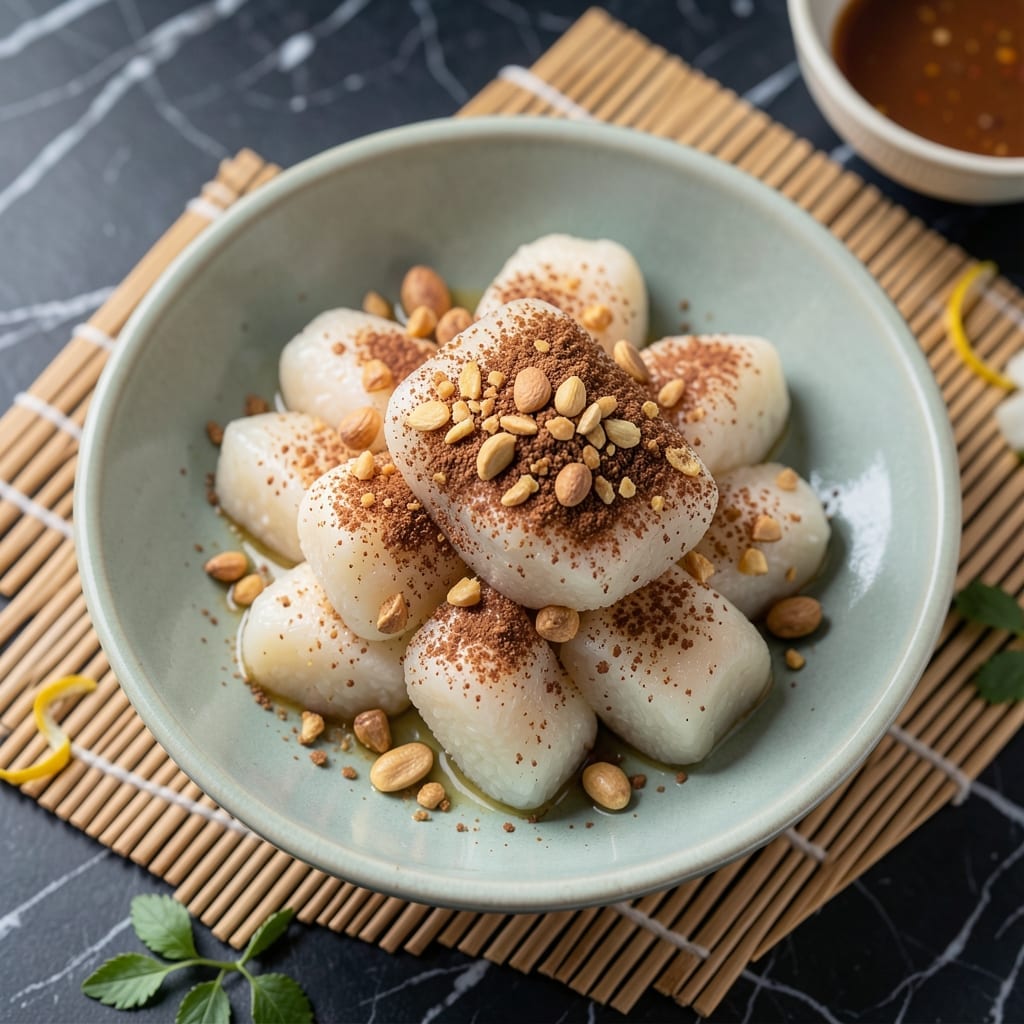
This traditional Korean dessert transforms simple ingredients into soft, chewy pillows that melt in your mouth. The texture comes from glutinous rice flour, which creates that signature bouncy consistency when steamed.
What makes this version special is the balance between the mild sweetness of the cakes and the rich, nutty toppings. The steaming process ensures each piece stays tender while developing a slightly sticky surface that holds the toppings perfectly.
You’ll end up with delicate rice cakes that are slightly translucent with a subtle gloss. The contrast between the smooth cakes and crunchy toppings creates a satisfying experience with every bite.
Perfect for celebrations or a special treat, this dish brings authentic Korean flavors to your kitchen.
Ingredients for Korean Glutinous Rice Cake
Transform simple pantry staples into these delicate, bouncy Korean rice cakes with nutty toppings.
| Ingredient | Amount | Notes |
|---|---|---|
| Glutinous Rice Flour 🌾 | 2 cups | Also called sweet rice flour |
| Granulated Sugar 🧂 | ½ cup | Adjust to taste preference |
| Hot Water 💧 | 1 ¼ cups | For dough consistency |
| Salt 🧂 | ¼ tsp | Fine sea salt preferred |
| Roasted Soybean Powder 🌿 | ½ cup | For nutty topping, optional |
| Crushed Peanuts 🥜 | ½ cup | Lightly toasted for crunch |
| Brown Sugar 🧈 | 2 tbsp | For topping sweetness |
| Sesame Oil 🫒 | 1 tbsp | Toasted for aroma |
| Sesame Seeds 🌰 | 2 tbsp | Toasted for garnish |
| Cinnamon Powder 🌿 | ½ tsp | Optional for warm spice |
| Red Bean Paste 🍮 | ½ cup | Sweet filling option |
| Vegetable Oil 🫒 | 1 tsp | For greasing steamer |
The glutinous rice flour is non-negotiable here—look for brands like Mochiko at Asian markets or the international aisle. Bob’s Red Mill also carries it in most supermarkets (the blue bag). Don’t confuse it with regular rice flour; the texture won’t be the same. The roasted soybean powder, called kongnamul garu, is worth hunting down at H Mart or Korean grocery stores (it adds that authentic nutty depth).
No roasted soybean powder? Crushed roasted soybeans or extra peanuts work in a pinch. For the red bean paste, canned sweet red bean paste from the Asian aisle saves time, or make your own with adzuki beans and sugar. The cinnamon is optional but adds warmth—skip if you prefer a purer nutty flavor. The sesame oil can be replaced with neutral oil if needed (though you’ll lose some aroma).
The rice cakes are best eaten fresh, same day. Store leftovers in an airtight container for up to 2 days—microwave briefly with a damp paper towel to soften before serving. The topping ingredients keep for 1 week in the pantry.
Why You’ll Love This Recipe
- I’ll be real: leftovers taste just as good the next day, if they last that long.
- Five Ingredients: I just need glutinous rice flour, sugar, hot water, salt, and roasted soybean powder—nothing extra.
- Chewy Sweetness: The soft, stretchy texture with that subtle nutty finish from the soybean powder is ridiculously good.
- Weeknight Friendly: Honestly, it’s ready before the kids finish arguing over who sets the table.
Step-by-Step Instructions for Korean Glutinous Rice Cake
Here’s the method I use to create pillowy, chewy rice cakes with irresistible nutty toppings.
Step 1: Prepare the Rice Cake Dough
In a large mixing bowl, combine the 2 cups glutinous rice flour, 0.5 cup granulated sugar, and 0.25 tsp salt. Gradually pour in the 1.25 cups hot water while stirring continuously with a wooden spoon to prevent lumps from forming.
The dough will start off thin but should thicken into a smooth, sticky batter as you incorporate all the water. You’re aiming for a consistency similar to thick pancake batter—it should slowly ribbon off the spoon. If it seems too thin, let it rest for 5 minutes; the flour will absorb more liquid.
Step 2: Steam the Dough Until Firm
Lightly grease a steamer basket with the 1 tsp vegetable oil to prevent sticking. Pour the dough into the prepared steamer, spreading it into an even layer about 1 inch thick. The surface should be smooth but doesn’t need to be perfect.
Bring water to a boil in your steaming pot, then place the steamer basket on top. Cover with a lid and steam over medium-high heat for 20-25 minutes. Check that the water doesn’t boil dry—add more hot water if needed. The rice cake is done when it’s firm to the touch and a toothpick inserted comes out clean.
Step 3: Prepare the Nutty Topping Mixture
In a dry skillet over medium heat, lightly toast the 0.5 cup crushed peanuts and 2 tbsp sesame seeds for 2-3 minutes until fragrant. Be careful not to let them burn—they should be just golden brown with a deep nutty aroma.
Transfer to a bowl and mix in the 0.5 cup roasted soybean powder, 2 tbsp brown sugar, 1 tbsp sesame oil, and 0.5 tsp cinnamon powder. The mixture should be crumbly but hold together slightly when pressed. This creates that signature nutty, aromatic topping that makes these rice cakes so special.
Step 4: Add Filling and Top with Nut Mixture
Once the rice cake has cooled slightly (but is still warm), spread the 0.5 cup red bean paste evenly over the top, leaving a small border around the edges. The warmth of the rice cake will help the paste spread more easily, creating a smooth, sweet layer.
Sprinkle the nut mixture generously over the red bean paste, pressing down lightly so it adheres. You want a thick, even layer that covers the entire surface. Let the rice cake cool completely at room temperature for about 30 minutes before slicing—this helps it set and makes for cleaner cuts.
Step 5: Slice and Serve
Using a sharp knife, cut the rice cake into squares or rectangles. I find that 1-inch pieces work well for bite-sized portions. The knife should slide through cleanly if the rice cake has set properly.
Serve at room temperature or slightly warmed. The texture should be chewy with a slight bounce, and each piece should have a perfect balance of sweet filling and crunchy nut topping. These keep well in an airtight container for up to 3 days, though they’re best enjoyed fresh.
Pro Tips For Making Korean Glutinous Rice Cake
- Steam Evenly: Use a bamboo steamer and make sure the water is at a rolling boil before adding the cake—this guarantees the rice cakes cook through without a gummy center.
- Sift the Flour: Glutinous rice flour clumps easily, so sift it before mixing to avoid dense, rubbery rice cakes.
- Skip Cold Water: Hot water dissolves the sugar and activates the flour better—cold water just makes the dough stubborn and lumpy.
- Coat with Care: Roll the finished cakes in roasted soybean powder while they’re still warm—it sticks better and gives that classic nutty finish.
Dietary Considerations for korean glutinous rice cake
Gluten-Free Friendly
Despite the name, glutinous rice flour contains no gluten—it’s naturally 100% gluten-free. This makes the dish perfect for anyone with celiac disease or gluten sensitivity. Just ensure your other ingredients, like soybean powder, aren’t processed in facilities with gluten-containing grains. 💪
Vegan Adaptations
The base recipe is already plant-based, using only rice flour, sugar, and water. For the toppings, simply check that your red bean paste doesn’t contain honey or dairy. I recommend Chung Jung One brand for guaranteed vegan paste.
Nut Allergy Options
For nut-free versions, replace peanuts with toasted pumpkin seeds or sunflower seeds. Swap the soybean powder for toasted coconut flakes or additional sesame seeds. The texture remains fantastic, and the flavor stays authentic.
Sugar Reduction
You can cut the granulated sugar by half without affecting texture. The red bean paste and brown sugar topping still provide plenty of sweetness. I’ve made batches with coconut sugar for a lower glycemic option.
Low-FODMAP Note
This recipe isn’t naturally low-FODMAP due to the red bean paste. However, you can make a version using maple syrup in the dough and omitting the bean paste. The nut topping remains safe in small portions.
Storage Considerations
For those managing diabetes, portion the cakes into 1-inch squares and store in the freezer. This prevents overindulging and lets you enjoy just 1-2 pieces at a time when cravings strike. ✨
Nutrition Facts
Frequently Asked Questions
What can I use instead of glutinous rice flour?
There’s no perfect substitute—this flour is essential for the chewy texture. In a pinch, you can try tapioca starch, but the result won’t be the same. Always check for 100% glutinous rice flour labels.
Why did my rice cakes turn out hard?
Over-steaming or using too little water in the dough can cause this. Steam for exactly 20-25 minutes and ensure your batter resembles thick pancake batter before cooking.
How do I store leftovers?
Keep in an airtight container at room temperature for up to 2 days. For longer storage, freeze for up to 1 month and reheat by steaming with a damp towel.

- Jollof Rice Sauce Recipe: West African Tomato and Spice Infusion - September 25, 2026
- Japanese Rice Soup Recipe: Umami-Rich Comfort in a Bowl - September 25, 2026
- Homemade Cream Of Rice Recipe: Silk-Smooth Breakfast in Minutes - September 25, 2026