
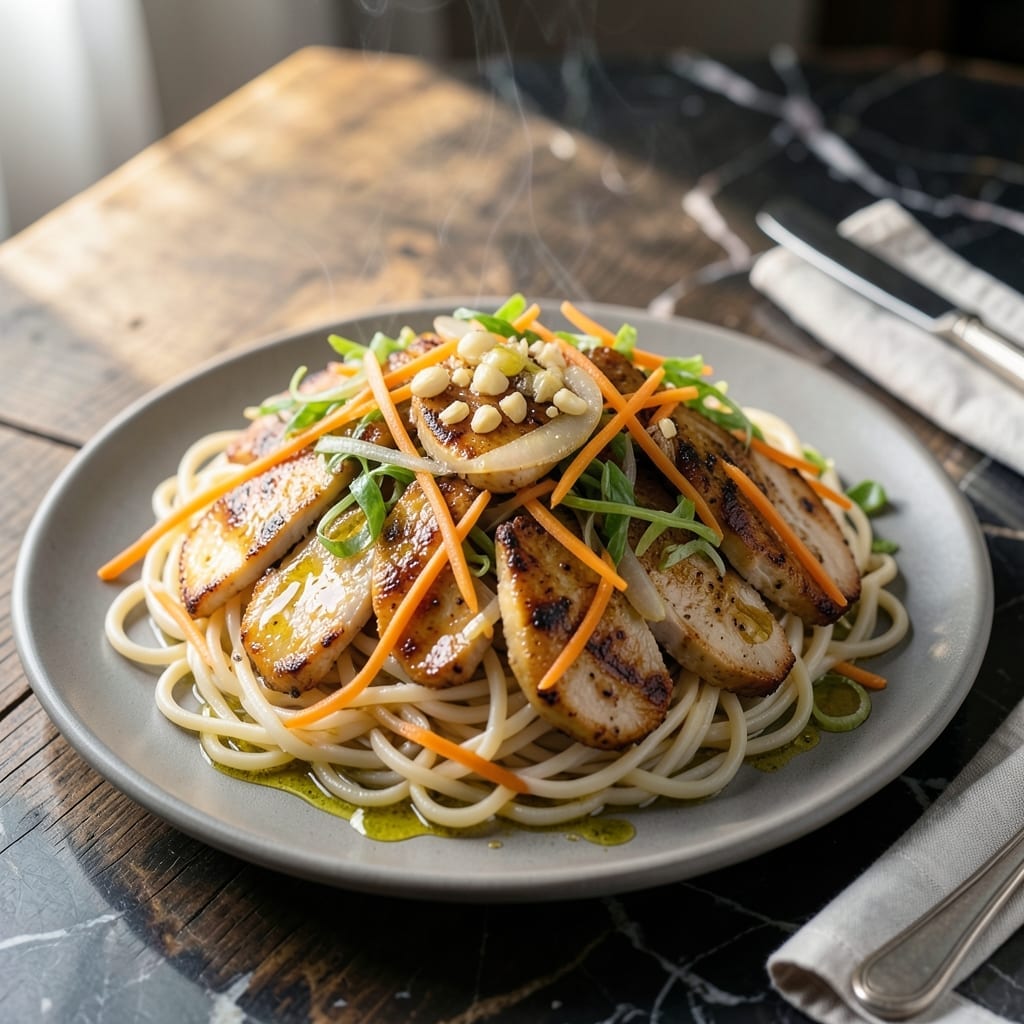
This pancit bihun brings authentic Filipino flavors to your kitchen with minimal effort. Thin rice noodles soak up the savory sauce while staying perfectly tender.
The dish comes together quickly with everyday ingredients, making it ideal for busy weeknights. Traditional pancit features a balance of textures, from crunchy vegetables to soft noodles.
What sets this version apart is the careful layering of flavors—garlic, soy sauce, and a touch of citrus create depth without complexity. The result is a satisfying meal that’s both comforting and exciting.
Serve it hot, straight from the pan, for the best experience. This recipe stays true to tradition while keeping the process approachable.
Ingredients for Filipino Rice Noodles
Everyday ingredients create this vibrant Filipino noodle dish with authentic flavors and textures.
| Ingredient | Amount | Notes |
|---|---|---|
| Rice Stick Noodles 🍜 | 8 oz | Bihun or thin rice vermicelli |
| Chicken Breast 🍗 | 1 lb | Boneless, skinless, thinly sliced |
| Carrots 🥕 | 2 whole | Julienned for crunch |
| Green Cabbage 🥬 | 3 cups | Thinly shredded |
| Garlic Cloves 🧄 | 6 cloves | Minced finely |
| Yellow Onion 🧅 | 1 whole | Thinly sliced |
| Soy Sauce 🫒 | ½ cup | Use low-sodium if preferred |
| Oyster Sauce 🥫 | 3 tbsp | Vegetarian oyster sauce if needed |
| Chicken Broth 🍲 | 2 cups | Low-sodium preferred |
| Calamansi Juice 🍋 | 2 tbsp | Lime juice as substitute |
| Green Onions 🧅 | ½ cup | Thinly sliced for garnish |
| Neutral Oil 🛢️ | 2 tbsp | For stir-frying |
| Ground Black Pepper 🌶️ | ½ tsp | Freshly cracked preferred |
| Salt 🧂 | ½ tsp | Adjust to taste |
The rice stick noodles are non-negotiable—look for bihun or thin rice vermicelli in the Asian aisle at Whole Foods or H Mart. Avoid thicker varieties as they won’t absorb the sauce properly. For the chicken, thinly sliced breast ensures even cooking without chewiness. The cabbage should be fresh with crisp leaves (avoid pre-shredded mixes, which wilt too quickly).
Need a vegetarian version? Swap chicken for tofu or shiitake mushrooms. Out of oyster sauce? Hoison sauce at half the amount works in a pinch. Calamansi juice is traditional, but fresh lime or lemon juice substitutes well. For extra umami, add a dash of fish sauce (omit for full vegetarian). The soy sauce can be tamari for gluten-free.
Store uncooked noodles in a cool, dry place for up to 1 year. Leftovers keep in the fridge for 3-4 days (reheat with a splash of water to revive). For best texture, serve immediately after cooking—noodles absorb sauce and soften as they sit.
Why You’ll Love This Recipe
- One Pot Meal: I toss everything in a single pan—noodles, chicken, and veggies—then let the garlic work its magic while I set the table.
- Garlic Infused Bite: The minced garlic cloves sautéed in oil give these noodles a deep, savory aroma that makes the whole kitchen smell incredible.
- Feeds My Crowd: Between us, this stretches to feed four with leftovers for lunch tomorrow, and my picky nephew even eats the cabbage.
- Pantry Superstar: Rice sticks and chicken breast are cheap staples, and I always have carrots and cabbage on hand for this exact dish.
Step-by-Step Instructions for Pancit Bihun with Chicken and Vegetables
Master this classic technique for perfectly balanced textures and authentic Filipino flavor.
Step 1: Prepare the Noodles and Protein
Soak the 8 oz rice stick noodles in warm water for 10-12 minutes until pliable but still slightly firm. Drain thoroughly and set aside—this prevents them from turning mushy during stir-frying. Meanwhile, slice the 1 lb chicken breast into thin strips against the grain for maximum tenderness.
Season the chicken lightly with 0.5 tsp salt and 0.5 tsp ground black pepper. This early seasoning ensures the meat absorbs flavor throughout. I always keep the chicken strips uniform in size so they cook evenly and integrate seamlessly with the noodles.
Step 2: Stir-Fry the Aromatics and Chicken
Heat 2 tbsp neutral oil in a wok over medium-high heat until shimmering. Add the 6 cloves minced garlic cloves and 1 whole thinly sliced yellow onion, stir-frying for 1-2 minutes until fragrant and translucent. The garlic should just begin to turn golden at the edges—watch closely to prevent burning.
Increase heat to high, add the seasoned chicken, and cook for 4-5 minutes until opaque and cooked through. Remove the chicken from the wok and set aside. This two-stage cooking prevents overcrowding, which would steam the chicken instead of searing it.
Step 3: Cook the Vegetables and Noodles
In the same wok, add the 2 whole julienned carrots and stir-fry for 2 minutes until slightly softened but still crisp. Add the 3 cups thinly shredded green cabbage and cook for another 2-3 minutes until the cabbage wilts but retains its vibrant color and crunch.
Add the drained rice stick noodles, 0.5 cup soy sauce, 3 tbsp oyster sauce, and 2 cups chicken broth. Toss everything together vigorously for 3-4 minutes until the noodles absorb most of the liquid and become tender but not soggy.
Step 4: Finish and Serve
Return the cooked chicken to the wok and stir to combine. Drizzle in the 2 tbsp calamansi juice and toss once more to distribute the bright, citrusy flavor evenly. Taste and adjust seasoning if needed—the sauce should be savory with a subtle tang.
Transfer to a serving platter and garnish with the 0.5 cup thinly sliced green onions. The green onions add a fresh, sharp contrast to the rich, umami-packed noodles. Serve immediately while hot, as the noodles will continue to absorb liquid as they sit.
Pro Tips For Making Filipino Rice Noodles
- Soak Noodles First: Cover rice sticks in warm water for 8-10 minutes until pliable but still firm—I learned this the hard way after ending up with mushy noodles more than once.
- Slice Chicken Thin: Cut the breast into ¼-inch strips against the grain so it cooks through in 2-3 minutes without turning chewy.
- Garlic Low and Slow: Cook minced garlic in oil on medium-low until just golden, about 30 seconds, or it’ll bitter up the whole dish.
- Cabbage Last: Toss in the green cabbage at the very end—2 minutes max—so it stays crisp and bright instead of wilting into oblivion.
Dietary Considerations for These Flavors
Gluten-Free Friendly
This dish is naturally gluten-free when using 100% rice stick noodles and tamari instead of regular soy sauce. I always check labels at my local Whole Foods to ensure no wheat cross-contamination.
Vegetarian Adaptation
Swap the 1 lb chicken breast for 14 oz extra-firm tofu or shiitake mushrooms. Use vegetarian oyster sauce—I’ve found Kikkoman’s version works well. The texture remains just as satisfying.
Low-Sodium Option
Use low-sodium soy sauce and low-sodium chicken broth to reduce salt content. I often add 1 tsp fish sauce for umami without extra sodium. The dish still packs plenty of flavor.
Nut Allergy Note
This recipe is nut-free as written. However, some oyster sauce brands may contain traces. I recommend Lee Kum Kee for reliable nut-free production.
Make It Lighter
Reduce the neutral oil to 1 tbsp and use a non-stick wok. The dish stays flavorful while cutting calories. I often add extra cabbage for volume without heaviness. 💪
Apparent Simplicity
Despite its humble ingredients, this dish delivers complex flavors. The key is the balance between soy sauce, oyster sauce, and calamansi juice. I love how it proves that simple can be extraordinary.
Nutrition Facts
Frequently Asked Questions
What’s the best substitute for calamansi juice?
Fresh lime or lemon juice works perfectly as a substitute. Use the same 2 tbsp measurement for balanced citrus flavor.
Can I use thicker rice noodles instead?
Thicker noodles won’t absorb the sauce as well and may become mushy. Stick with thin bihun or rice vermicelli for authentic texture.
How do I prevent the noodles from sticking?
Rinse the soaked noodles with cold water and drain well before cooking. Use medium-high heat and stir constantly to keep them separate.
Can I make this dish ahead of time?
It’s best served immediately, but leftovers keep for 3-4 days in the fridge. Reheat with a splash of water to refresh the texture.

- Fresh Turmeric Rice Recipe: Golden Grains with Earthy Warmth - October 7, 2026
- French Onion Brown Rice Recipe: Umami-Rich Grains With Caramelized Depth - October 7, 2026
- Rice Noodle Soup Recipe: Aromatic Broth with Silky Strands - October 7, 2026