
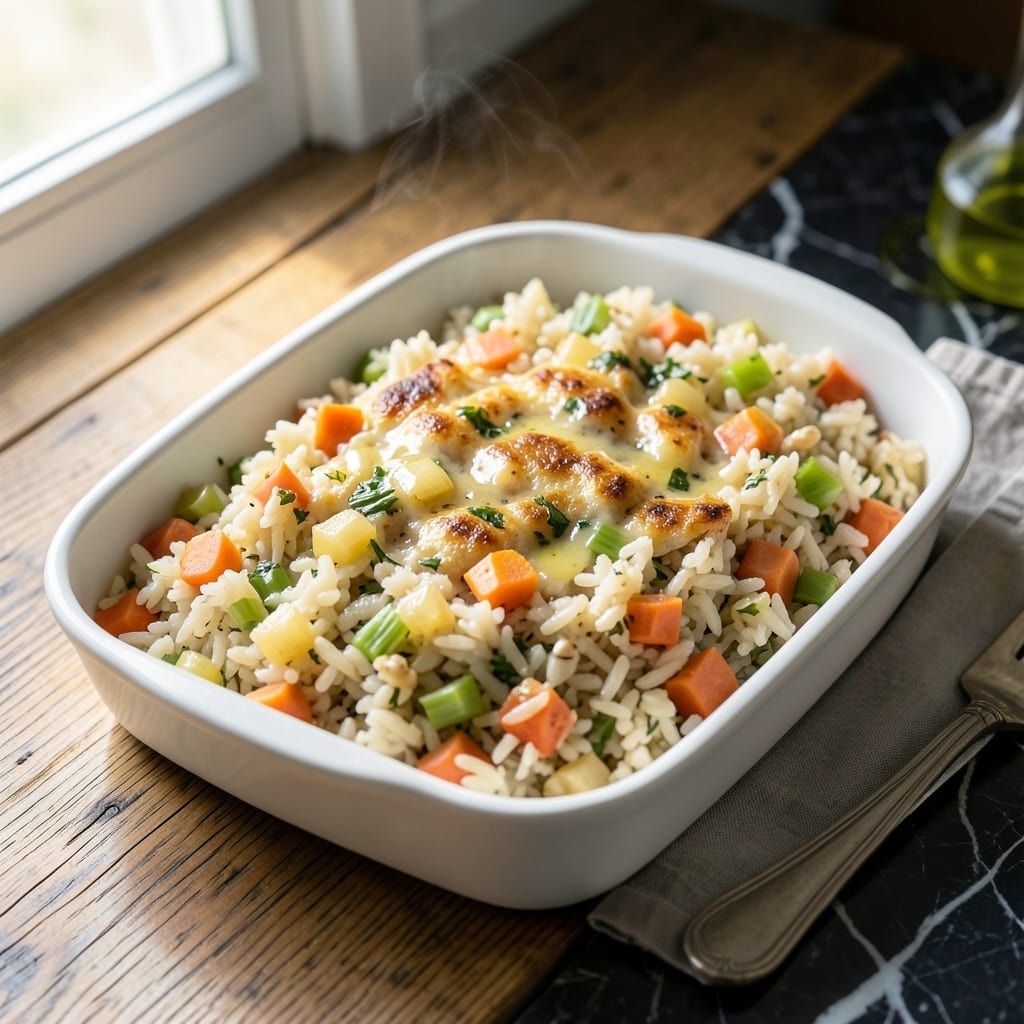
This gluten-free rice stuffing brings all the holiday comfort without the gluten. I’ve perfected a herb-infused version that’s just as rich and satisfying as traditional bread-based stuffing.
With fluffy rice, fresh herbs, and aromatic vegetables, this dish delivers the same hearty texture and festive flavor. It’s the perfect side for your holiday table.
Ingredients for Gluten Free Rice Stuffing
Pantry staples and fresh herbs make this holiday side sing without gluten.
| Ingredient | Amount | Notes |
|---|---|---|
| Long-Grain White Rice 🍚 | 2 cups | Uncooked, rinsed thoroughly |
| Vegetable Stock 🥫 | 4 cups | Low-sodium preferred for control |
| Yellow Onion 🧅 | 1 whole | Medium-sized, finely diced |
| Celery Stalks 🌿 | 3 pieces | Finely diced, leaves included |
| Carrots 🥕 | 2 whole | Medium, finely diced |
| Garlic Cloves 🧄 | 4 cloves | Minced for even distribution |
| Fresh Sage Leaves 🌿 | ¼ cup | Chopped, packed tightly |
| Fresh Thyme Sprigs 🌿 | 2 tbsp | Leaves stripped from stems |
| Fresh Rosemary 🌿 | 1 tbsp | Finely chopped, no stems |
| Dried Cranberries 🍒 | ½ cup | Sweetened, for festive touch |
| Pecans 🌰 | ½ cup | Chopped, lightly toasted |
| Unsalted Butter 🧈 | 4 tbsp | Or olive oil for dairy-free |
| Kosher Salt 🧂 | 1 tsp | Diamond Crystal preferred |
| Ground Black Pepper 🌶️ | ½ tsp | Freshly cracked for best flavor |
The rice is the foundation—jasmine or basmati give that fluffy texture we’re after. Whole Foods or Trader Joe’s have great organic options. Fresh herbs are non-negotiable here; sage, thyme, and rosemary form the aromatic backbone. I grab mine from the farmers market when possible (the scent alone tells you it’s fresh). For the vegetable stock, Better Than Bouillon is my go-to for depth without gluten.
No fresh herbs? Dried at one-third the amount works, but fresh really shines. Swap pecans for walnuts or almonds if that’s what you’ve got. The dried cranberries add a sweet contrast—chopped dried apricots are a great alternative. For a nut-free version, toasted gluten-free bread cubes add that crunch. Short on time? Pre-diced mirepoix from the grocery store (check for gluten) saves minutes.
This reheats like a dream—3-4 days in the fridge, or freeze for up to 3 months. The flavors actually deepen overnight. Store herbs wrapped in damp paper towels, and keep the rice airtight to avoid staleness. Leftovers? Perfect stuffed into bell peppers the next day.
Why You’ll Love This Recipe
- One Pot Wonder: I just dump everything in and let the rice soak up all that rich vegetable stock flavor.
- Rich Veggie Depth: The onion, celery, and carrots cook down into this cozy, savory mix that tastes like home.
- Holiday or Tuesday: Honestly, it’s just as good with turkey at Thanksgiving as it is with roasted chicken on a random weeknight.
- Stretches Far: Leftovers reheat beautifully, and it’s cheap—long-grain rice and veggies go a long way.
Step-by-Step Instructions for Herb-Infused Rice Stuffing
This method delivers perfectly seasoned stuffing with a delightful texture every time.
Step 1: Sauté Aromatics in Butter
Melt the 4 tbsp Unsalted Butter in a large skillet over medium heat. Add the finely diced 1 whole Yellow Onion, 3 pieces Celery Stalks, and 2 whole Carrots. Cook for 8-10 minutes until the vegetables soften and the onion becomes translucent.
This builds the flavor foundation. Stir occasionally to prevent browning, but let the vegetables develop some color at the edges. The mixture should smell fragrant and sweet when it’s ready for the next step.
Step 2: Toast Herbs and Rice
Add the minced 4 cloves Garlic Cloves, chopped 0.25 cup Fresh Sage Leaves, stripped 2 tbsp Fresh Thyme Sprigs, and chopped 1 tbsp Fresh Rosemary to the skillet. Stir for 1-2 minutes until the herbs release their aroma.
Then add the 2 cups Long-Grain White Rice and toast for 2 minutes, stirring constantly. The rice should turn slightly opaque and smell nutty. This step enhances the rice’s natural flavor and prevents a starchy finish.
Step 3: Simmer with Stock and Fruits
Pour in the 4 cups Vegetable Stock, 0.5 cup Dried Cranberries, and 0.5 cup Pecans. Add the 1 tsp Kosher Salt and 0.5 tsp Ground Black Pepper. Bring to a gentle boil, then reduce heat to low.
Cover and simmer for 18-20 minutes until the rice is tender and the liquid is absorbed. Resist the urge to peek—every time you lift the lid, you release precious steam that affects the cooking time.
Step 4: Rest and Fluff
Remove from heat and let stand covered for 10 minutes. This allows the rice to steam and the flavors to meld together. The cranberries will plump up beautifully, and the pecans will soften slightly while retaining a pleasant crunch.
Finally, fluff with a fork to separate the grains. The stuffing should have a light, airy texture with the vegetables and fruits evenly distributed throughout. Serve warm for the best experience.
Pro Tips For Making Gluten Free Rice Stuffing
- Toast the Rice: Cook the rice in a dry pan for 2-3 minutes before adding liquid—it deepens the nutty flavor and prevents mushiness. I learned this the hard way after my first few batches turned out bland.
- Sauté Veggies Longer: Give the onion, celery, and carrots a full 8-10 minutes in the pan until they’re soft and just starting to brown. Sounds tedious, but it builds the base flavor that gluten-free stuffing often lacks.
- Use Warm Stock: Pouring cold vegetable stock over the rice drops the temperature and slows cooking. Heat it first to keep the process steady and even.
- Let It Rest: After baking, give the stuffing 10 minutes covered with foil. It lets the rice absorb any lingering liquid and keeps it from crumbling when served.
Common Mistakes When Making Perfect Results
Overcooking the Rice
Rice can turn mushy if overcooked. Stick to the 18-20 minute simmer time and resist peeking. I learned this the hard way when my first batch turned into porridge.
Skipping the Toasting Step
Toasting the rice with herbs for 2 minutes builds nutty flavor. Without this, your stuffing will taste flat. Keep stirring to prevent burning while developing aroma.
Using Wrong Stock
Not all vegetable stocks are gluten-free. I always use Better Than Bouillon to avoid hidden gluten. Check labels carefully—some brands contain wheat derivatives.
Overloading the Skillet
Crowding the pan steams vegetables instead of sautéing them. Use a large skillet and cook in batches if needed. The vegetables should sizzle, not simmer. 🔥
Skipping the Rest
The 10-minute rest is crucial for even texture. The rice absorbs final moisture and the flavors meld. I once served it immediately and regretted the uneven texture.
Ignoring Liquid Ratios
Use exactly 4 cups stock for 2 cups rice. Too much liquid makes it soggy, too little leaves it dry. Measure carefully for perfect fluffiness.
Nutrition Facts
Frequently Asked Questions
Can I use brown rice instead of white?
Yes, but increase stock to 4.5 cups and simmer for 40-45 minutes. Brown rice needs more liquid and time to soften properly.
How do I make this nut-free?
Replace pecans with toasted gluten-free bread cubes or sunflower seeds. Both add texture without compromising flavor.
Can I prepare this ahead of time?
Make up to 2 days ahead and store covered in the fridge. Reheat gently with 2 tbsp stock to restore moisture.
Why did my rice turn mushy?
Lifting the lid too often releases steam. Keep it covered for the full 18-20 minutes and resist peeking.

- Fresh Turmeric Rice Recipe: Golden Grains with Earthy Warmth - October 7, 2026
- French Onion Brown Rice Recipe: Umami-Rich Grains With Caramelized Depth - October 7, 2026
- Rice Noodle Soup Recipe: Aromatic Broth with Silky Strands - October 7, 2026