
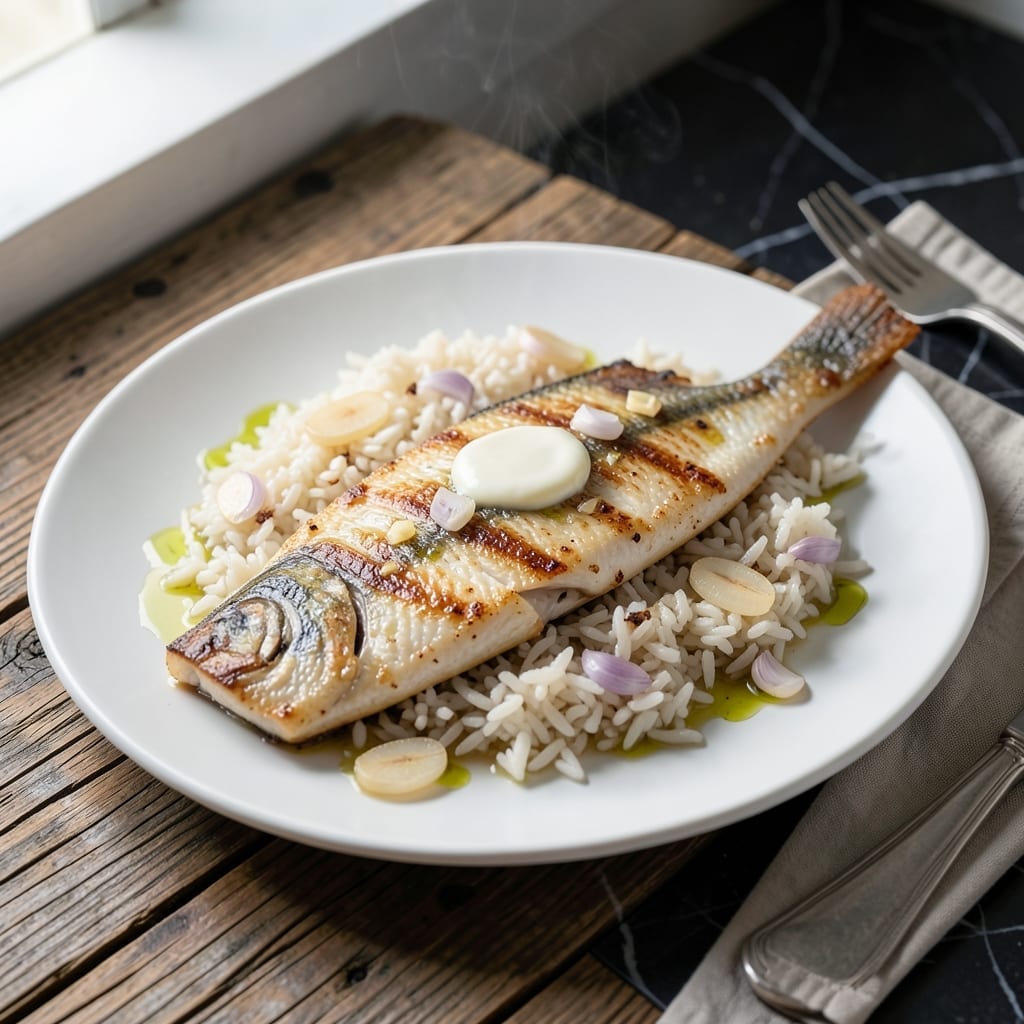
This flounder and rice dish delivers flaky fish with perfectly cooked grains every time. The key is gentle cooking that preserves the delicate texture of the flounder while infusing the rice with subtle flavor.
I’ve refined this method to ensure the fish stays moist and tender, with rice that absorbs just the right amount of seasoning. It’s a balanced, elegant meal that comes together with minimal effort.
Ingredients for Flounder and Rice
Gentle cooking preserves delicate flounder while rice absorbs fragrant, subtle seasoning beautifully.
| Ingredient | Amount | Notes |
|---|---|---|
| Flounder Fillets 🐟 | 1 ½ lb | Fresh, skinless, boneless |
| Long-Grain White Rice 🍚 | 1 ½ cups | Uncooked, rinsed before use |
| Chicken Broth 🍲 | 2 ½ cups | Low-sodium preferred |
| Butter 🧈 | 3 tbsp | Unsalted, divided use |
| Shallots 🧅 | 2 whole | Finely minced |
| Garlic Cloves 🧄 | 3 cloves | Minced for depth |
| Dry White Wine 🍷 | ½ cup | Sauvignon Blanc or Pinot Grigio |
| Lemon 🍋 | 1 whole | Zested and juiced |
| Fresh Parsley 🌿 | ¼ cup | Chopped, for garnish |
| Salt 🧂 | 1 ½ tsp | Divided, kosher preferred |
| Black Pepper 🌶️ | ½ tsp | Freshly ground |
| Bay Leaf 🍃 | 1 whole | Dried, for rice infusion |
| Olive Oil 🫒 | 1 tbsp | For sautéing aromatics |
The flounder must be fresh—look for fillets that are translucent and smell like the ocean (not fishy). Whole Foods or a trusted seafood counter will have the best selection. For the rice, jasmine or basmati work just as well as long-grain white if you want a slightly floral note. The broth should be low-sodium so you control the salt content precisely.
No white wine? Extra chicken broth with a splash of lemon juice mimics the acidity. Shallots can be swapped for yellow onion at one-to-one ratio, though the flavor will be slightly sharper. If you’re out of fresh parsley, chives or dill make nice substitutes. The bay leaf is optional but adds a subtle depth worth including if you have it.
The cooked dish keeps in the fridge for 2-3 days—reheat gently to avoid drying the flounder. Rice will firm up as it cools, so a splash of broth when reheating helps. Flounder is best the day it’s cooked, but leftovers are still tasty for lunch the next day.
Why You’ll Love This Recipe
- One Pan Meal: I love that everything cooks together—flounder, rice, and shallots in one skillet with minimal cleanup.
- Rich and Buttery: The butter and chicken broth soak into the rice, giving it a depth of flavor that’s honestly hard to beat.
- Weeknight Lifesaver: This dish comes together in about 30 minutes, which is exactly what I need after a long day.
- Budget Stretcher: Flounder fillets are affordable, and the rice bulks it up so it feeds my family without breaking the bank.
Step-by-Step Instructions for Flounder and Rice
This method ensures light, flaky fish with perfectly fragrant rice every time.
Step 1: Cook the Rice with Aromatics
Rinse the 1.5 cups long-grain white rice under cold water until the water runs clear. This removes excess starch and prevents gummy rice. Drain well.
In a medium pot, heat the 1 tbsp olive oil over medium heat. Add the 2 whole shallots and sauté for 2-3 minutes until translucent. Stir in the 1.5 cups long-grain white rice and toast for 1 minute to enhance the nutty flavor.
Add the 2.5 cups chicken broth, 1 whole bay leaf, ½ tsp salt, and ¼ tsp black pepper. Bring to a boil, then reduce heat to low, cover, and simmer for 15-18 minutes until the liquid is absorbed and the rice is tender.
Step 2: Sauté the Garlic and Deglaze with Wine
While the rice cooks, melt 1 tbsp butter in a large skillet over medium heat. Add the 3 cloves garlic cloves and sauté for 30 seconds until fragrant but not browned. You want the garlic to infuse the butter with aroma without becoming bitter.
Pour in the ½ cup dry white wine and let it simmer for 3-4 minutes until reduced by half. This step builds a flavorful base for the flounder and creates a light, tangy sauce.
Step 3: Cook the Flounder Fillets
Pat the 1.5 lb flounder fillets dry with paper towels and season both sides with the remaining 1 tsp salt and ¼ tsp black pepper. This ensures the fish stays moist and absorbs the flavors well.
Add the flounder to the skillet with the wine reduction. Cook for 3-4 minutes per side until the fish is opaque and flakes easily with a fork. The fillets should release cleanly from the pan when ready. Add the remaining 2 tbsp butter to the pan during the last minute for extra richness.
Step 4: Finish with Lemon and Serve
Zest and juice the 1 whole lemon directly into the skillet. Stir gently to coat the flounder in the bright, citrusy sauce. The acid from the lemon balances the richness of the butter and wine, enhancing the flaky texture of the fish.
To serve, fluff the cooked rice with a fork and divide it among plates. Top with the flounder fillets and spoon the pan sauce over the top. Garnish with the ¼ cup fresh parsley for a pop of color and freshness. Serve immediately for the best texture and flavor.
Pro Tips For Making Flounder And Rice
- Pat Dry the Flounder: I learned this the hard way—skip drying the fillets and they’ll steam instead of sear. Press them between paper towels for 30 seconds before cooking.
- Toast the Rice First: Sounds weird, but it works: cook the rice in butter for 2 minutes before adding broth to deepen the flavor.
- Skip the Overcrowding: Resist the urge to cram all the flounder into one pan—it drops the temperature and makes the fish soggy.
- Use Warm Broth: After burning three batches, I finally figured out cold broth slows the cooking and makes the rice gummy—heat it first.
Perfect Pairings for flounder and rice
Wine Pairings
The Sauvignon Blanc or Pinot Grigio used in cooking pairs perfectly with the dish. I love a chilled New Zealand Sauvignon Blanc—its crisp acidity and citrus notes mirror the lemon in the recipe. A Pinot Grigio from Northern Italy offers a lighter, more delicate complement. 🍷
Side Dish Ideas
A simple green salad with a light vinaigrette adds freshness without overpowering the delicate flounder. I toss mixed greens with 1 tbsp olive oil and lemon juice. Alternatively, steamed asparagus or roasted zucchini work beautifully.
Bread Options
A crusty baguette or sourdough is perfect for soaking up the buttery pan sauce. Warm the bread and serve with herbed butter for extra flavor. I like to toast slices and rub with a garlic clove for a subtle kick.
Vegetable Pairings
Sautéed spinach with garlic adds a touch of earthiness that balances the dish. I cook 4 cups baby spinach in 1 tsp olive oil with 1 minced garlic clove for 2-3 minutes. The greens add color and nutrients without competing with the flounder. ✨
Finishing Touches
Add a sprinkle of lemon zest or a drizzle of extra pan sauce for brightness. Fresh dill or tarragon can replace parsley for a different herbaceous note. A pinch of red pepper flakes adds warmth if you like a subtle kick.
Nutrition Facts
Frequently Asked Questions
Can I use frozen flounder instead of fresh?
Yes, but thaw it overnight in the fridge first. Pat it very dry to ensure proper browning and prevent steaming. Frozen fillets may release more moisture, so adjust cooking time slightly.
What if I don’t have white wine?
Substitute with extra chicken broth and a splash of lemon juice. The acidity mimics wine’s role in balancing the dish’s richness.
How do I know when the flounder is done?
The fish is ready when it turns opaque and flakes easily with a fork. This typically takes 3-4 minutes per side over medium heat.
Can I make this ahead of time?
Cook the rice in advance, but prepare the flounder just before serving to maintain its delicate texture. Reheat rice with a splash of broth to restore moisture.

- Jollof Rice Sauce Recipe: West African Tomato and Spice Infusion - September 25, 2026
- Japanese Rice Soup Recipe: Umami-Rich Comfort in a Bowl - September 25, 2026
- Homemade Cream Of Rice Recipe: Silk-Smooth Breakfast in Minutes - September 25, 2026