
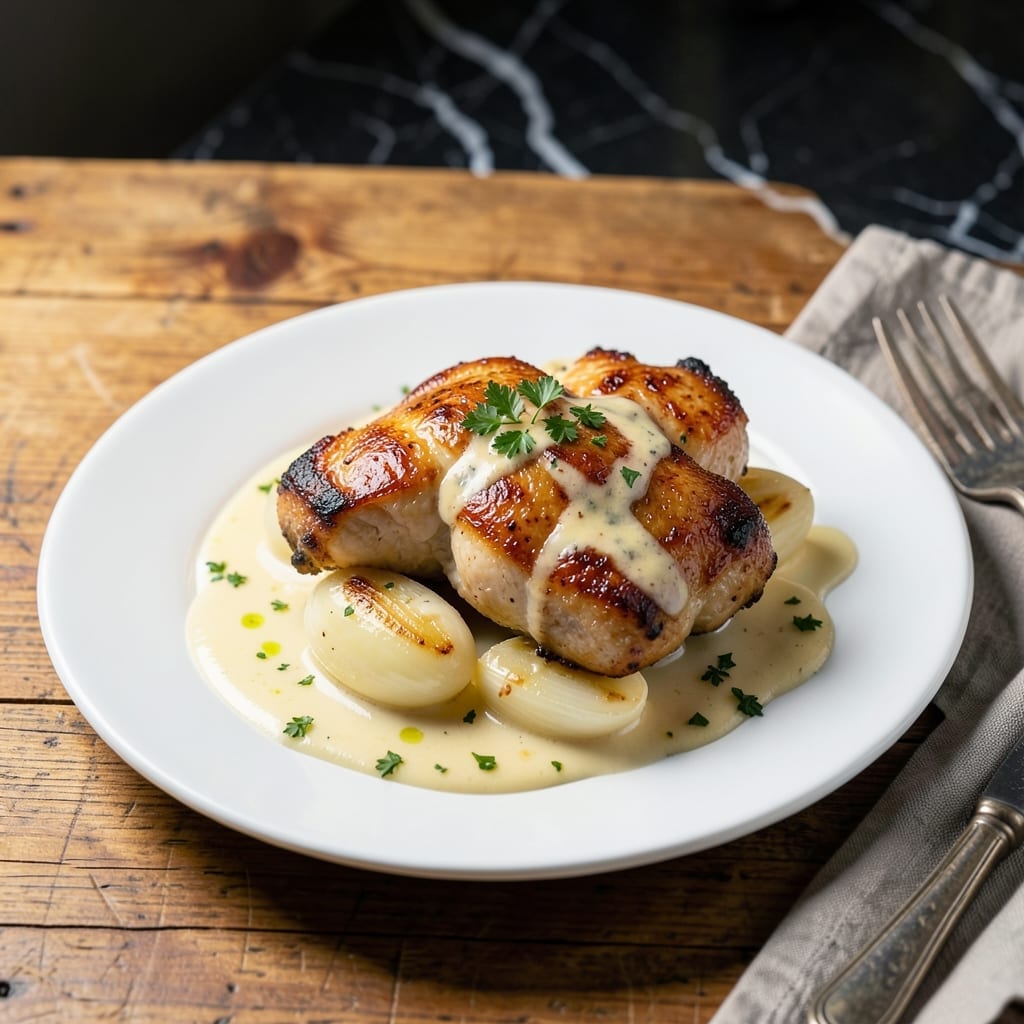
This classic French technique transforms ordinary chicken into an elegant, restaurant-worthy dish with minimal effort.
The braising method uses white wine and Dijon mustard to create a rich, velvety sauce that perfectly complements the tender meat. One pot is all you need from start to finish.
By the end, you’ll have fall-off-the-bone chicken in a creamy, tangy sauce that pairs beautifully with crusty bread or mashed potatoes.
Perfect for a special dinner or when you want to impress without spending hours in the kitchen.
Ingredients for French Chicken
Elegant French flavors with ingredients you probably have on hand. Simple but impressive.
| Ingredient | Amount | Notes |
|---|---|---|
| Chicken Thighs 🍗 | 2 lb | Boneless, skin-on preferred |
| Dijon Mustard 🟡 | 3 tbsp | Smooth, not whole grain |
| Dry White Wine 🍷 | 1 ½ cups | Sauvignon Blanc or Chardonnay |
| Chicken Stock 🥣 | 1 cup | Low-sodium preferred |
| Heavy Cream 🥛 | ½ cup | Full-fat for richness |
| Shallots 🧅 | 2 whole | Finely minced |
| Garlic Cloves 🧄 | 4 cloves | Minced into paste |
| Fresh Thyme Sprigs 🌿 | 4 sprigs | Leaves stripped from stems |
| Fresh Rosemary Sprig 🌿 | 1 whole | Leaves finely chopped |
| Unsalted Butter 🧈 | 2 tbsp | Divided for cooking |
| All-Purpose Flour 🌾 | 2 tbsp | For thickening sauce |
| Kosher Salt 🧂 | 1 ½ tsp | Diamond Crystal preferred |
| Black Pepper 🌶️ | 1 tsp | Freshly cracked |
| Olive Oil 🫒 | 1 tbsp | For searing chicken |
| Bay Leaf 🍃 | 1 whole | Dried, for braising |
The chicken is the star—thighs stay juicier than breasts through the long braise. Whole Foods or local butchers often have skin-on, bone-in stocked fresh. For the wine, dry whites like Sauvignon Blanc add acidity that balances the cream. Skip the cooking wine (it’s salty and harsh). If you’re splurging, a French Chablis adds authenticity worth the extra bucks.
No white wine? Substitute apple cider vinegar mixed with extra stock (about 2 tbsp vinegar to 1.5 cups stock). Dried thyme works at one-third the amount—just add it earlier to bloom in the fat. Heavy cream can be swapped for crème fraîche (tangier) or half-and-half (lighter). The Dijon mustard is non-negotiable though—yellow mustard won’t cut it.
The braised chicken tastes even better the next day once the flavors meld. Store in an airtight container for up to 4 days in the fridge, or freeze for 3 months. Reheat gently on the stove—microwaving can separate the sauce (worth the extra minute).
Why You’ll Love This Recipe
- One Pan Wonder: I toss everything in a single skillet—chicken, wine, cream—and let it work its magic while I set the table.
- Rich & Tangy: The Dijon mustard cuts through the cream and wine for that bold, balanced French taste I can’t get enough of.
- Fancy Enough for Guests: Honestly, it looks and tastes like a restaurant dish but costs half as much to make.
- Leftovers? Even Better: The flavors deepen overnight, so I always make extra for tomorrow’s lunch.
Step-by-Step Instructions for Dijon Mustard and White Wine Braise
This method delivers tender chicken with a rich, creamy sauce that’s restaurant-worthy yet simple.
Step 1: Sear the Chicken Thighs
Pat the 2 lb Chicken Thighs dry with paper towels and season both sides with 1.5 tsp Kosher Salt and 1 tsp Black Pepper. Heat 1 tbsp Olive Oil in a large, heavy Dutch oven over medium-high heat until shimmering.
Add the chicken skin-side down and sear undisturbed for 6-7 minutes until the skin is deep golden brown and crisp. Flip and cook for another 4-5 minutes until lightly browned. Transfer to a plate and set aside.
This searing step builds a flavorful fond in the pan, which will deepen the sauce later. Don’t rush it—proper browning ensures maximum flavor.
Step 2: Build the Aromatic Base
Reduce the heat to medium and add 2 tbsp Unsalted Butter to the pot. Once melted, stir in the 2 whole Shallots (finely minced) and cook for 2-3 minutes until softened and translucent. Add the 4 cloves Garlic Cloves (minced into paste) and cook for 30 seconds until fragrant.
Sprinkle the 2 tbsp All-Purpose Flour over the shallots and garlic, stirring constantly for 1 minute to cook out the raw flour taste. This creates a roux that will thicken the sauce beautifully.
Step 3: Deglaze and Braise
Pour in the 1.5 cups Dry White Wine and scrape the bottom of the pot with a wooden spoon to release all the browned bits. Add the 1 cup Chicken Stock, 1 whole Bay Leaf, 4 sprigs Fresh Thyme Sprigs (leaves stripped), and 1 whole Fresh Rosemary Sprig (leaves chopped).
Return the chicken to the pot, skin-side up, along with any accumulated juices. Bring to a simmer, then reduce the heat to medium-low. Cover and let braise for 25-30 minutes until the chicken is cooked through and tender.
Step 4: Finish with Cream and Mustard
Remove the chicken from the pot and set aside. Stir in the 0.5 cup Heavy Cream and 3 tbsp Dijon Mustard into the sauce. Simmer uncovered for 5-7 minutes until the sauce thickens enough to coat the back of a spoon.
Return the chicken to the pot and turn to coat in the sauce. Cook for another 2-3 minutes to heat through and meld the flavors. Taste and adjust seasoning if needed—this is where the dish really comes together.
Pro Tips For Making French Chicken
- Brown the Thighs Well: Get a deep golden crust on the chicken thighs before adding liquids—this builds the flavor base that carries through the sauce. I learned this the hard way after making pale, bland versions for years.
- Deglaze with Wine First: Pour the white wine into the hot pan right after removing the chicken to scrape up all those browned bits. That’s where the real depth of flavor hides.
- Skip Low-Fat Cream: Heavy cream is non-negotiable here—lower-fat versions curdle when mixed with the wine and mustard. I was skeptical until I tried it and saw the difference.
- Simmer, Don’t Boil: Once the cream goes in, keep the heat low to avoid splitting the sauce. A gentle simmer thickens it perfectly without turning it into a greasy mess.
Troubleshooting This Dish
Sauce Too Thin
If your braising liquid hasn’t thickened enough after adding cream, mix 1 tbsp cornstarch with 1 tbsp cold water and whisk into the simmering sauce. Cook for 2-3 minutes until glossy and coats the spoon. I always keep cornstarch on hand for this exact situation. 💡
Sauce Breaking
Cream-based sauces can separate if boiled too vigorously. If yours looks curdled, immediately reduce heat to low and whisk in 1 tbsp cold butter to re-emulsify. Avoid high heat from this point forward.
Chicken Not Tender
Braised thighs should be fall-apart tender. If yours are tough after 25-30 minutes, they likely simmered too gently. Return to medium-low heat, cover, and cook another 10-15 minutes.
Bitter Wine Flavor
Cheap cooking wine can turn harsh when reduced. If your sauce tastes bitter, balance with 1 tsp honey or 1 tbsp additional Dijon mustard. Next time, use a dry white you’d actually drink.
Herbs Overpower
Fresh herbs intensify during braising. If thyme or rosemary dominate, add ½ cup chicken stock to dilute. In the future, use 1 less sprig of each fresh herb.
Skin Soggy
For crispier skin, transfer chicken to a baking sheet and broil for 2-3 minutes after braising. Watch closely to avoid burning. This trick works every time for me. 🔥
Nutrition Facts
Frequently Asked Questions
Can I use chicken breasts instead of thighs?
Thighs are recommended for their juiciness, but breasts work if cooked carefully. Reduce braising time to 15-20 minutes to prevent drying out.
What if I don’t have white wine?
Substitute 1.5 cups chicken stock mixed with 2 tbsp apple cider vinegar. The acidity mimics wine’s balance, though the flavor will be milder.
Can I make this ahead of time?
The flavors deepen overnight. Store in an airtight container for up to 4 days in the fridge. Reheat gently on the stove.
Why did my sauce separate?
High heat can break the emulsion. Fix it by whisking in 1 tbsp cold butter off heat. Keep the sauce at a gentle simmer.

- Jollof Rice Sauce Recipe: West African Tomato and Spice Infusion - September 25, 2026
- Japanese Rice Soup Recipe: Umami-Rich Comfort in a Bowl - September 25, 2026
- Homemade Cream Of Rice Recipe: Silk-Smooth Breakfast in Minutes - September 25, 2026