
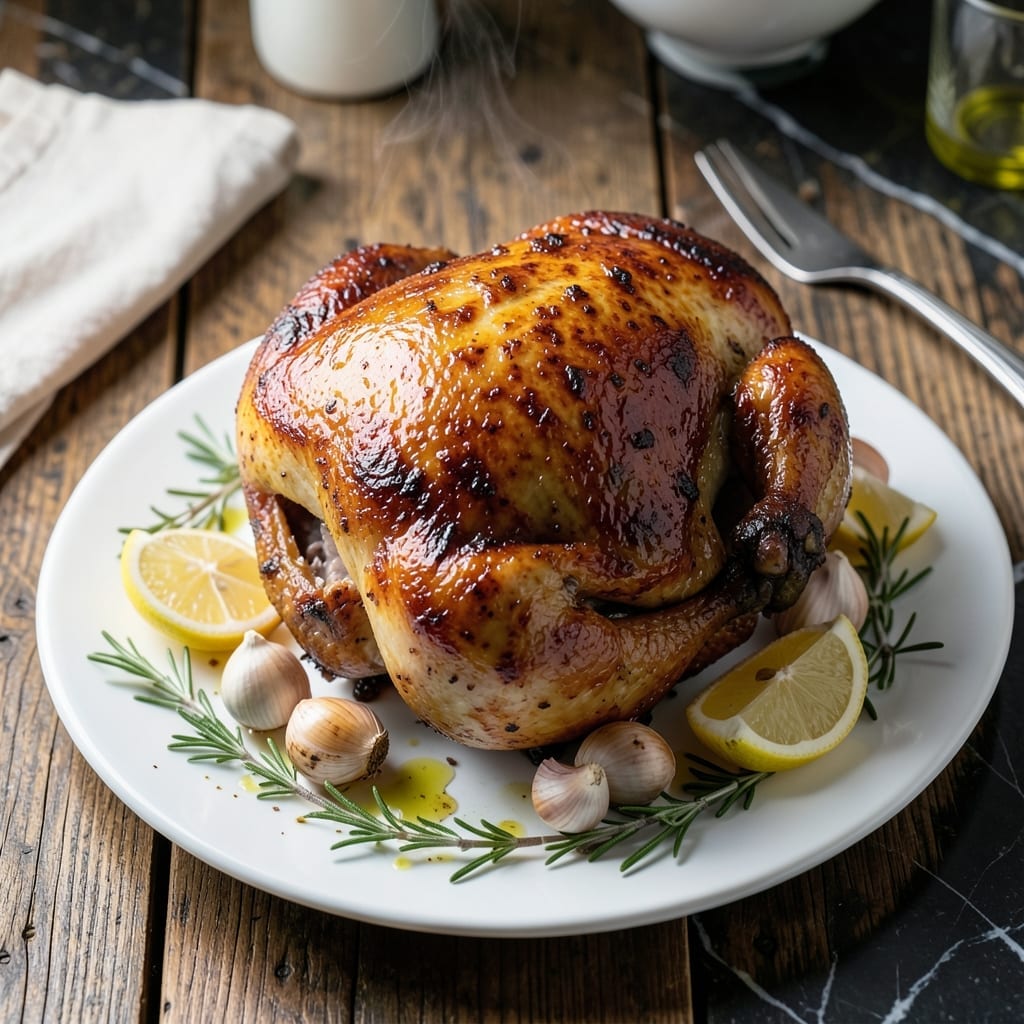
This French-style roast chicken delivers golden, herb-infused perfection with every bite. The secret lies in a simple but precise technique that guarantees crispy skin and juicy meat.
I developed this method after years of testing, focusing on even browning and deep flavor development. The herb butter under the skin transforms ordinary chicken into something extraordinary.
You’ll achieve restaurant-quality results with minimal effort. The aroma alone will have everyone gathered around the table before it’s even out of the oven.
Serve with roasted vegetables to complete this classic meal. The presentation is as impressive as the taste.
Ingredients for French Roast Chicken
Quality ingredients elevate this classic dish to restaurant-level perfection every time.
| Ingredient | Amount | Notes |
|---|---|---|
| Whole Chicken 🍗 | 4 lb | Giblets removed, patted dry |
| Unsalted Butter 🧈 | ½ cup | Room temperature, softened |
| Fresh Thyme 🌿 | 2 tbsp | Leaves stripped from stems |
| Fresh Rosemary 🌿 | 1 tbsp | Finely chopped |
| Fresh Sage 🍃 | 1 tbsp | Finely chopped |
| Garlic Cloves 🧄 | 6 cloves | Minced to a paste |
| Diamond Crystal Kosher Salt 🧂 | 1 ½ tbsp | Divided for seasoning |
| Freshly Ground Black Pepper 🌶️ | 1 ½ tsp | Divided for seasoning |
| Lemon 🍋 | 1 whole | Zested and juiced |
| Shallot 🧅 | 1 whole | Finely minced |
| Dry White Wine 🍷 | ½ cup | For deglazing pan |
| Chicken Stock 🥣 | ½ cup | Low-sodium preferred |
| Extra-Virgin Olive Oil 🫒 | 1 tbsp | For basting |
The chicken is the foundation—opt for air-chilled, free-range birds from Whole Foods or a trusted butcher. The herb butter relies on fresh herbs; avoid dried substitutes for this application. Diamond Crystal kosher salt is non-negotiable for professional kitchens due to its consistent texture and clean flavor. The butter should be European-style for superior fat content (82% minimum), such as Plugrá or Kerrygold.
White wine substitutions must maintain acidity—dry vermouth works in a pinch, or use additional chicken stock with 1 tbsp lemon juice. For the herbs, tarragon can replace sage at equal volume if unavailable. Shallots may be swapped for yellow onion at half the quantity, though the flavor profile will be less delicate. Never use table salt as a substitute for Diamond Crystal—reduce volume by half if forced.
Prepare the herb butter up to 2 days ahead—store covered in the refrigerator. The whole chicken can be seasoned and refrigerated uncovered overnight for optimal skin drying, ensuring crispier results. Leftovers keep for 4 days refrigerated or freeze for 3 months in airtight portions.
Why You’ll Love This Recipe
- One Pan Magic: I just rub the chicken with butter and herbs, pop it in the oven, and let it do its thing—no flipping, no fuss.
- Herb-Infused Perfection: The thyme, rosemary, and sage make every bite taste like a cozy French bistro meal.
- Sunday or Wednesday: Honestly, it’s fancy enough for company but unfussy enough for a regular dinner.
- Leftovers? Yes Please: The meat stays juicy for days, so I can stretch one bird into sandwiches, salads, or tacos.
Step-by-Step Instructions for French Roast Chicken
Master this technique for perfectly crisp skin and moist, herb-infused meat every single time.
Step 1: Prepare and Season the Whole Chicken
Pat the 4 lb Whole Chicken completely dry inside and out with paper towels. This step is non-negotiable—any residual moisture will steam the skin instead of crisping it. Place the chicken on a rack set over a baking sheet.
In a small bowl, combine 0.5 cup Unsalted Butter (softened) with 2 tbsp Fresh Thyme, 1 tbsp Fresh Rosemary, 1 tbsp Fresh Sage, 6 cloves Garlic Cloves (minced to paste), 1.5 tbsp Diamond Crystal Kosher Salt, and 1.5 tsp Freshly Ground Black Pepper. Gently separate the skin from the breast and thighs, then rub half the herb butter mixture underneath the skin. Rub the remaining butter mixture over the outside of the chicken.
Step 2: Truss and Begin Roasting
Finely mince the 1 whole Shallot and zest the 1 whole Lemon. Sprinkle the zest and half the minced shallot inside the chicken cavity. Tie the legs together with kitchen twine and tuck the wings under the body to create a compact shape for even cooking.
Preheat your oven to 425°F. Place the chicken breast-side up on the rack in the baking sheet. This elevation allows hot air to circulate around the entire bird, ensuring crispy skin on all sides. Roast the chicken undisturbed for 30 minutes to start developing color.
Step 3: Baste and Continue Roasting
After 30 minutes, carefully remove the baking sheet from the oven. Using a pastry brush, baste the chicken with 1 tbsp Extra-Virgin Olive Oil. This step enhances browning and adds an extra layer of richness to the skin.
Return the chicken to the oven and roast for another 25-30 minutes, or until the skin is deep golden brown and the juices run clear when you pierce the thickest part of the thigh. The internal temperature should reach 165°F at the thickest part of the breast and thigh.
Step 4: Create the Pan Sauce and Rest
Transfer the chicken to a cutting board and tent loosely with foil. Place the baking sheet with the rack on the stovetop over medium heat. Add the remaining minced shallot to the pan drippings and cook for 1-2 minutes until softened.
Deglaze the pan with 0.5 cup Dry White Wine, scraping up all the browned bits with a wooden spoon. Add 0.5 cup Chicken Stock and the juice from the zested lemon. Simmer for 3-4 minutes until the sauce reduces by half and coats the back of a spoon.
Step 5: Carve and Serve
Let the chicken rest for 15 minutes before carving. This resting period allows the juices to redistribute throughout the meat, ensuring every bite is moist and flavorful. Remove the twine and carve the chicken into serving pieces.
Arrange the carved chicken on a platter and spoon the pan sauce over the top. The skin should be crisp and deeply browned, while the meat remains tender and infused with the aromatic herbs. Serve immediately with the remaining sauce on the side.
Pro Tips For Making French Roast Chicken
- Dry the Skin: Pat the chicken completely dry with paper towels before seasoning—this guarantees crispy skin, not soggy. I learned this the hard way after pulling out a pale, rubbery bird.
- Room Temp First: Let the chicken sit out for 30-40 minutes before roasting. Sounds weird, but it works: the meat cooks more evenly, and you won’t be left with dry edges and raw thighs.
- Butter Under Skin: Gently loosen the skin and rub softened unsalted butter mixed with thyme and rosemary directly onto the meat. This isn’t the prettiest method, but it’s the tastiest.
- Rest Before Carving: Give it a solid 15 minutes under foil after roasting—yes, even if you’re impatient like me. It keeps the juices inside instead of all over the cutting board.
Best Sauces and Condiments for This Dish
Classic French Sauces
I always serve this with a Dijon mustard sauce—whisk 2 tbsp Dijon mustard with 2 tbsp lemon juice and ¼ cup olive oil. The tang cuts through the richness beautifully. It’s my go-to for balancing the herb butter’s depth. 💛
Herb-Infused Pan Jus
The roasting pan already has incredible flavor. After removing the chicken, deglaze with ½ cup dry white wine and ½ cup chicken stock, then reduce by half. Strain and drizzle over carved pieces for extra moisture.
Creamy Tarragon
For a luxurious touch, stir 2 tbsp crème fraîche into the pan sauce with 1 tbsp chopped fresh tarragon. This French bistro staple adds a silky texture that pairs perfectly with the crispy skin.
Bright Citrus Butter
Mix 4 tbsp softened butter with the zest of 1 lemon and 1 tbsp chopped parsley. Dot small spoonfuls over the chicken just before serving—they melt into the meat for a fresh, vibrant finish.
Garlic Aioli
Blend ½ cup mayonnaise with 2 minced garlic cloves and 1 tbsp lemon juice. This Mediterranean twist adds a creamy contrast to the herb notes. I learned this from a chef in Charleston. ✨
Simple Gremolata
Combine ¼ cup chopped parsley, 1 tbsp lemon zest, and 1 minced garlic clove. Sprinkle over the chicken for a zesty, textured garnish that brightens every bite.
Nutrition Facts
Frequently Asked Questions
What oven temperature should I use?
Start with 425°F for the first 30 minutes, then continue at the same temperature until the chicken reaches 165°F internally. This ensures crispy skin while cooking through evenly.
How do I know when it’s done?
Use a meat thermometer—it’s done at 165°F in the thickest part of the breast and thigh. The juices should run clear, and the skin should be deep golden brown.
Can I use dried herbs instead of fresh?
Fresh herbs are ideal for maximum flavor, but in a pinch, use 1/3 the amount of dried. Soak them in warm water for 10 minutes first to rehydrate.
Why is my skin not crispy?
Pat the chicken completely dry before seasoning, and avoid overcrowding the pan. Elevate it on a rack so air circulates underneath for even browning.

- Jollof Rice Sauce Recipe: West African Tomato and Spice Infusion - September 25, 2026
- Japanese Rice Soup Recipe: Umami-Rich Comfort in a Bowl - September 25, 2026
- Homemade Cream Of Rice Recipe: Silk-Smooth Breakfast in Minutes - September 25, 2026