
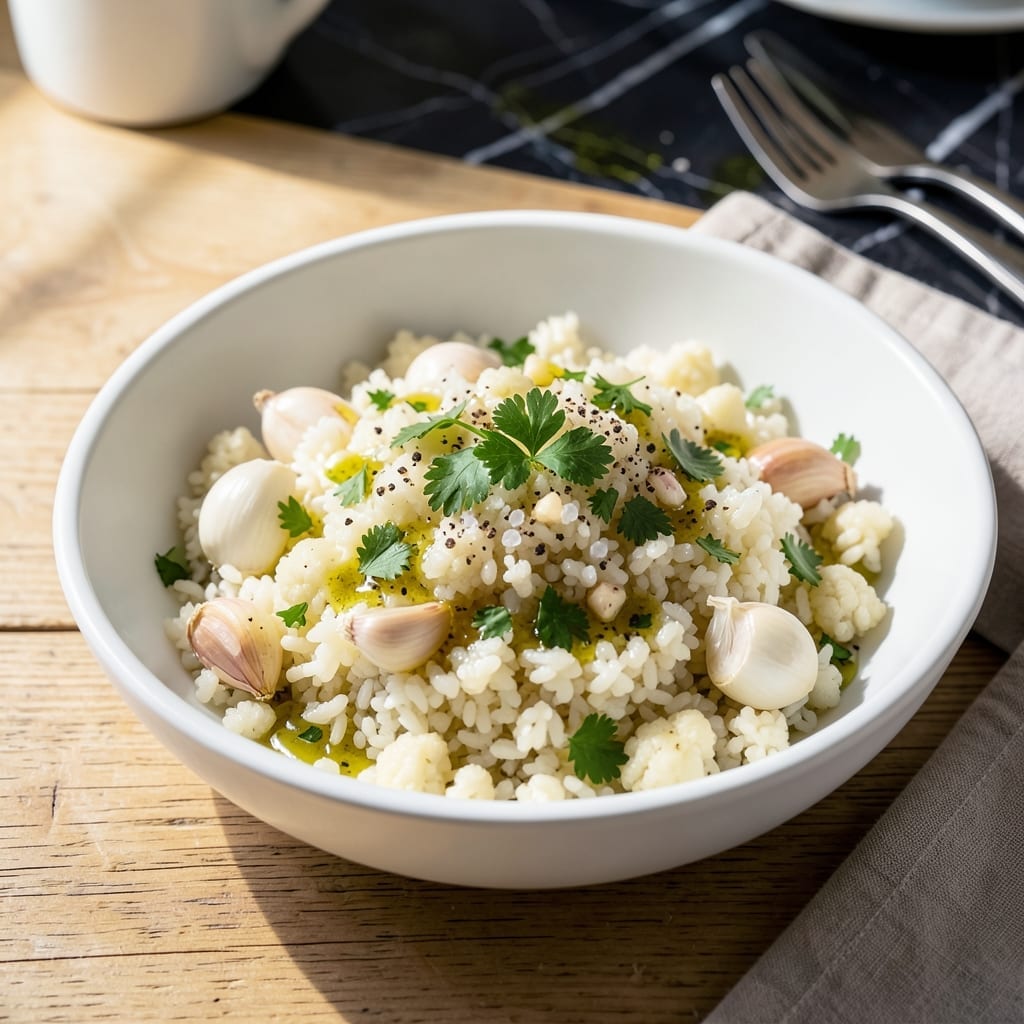
This fresh cauliflower rice delivers a light and fluffy texture that perfectly replaces traditional rice in any dish. The secret is using just the right amount of moisture and heat to achieve that ideal consistency without mushiness.
As a low-carb alternative, it works beautifully as a base for stir-fries, bowls, or as a simple side. The process takes less than 15 minutes from start to finish, making it a quick and healthy option for any meal.
Ingredients for Fresh Kitchen Cauliflower Rice
Fresh cauliflower and a few pantry staples create this light, fluffy low-carb base.
| Ingredient | Amount | Notes |
|---|---|---|
| Fresh Cauliflower 🥦 | 1 whole | Medium head, about 2 lbs |
| Extra-Virgin Olive Oil 🫒 | 1 tbsp | Divided for cooking |
| Sea Salt 🧂 | ½ tsp | Fine grain preferred |
| Freshly Ground Black Pepper 🌶️ | ¼ tsp | To taste |
| Garlic Cloves 🧄 | 2 cloves | Minced for flavor |
| Fresh Parsley 🌿 | 2 tbsp | Chopped, for garnish |
| Fresh Cilantro 🌿 | 2 tbsp | Chopped, for garnish |
| Lemon Juice 🍋 | 1 tbsp | Freshly squeezed |
| Onion Powder 🧅 | ½ tsp | For depth of flavor |
| Ground Cumin 🌿 | ¼ tsp | Optional for warmth |
The cauliflower quality is critical here. Choose a firm, heavy head with tight florets—avoid any with brown spots or softness. Whole Foods or Trader Joe’s consistently carry excellent organic options. A medium head (about 2 lbs) yields roughly 4 cups of rice. For best texture, use within 5 days of purchase as freshness directly impacts the final product’s fluffiness.
No fresh cauliflower? Frozen riced cauliflower works in a pinch (thaw and squeeze out all moisture first). Out of fresh herbs? Dried parsley or cilantro at one-third the amount maintains the flavor profile. For extra richness, avocado oil can replace olive oil. The garlic is non-negotiable for depth, but onion powder can stretch to cover if you’re short on fresh aromatics.
Store uncooked cauliflower in a paper bag in the crisper drawer for up to 1 week. Once riced, it keeps 3-4 days in an airtight container. For longer storage, blanch and freeze riced cauliflower for up to 3 months—perfect for meal prep.
Why You’ll Love This Recipe
- One Pan Wonder: I just pulse fresh cauliflower in my food processor, toss with olive oil and garlic, and roast—no fancy steps.
- Garlicky Bite: The roasted garlic cloves turn sweet and mellow while the salt and pepper make every bite pop.
- Meal Prep Star: I make a big batch Sunday and it stays fresh all week for stir-fries, bowls, or even under fried eggs.
- Pocket-Friendly Side: A head of cauliflower costs less than a bag of rice, and I get two meals out of one.
Step-by-Step Instructions for Fresh Kitchen Cauliflower Rice
Here’s the method that transforms fresh cauliflower into a light, fluffy low-carb base every time.
Step 1: Prepare the Fresh Cauliflower
Cut the fresh cauliflower into small florets, discarding the tough stem and any leaves. You want uniformly sized pieces to ensure even processing. I prefer working in batches—this gives you better control and prevents overloading your food processor.
Pulse the florets in a food processor using quick 1-second bursts until they reach a rice-like consistency. Be careful not to over-process or you’ll end up with a purée. You should have about 4 cups of cauliflower rice from a medium head.
Step 2: Sauté Aromatics in Extra-Virgin Olive Oil
Heat 1 tbsp extra-virgin olive oil in a large skillet over medium heat until it shimmers. Add the minced 2 cloves garlic cloves along with 0.5 tsp sea salt, 0.25 tsp freshly ground black pepper, 0.5 tsp onion powder, and 0.25 tsp ground cumin.
Sauté for 30-45 seconds until the garlic becomes fragrant but hasn’t browned. The spices will bloom in the hot oil, releasing their full flavor potential. Watch closely—garlic burns easily and bitterness ruins the dish.
Step 3: Cook the Cauliflower Rice
Add the processed fresh cauliflower to the skillet and stir to coat in the aromatic oil. Cook over medium heat for 8-10 minutes, stirring occasionally, until the cauliflower is tender but still has a slight bite.
You’ll notice the cauliflower releases moisture as it cooks. Continue cooking until this liquid has evaporated and the cauliflower is light golden in spots. This evaporation is crucial—it prevents a watery final product.
Step 4: Finish with Fresh Herbs and Acid
Remove the skillet from heat and stir in 1 tbsp lemon juice. The acid brightens all the flavors and balances the richness of the olive oil. Taste and adjust seasoning if needed.
Fold in 2 tbsp fresh parsley and 2 tbsp fresh cilantro, reserving a small amount for garnish. The herbs add freshness and color. Let the mixture sit for 2 minutes to allow the flavors to meld before serving.
Pro Tips For Making Fresh Kitchen Cauliflower Rice
- Pulse, Don’t Blend: Use short pulses in your food processor—about 5-6 bursts—to get even, rice-like pieces. I learned this the hard way after turning my first batch into cauliflower mush.
- Squeeze Out Moisture: After grating or pulsing, wrap the cauliflower in a clean towel and wring it out hard. Sounds weird, but it works: this keeps your rice from turning soggy when cooked.
- High Heat, Fast Cook: Cook over medium-high heat for just 5-7 minutes, stirring constantly. After burning three batches, I finally figured out that low heat just steams it into a sad, wet mess.
- Salt the Raw Rice: Toss the riced cauliflower with salt right after pulsing, before cooking. My grandmother swore by this, and she was right: it seasons evenly and draws out excess water.
Make-Ahead Tips for fresh kitchen cauliflower rice
Batch Prep Method
I make 4-6 cups of cauliflower rice at once by processing 2-3 medium heads back-to-back. This takes about 10 minutes total in the food processor. Store the uncooked rice in airtight containers in the fridge for up to 4 days.
Freezing for Later
Spread freshly riced cauliflower on a baking sheet and freeze for 1 hour before transferring to freezer bags. This prevents clumping. It will keep for 3 months. No need to thaw before cooking—just add directly to your hot pan.
Partial Cook Method
For meal prep, I partially cook the rice for 5 minutes, then cool and refrigerate. When ready to use, finish cooking with your chosen seasonings. This cuts final prep time in half while maintaining texture.
Flavor Infusions
Before storing, mix in 1 tsp lemon zest or ½ tsp smoked paprika to the raw rice. This creates pre-seasoned bases ready for different cuisines. I love having Mexican and Mediterranean versions on hand. 🌟
Reviving Leftovers
Cooked cauliflower rice keeps 3-4 days in the fridge. To revive, heat in a dry skillet over medium-high heat for 3-4 minutes. This drives off excess moisture and restores the fluffy texture.
Portion Control
Divide cooked rice into 1-cup portions in microwave-safe containers. This makes it easy to grab exactly what you need for stir-fries or bowls. Reheat covered with a damp paper towel for 1-2 minutes. 💡
Nutrition Facts
Frequently Asked Questions
Can I use a grater instead of a food processor?
Yes, a box grater works for small batches. Use the largest holes for a rice-like texture. It takes more effort and time but creates similar results.
Why does my cauliflower rice turn mushy?
Overcooking or excess moisture is the culprit. Cook over medium heat and let all liquid evaporate. Squeeze out extra water from frozen cauliflower before cooking.
What’s the best way to season it?
Start with garlic, salt, and pepper as a base. Add 1/2 tsp cumin or 1 tsp lemon zest for extra flavor. Adjust to taste before serving.
Can I make it ahead of time?
Store uncooked rice in an airtight container for up to 4 days. Freeze for up to 3 months on a tray first to prevent clumping.

- Gambia Jollof Rice Recipe: West African One-Pot Spice Fusion - October 5, 2026
- Cream of Wild Rice Soup Recipe Minnesota: Northwoods Creaminess With Foraged Grains - October 5, 2026
- Frozen Cauliflower Fried Rice Recipe: Quick Low-Carb Wok Magic - October 5, 2026