
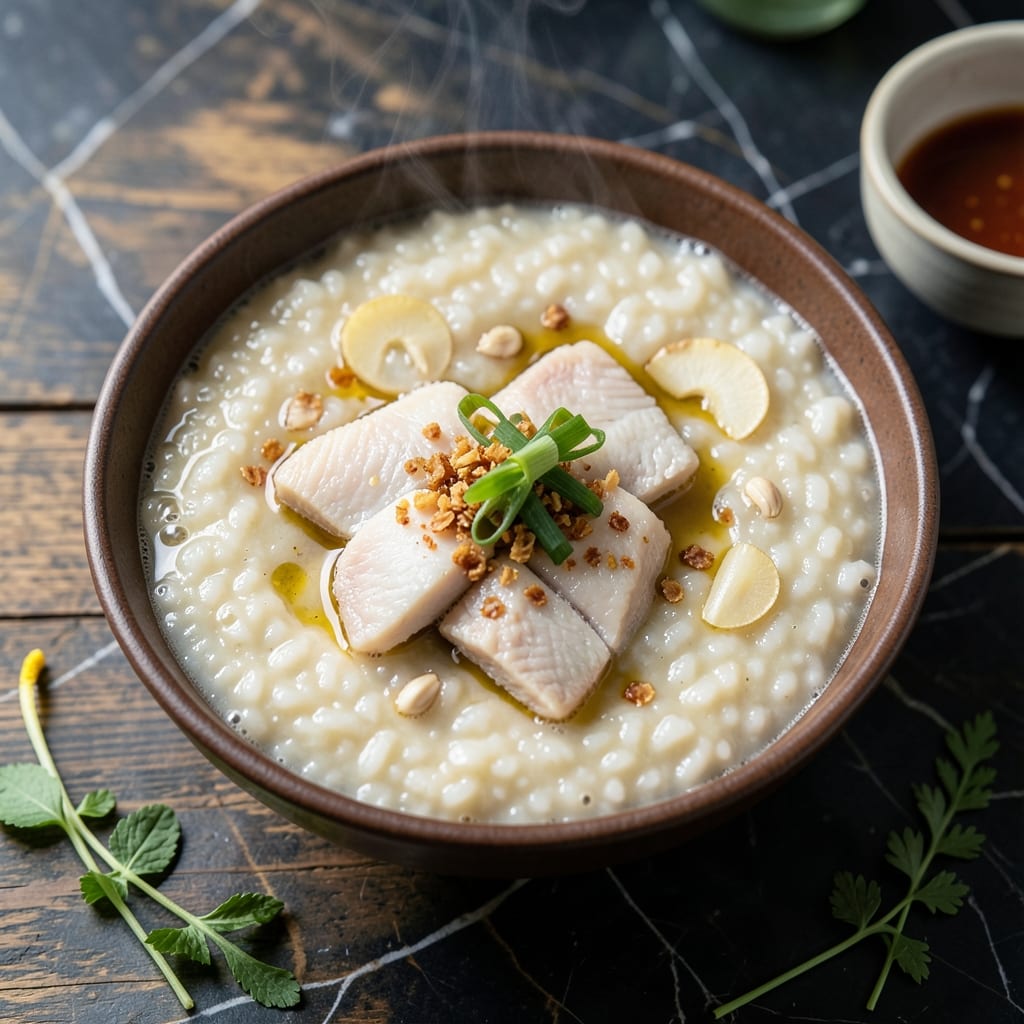
This congee delivers the ultimate comfort in a bowl with its silky texture and gentle ocean flavors. I developed this method to highlight the natural sweetness of fresh fish while maintaining the creamy consistency that defines great porridge.
The key is using the right ratio of rice to liquid and cooking it low and slow. Fresh white fish breaks apart beautifully into the porridge, creating a light yet satisfying dish that’s perfect for any meal of the day.
What emerges is a bowl of congee with tender fish pieces suspended in a smooth, aromatic broth. The rice grains dissolve into the liquid, creating that signature creamy texture that makes congee so irresistible.
Serve hot with your favorite garnishes like scallions, ginger, or a drizzle of soy sauce. Here’s how to make this comforting classic.
Ingredients for Fish Rice Porridge
Simple ingredients create that silky, comforting porridge with gentle ocean flavors.
| Ingredient | Amount | Notes |
|---|---|---|
| White Fish Fillets 🐟 | 1 lb | Fresh, skinless, mild variety |
| Jasmine Rice 🍚 | 1 cup | Rinsed until water runs clear |
| Water 💧 | 8 cups | For cooking rice to porridge |
| Chicken Stock 🍲 | 2 cups | Low-sodium preferred |
| Fresh Ginger 🌿 | 1 whole | 2-inch piece, peeled and sliced |
| Garlic Cloves 🧄 | 4 cloves | Minced or thinly sliced |
| Scallions 🧅 | 4 whole | Thinly sliced, white and green parts separated |
| Soy Sauce 🫒 | 3 tbsp | Light or regular variety |
| Sesame Oil 🫒 | 1 tbsp | Toasted for depth of flavor |
| Salt 🧂 | 1 tsp | Adjust to taste |
| White Pepper 🌶️ | ½ tsp | Ground, for subtle heat |
| Shaoxing Wine 🍶 | 2 tbsp | Optional, for depth |
| Cilantro 🌿 | ¼ cup | Fresh, chopped for garnish |
The fish is the star here. Cod or tilapia work beautifully—firm but flaky, with a mild sweetness. Look for wild-caught if possible, or ask your fishmonger for the freshest cut. Whole Foods has great options if you’re not near a seafood market. The ginger should be fresh (not powdered) for that bright, aromatic kick. Don’t skip the rice rinse—it’s what gives you that smooth, creamy texture.
No white fish? Shrimp or scallops add a lovely touch (just reduce cooking time). Out of jasmine rice? Short-grain rice at a 1:1 ratio works fine. Shaoxing wine missing? Dry sherry gets you close. For extra richness, swap half the water for seafood stock. The garnishes are all optional—use what you’ve got on hand (frozen cilantro works in a pinch).
Congee keeps well in the fridge for 3-4 days—reheat with extra water to thin as needed. Freeze without garnishes for up to 3 months. I like to prep the ginger and garlic ahead (store together in a jar) to save time on busy mornings.
Why You’ll Love This Recipe
- One Pot Wonder: I just toss the rice, fish, and ginger into a single pot with stock and let it simmer—no fancy techniques, no fuss.
- Ginger Zing: The fresh ginger infuses the broth with this warm, cozy heat that makes every spoonful addictive.
- Feeds the Family: It stretches a few fish fillets into a hearty meal that even my picky nephew cleans his bowl for.
- Budget Stretcher: Honestly, a handful of rice and one fish fillet makes enough for two meals, and leftovers taste even better the next day.
Step-by-Step Instructions for Fish Rice Porridge
Here’s the method. Straightforward, tested, works every time.
Step 1: Rinse Rice and Prepare Aromatics
Rinse the 1 cup Jasmine Rice under cold water until the water runs clear—this removes excess starch and prevents a gummy texture. Drain well and set aside.
Peel and slice the 1 whole Fresh Ginger into thin coins. Thinly slice the 4 cloves Garlic Cloves and separate the white and green parts of the 4 whole Scallions. Keep the white parts for cooking and reserve the green parts for garnish later.
Step 2: Cook the Porridge Base
In a large pot, combine the rinsed 1 cup Jasmine Rice, 8 cups Water, and 2 cups Chicken Stock. Add the sliced ginger, garlic, and the white parts of the scallions. Bring to a boil over high heat.
Once boiling, reduce the heat to low and let it simmer uncovered for 45-50 minutes, stirring occasionally. You’ll see the rice break down and the mixture thicken into a creamy porridge. Keep an eye on it to prevent sticking.
Step 3: Add Fish and Seasonings
While the porridge simmers, cut the 1 lb White Fish Fillets into bite-sized pieces. When the porridge has thickened significantly, gently stir in the fish pieces, 3 tbsp Soy Sauce, 1 tbsp Sesame Oil, 1 tsp Salt, and 0.5 tsp White Pepper.
Add the 2 tbsp Shaoxing Wine for depth of flavor. Cook for another 10-12 minutes on low heat until the fish is opaque and flakes easily with a fork.
Step 4: Finish and Garnish
Taste and adjust seasoning if needed. The porridge should be thick and creamy, with tender fish pieces suspended throughout. If it’s too thick, add a splash of hot water to reach your desired consistency.
Ladle into bowls and garnish with the reserved green scallion parts and 0.25 cup Cilantro. Serve hot, with extra soy sauce on the side if desired.
Pro Tips For Making Fish Rice Porridge
- Simmer, Don’t Boil: Keep the heat at a gentle simmer—boiling will turn your porridge gluey and break up the fish. I learned this the hard way after ending up with a pot of mushy rice more than once.
- Rinse the Rice: Wash the jasmine rice until the water runs clear to remove excess starch. Sounds tedious, but it prevents the porridge from getting gummy, especially with the long cooking time.
- Add Fish Late: Drop the white fish fillets in only during the last 8-10 minutes of cooking. Any sooner and they’ll overcook and flake apart into the broth—still edible, but not as nice.
- Grate the Ginger: Use a fine grater on the fresh ginger so it melts into the porridge. It’s faster than mincing, and you won’t get fibrous bits stuck in your spoon.
Regional Styles of fish rice porridge
Chinese Congee Style
In Cantonese cuisine, this dish is called fish congee, often made with grouper or cod. The rice is cooked until completely broken down, creating a silky texture. I add a 1-inch ginger slice for extra warmth and serve with century egg for contrast. 🌟
Thai-Inspired Version
Thai cooks use lemongrass and kaffir lime leaves in the broth for bright citrus notes. I stir in 1 tbsp fish sauce and top with fresh Thai basil and lime wedges. The fish is often tilapia or snapper.
Korean Juk Style
Koreans make saengseon juk with pollock or cod. The broth is lighter, often just water and anchovy stock. I garnish with kimchi and a soft-boiled egg for extra richness.
Japanese Okayu
Japanese okayu uses short-grain rice for a stickier texture. I add dashi stock and top with salmon or white fish. A drizzle of ponzu sauce adds a citrusy finish.
Vietnamese Cháo
Vietnamese cháo cá includes catfish or bass. The porridge is thinner, almost soup-like. I add fish sauce and black pepper, then top with fried shallots and fresh herbs. 💛
Nutrition Facts
Frequently Asked Questions
What kind of fish works best?
Mild white fish like cod or tilapia are ideal. They break apart beautifully and absorb the porridge flavors well. Avoid oily fish like salmon, as they can overpower the delicate broth.
How do I prevent the porridge from getting too thick?
Stir occasionally and add 1/2 cup hot water if it thickens too much. The rice will continue to absorb liquid as it cooks, so keep an eye on the consistency.
Can I make this in a slow cooker?
Yes! Combine all ingredients except fish and cook on low for 4-6 hours. Add fish in the last 30 minutes to prevent overcooking.
What should I serve with it?
Traditional pairings include soy sauce, pickled vegetables, or a soft-boiled egg. Fresh herbs like cilantro or scallions add a bright finish.

- Gambia Jollof Rice Recipe: West African One-Pot Spice Fusion - October 5, 2026
- Cream of Wild Rice Soup Recipe Minnesota: Northwoods Creaminess With Foraged Grains - October 5, 2026
- Frozen Cauliflower Fried Rice Recipe: Quick Low-Carb Wok Magic - October 5, 2026