
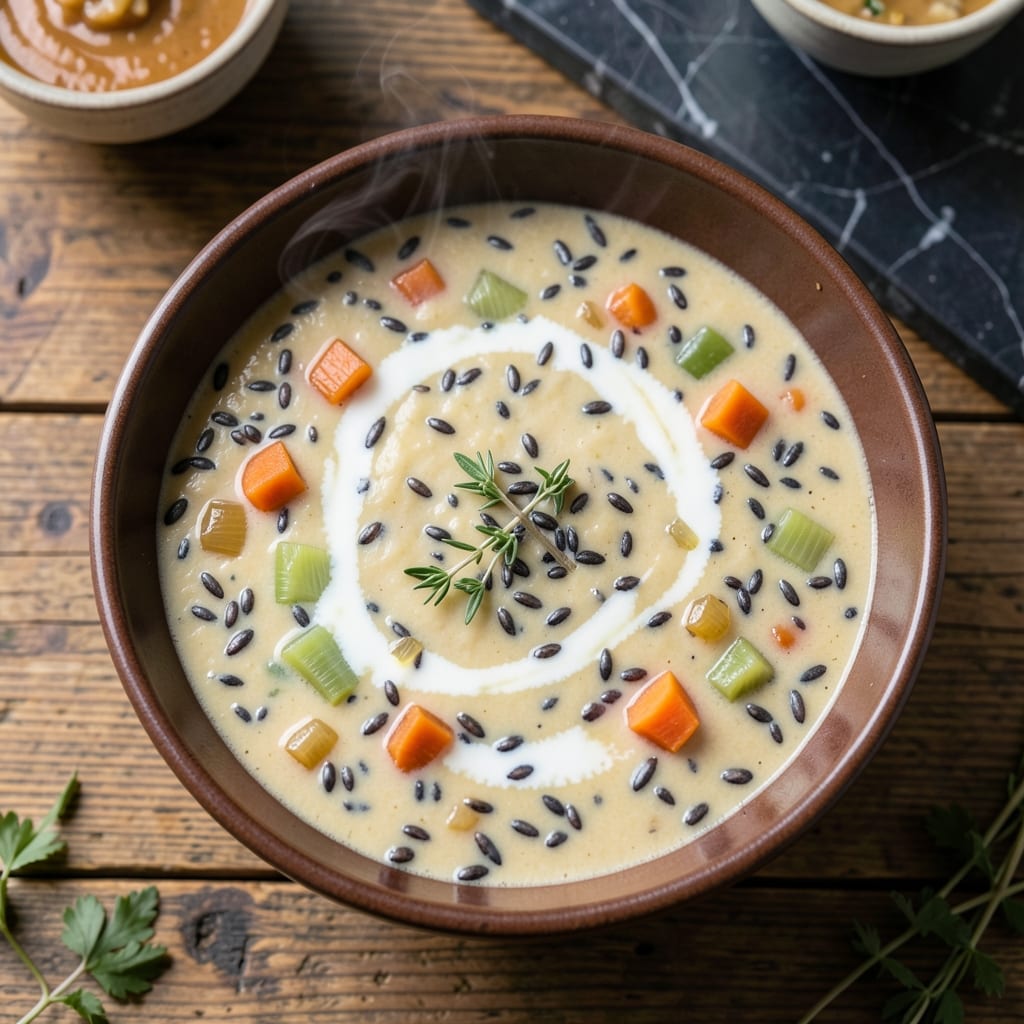
This Minnesota classic transforms simple ingredients into a creamy, hearty soup that warms any winter day. The wild rice adds a delightful nutty flavor and chewy texture that perfectly complements the smooth, velvety broth.
Developed over generations in the Northwoods, this recipe brings authentic regional comfort to your table. The secret lies in slow simmering to coax maximum richness from the grains and vegetables, creating a soup that’s both rustic and refined.
Ingredients for Cream of Wild Rice Soup Recipe Minnesota
Authentic Northwoods ingredients create this velvety, hearty soup with foraged grains and garden vegetables.
| Ingredient | Amount | Notes |
|---|---|---|
| Wild Rice 🌾 | 1 cup | Uncooked, Minnesota-grown preferred |
| Unsalted Butter 🧈 | ½ cup | Divided for sautéing and finishing |
| Yellow Onion 🧅 | 1 whole | Medium, finely diced |
| Celery Stalks 🥬 | 3 pieces | Finely diced for mirepoix |
| Carrots 🥕 | 2 whole | Medium, finely diced |
| Garlic Cloves 🧄 | 3 cloves | Minced for aromatic base |
| All-Purpose Flour 🌾 | ⅓ cup | For roux thickening |
| Vegetable Broth 🥣 | 6 cups | Low-sodium preferred for control |
| Whole Milk 🥛 | 2 cups | Full-fat for creaminess |
| Heavy Cream 🥛 | 1 cup | For velvety texture |
| Fresh Thyme Sprigs 🌿 | 3 pieces | Leaves stripped, stems discarded |
| Fresh Rosemary 🌿 | 1 tbsp | Finely chopped for depth |
| Bay Leaf 🍃 | 1 whole | Dried, for slow infusion |
| Salt 🧂 | 1 ½ tsp | Diamond Crystal kosher preferred |
| Black Pepper 🌶️ | ½ tsp | Freshly ground for best flavor |
The wild rice is non-negotiable for authenticity—Minnesota-grown brands like Lund or Northwoods Wild Rice offer superior texture and that signature nutty flavor. Seek out dark, long grains (not the pre-cooked stuff). For the broth, Better Than Bouillon vegetable base dissolved in hot water yields excellent depth. The butter should be high-fat (82% or higher) for proper roux formation.
No wild rice? Brown rice at half the quantity works in a pinch (though texture differs). Swap milk for half-and-half if you want extra richness. Fresh herbs are ideal, but dried at one-third the quantity suffices—just add them earlier. The celery can be omitted if you despise it (add extra carrot), but the mirepoix trio really builds the flavor foundation.
Soup improves overnight as flavors meld. Refrigerate in airtight containers for up to 5 days. Freezes beautifully for 3 months—thaw overnight before reheating. Stir in a splash of milk when warming leftovers to restore creaminess.
Why You’ll Love This Recipe
- One Pot Wonder: I love that everything—wild rice, celery, carrots—simmers together in one pot while I do something else.
- Rich and Earthy: The butter toasted with onions and wild rice creates this deep, nutty flavor that’s purely Minnesota comfort.
- Meal Prep Hero: It tastes even better the next day, so I always make a double batch for lunches.
- Budget Friendly: Wild rice stretches further than you’d think, and those simple veggies keep the cost low.
Instructions
This method ensures the wild rice cooks perfectly while building layers of Northwoods flavor in every spoonful.
Step 1: Cook the Wild Rice to Tenderness
Rinse the 1 cup Wild Rice under cold water to remove any debris. In a medium saucepan, combine the rice with 2 cups of the 6 cups Vegetable Broth. Bring to a boil, then reduce heat to low, cover, and simmer for 45-50 minutes until the grains are tender and the liquid is absorbed.
The rice should split open slightly and have a chewy texture. If it’s still firm, add another ¼ cup of broth and cook for 5-10 minutes longer. Drain any excess liquid and set aside. Properly cooked wild rice is essential for the soup’s signature texture.
Step 2: Sauté the Mirepoix and Aromatics
In a large pot or Dutch oven, melt 0.5 cup Unsalted Butter over medium heat. Add the finely diced 1 whole Yellow Onion, 3 pieces Celery Stalks, and 2 whole Carrots. Cook for 8-10 minutes, stirring occasionally, until the vegetables soften and the onion becomes translucent.
Add the minced 3 cloves Garlic Cloves, 1 tbsp Fresh Rosemary, leaves from the 3 pieces Fresh Thyme Sprigs, and the 1 whole Bay Leaf. Sauté for 1-2 minutes until fragrant. This base builds the soup’s aromatic depth and ensures every bite is flavorful.
Step 3: Create the Roux and Build the Soup Base
Sprinkle the 0.33 cup All-Purpose Flour over the sautéed vegetables and stir to coat evenly. Cook for 2 minutes to remove the raw flour taste. Gradually whisk in the remaining 4 cups Vegetable Broth, ensuring no lumps form. Bring the mixture to a gentle simmer.
Stir in the cooked wild rice and season with 1.5 tsp Salt and 0.5 tsp Black Pepper. Simmer for 10 minutes to allow the flavors to meld. The soup should begin to thicken slightly as the roux works its magic.
Step 4: Finish with Cream for Velvety Texture
Reduce the heat to low and stir in the 2 cups Whole Milk and 1 cup Heavy Cream. Simmer gently for 5-7 minutes, stirring occasionally, until the soup reaches your desired consistency. Avoid boiling to prevent the dairy from curdling.
The soup should coat the back of a spoon and have a rich, creamy appearance. Taste and adjust seasoning if needed, though the Northwoods flavors should now be perfectly balanced. Serve hot, garnished with a sprinkle of fresh thyme or rosemary for a touch of elegance.
Pro Tips For Making Cream Of Wild Rice Soup Recipe Minnesota
- Soak the Rice: Wild rice needs at least 30 minutes in cold water before cooking—skipping this step means uneven cooking and a soup that’s half-crunched, half-mushy. I learned this the hard way after ruining two batches.
- Sweat the Veggies Slow: Cook the onion, celery, and carrots in butter over medium-low for 8-10 minutes until soft but not browned. Rushing this part leaves them tough and the soup tasting raw.
- Use Real Cream: Skip the milk or half-and-half—heavy cream gives that rich, velvety texture Minnesota wild rice soup is known for. It’s worth the extra calories.
- Season in Layers: Salt the sweating veggies, then the broth, then adjust at the end. Wild rice absorbs seasoning differently, and this guarantees every bite tastes right.
Troubleshooting This Dish
Rice Not Tender
If your wild rice stays firm after 45-50 minutes, it likely needs more liquid. Add ¼ cup extra broth and simmer for 10 more minutes. Check often—overcooking turns it mushy. Minnesota wild rice is thicker than cultivated varieties. 💡
Thin Soup Base
If your soup seems watery after adding cream, the roux may need more time. Simmer uncovered for 5-10 minutes to thicken. Alternatively, mix 1 tbsp cornstarch with 1 tbsp cold water and stir in gently. Avoid boiling after adding this slurry.
Curdled Dairy
If you see separation or curdling, you’ve likely boiled the soup after adding milk. Remove from heat immediately and stir in 1 tbsp cold heavy cream to smooth it out. Next time, keep the heat at low-medium during the final steps.
Bland Flavor
If your soup tastes flat, it may need more salt or acid. Start with ½ tsp salt and taste. If still dull, add 1 tbsp lemon juice or a splash of white wine to brighten the Northwoods flavors.
Over-Salted
If you’ve over-salted, don’t panic. Stir in ½ cup cooked wild rice or a peeled, diced potato and simmer for 10 minutes to absorb excess salt. Remove the potato or rice before serving.
Lumpy Roux
If your roux is lumpy, whisk vigorously while adding broth. If lumps persist, strain the soup through a fine-mesh sieve before adding cream. For prevention, ensure flour is fully incorporated into butter before adding liquid. 🔥
Nutrition Facts
Frequently Asked Questions
Can I use cultivated wild rice instead of foraged?
Yes, but choose Minnesota-grown cultivated wild rice for best results. It has a similar nutty flavor and chewy texture. Avoid pre-cooked or instant varieties, as they lack the authentic bite.
How do I prevent the soup from curdling?
Keep the heat at low-medium after adding dairy. Never boil once milk or cream is in the pot. If curdling starts, remove from heat and stir in 1 tbsp cold heavy cream.
Can I make this soup dairy-free?
Substitute coconut milk for heavy cream and unsweetened almond milk for whole milk. Use olive oil instead of butter. The flavor will differ slightly but remain rich and creamy.
How long can I store leftovers?
Refrigerate in an airtight container for up to 5 days. For longer storage, freeze for 3 months. Reheat gently on the stove, stirring occasionally.

- Gambia Jollof Rice Recipe: West African One-Pot Spice Fusion - October 5, 2026
- Cream of Wild Rice Soup Recipe Minnesota: Northwoods Creaminess With Foraged Grains - October 5, 2026
- Frozen Cauliflower Fried Rice Recipe: Quick Low-Carb Wok Magic - October 5, 2026