
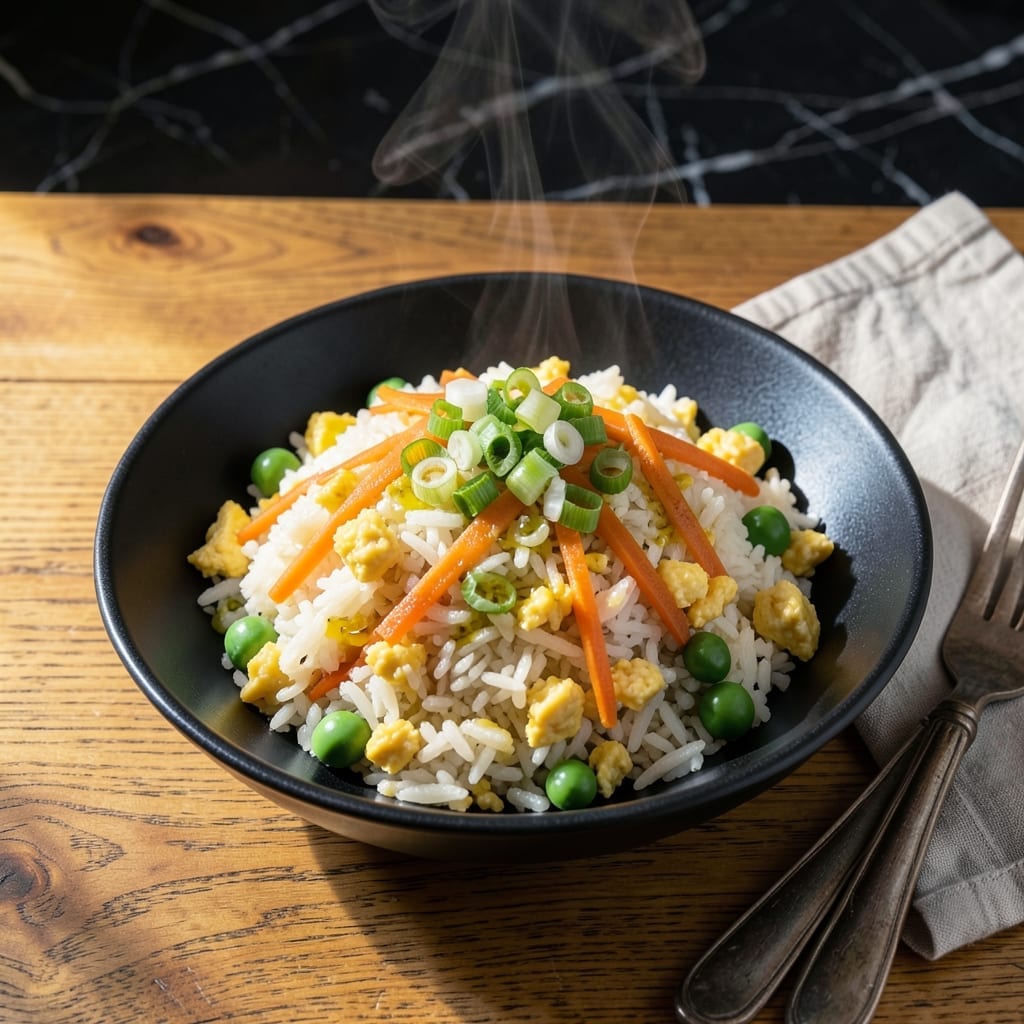
I’ve perfected this fried rice method after years of trial and error, and the secret always starts with day-old grains. Cold rice holds its shape and texture, preventing the mushy results that plague fresh batches.
High heat and a well-seasoned wok are essential for achieving that signature smoky flavor and slight char on the vegetables. A quick toss with soy sauce and a touch of sesame oil brings everything together in minutes.
This dish is a masterclass in transforming leftovers into something extraordinary. The rice absorbs the bold flavors while staying light and separate, with just the right bite.
Ready in under 20 minutes, it’s a foolproof way to turn simple ingredients into a satisfying meal.
Ingredients for Fri3d Rice
Transform leftovers with these precise ingredients for authentic wok-fried results in minutes.
| Ingredient | Amount | Notes |
|---|---|---|
| Day-Old Cooked White Rice 🍚 | 4 cups | Cold, preferably refrigerated overnight |
| Peanut Oil 🫒 | 3 tbsp | High smoke point essential |
| Large Eggs 🥚 | 3 whole | Beaten, room temperature |
| Carrots 🥕 | 2 whole | Medium, finely diced |
| Green Onions 🧅 | 4 whole | Thinly sliced, whites and greens separated |
| Frozen Green Peas 🌱 | 1 cup | Thawed, no need to cook |
| Garlic Cloves 🧄 | 3 cloves | Minced to fine paste |
| Low-Sodium Soy Sauce 🥢 | 3 tbsp | Divided for layering flavor |
| Toasted Sesame Oil 🫒 | 1 tsp | Added at finish for aroma |
| Diamond Crystal Kosher Salt 🧂 | 1 tsp | Adjust to taste at end |
| Ground White Pepper 🌶️ | ½ tsp | Classic fried rice seasoning |
| Fresh Ginger 🌿 | 1 tbsp | Finely grated, peeled |
The rice is non-negotiable—day-old, cold, and dry is the only way to achieve that perfect texture. Jasmine or long-grain white rice works best; avoid instant or sticky varieties. For the wok, carbon steel is ideal, but a heavy skillet on high heat will suffice. Peanut oil handles the heat without smoking, but vegetable oil works in a pinch. Always have your mise en place ready—this moves fast.
No green peas? Diced bell peppers or corn kernels add similar color and crunch. Short on green onions? Shallots or yellow onions can substitute, though the flavor profile shifts slightly. For depth, oyster sauce at 1 tbsp enhances umami. The soy sauce should be low-sodium to control seasoning; tamari works for gluten-free. Never skip the sesame oil finish—it’s the signature aroma.
Cooked rice keeps 3-4 days in the fridge for optimal drying. Prep all vegetables and sauces before heating the wok—this prevents burning. Leftovers reheat well with a splash of water in a skillet for 2-3 days, though best served fresh for texture.
Why You’ll Love This Recipe
- I’ll be real: using yesterday’s rice actually makes the texture better, and it clears out the fridge in one go.
- One Pan Meal: I love that everything from the day-old rice to the scrambled eggs cooks in a single wok.
- That Peanut Oil Magic: Honestly, the nutty aroma from the peanut oil takes the rice, carrots, and green onions to a whole new level.
- Weeknight Rescue: It’s my go-to when I need something fast, filling, and ready before the kids start asking for snacks.
Step-by-Step Instructions for Day-Old Grains with Wok-Tossed Veggies
Master the wok technique with precise timing and heat control for restaurant-quality results.
Step 1: Prepare and Pre-Cook the Aromatics and Protein
Heat 1 tbsp Peanut Oil in a wok over medium-high heat until shimmering. Add the 3 whole Large Eggs and scramble quickly until just set but still slightly runny. Remove to a plate—they’ll finish cooking when combined later.
In the same wok, add the remaining 2 tbsp Peanut Oil. Sauté the 2 whole Carrots (finely diced) for 2 minutes until edges soften. Add the 3 cloves Garlic Cloves (minced) and 1 tbsp Fresh Ginger (grated), stirring constantly for 30 seconds until fragrant but not browned.
Step 2: Incorporate Vegetables and Rice
Add the 4 whole Green Onions (whites and greens separated) and 1 cup Frozen Green Peas (thawed). Stir-fry for 1-2 minutes until the peas are bright green and the onions wilt slightly.
Break up the 4 cups Day-Old Cooked White Rice with your hands to separate grains, then add to the wok. Press the rice into the surface and let it sit undisturbed for 30 seconds to develop a slight crust. Stir-fry for another 2 minutes to evenly coat the grains in oil and aromatics.
Step 3: Season and Finish with Precision
Drizzle 2 tbsp Low-Sodium Soy Sauce over the rice, using a spatula to toss and distribute evenly. The rice should take on a light golden hue. Add the scrambled eggs back to the wok, breaking them into small pieces.
Sprinkle with 1 tsp Diamond Crystal Kosher Salt and 0.5 tsp Ground White Pepper. Toss vigorously for 1-2 minutes until everything is uniformly combined and heated through. The rice should be slightly crispy in spots but not dry.
Step 4: Final Touches and Plating
Remove from heat and stir in the remaining 1 tbsp Low-Sodium Soy Sauce and 1 tsp Toasted Sesame Oil. The sesame oil should add a glossy sheen and deep aroma. Taste and adjust salt if needed, though the soy sauce likely provides sufficient seasoning.
Garnish with the reserved green onion greens. Serve immediately while hot—the texture is best fresh from the wok. Each grain should be distinct yet coated in flavor, with a balance of savory, umami, and subtle sweetness from the vegetables.
Pro Tips For Making Fri3d Rice
- Use Cold Rice: Day-old, refrigerated rice is non-negotiable—it fries up dry and separate instead of mushy. I learned this the hard way after making a sad, sticky pan of warm rice.
- Crank Up Heat: Get your wok or pan screaming hot before adding oil and rice. After burning three batches at medium heat, I finally figured out high heat is what gives that classic char.
- Break Up Clumps: Smash any rice lumps with your hands or a fork before frying. Sounds tedious, but it works—no one wants a chewy bite in their fried rice.
- Prep All First: Have every ingredient chopped, beaten, and measured before starting. My grandmother swore by this, and she was right: fried rice cooks fast and waits for no one.
Best Sauces and Condiments for This Dish
Classic Soy-Based Sauce
I always drizzle an extra 1 tbsp low-sodium soy sauce at the table for those who love bold umami flavor. It enhances the dish without overpowering the existing seasoning. A tiny splash of rice vinegar mixed in adds brightness.
Spicy Chili Oil
My go-to for heat is Lao Gan Ma chili crisp—just ½ tsp per serving adds crunch and fiery depth. The oil infuses every bite with aromatic heat. Stir it in or drizzle on top for visual appeal.
Creamy Sriracha Mayo
Mix 2 tbsp mayonnaise with 1 tsp sriracha for a cooling contrast to the wok’s heat. It’s perfect for dipping or dolloping on top. The creamy texture balances the rice’s crisp edges beautifully.
Sweet and Tangy
A quick hoisin sauce glaze—1 tbsp thinned with 1 tsp water—adds sweetness that pairs well with the savory notes. Brush it on or serve on the side for dipping. 💛
Fresh Herb Garnish
I finish with extra green onions and a sprinkle of cilantro for freshness. The herbs cut through the richness and add color. A squeeze of lime brightens all the flavors.
Sesame Seeds
Toasted white sesame seeds add nutty crunch—just 1 tsp per serving. I toast them in a dry pan for 1-2 minutes until golden. They’re the perfect textural contrast. ✨
Nutrition Facts
Frequently Asked Questions
Can I use fresh rice instead of day-old?
Fresh rice has too much moisture and will turn mushy when stir-fried. Always use cold, day-old rice for the best texture. Spread hot rice on a tray to cool quickly if needed.
What’s the best oil for high-heat cooking?
Peanut oil is ideal for its high smoke point and neutral flavor. Vegetable or canola oil work too, but avoid olive oil—it smokes at wok temperatures.
How do I prevent soggy results?
Cook in small batches to avoid overcrowding the wok. Use high heat and keep ingredients moving constantly. 1-2 minutes per batch ensures crisp, separate grains.
Can I add other proteins?
Swap eggs for chicken, shrimp, or tofu. Cook proteins separately first, then combine at the end to avoid overcooking.

- Gobi Fried Rice Recipe: Spiced Cauliflower Wok Delight - October 8, 2026
- Glutinous Rice Roll Recipe: Chewy Pillows With Savory Fillings - October 8, 2026
- Garlic Jasmine Rice Recipe: Fragrant Grains with Aromatic Depth - October 8, 2026