
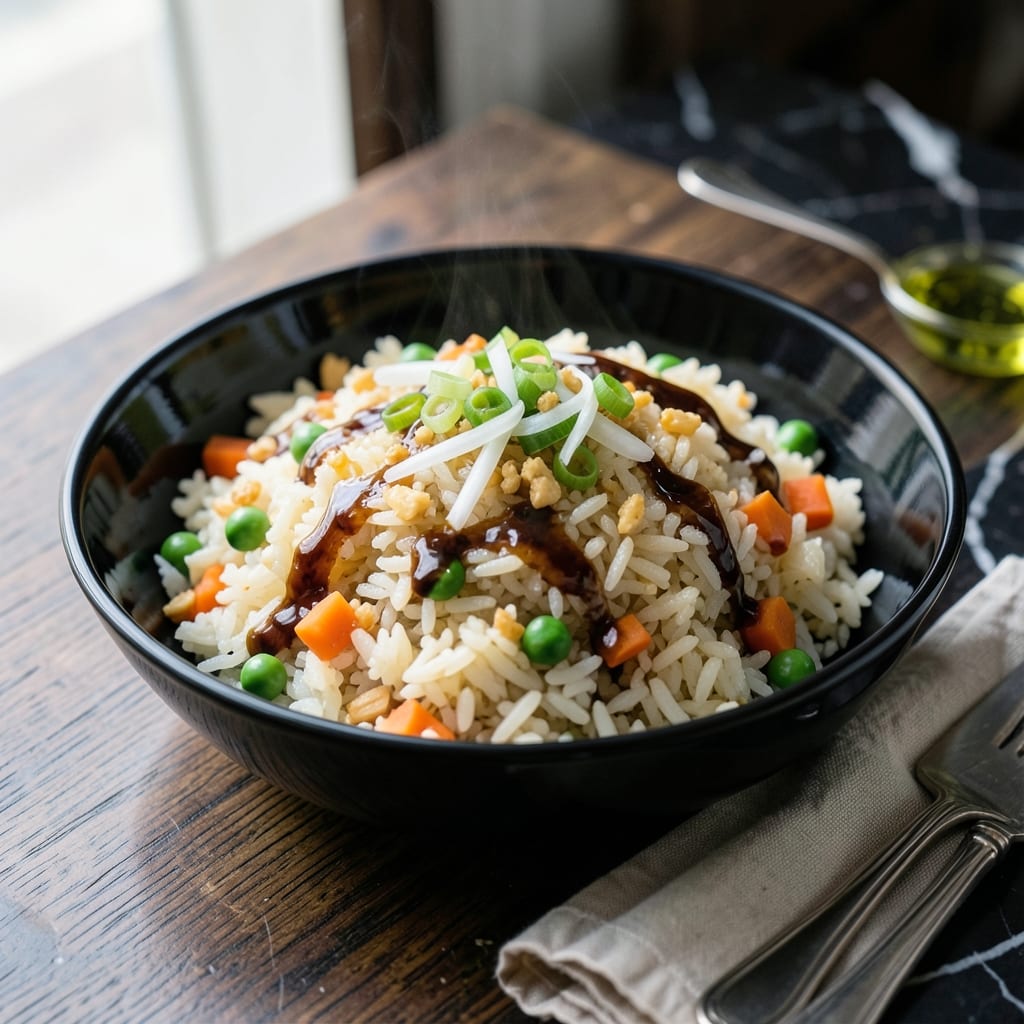
Kylie Kwong’s approach to fried rice changed how I think about this classic dish. Her method focuses on high heat and precise timing to create layers of flavor in every bite.
This version uses day-old rice, which absorbs the smoky wok hei aroma without turning mushy. The key is cooking in small batches to ensure each grain gets evenly coated with soy sauce and aromatic oils.
You’ll end up with savory rice that’s slightly charred at the edges, packed with umami from the soy and a subtle sweetness from the vegetables. The texture is what makes it unforgettable.
Perfect for a quick weeknight meal, this recipe delivers restaurant-quality results with minimal effort. The technique is simple but requires attention to detail.
Ingredients for Fried Rice Recipe Kylie Kwong
Day-old rice and umami-packed sauces create this wok-tossed classic with minimal effort.
| Ingredient | Amount | Notes |
|---|---|---|
| Day-Old Cooked Rice 🍚 | 4 cups | Jasmine or long-grain preferred |
| Light Soy Sauce 🫕 | 3 tbsp | Low-sodium works too |
| Dark Soy Sauce 🫕 | 1 tbsp | For depth and color |
| Vegetable Oil 🫒 | 3 tbsp | High smoke point essential |
| Garlic Cloves 🧄 | 3 cloves | Minced finely |
| Fresh Ginger 🌿 | 1 tbsp | Peeled and minced |
| Green Onions 🧅 | 4 whole | Thinly sliced, whites and greens separated |
| Carrots 🥕 | 1 whole | Medium, finely diced |
| Frozen Peas 🌱 | ½ cup | Thawed before cooking |
| Large Eggs 🥚 | 2 whole | Lightly beaten |
| Sesame Oil 🫒 | 1 tsp | For finishing aroma |
| Salt 🧂 | ½ tsp | Adjust to taste |
| White Pepper 🌶️ | ¼ tsp | Freshly ground preferred |
The rice is non-negotiable—day-old, cold, and dry. Fresh rice turns to mush in the wok. Jasmine rice gives the best texture, but long-grain works too. For soy sauces, Pearl River Bridge or Kikkoman are reliable brands. The vegetable oil needs a high smoke point—peanut oil is traditional if you have it. Ginger and garlic should be fresh; pre-minced lacks the punch.
No dark soy sauce? Double the light soy plus 1/2 tsp sugar for depth. Swap carrots for bell peppers or zucchini—just keep the dice small. Frozen peas can be edamame or corn (thawed first). For a vegetarian version, skip the egg or use tofu. The sesame oil is for finishing—don’t cook with it or it’ll burn.
Cooked rice keeps 3-4 days in the fridge before using. Store soy sauces in a cool, dark place—they last 6-12 months. Fresh ginger freezes beautifully; just grate what you need while frozen. Leftovers reheat best in a skillet with a splash of water to revive the grains.
Why You’ll Love This Recipe
- I’ll be real: this is my go-to when I need something fast, filling, and way better than takeout.
- One Pan Meal: I love that this comes together in a single wok—just toss in day-old rice, soy sauces, and garlic with oil, and dinner’s done.
- Umami Bomb: Honestly, the combo of light and dark soy sauce gives it that deep, caramelized flavor I crave every time.
- Weeknight Hero: I’ll be real: this is my go-to when I need something fast, filling, and way better than takeout.
Step-by-Step Instructions for Wok-Tossed Savory Fried Rice
Master the wok technique and timing that transforms simple ingredients into a restaurant-quality dish.
Step 1: Prep and Heat the Wok
Begin by having all ingredients prepped and within reach—this dish moves fast once started. Thinly slice the green onions, separating whites from greens. Finely dice the carrots and ensure the frozen peas are thawed. Break up any clumps in the 4 cups day-old cooked rice with your hands.
Heat a wok or large skillet over high heat until a drop of water sizzles and evaporates instantly. Add 1 tbsp of the 3 tbsp vegetable oil and swirl to coat. The oil should shimmer but not smoke. This high heat is crucial for that signature wok hei flavor.
Step 2: Cook the Aromatics and Vegetables
Add the 3 cloves garlic cloves and 1 tbsp fresh ginger to the hot oil. Stir-fry for 10-15 seconds until fragrant—they should sizzle but not brown. Immediately add the white parts of the green onions and diced carrots, stirring constantly for 2 minutes.
The carrots should brighten in color but retain a slight crunch. Add the 0.5 cup frozen peas and cook for another 30 seconds. The peas will heat through quickly. Season with 0.5 tsp salt and 0.25 tsp white pepper at this stage to build flavor layers.
Step 3: Scramble the Eggs and Add Rice
Push the vegetables to one side of the wok and add the remaining 2 tbsp vegetable oil to the empty space. Pour in the 2 whole large eggs and scramble quickly with a spatula until just set—about 20-30 seconds. The eggs should be soft and slightly runny.
Add the 4 cups day-old cooked rice to the wok, breaking up any remaining clumps with your spatula. Toss everything together vigorously for 2-3 minutes until the rice is uniformly coated with oil and heated through. The rice should start to take on a slightly toasted appearance.
Step 4: Season and Finish with Soy Sauces
Drizzle the 3 tbsp light soy sauce and 1 tbsp dark soy sauce around the edges of the wok. The dark soy sauce adds depth and that characteristic caramel color. Toss everything together for another 1-2 minutes until the rice is evenly coated and the soy sauces are fully incorporated.
Taste and adjust seasoning if needed, though the soy sauces should provide sufficient saltiness. The rice should be hot throughout with vegetables evenly distributed. Remove from heat and stir in the green onion tops.
Step 5: Plate with Sesame Oil Drizzle
Transfer the fried rice to a serving platter. Drizzle with 1 tsp sesame oil and toss gently to incorporate. The sesame oil adds a final aromatic note that ties all the flavors together. Serve immediately while hot.
Each grain of rice should be distinct and coated with sauce, with vegetables and egg evenly distributed throughout. The dish should have a balance of savory depth from the soy sauces and freshness from the aromatics.
Pro Tips For Making Fried Rice Recipe Kylie Kwong
- Use Cold Rice: Day-old rice from the fridge works best—fresh rice turns mushy. I learned this the hard way after my first few attempts ended up gummy.
- High Heat Only: Crank the heat to maximum and keep the wok smoking hot. Sounds intimidating, but it’s the only way to get that signature wok hei flavor Kylie Kwong’s recipe is known for.
- Separate Soy Sauces: Don’t substitute one for the other—light soy for salting, dark soy for color. My grandmother swore by this, and she was right: mixing them up flattens the depth of flavor.
- Mince Garlic Fine: Chop the garlic cloves into tiny, even pieces so they distribute quickly and don’t burn. I used to rush this part and wondered why my garlic tasted bitter instead of fragrant.
Wine and Beer Pairings for These Flavors
Crisp White Wines
I love pairing this fried rice with a dry Riesling—its bright acidity cuts through the soy sauce richness beautifully. A New Zealand Sauvignon Blanc works too, with citrus notes that complement the ginger and garlic. Serve chilled at 45-50°F for best results. 🍷
Light Beers
A crisp pilsner like Samuel Adams or Stella Artois offers a refreshing contrast to the savory flavors. The light body won’t overwhelm the dish, while the subtle bitterness cleanses your palate between bites.
Asian-Inspired Brews
For something different, try a Japanese lager such as Sapporo or Asahi. These beers have a clean profile that pairs naturally with the umami notes in the rice. I always keep a few in my Boston fridge for fried rice nights. 🍺
Rosé Options
A dry rosé from Provence provides a versatile match with its red fruit and herbal notes. The slight sweetness balances the saltiness without clashing with the dish’s savory profile. Chill to 45°F before serving.
Non-Alcoholic Pairings
For a non-alcoholic option, sparkling water with a squeeze of lime offers a palate-cleansing choice. I also enjoy jasmine tea, hot or iced, which complements the dish’s aromatic qualities perfectly.
Nutrition Facts
Frequently Asked Questions
Why does the rice need to be day-old?
Fresh rice contains too much moisture, which turns to mush in the wok. Day-old rice is drier and firms up, allowing it to absorb flavors without becoming soggy. This texture is key for that perfect wok-tossed bite.
Can I substitute the dark soy sauce?
Yes! Use 2 tbsp light soy sauce plus 1/2 tsp sugar for similar depth and color. The sugar mimics dark soy’s caramel notes while keeping the savory balance intact.
What’s the best way to reheat leftovers?
Use a skillet over medium-high heat with a splash of water. Stir-fry for 2-3 minutes until hot. This revives the texture better than a microwave, which can make the rice gummy.

- Cream of Wild Rice Soup Recipe: Earthy Grains in Silky Broth - October 9, 2026
- Filipino Garlic Rice Recipe: Crispy Fried Aroma With Every Bite - October 9, 2026
- Gobi Manchurian Rice Recipe: Indo-Chinese Fusion in One Bowl - October 9, 2026