
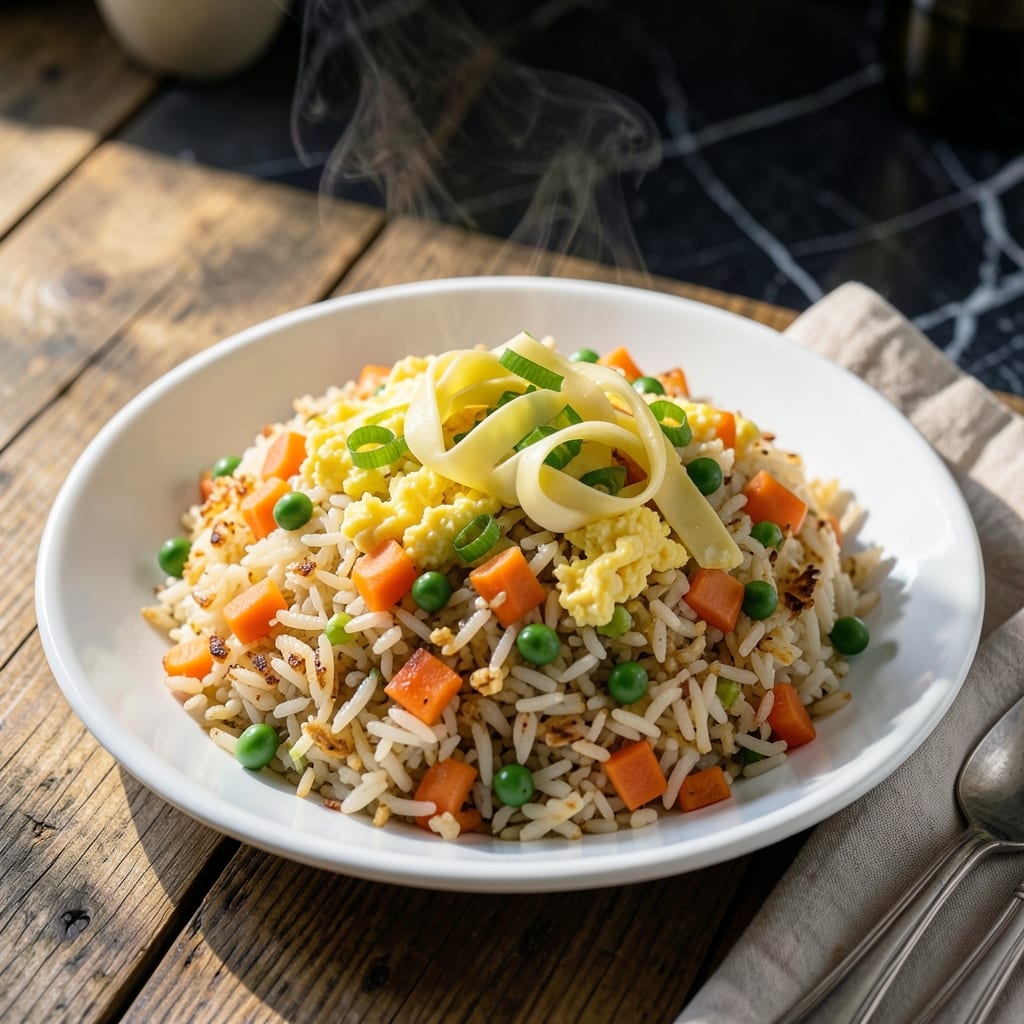
There’s a reason this classic fried rice has stood the test of time—it delivers perfectly charred flavor with every bite. I’ve refined this method to capture the essence of traditional wok cooking at home.
The key lies in using day-old rice and high heat to achieve that signature texture. Each grain stays distinct yet absorbs the savory depth of soy sauce and aromatic ingredients.
You’ll end up with a dish that balances smoky wok hei, tender vegetables, and rich, umami-packed seasoning. It’s a foolproof way to turn leftovers into something extraordinary.
Serve it as a main or alongside your favorite protein. Here’s how to make it right.
Ingredients for Fried Rice Recipe Nyt
Day-old rice, fresh aromatics, and a few pantry staples bring this wok classic to life.
| Ingredient | Amount | Notes |
|---|---|---|
| Cooked Long-Grain White Rice 🍚 | 4 cups | Day-old, cold, broken up |
| Neutral Oil 🫒 | 3 tbsp | High smoke point, like vegetable or peanut |
| Large Eggs 🥚 | 3 whole | Lightly beaten |
| Carrots 🥕 | 1 whole | Medium, finely diced |
| Green Onions 🧅 | 4 whole | Thinly sliced, whites and greens separated |
| Frozen Peas 🌱 | ¾ cup | Thawed, patted dry |
| Garlic Cloves 🧄 | 3 cloves | Minced finely |
| Fresh Ginger 🌿 | 1 tbsp | Grated or minced |
| Soy Sauce 💧 | 3 tbsp | Use low-sodium if preferred |
| Oyster Sauce 🍶 | 1 tbsp | Optional but recommended for depth |
| Sesame Oil 🫒 | 1 tsp | Toasted, for finishing |
| Salt 🧂 | ½ tsp | Or to taste |
| White Pepper 🌶️ | ¼ tsp | Ground, preferred for authenticity |
The rice is non-negotiable—use day-old, cold, and dry. Freshly cooked rice turns to mush in the wok. I grab jasmine or long-grain white from the bulk bins at Whole Foods or any Asian market. The oil needs a high smoke point to hit those searing temps without burning. Peanut oil is my go-to for that authentic wok hei, but vegetable or canola work fine too.
No oyster sauce? Hoisin or fish sauce (if you eat fish) adds similar umami depth. Out of fresh ginger? Ground ginger at half the amount works in a pinch, though fresh makes a difference. The carrots and peas are flexible—swap in bell peppers, corn, or even diced zucchini. For a vegetarian version, skip the oyster sauce or use a mushroom-based alternative.
Leftover fried rice is a gift—it actually improves overnight. Store in an airtight container in the fridge for up to 4 days. Reheat in a skillet with a splash of water to revive the texture. For freezing, spread cooled rice on a tray first to prevent clumping, then portion into bags for up to 3 months.
Why You’ll Love This Recipe
- One Pan Wonder: I love that I can toss the rice, eggs, and veggies into a single pan and have dinner ready faster than takeout arrives.
- That Egg Magic: The eggs scramble right into the rice, creating little pockets of creamy richness with every bite.
- Leftovers Reinvented: Honestly, it’s my favorite way to use up last night’s rice and those half-used carrots lingering in the fridge.
- Budget Hero: A handful of pantry staples and a couple eggs stretch into a filling meal that costs pennies per serving.
Step-by-Step Instructions for Classic Wok-Charred Fried Rice
Here’s my tested method for achieving that authentic wok hei flavor at home.
Step 1: Prep and Scramble the Eggs
Heat 1 tablespoon of neutral oil in your wok or large skillet over high heat until it shimmers. Pour in the 3 whole large eggs and let them sit for 10 seconds before gently scrambling with a spatula.
Cook until just set but still slightly soft—about 30-45 seconds. You want small, tender curds, not dry and rubbery. Remove the eggs to a plate and set aside. This prevents overcooking when we add them back later.
Real talk: if your eggs look dry at this stage, you’ve gone too far. They’ll continue cooking in the final steps, so underdone is better than overdone here.
Step 2: Stir-Fry the Aromatics and Vegetables
Add the remaining 2 tablespoons of neutral oil to the hot wok. When it begins to smoke slightly, add the minced garlic and grated ginger. Stir constantly for 15-20 seconds until fragrant but not browned—burnt garlic turns bitter.
Immediately add the finely diced carrots and thawed peas. Stir-fry for 2-3 minutes until the carrots just begin to soften but retain their bright color. Then add the white parts of the green onions and cook for another 30 seconds.
This is the moment that matters: keep everything moving in the wok. The high heat and constant stirring create that signature charred flavor.
Step 3: Combine Rice and Sauces
Add the 4 cups of cooked long-grain white rice to the wok, breaking up any clumps with your spatula. Press down firmly and let it sit undisturbed for 20-30 seconds to develop a slight crust on the bottom.
Drizzle the 3 tablespoons of soy sauce and 1 tablespoon of oyster sauce around the edges of the wok. This allows the sauces to caramelize slightly before mixing. Stir everything together, then add the scrambled eggs back in.
I’ve found that pressing the rice against the hot wok surface at this stage creates those coveted crispy bits that make fried rice irresistible.
Step 4: Finish and Season
Sprinkle the 0.5 teaspoon of salt and 0.25 teaspoon of white pepper over the rice. Stir well to distribute evenly. Taste and adjust seasoning if needed—remember, the soy and oyster sauces are already salty.
Remove from heat and stir in the 1 teaspoon of sesame oil. This adds a final layer of aroma. Garnish with the green parts of the green onions and serve immediately while hot.
Here’s the thing—fried rice continues cooking from residual heat, so it’ll taste best straight from the wok. The sesame oil should be the last thing added to preserve its delicate flavor.
Pro Tips For Making Fried Rice Recipe Nyt
- Chill the Rice: Use day-old rice straight from the fridge—fresh rice is too moist and will turn your fried rice into a soggy mess. I learned this the hard way after ruining two batches.
- High Heat Only: Crank the burner to max and keep it there. After burning three batches, I finally figured out that medium heat just steams the rice instead of frying it.
- Prep Veggies Small: Dice the carrots and green onions into tiny, even pieces—about 1/4-inch. They cook faster and distribute better, so every bite has flavor.
- Scramble Eggs First: Push the rice to one side of the pan, pour in the beaten eggs, and scramble them before mixing everything together. It’s the easiest way to avoid rubbery egg chunks.
Troubleshooting fried rice recipe nyt
Soggy Rice Fix
If your fried rice turns mushy, you likely used fresh rice. Spread the cooked rice on a baking sheet and refrigerate uncovered for 1-2 hours to dry it out. For immediate rescue, cook it longer in the wok over high heat to evaporate excess moisture. 🔥
Bland Flavor Fix
Underseasoned rice needs more than just salt. Add an extra 1 tbsp soy sauce or ½ tsp white pepper at the end. A splash of fish sauce or dash of sesame oil can also boost umami depth significantly.
Remember, day-old rice absorbs seasonings better than fresh.
Egg Troubles
If your eggs turned rubbery, they were overcooked initially. Scramble them just until set—about 30 seconds—then remove immediately. Add them back at the very end to warm through without overcooking.
Burnt Aromatics
Burnt garlic or ginger means your heat was too high or you didn’t stir enough. Next time, reduce heat slightly when adding aromatics and keep them moving constantly for just 15-20 seconds until fragrant.
No Wok Hei
For that smoky wok flavor, ensure your pan is screaming hot before adding oil. Use peanut oil for its high smoke point. Press the rice firmly against the wok surface and let it sit for 20-30 seconds to develop char. 💡
Small batches cook better than overloading your wok.
Nutrition Facts
Frequently Asked Questions
Why does the recipe call for day-old rice?
Fresh rice contains too much moisture, which turns to mush in the wok. Day-old rice is drier and firmer, allowing it to absorb flavors better and develop that coveted char.
Can I use brown rice instead of white?
You can, but the texture will differ. Brown rice is chewier and may require slightly longer cooking. For best results, use day-old cooked brown rice and adjust seasoning to taste.
How do I prevent my eggs from turning rubbery?
Cook the eggs just until set—about 30-45 seconds—then remove them immediately. Add them back at the end to warm through without overcooking.
What can I substitute for oyster sauce?
Try hoisin sauce, fish sauce, or a mushroom-based alternative for similar umami depth. Each adds a slightly different flavor profile but works well.

- Jollof Rice Sauce Recipe: West African Tomato and Spice Infusion - September 25, 2026
- Japanese Rice Soup Recipe: Umami-Rich Comfort in a Bowl - September 25, 2026
- Homemade Cream Of Rice Recipe: Silk-Smooth Breakfast in Minutes - September 25, 2026