
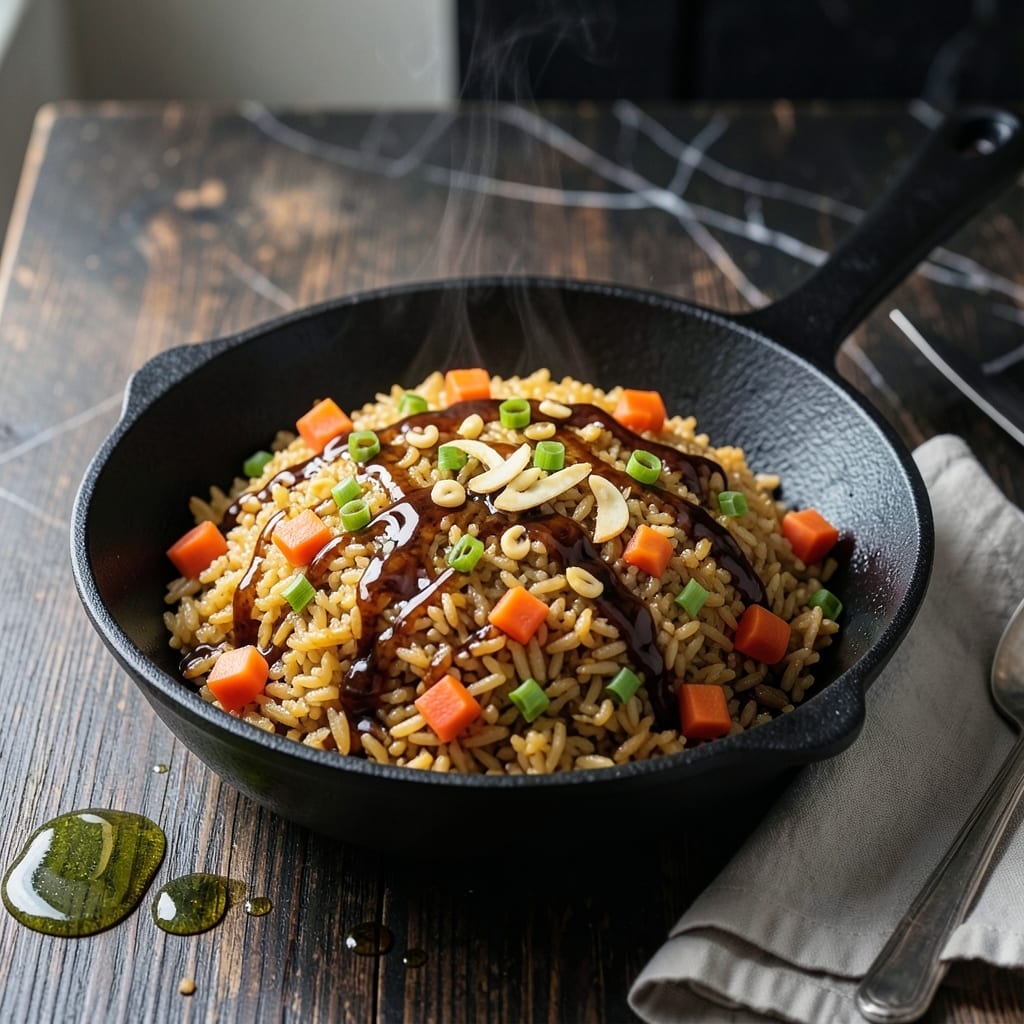
There’s an art to achieving wok-charred umami in fried rice, and oyster sauce holds the key to unlocking that depth of flavor.
This method transforms simple ingredients into a dish with restaurant-quality complexity. I rely on high heat and precise timing to create those signature charred bits that make each bite irresistible.
The oyster sauce adds a rich, savory base that elevates the garden vegetables, while the rice develops a slight crispness that contrasts perfectly with the tender additions.
What emerges is a balanced, flavorful dish that’s as satisfying as it is impressive. It proves that a few quality ingredients can create something extraordinary.
Ingredients for Fried Rice Recipe Oyster Sauce
High heat meets umami depth with garden vegetables and charred rice in this dish.
| Ingredient | Amount | Notes |
|---|---|---|
| Day-Old Cooked Jasmine Rice 🍚 | 4 cups | Cold, dry, separated grains |
| Oyster Sauce 🫕 | 3 tbsp | Premium brand recommended |
| Soy Sauce 🫕 | 2 tbsp | Low-sodium preferred |
| Peanut Oil 🫒 | 3 tbsp | High smoke point essential |
| Garlic Cloves 🧄 | 4 cloves | Finely minced |
| Fresh Ginger 🌿 | 1 tbsp | Finely grated or minced |
| Carrots 🥕 | 1 cup | Small diced, uniform pieces |
| Green Onions 🧅 | ½ cup | Thinly sliced, whites and greens separated |
| Frozen Green Peas 🌱 | ¾ cup | Thawed and drained |
| Large Eggs 🥚 | 2 whole | Lightly beaten |
| Sesame Oil 🫒 | 1 tsp | Toasted variety for finishing |
| White Pepper 🌶️ | ½ tsp | Freshly ground preferred |
| Kosher Salt 🧂 | ½ tsp | Adjust to taste |
The rice quality is non-negotiable. Day-old jasmine rice from the fridge yields the best texture—dry, separated grains that won’t turn mushy. Oyster sauce brands vary wildly; Lee Kum Kee Premium or Maekrua deliver authentic depth. For vegetables, fresh, crisp carrots and peas provide the perfect contrast to the charred rice. Source these from any Asian grocery for optimal selection and freshness.
No oyster sauce? Vegetarian oyster sauce (made from mushrooms) works at a 1:1 ratio. Substitute peas with diced bell peppers for color. Tamari can replace soy sauce at half the amount for gluten-free needs. The eggs are optional—omit entirely or replace with tofu for a plant-based version. Avocado oil stands in for peanut oil if allergies are a concern.
Cooked rice holds for 3-4 days in the fridge before drying out. The finished dish keeps for 2-3 days refrigerated but loses its wok-charred texture. For best results, consume immediately. Reheat in a skillet over high heat to approximate the original texture.
Why You’ll Love This Recipe
- One Pan Wonder: I toss everything into a single wok—day-old jasmine rice, garlic sizzling in peanut oil, and a splash of oyster sauce—and it’s ready before the takeout arrives.
- Umami Bomb: The oyster sauce and soy sauce combo hits that sweet-salty depth, while the garlic adds just the right punch. Honestly, it’s the flavor I crave most.
- Fridge Cleaner: I throw in whatever veggies or proteins are lingering, and it still turns out spot-on every time.
- Leftovers Upgrade: That extra rice from last night? It fries up even better the next day—crispy edges, tender centers, no waste.
Step-by-Step Instructions for Wok-Charred Umami Fried Rice
Master the technique that delivers restaurant-quality texture and flavor with every grain.
Step 1: Prepare and Heat the Wok
Heat 3 tbsp Peanut Oil in a wok over high heat until it shimmers and a drop of water sizzles violently. I always use peanut oil for its high smoke point, which prevents burning and allows you to achieve that coveted wok hei (breath of the wok) flavor.
Add 4 cloves Garlic Cloves and 1 tbsp Fresh Ginger, both finely minced, and stir-fry for 15-20 seconds until fragrant but not browned. This aromatic base builds the flavor foundation. Be vigilant—garlic burns quickly at this temperature.
Step 2: Cook the Vegetables and Eggs
Add 1 cup Carrots, small diced into uniform pieces, and stir-fry for 2 minutes until the edges begin to soften. Then add 0.75 cup Frozen Green Peas and continue cooking for another 1 minute until both vegetables are vibrant in color.
Push the vegetables to one side of the wok. Pour in the 2 whole Large Eggs, lightly beaten, and scramble gently until just set but still slightly runny. This ensures the eggs coat the rice evenly rather than forming large curds.
Step 3: Incorporate the Rice and Seasonings
Add 4 cups Day-Old Cooked Jasmine Rice, breaking up any clumps with your spatula. The rice should be cold and dry for optimal texture. Stir-fry for 2-3 minutes, pressing the rice against the hot wok surface to achieve slight char on some grains.
Drizzle 3 tbsp Oyster Sauce and 2 tbsp Soy Sauce evenly over the rice. Sprinkle with 0.5 tsp White Pepper and 0.5 tsp Kosher Salt. Toss everything together vigorously for 2 minutes until the rice is evenly coated and glossy with sauce.
Step 4: Finish and Serve
Remove the wok from heat and stir in 0.5 cup Green Onions, using both whites and greens as specified. Drizzle with 1 tsp Sesame Oil and toss once more to combine. The green onions should remain bright and fresh, adding a pop of color and mild bite.
Taste and adjust seasoning if needed, though the combination of oyster and soy sauces typically provides the perfect balance. Serve immediately while hot, with each grain distinct yet cohesive, and the aroma of wok-charred goodness filling the air.
Pro Tips For Making Fried Rice Recipe Oyster Sauce
- Crank the Heat: Use the highest flame your stove allows—peanut oil should shimmer before adding garlic. I learned this the hard way after too many soggy batches.
- Dry the Rice: Spread day-old jasmine rice on a tray and let it sit uncovered for 30 minutes before frying. Sounds weird, but it works: the grains fry up separate and crisp.
- Skip Fresh Garlic: Mince your garlic cloves fine and cook them just until fragrant, about 15 seconds—any longer and they turn bitter. After burning three batches, I finally figured out the timing.
- Sauce Last: Add oyster sauce and soy sauce at the very end of cooking to avoid steaming the rice. My grandmother swore by this, and she was right: it keeps the texture perfect.
Best Sauces and Condiments for This Dish
Classic Pairings
I always start with a drizzle of sriracha for heat that complements the umami depth. A side of quick-pickled cucumbers cuts through the richness beautifully—I toss 1 cup thinly sliced cucumbers with ¼ cup rice vinegar and 1 tsp sugar. 🌶️
Umami Boosters
For extra depth, add 1 tsp fish sauce to your finished dish—it amplifies the oyster sauce without overpowering. A sprinkle of toasted sesame seeds adds nutty crunch. I also keep chili garlic sauce on hand for guests who want more kick.
Fresh Accents
Fresh herbs elevate this dish instantly. Stir in ¼ cup chopped cilantro just before serving. A squeeze of lime juice brightens all the flavors. I grow my own cilantro in summer—nothing beats that garden-fresh aroma.
Texture Contrasts
Add ½ cup crushed peanuts for crunch that contrasts the soft rice. For a Sicilian twist, I sometimes top with fried shallots from the Asian market. Both add a satisfying textural element that keeps every bite interesting.
Dipping Sauces
Serve with a side of sweet chili sauce for dipping—its sticky, sweet-spicy profile pairs wonderfully. I also love hoisin sauce thinned with a little water for a dipping consistency. These sauces let everyone customize their bite. 💫
Nutrition Facts
Frequently Asked Questions
Can I use fresh rice instead of day-old?
Fresh rice contains too much moisture and will turn mushy. Day-old rice is essential for achieving the perfect texture with distinct grains. Spread fresh rice on a tray to cool and dry quickly if needed.
What can I substitute for oyster sauce?
Use 1:1 vegetarian oyster sauce (mushroom-based) or mix 2 tbsp hoisin sauce with 1 tbsp soy sauce. Fish sauce works in a pinch but use sparingly.
How do I prevent my fried rice from being soggy?
Use high heat and cook in small batches. Ensure your wok is hot before adding oil, and don’t overcrowd the pan. Cold rice and constant stirring help too.
Can I add other proteins?
Try shrimp, chicken, or tofu. Cook proteins separately first, then combine at the end to avoid overcooking.

- Jollof Rice Sauce Recipe: West African Tomato and Spice Infusion - September 25, 2026
- Japanese Rice Soup Recipe: Umami-Rich Comfort in a Bowl - September 25, 2026
- Homemade Cream Of Rice Recipe: Silk-Smooth Breakfast in Minutes - September 25, 2026