
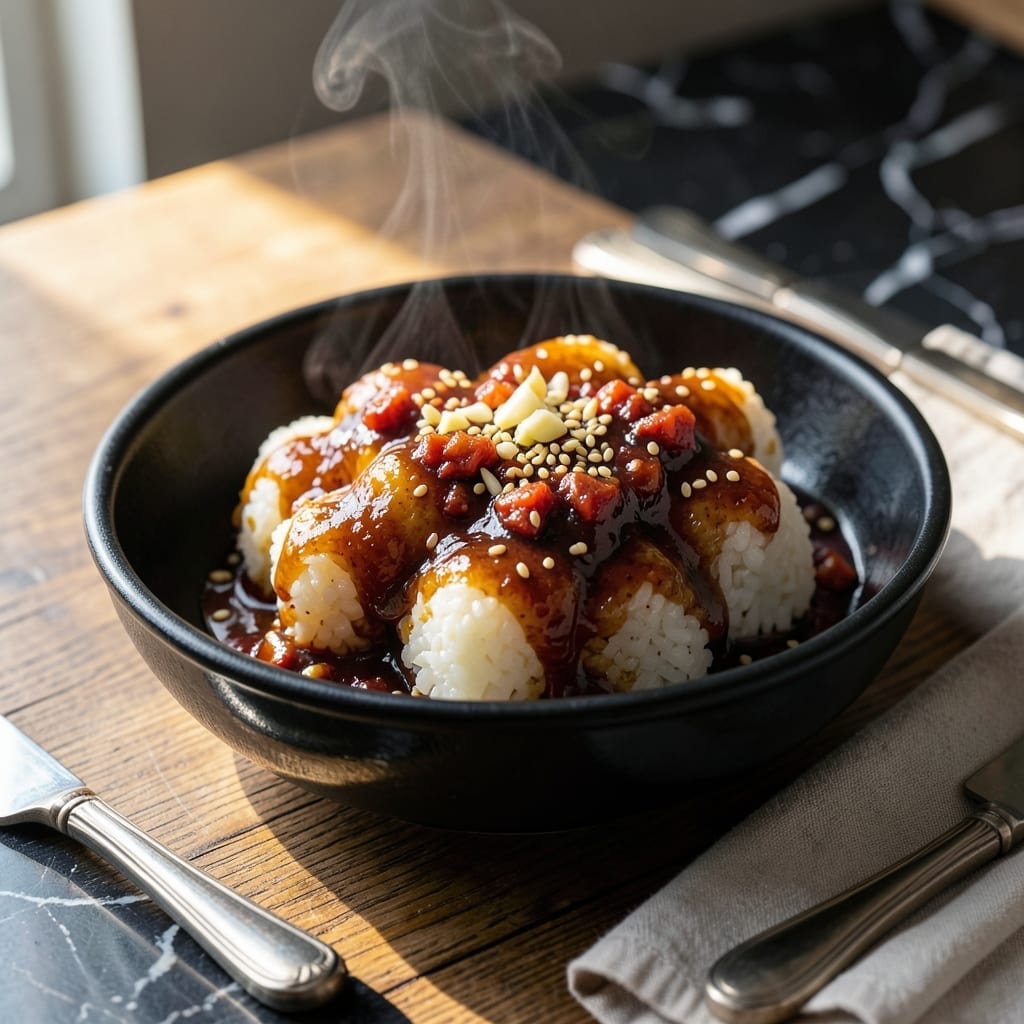
This dish transforms simple rice cakes into a vibrant, chewy masterpiece coated in a glossy sweet-spicy gochujang sauce. The contrast between soft rice cakes and the bold, slightly sticky sauce makes it irresistible.
I perfected this method after testing various sauce ratios to balance heat, sweetness, and umami. The key is simmering the rice cakes in the sauce until they absorb the flavors completely, creating that signature sticky texture.
You’ll end up with a dish that’s satisfyingly tender yet slightly resistant, with a sauce so flavorful you’ll want to lick the pan. It’s traditional Korean comfort food at its best.
Serve it as a main or side—either way, it’s a crowd-pleaser that comes together in under 30 minutes.
Ingredients for Korean Spicy Sticky Rice Cake
Cylindrical rice cakes and a glossy gochujang sauce create this vibrant, chewy dish.
| Ingredient | Amount | Notes |
|---|---|---|
| Korean Rice Cakes 🍚 | 1 lb | Cylindrical or disc-shaped tteok |
| Gochujang 🌶️ | ½ cup | Korean red pepper paste |
| Soy Sauce 🫒 | 3 tbsp | Low-sodium preferred |
| Brown Sugar 💛 | 3 tbsp | Light or dark variety |
| Honey 🍯 | 2 tbsp | For balancing sweetness |
| Garlic Cloves 🧄 | 4 cloves | Minced for depth |
| Ginger Root 🌿 | 1 tbsp | Freshly grated preferred |
| Sesame Oil 🫒 | 1 tbsp | Toasted for aroma |
| Vegetable Broth 🥣 | ½ cup | Low-sodium for control |
| Green Onions 🌱 | ½ cup | Thinly sliced for garnish |
| Sesame Seeds 🌾 | 2 tbsp | Toasted for garnish |
| Neutral Oil 🫒 | 2 tbsp | For sautéing aromatics |
| Red Pepper Flakes 🌶️ | 1 tsp | Korean gochugaru preferred |
| Rice Vinegar 🍶 | 1 tbsp | For acidity balance |
The rice cakes are non-negotiable—look for cylindrical tteok at Korean markets like H Mart or any well-stocked Asian grocery. Fresh is best (soft and pliable), but frozen works too (thaw completely first). Gochujang brands vary wildly: Sempio or CJ are reliable, but check the label for added sugar if that’s a concern. The honey can be swapped for maple syrup in a pinch.
No gochujang? Sriracha plus miso paste gets you in the ballpark (adjust sweetness). For extra umami, add a spoonful of doenjang (fermented soybean paste). Green onions can be swapped for chives or regular onions. If avoiding honey, agave or maple syrup work beautifully. The sesame oil is key—don’t skip it, but any neutral oil works for the initial sauté.
Rice cakes absorb flavors fast, so serve immediately. Leftovers? 2-3 days max—reheat gently with a splash of water to prevent drying. Sauce thickens as it sits, so thin with broth when reheating. Freezing isn’t ideal (texture suffers), but cooked rice cakes will keep for 1 month if needed.
Why You’ll Love This Recipe
- One-Pot Wonder: I toss everything in a single pan—rice cakes, gochujang, soy sauce—and let the sticky magic happen.
- Sweet Heat Balance: Honestly, the brown sugar and honey tame the gochujang’s fire just enough to keep me reaching for another bite.
- Party or Lunchbox: Between us, this works as a crowd-pleasing appetizer or my daughter’s after-school snack.
- Budget Stretcher: A bag of rice cakes and a jar of gochujang last me weeks, and this dish feeds four for pennies.
Step-by-Step Instructions for Korean Spicy Sticky Rice Cakes
Here’s the method. Straightforward, tested, works every time for those chewy, saucy delights.
Step 1: Soak and Prep the Rice Cakes
If your Korean rice cakes feel hard or dry, soak them in warm water for 10-15 minutes until they become soft and pliable. This step ensures they absorb the sauce beautifully and cook evenly. Drain thoroughly afterward to prevent a watery final dish.
While they soak, thinly slice the 0.5 cup green onions and set aside for garnishing later. I like to separate the white and green parts for a bit of color contrast in the finished dish, but it’s optional.
Step 2: Build the Flavor Base with Aromatics
Heat the 2 tbsp neutral oil in a large skillet or wok over medium-high heat until it shimmers. Add the minced 4 cloves garlic cloves and grated 1 tbsp ginger root, stirring constantly for 30-45 seconds until fragrant but not browned. Garlic burns easily, so keep it moving.
Next, add the 1 tsp red pepper flakes and toast for 15 seconds to bloom their flavor. This creates a deep, aromatic foundation for the sauce that will coat every chewy bite of rice cake.
Step 3: Create the Sweet-Spicy Sauce
Reduce heat to medium and add the 0.5 cup gochujang, 3 tbsp soy sauce, 3 tbsp brown sugar, 2 tbsp honey, 1 tbsp sesame oil, 1 tbsp rice vinegar, and 0.5 cup vegetable broth. Stir well to combine all ingredients into a smooth, glossy sauce.
Let it simmer for 3-4 minutes until it thickens slightly and the raw edge of the gochujang mellows. The sauce should coat the back of a spoon but still be pourable. Taste and adjust sweetness or spice if needed, though the balance should be perfect as written.
Step 4: Cook the Rice Cakes in the Sauce
Add the drained 1 lb Korean rice cakes to the skillet and gently fold them into the sauce using a spatula. Cook for 5-7 minutes over medium heat, stirring occasionally, until the rice cakes are heated through and have absorbed much of the sauce.
You’ll notice the rice cakes become translucent and incredibly tender as they soak up the flavors. If the sauce thickens too much, add a splash of water to loosen it. The rice cakes should be glossy and coated, not swimming in liquid.
Step 5: Garnish and Serve Immediately
Remove from heat and drizzle with the 1 tbsp sesame oil for extra aroma. Sprinkle with the reserved 0.5 cup green onions and 2 tbsp sesame seeds, tossing gently to distribute the garnishes evenly. The green onions add freshness while the sesame seeds provide a nutty crunch.
Serve immediately while hot—the rice cakes are best when freshly cooked and at their most tender. The sauce will continue to thicken as it cools, so dig in right away for the perfect chewy, saucy experience.
Pro Tips For Making Korean Spicy Sticky Rice Cake
- Soak the Rice Cakes: I learned this the hard way—dry rice cakes stay chewy and undercooked. Soak them in warm water for 10-15 minutes before cooking, or they’ll never absorb the spicy sauce properly.
- Bloom the Gochujang: Heat the gochujang with a little oil for 1-2 minutes before adding liquids. Sounds weird, but it deepens the flavor and removes that raw, pasty taste.
- Watch the Sugar: Brown sugar and honey burn fast. Stir frequently once you add them, and pull the sauce off the heat the second it starts to thicken—it’ll keep cooking from residual heat.
- Use Fresh Gochujang: After burning three batches, I finally figured out old gochujang loses its punch. Check the date on the tub; if it’s been open more than a few months, grab a new one for the best spicy kick.
Essential Equipment for This Dish
Skillet or Wok
A large, heavy-bottomed skillet or wok is essential for even heat distribution. I recommend a 12-inch cast iron skillet or a carbon steel wok for best results. Non-stick works too, but avoid thin aluminum pans that create hot spots. 🔥
Wooden Spatula
Use a wooden spatula or silicone-coated spoon to gently fold the rice cakes without breaking them. Metal utensils can scratch your cookware and damage the tender rice cakes. The sauce clings well to wood, making every fold more flavorful.
Mixing Bowls
A set of nesting mixing bowls helps with prep—one for soaking rice cakes, another for sauce ingredients. I prefer stainless steel for durability. Having everything ready before cooking makes the process smooth and stress-free.
Chef’s Knife
A sharp 8-inch chef’s knife is perfect for slicing green onions and mincing garlic efficiently. I use a Victorinox Fibrox for its comfort and precision. Dull knives make prep slower and less safe.
Measuring Cups
Accurate measurements matter for balancing the sauce’s sweetness and heat. I keep a set of stainless steel measuring cups handy for the gochujang, soy sauce, and other liquid ingredients. Guessing can throw off the entire dish.
Fine Grater
A Microplane grater is ideal for ginger, ensuring you get the finest texture for maximum flavor infusion. Fresh ginger is non-negotiable here—its zesty kick elevates the sauce beautifully. 💫
Nutrition Facts
Frequently Asked Questions
Can I use frozen rice cakes?
Yes, but thaw them completely first. Soak in warm water for 15-20 minutes until soft. Frozen rice cakes often have a slightly different texture, so check for consistency before cooking.
Why did my sauce turn out too thick?
This usually happens if simmered too long. Thin it with 1-2 tbsp water or broth while cooking. The rice cakes will absorb some liquid, so keep it slightly looser than desired initially.
How do I make it less spicy?
Reduce the gochujang to 1/3 cup and add an extra 1 tbsp of honey or sugar. For milder heat, replace 1 tbsp gochujang with 1 tbsp tomato paste.
Can I add vegetables to this?
Add 1 cup of sliced carrots, zucchini, or cabbage when cooking the rice cakes. They’ll soak up the sauce beautifully and add texture.

- Jollof Rice Sauce Recipe: West African Tomato and Spice Infusion - September 25, 2026
- Japanese Rice Soup Recipe: Umami-Rich Comfort in a Bowl - September 25, 2026
- Homemade Cream Of Rice Recipe: Silk-Smooth Breakfast in Minutes - September 25, 2026