
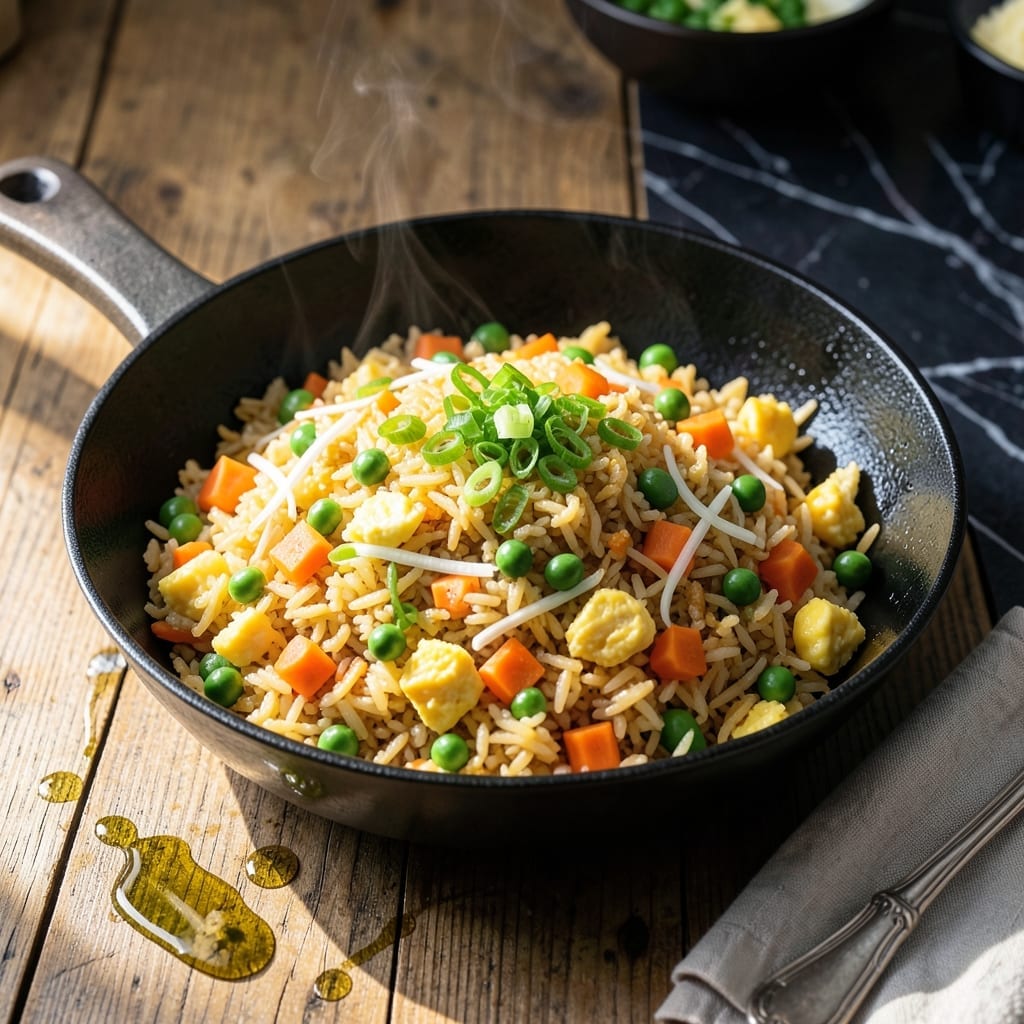
I developed this fried rice recipe after years of takeout disappointment, determined to master the balance of umami and tang at home.
The secret is rice vinegar, which cuts through the richness while adding brightness that elevates every bite. This foolproof method delivers restaurant-quality results with basic ingredients and a hot wok.
You’ll achieve perfectly seared rice with caramelized edges, tender vegetables, and that signature wok hei flavor. The vinegar adds just enough acidity to keep the dish vibrant and fresh.
Ready in 20 minutes with minimal cleanup, this becomes a weeknight staple you’ll crave.
Ingredients for Fried Rice Recipe Rice Vinegar
Basic ingredients transform into restaurant-quality fried rice with bright tangy depth here.
| Ingredient | Amount | Notes |
|---|---|---|
| Day-Old Cooked White Rice 🍚 | 4 cups | Cold, dry, preferably jasmine or long-grain |
| Peanut Oil 🫒 | 3 tbsp | High smoke point essential for wok hei |
| Large Eggs 🥚 | 3 whole | Lightly beaten for scrambling |
| Carrots 🥕 | 2 whole | Medium dice for even cooking |
| Green Onions 🧅 | 4 whole | Thinly sliced, whites and greens separated |
| Frozen Peas 🌱 | 1 cup | No need to thaw |
| Garlic Cloves 🧄 | 3 cloves | Minced finely for even distribution |
| Fresh Ginger Root 🌿 | 1 tbsp | Finely grated or minced |
| Soy Sauce 💧 | 3 tbsp | Low-sodium preferred for control |
| Rice Vinegar 🍚 | 2 tbsp | The key tangy brightness component |
| Sesame Oil 🫒 | 1 tsp | Toasted, for finishing aroma |
| Kosher Salt 🧂 | ½ tsp | Adjust to taste at the end |
| White Pepper 🌶️ | ¼ tsp | Freshly ground for subtle heat |
| Optional Protein 🍗 | 1 cup | Diced cooked chicken, shrimp, or tofu |
The rice is non-negotiable—day-old, cold, and dry is what gives you those perfect seared edges. Jasmine rice is ideal, but any long-grain works if it’s been chilled overnight. For the oil, peanut oil hits the high smoke point needed for authentic wok hei. Costco or Asian markets sell it in large bottles that last forever. The vegetables should be fresh but simple—no need for anything exotic.
No peanut oil? Vegetable or canola oil at a pinch, but avoid olive oil (smoke point too low). Missing rice vinegar? Apple cider vinegar at half the amount works, though the flavor profile shifts slightly. For protein, leftover rotisserie chicken or shrimp from the freezer section at Whole Foods are great shortcuts. The soy sauce should be low-sodium so you control the saltiness.
Leftover fried rice actually improves overnight as flavors meld. Store in an airtight container for up to 4 days in the fridge. Reheat in a skillet with a splash of water to revive the texture. Freezing isn’t recommended—rice becomes mushy when thawed. Always cook the rice fresh the day before for best results (don’t use same-day rice).
Why You’ll Love This Recipe
- One-Pan Wonder: I toss everything in my wok with peanut oil and it’s done in 10 minutes flat—no extra dishes.
- Bright & Tangy: Rice vinegar cuts through the richness and makes the carrots and green onions pop.
- Feeds My Pack: I double the batch on Sunday and we’re set for lunches all week.
- Uses Up Leftovers: That extra cup of day-old rice and half a bag of carrots? They disappear in here.
Step-by-Step Instructions for Wok-Seared Umami Fried Rice With Tangy Brightness
Master the technique for restaurant-quality results with perfect wok hei and balanced flavors.
Step 1: Prep Ingredients for Maximum Efficiency
Begin by dicing the 2 whole Carrots into ¼-inch pieces and thinly slicing the 4 whole Green Onions, keeping the whites and greens separate. Mince the 3 cloves Garlic Cloves and finely grate the 1 tbsp Fresh Ginger Root—this fine texture ensures even distribution in every bite.
Lightly beat the 3 whole Large Eggs in a small bowl. If using the 1 cup Optional Protein, ensure it’s diced into small, uniform pieces. Having all ingredients prepped and within reach is crucial for the fast-paced stir-frying process that follows.
Step 2: Scramble Eggs and Aromatics in High Heat
Heat a wok or large skillet over high heat until smoking hot, then add 1 tbsp Peanut Oil. Swirl to coat the surface, then add the beaten eggs. Let them set for 10 seconds before scrambling vigorously with a spatula until just set but still slightly runny.
Push the eggs to one side, then add the remaining 2 tbsp Peanut Oil to the empty space. Immediately add the carrot dice, green onion whites, garlic, and ginger. Stir-fry for 2-3 minutes until the carrots begin to soften and the aromatics become fragrant.
Step 3: Combine Rice and Seasonings for Even Coating
Add the 4 cups Day-Old Cooked White Rice to the wok, breaking up any clumps with your spatula. The cold, dry rice will absorb flavors better and resist turning mushy. Stir-fry for 2-3 minutes until the rice is hot and begins to develop a slight toasted aroma.
Create a well in the center and add the 1 cup Frozen Peas, 3 tbsp Soy Sauce, 2 tbsp Rice Vinegar, 0.5 tsp Kosher Salt, and 0.25 tsp White Pepper. The vinegar adds that signature tangy brightness. Toss everything together for 1-2 minutes until the peas are heated through and the rice is evenly coated.
Step 4: Incorporate Protein and Finish with Aroma
Add the 1 cup Optional Protein and stir-fry for 1-2 minutes until heated through. If using raw protein like shrimp, ensure it’s fully cooked at this stage. The residual heat from the wok will finish cooking any raw elements while maintaining the dish’s texture.
Remove from heat and drizzle with 1 tsp Sesame Oil. Fold in the green onion greens for a pop of color and freshness. Taste and adjust seasoning if needed—the soy sauce and vinegar should create a perfect balance of salty and tangy notes.
Pro Tips For Making Fried Rice Recipe Rice Vinegar
- Crank Up the Heat: High heat is non-negotiable—peanut oil should shimmer before adding rice. I learned this the hard way after too many soggy batches.
- Dry the Rice First: Spread day-old rice on a tray for 10 minutes to evaporate excess moisture, or it’ll steam instead of fry.
- Skip Fresh Rice: Freshly cooked rice turns to mush in the wok. Day-old, cold grains hold their shape and crisp up properly.
- Scramble Eggs Separately: Cook the eggs first, remove them, then add back at the end—this keeps them tender instead of rubbery from overcooking.
Creative Variations of fried rice recipe rice vinegar
Thai Pineapple Twist
Add 1 cup diced pineapple and 2 tbsp fish sauce along with the soy sauce. The pineapple’s sweetness pairs beautifully with the rice vinegar’s tang. I like to finish with ¼ cup chopped cilantro and 1 sliced jalapeño for fresh heat. 🌶️
Kimchi Power Boost
Stir in 1 cup chopped kimchi with its juices when adding the peas. The fermented spice adds complexity that works wonderfully with the vinegar’s brightness. Use gochujang instead of soy sauce for a Korean-inspired version.
Breakfast Fried Rice
Skip the peas and add ½ cup diced ham and ½ cup shredded cheddar with the eggs. The vinegar cuts through the richness perfectly. I tested this version three times in my tiny Boston kitchen—it’s foolproof.
Vegetable Medley
Swap the carrots for 1 cup bell pepper strips and add ½ cup corn kernels. The extra veggies soak up the rice vinegar beautifully. This became my go-to when I wanted to use up leftover produce from the market.
Coconut Curry Style
Add 1 tbsp curry powder with the garlic and ginger, then stir in ¼ cup coconut milk at the end. The rice vinegar keeps the curry flavors bright and prevents them from becoming too heavy. 💛
Protein Swap Tips
Try diced leftover steak or crumbled bacon instead of chicken. The rice vinegar works especially well with richer proteins, cutting through the fat while adding that signature tangy note we all love.
Nutrition Facts
Frequently Asked Questions
Why use cold rice for fried rice?
Cold rice is drier and firmer, preventing mushiness when stir-fried. Freshly cooked rice contains too much moisture and will turn to paste in the wok.
Can I substitute another vinegar?
Apple cider vinegar works in a pinch, but use half the amount. The milder flavor of rice vinegar balances the dish better without overpowering.
What if my wok isn’t hot enough?
You won’t get proper searing or wok hei. Heat the wok until smoking before adding oil, then swirl to coat. High heat is non-negotiable for restaurant-quality texture.
How do I prevent soggy fried rice?
Cook in small batches to avoid steaming. Use high heat and keep ingredients moving constantly. Cold rice and hot oil are your best defenses.

- Jollof Rice Sauce Recipe: West African Tomato and Spice Infusion - September 25, 2026
- Japanese Rice Soup Recipe: Umami-Rich Comfort in a Bowl - September 25, 2026
- Homemade Cream Of Rice Recipe: Silk-Smooth Breakfast in Minutes - September 25, 2026