
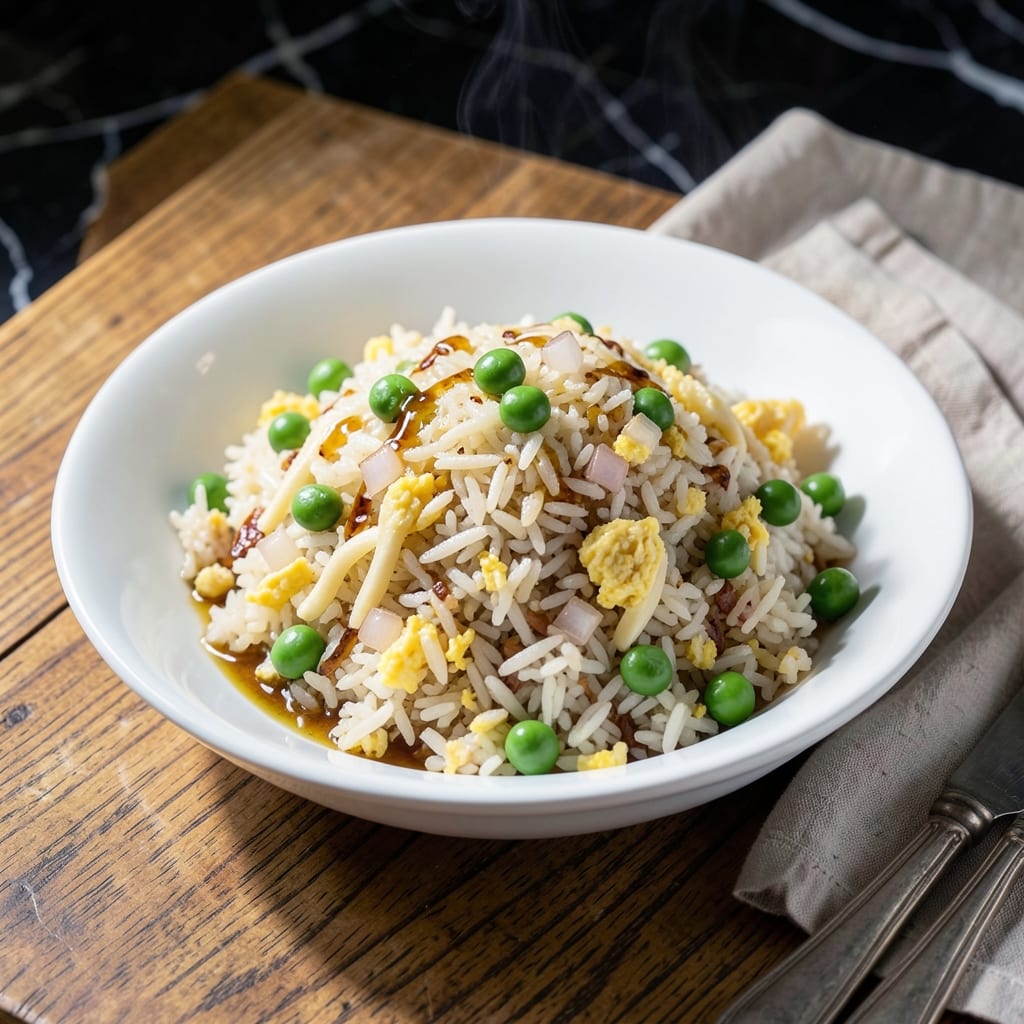
Most fried rice recipes call for day-old rice, but this method proves you can achieve perfectly charred results with fresh rice when you know the right technique. The key starts with rinsing and draining the rice thoroughly before cooking.
By par-cooking the rice slightly underdone, then spreading it out to cool and dry, you create the ideal texture for stir-frying. High heat and constant stirring ensure each grain gets that signature wok-hei flavor without turning mushy.
What emerges is a dish with distinct, separate grains, each coated in savory sauce with just the right amount of smoky char. The fresh rice actually absorbs flavors better than leftovers, making every bite more vibrant.
This approach delivers restaurant-quality fried rice without the wait. The process takes about 30 minutes from start to finish, with most of that time hands-off as the rice prepares.
Ingredients for Fried Rice Recipe with Fresh Rice
Fresh rice works perfectly with the right prep and a few pantry staples for bold flavor.
| Ingredient | Amount | Notes |
|---|---|---|
| Jasmine Rice 🍚 | 2 cups | Rinsed and drained thoroughly |
| Large Eggs 🥚 | 3 whole | Beaten for scrambling |
| Vegetable Oil 🫒 | 3 tbsp | Divided, high smoke point |
| Garlic Cloves 🧄 | 3 cloves | Minced for aroma |
| Small Onion 🧅 | 1 whole | Finely diced for texture |
| Frozen Peas 🌱 | 1 cup | Thawed for quick cooking |
| Carrots 🥕 | 2 whole | Medium, finely diced |
| Soy Sauce 💧 | 3 tbsp | Low-sodium preferred |
| Oyster Sauce 🍲 | 1 tbsp | Or vegetarian oyster sauce |
| Sesame Oil 🫒 | 1 tsp | Toasted, for finishing |
| Green Onions 🌿 | 3 whole | Thinly sliced for garnish |
| Salt 🧂 | ½ tsp | Adjust to taste |
| White Pepper 🌶️ | ¼ tsp | Ground, for authenticity |
The rice is non-negotiable here. Jasmine rice gives you that classic texture—long grain with a slight stickiness. Rinse it until the water runs clear to remove excess starch (that’s what causes mushiness). Basmatic works too, but avoid short-grain varieties. Most grocery stores carry both, but Asian markets often have fresher stock with better aroma.
No jasmine? Long-grain white rice is your backup. Missing oyster sauce? Hoisin or extra soy sauce with a pinch of sugar gets you close. Vegetable substitutions are endless—swap peas for corn or bell peppers. The eggs can be omitted entirely for a vegan take, but they add that signature richness. Fresh ginger (1 tsp) is a great addition if you have it.
Store uncooked rice in a cool, dry place for up to 6 months. Once cooked, spread it out to cool completely before storing. Leftovers keep in the fridge for 4-5 days or freeze for 3 months (spread on a tray first to prevent clumping).
Why You’ll Love This Recipe
- One-Pan Meal: I love that I only need a single pan and a spatula—no extra bowls, no mess.
- Garlic Aroma: The sizzle of fresh garlic in hot oil fills the kitchen, and that first bite with the fluffy jasmine rice? Ridiculously good.
- Lunchbox Hero: Honestly, it’s my kids’ favorite in their thermoses, and it reheats perfectly.
- Pantry Friendly: Between us, I always have these basics on hand, so it’s my go-to when the fridge looks bare.
Step-by-Step Instructions for Fried Rice
Achieve perfect texture and flavor by cooking the rice first, then creating wok-charred results with fresh ingredients.
Step 1: Cook and Cool the Rice
Rinse the 2 cups jasmine rice thoroughly until the water runs clear, then drain well. This removes excess starch and prevents the rice from becoming gummy when fried.
Cook the rice according to package instructions, then spread it on a baking sheet in an even layer. Let it cool completely to room temperature, about 30 minutes. The cooling process dries out the grains slightly, which helps them stay separate and achieve that classic fried rice texture when stir-fried.
Step 2: Scramble the Eggs and Prepare Vegetables
Beat the 3 whole large eggs with a pinch of the 0.5 tsp salt until well combined. Heat 1 tablespoon of the 3 tbsp vegetable oil in a wok or large skillet over medium-high heat until shimmering.
Pour in the eggs and scramble quickly until just set but still slightly soft, about 1-2 minutes. Remove the eggs from the pan and set aside. Next, finely dice the 1 whole small onion and 2 whole carrots, and mince the 3 cloves garlic cloves. Thaw the 1 cup frozen peas and thinly slice the 3 whole green onions.
Step 3: Stir-Fry the Aromatics and Vegetables
Add the remaining 2 tbsp vegetable oil to the wok and heat over high heat until very hot. Add the diced onion and carrots, stir-frying for 3-4 minutes until the vegetables soften slightly and the edges begin to brown.
Add the minced garlic and cook for 30 seconds until fragrant, being careful not to let it burn. Stir in the thawed peas and cook for another 1-2 minutes until everything is heated through. The vegetables should be tender-crisp with some caramelization on the edges.
Step 4: Combine Rice, Eggs, and Sauces
Add the cooled rice to the wok, breaking up any clumps with your spatula. Stir-fry for 2-3 minutes until the rice is heated through and begins to develop a light golden color in spots. This is where the wok-hei, or breath of the wok, develops its characteristic flavor.
Return the scrambled eggs to the wok. Drizzle the 3 tbsp soy sauce, 1 tbsp oyster sauce, and 0.5 tsp salt over the mixture. Add the 0.25 tsp white pepper and stir-fry for another 2 minutes until everything is well combined and the rice has absorbed the sauces evenly.
Step 5: Finish and Garnish
Remove the wok from heat and stir in the 1 tsp sesame oil. This adds a fragrant, nutty aroma that completes the dish. Taste and adjust seasoning if needed, though the sauces should provide plenty of flavor.
Transfer to a serving platter and garnish with the sliced green onions. The final dish should have distinct grains of rice with a slight char, vibrant vegetables, and a glossy sheen from the sauces. Serve immediately while hot for the best texture and flavor.
Pro Tips For Making Fried Rice Recipe With Fresh Rice
- Dry the Rice: Spread the freshly cooked jasmine rice on a tray for 10-15 minutes to evaporate excess moisture—this is the only way to get that classic wok-fried texture instead of mush.
- Beat Eggs Hard: Whisk the eggs with a pinch of salt until they’re completely uniform and frothy; this makes them cook faster and distribute evenly through the rice.
- Skip Cold Rice: I learned this the hard way—fresh rice works if it’s dry, but cold rice from the fridge will steam instead of fry, leaving you with a soggy mess.
- High Heat Only: Crank your burner to max and keep the oil shimmering hot; anything less and your garlic and onion will soak into the rice instead of adding flavor.
Storing and Reheating Leftovers
Fridge Storage
Let your fried rice cool completely before transferring to airtight containers. I use glass containers with locking lids to keep out moisture. Store in the fridge at 40°F or below for up to 4 days. The flavors deepen overnight as the rice absorbs the sauces. ❄️
Freezer Method
For longer storage, spread cooled fried rice in a single layer on a baking sheet to freeze initially. Once solid, transfer to freezer bags and press out air. Freeze for up to 3 months without texture loss. This prevents the dreaded fried rice clump.
Stovetop Reheating
My go-to method: Heat 1 tbsp vegetable oil in a skillet over medium-high heat. Add fried rice in a single layer, breaking up any clumps. Stir-fry for 3-4 minutes until hot, adding 1-2 tbsp water if needed to revive moisture. 🔥
Microwave Option
Place fried rice in a microwave-safe dish, sprinkle 1 tsp water over the top, and cover with a damp paper towel. Heat on 70% power for 2 minutes, stir, then continue in 30-second bursts until reaching 165°F.
This prevents the rice from drying out while ensuring even heating.
Nutrition Facts
Frequently Asked Questions
Why rinse the rice before cooking?
Rinsing removes excess starch that can make the rice gummy when stir-fried. Always rinse until the water runs clear for best texture.
Can I use other rice varieties?
Yes, but stick to long-grain like basmati. Avoid short-grain as it becomes too sticky for proper stir-frying.
How do I prevent mushy rice?
Spread the cooked rice on a baking sheet to cool completely before stir-frying. This dries the grains slightly for perfect texture.
What if I don’t have a wok?
A large, deep skillet works fine. Use high heat and work in batches if needed to avoid overcrowding.

- Jollof Rice Sauce Recipe: West African Tomato and Spice Infusion - September 25, 2026
- Japanese Rice Soup Recipe: Umami-Rich Comfort in a Bowl - September 25, 2026
- Homemade Cream Of Rice Recipe: Silk-Smooth Breakfast in Minutes - September 25, 2026