
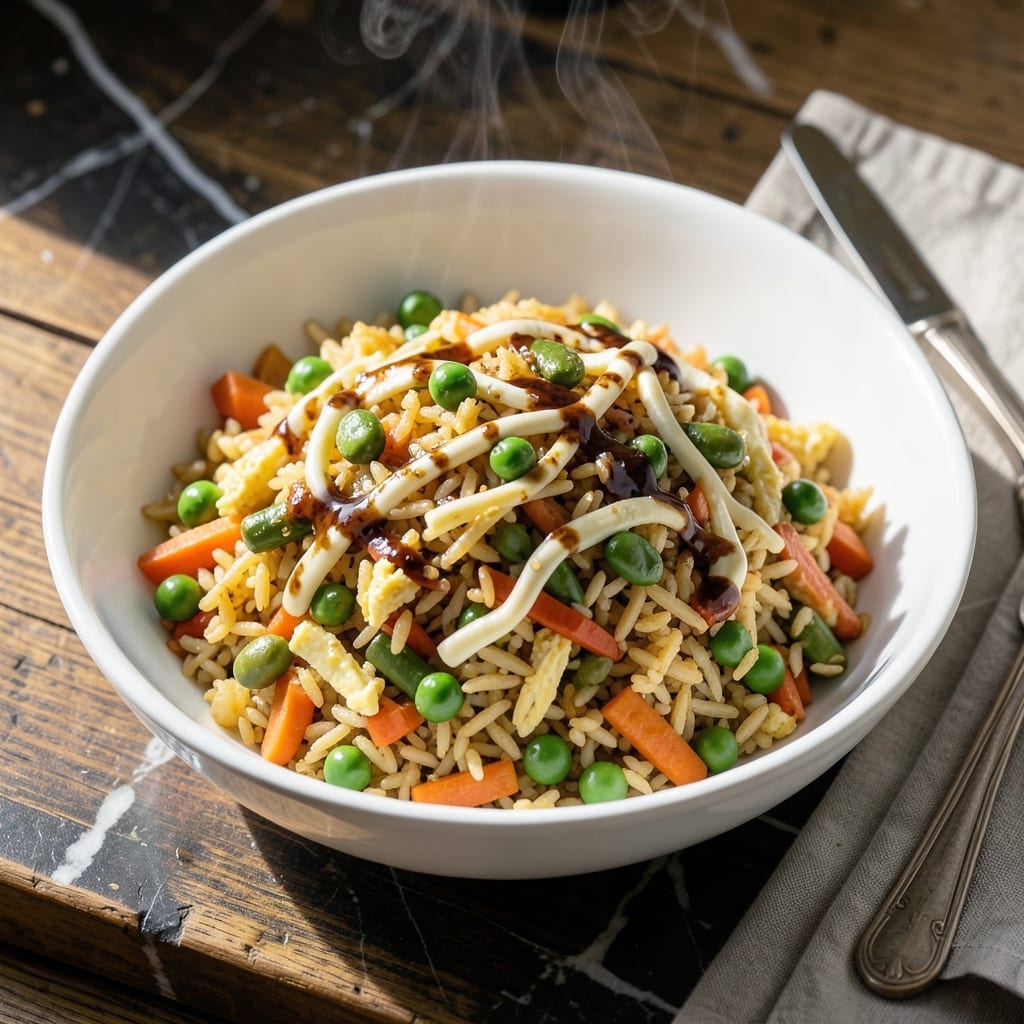
This method turns frozen vegetables into a 15-minute meal that tastes fresh from the wok. I developed it after too many takeout containers piled up in the fridge, realizing I could do better at home with what I already had.
The key is high heat and constant motion, which prevents soggy vegetables and ensures each grain of rice gets that signature wok-seared flavor. Frozen peas, carrots, and corn work perfectly—they’re pre-blanched, so they cook quickly without turning mushy.
What you get is a dish with distinct texture: tender vegetables, fluffy rice, and just the right amount of savory depth from soy sauce and sesame oil. It’s proof that convenience and quality aren’t mutually exclusive.
Serve it as a main or alongside your favorite protein. Here’s how to make it right every time.
Ingredients for Fried Rice Recipe with Frozen Vegetables
Pantry staples and frozen veggies make this wok-seared dish happen fast.
| Ingredient | Amount | Notes |
|---|---|---|
| Long-Grain White Rice 🍚 | 3 cups | Day-old, cooked and cooled |
| Frozen Mixed Vegetables 🥕 | 2 cups | Peas, carrots, and corn blend |
| Large Eggs 🥚 | 2 whole | Lightly beaten |
| Soy Sauce 🫕 | 3 tbsp | Low-sodium preferred |
| Sesame Oil 🫒 | 1 tbsp | Toasted for best flavor |
| Vegetable Oil 🫒 | 2 tbsp | High smoke point |
| Garlic Cloves 🧄 | 2 cloves | Minced finely |
| Fresh Ginger 🌿 | 1 tbsp | Peeled and grated |
| Green Onions 🧅 | ½ cup | Thinly sliced, for garnish |
| Frozen Peas 🌱 | ½ cup | Optional extra for color |
| Salt 🧂 | ½ tsp | Adjust to taste |
| Black Pepper 🌶️ | ¼ tsp | Freshly ground |
The rice is the foundation here. Day-old, cold rice from the fridge works best—fresh rice gets mushy. Most grocery stores carry jasmine or long-grain white rice in bulk, which are ideal. I usually grab a 10-pound bag from Costco and cook a big batch at the start of the week. The frozen veggies should be a peas, carrots, and corn blend—no need to thaw before cooking.
No sesame oil? Toasted peanut oil gives a similar depth. Fresh ginger can be swapped for ground ginger at one-quarter the amount. If you don’t have green onions, red onion or chives work in a pinch. For a gluten-free version, use tamari instead of soy sauce. The eggs can be omitted entirely if you prefer a fully plant-based approach (though this is vegetarian, not vegan).
Leftover fried rice keeps well in the fridge for 3-4 days and reheats beautifully in a skillet. Freeze portions for up to 3 months—just thaw and crisp in a pan. Always store rice in an airtight container to keep it fresh.
Why You’ll Love This Recipe
- One Pan Meal: No chopping, no fuss—just dump frozen veggies straight from the bag and stir.
- Umami Bomb: The soy sauce and sesame oil combo hits that savory-salty spot every time.
- Lunchbox Hero: I pack leftovers for work, and it reheats just as good as fresh.
- Budget Stretcher: Honestly, a pound of rice and a bag of frozen veggies feeds my family for days.
Step-by-Step Instructions for Fried Rice With Frozen Vegetables
This method delivers perfect texture and flavor every time with minimal effort.
Step 1: Prepare the Aromatics and Scramble the Eggs
Heat 2 tbsp Vegetable Oil in a large wok or skillet over medium-high heat until it shimmers. Add the 2 cloves Garlic Cloves and 1 tbsp Fresh Ginger, stirring constantly for 30 seconds until fragrant but not browned.
Push the aromatics to one side and pour in the 2 whole Large Eggs. Scramble quickly with a spatula until just set but still slightly runny. Break them into small pieces and mix with the garlic and ginger. Remove from the pan and set aside.
Step 2: Stir-Fry the Vegetables Until Tender
In the same pan, add the 2 cups Frozen Mixed Vegetables and 0.5 cup Frozen Peas. Stir-fry for 4-5 minutes until the vegetables are thawed and any excess moisture has evaporated. The veggies should be bright in color and slightly tender.
Season lightly with 0.5 tsp Salt and 0.25 tsp Black Pepper. This step ensures the vegetables cook through without becoming mushy. Keep the heat high to maintain that essential wok-hei flavor.
Step 3: Add Rice and Seasonings for Maximum Flavor
Add the 3 cups Long-Grain White Rice to the pan, breaking up any clumps with your spatula. Stir-fry for 2-3 minutes until the rice is heated through and slightly crispy in spots. The grains should be separate and hot to the touch.
Drizzle 3 tbsp Soy Sauce evenly over the rice and mix well to coat every grain. The soy sauce should create a light, golden-brown color throughout. Return the scrambled eggs to the pan and stir to combine.
Step 4: Finish with Sesame Oil and Green Onions
Remove the pan from heat and stir in the 1 tbsp Sesame Oil. This adds a rich, nutty aroma that ties all the flavors together. Toss gently to distribute the oil evenly without breaking up the rice grains too much.
Sprinkle the 0.5 cup Green Onions over the top and stir once more. The green onions should remain bright and fresh-looking. Taste and adjust seasoning if needed—this dish should be savory with a hint of toasted depth from the sesame oil.
Pro Tips For Making Fried Rice Recipe With Frozen Vegetables
- Use Day-Old Rice: Fresh rice is too moist and will turn to mush—spread leftover rice on a tray and refrigerate overnight to dry it out. I learned this the hard way after making soggy fried rice more times than I’d like to admit.
- Thaw and Drain Veggies: Toss frozen vegetables in the pan while still icy and they’ll steam instead of fry. Microwave them for 1-2 minutes first, then squeeze out excess water with a paper towel.
- Push Eggs to One Side: Scramble the eggs in a corner of the hot pan first, then mix them into the rice once just set. This keeps them fluffy instead of rubbery from overcooking.
- Finish with Sesame Oil: Stir in the sesame oil at the very end, off the heat—its flavor disappears if cooked too long. About 1 teaspoon is all you need for that nutty aroma.
Regional Styles of This Recipe
Chinese Classic
This version stays true to my grandmother’s notes—simple, balanced flavors with day-old rice as the foundation. She’d insist on 2 cups frozen peas and carrots for color and texture, scrambled with 2 eggs and finished with just 1 tbsp toasted sesame oil for that authentic wok aroma. 🗺️
Thai-Inspired Twist
Swap the soy sauce for 3 tbsp fish sauce and add a splash of 1 tbsp lime juice at the end. I toss in ½ cup frozen bell pepper strips for extra color and a sprinkle of crushed red pepper for heat. The result is bright, tangy, and completely different from the original.
Japanese Style
Use short-grain rice instead of long-grain for a stickier texture. Add 1 tbsp mirin and 1 tsp sugar with the soy sauce for a sweeter profile. My local Japanese market sells frozen mixed vegetables with edamame, which I love in this version.
Korean Fusion
Boost the flavor with 1 tbsp gochujang mixed into the soy sauce and top with kimchi and a fried egg. I learned this from a Korean friend who swore by using frozen vegetables for convenience. The spicy-savory combo is addictive.
American Comfort
Make it heartier with ½ cup diced ham or cooked bacon. I also add ½ tsp garlic powder and ½ tsp onion powder for extra depth. This is the version I make when I’m craving something familiar but still quick. 💛
Nutrition Facts
Frequently Asked Questions
Should I thaw the frozen vegetables first?
No, toss them straight from the freezer into the hot pan. This prevents them from releasing excess moisture, which would make your rice soggy. Cook them for 4-5 minutes to evaporate any liquid.
Why use day-old rice?
Fresh rice contains too much moisture and will turn mushy. Cold, dried-out rice from the fridge fries up fluffy with distinct grains. Spread leftover rice on a tray to cool quickly if you’re in a hurry.
Can I make this without a wok?
A large, deep skillet works just as well. Use medium-high heat and cook in batches if needed to avoid overcrowding. The key is maintaining high heat for that classic sear.

- Jollof Rice Sauce Recipe: West African Tomato and Spice Infusion - September 25, 2026
- Japanese Rice Soup Recipe: Umami-Rich Comfort in a Bowl - September 25, 2026
- Homemade Cream Of Rice Recipe: Silk-Smooth Breakfast in Minutes - September 25, 2026