
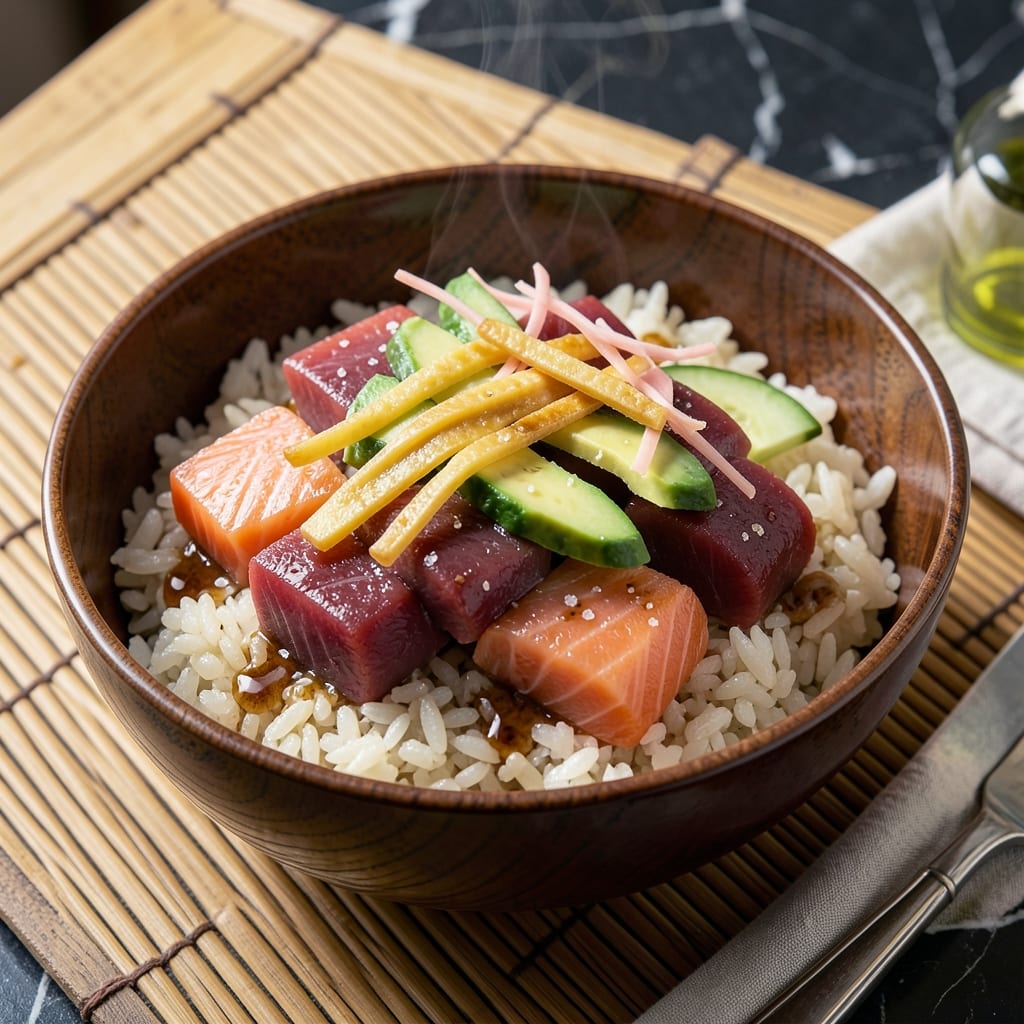
This vibrant dish transforms simple sushi rice into a stunning meal with an array of fresh toppings. I’ve refined this method to balance textures and flavors perfectly, ensuring every bite delivers a taste of Japan’s culinary artistry.
The foundation is seasoned sushi rice, topped with tender slices of raw fish, creamy avocado, and crunchy vegetables. Each element is chosen for its color, freshness, and ability to complement the delicate rice.
What makes this recipe special is its versatility—you can customize the toppings to suit your preferences while maintaining the dish’s authentic spirit. The result is a beautifully balanced bowl that’s as pleasing to the eye as it is to the palate.
Perfect for a light lunch or a showstopping dinner, this creation proves that simplicity and elegance go hand in hand.
Ingredients for Chirashi Rice
Fresh, vibrant ingredients come together for this beautifully balanced bowl of seasoned rice and toppings.
| Ingredient | Amount | Notes |
|---|---|---|
| Sushi Rice 🍚 | 2 cups | Short-grain, rinsed well |
| Rice Vinegar 🍶 | ¼ cup | Seasoned variety preferred |
| Granulated Sugar 🍚 | 2 tbsp | Dissolved in vinegar |
| Sea Salt 🧂 | 1 tsp | Fine grain for seasoning |
| Fresh Salmon 🐟 | ½ lb | Sushi-grade, skinless |
| Fresh Tuna 🐟 | ½ lb | Sushi-grade, skinless |
| Avocado 🥑 | 1 whole | Ripe but firm, sliced |
| Cucumber 🥒 | ½ whole | English or Persian, thinly sliced |
| Carrots 🥕 | 1 whole | Julienned for color |
| Edamame 🫛 | ½ cup | Shelled and blanched |
| Pickled Ginger 🌿 | ¼ cup | Thinly sliced, for garnish |
| Nori Sheets 🍱 | 2 sheets | Cut into thin strips |
| Sesame Seeds 🌰 | 1 tbsp | Toasted for garnish |
| Soy Sauce 🫕 | ¼ cup | For dipping or drizzling |
| Wasabi 🟢 | 1 tbsp | Optional, for serving |
The fish is non-negotiable here. Sushi-grade salmon and tuna must be the freshest you can find—ask for it at the seafood counter, never from the frozen section. Most Whole Foods or Asian markets will have it pre-sliced for sushi, which saves time. Look for bright color, no fishy smell, and a firm texture. If you’re unsure about freshness, skip it (this recipe works without raw fish too).
No raw fish? Shrimp or scallops (lightly poached) are great alternatives. For vegetarians, marinated tofu or mushrooms add that umami depth. The rice vinegar matters—Mitsukan is a solid brand. Short on veggies? Swap in radish, bell pepper, or snap peas (all about that crunch). If avocado isn’t your thing, mango brings a similar creaminess with sweetness.
Best eaten fresh, but you can prep toppings 4 hours ahead and keep chilled. Cooked rice holds at room temp for 2 hours—no longer. Leftovers? Not ideal, but will keep in the fridge for 1 day (the rice hardens). Always slice fish just before serving to maintain texture.
Why You’ll Love This Recipe
- No Cooking Required: The salmon stays raw, so I just chop, mix, and serve—no stove time at all.
- Bright & Balanced: That hit of rice vinegar with a touch of sugar and salt makes every bite sing.
- Lunchbox Hero: I pack leftovers for work, and the flavors hold up beautifully for hours.
- Dinner in Minutes: From rice cooker to table in under 20, and honestly, it feels like a restaurant meal.
Step-by-Step Instructions for Chirashi Rice
This method ensures perfectly seasoned rice and vibrant toppings every time.
Step 1: Prepare and Season the Sushi Rice
Rinse the 2 cups Sushi Rice under cold water until the water runs clear—this removes excess starch and prevents gummy rice. Drain well and cook according to package instructions or in a rice cooker with a 1:1.25 rice-to-water ratio.
While the rice is hot, gently fold in a mixture of 0.25 cup Rice Vinegar, 2 tbsp Granulated Sugar, and 1 tsp Sea Salt using a cutting motion with a rice paddle. The rice should glisten and feel slightly sticky—this is how you know it’s properly seasoned. Let it cool to room temperature before assembling.
Step 2: Prepare the Protein and Vegetable Toppings
Dice the 0.5 lb Fresh Salmon and 0.5 lb Fresh Tuna into ½-inch cubes for even distribution. Keep them chilled until ready to use. Thinly slice the 1 whole Avocado and 0.5 whole Cucumber, and julienne the 1 whole Carrots into matchstick pieces for color contrast.
Blanch the 0.5 cup Edamame in boiling water for 2 minutes, then shock in ice water to preserve the bright green color. Pat dry before using. This step ensures the edamame stays crisp and vibrant on top of the rice.
Step 3: Assemble the Chirashi Rice Bowl
Divide the seasoned sushi rice among four bowls, pressing lightly to create a slight well in the center. Arrange the diced salmon and tuna in small clusters across the rice, alternating with slices of avocado, cucumber, and julienned carrots. Scatter the blanched edamame around the edges for texture.
Sprinkle the 1 tbsp Sesame Seeds evenly over the toppings and garnish with thin strips of 2 sheets Nori Sheets. The presentation should be balanced, with each topping visible and accessible in every bite.
Step 4: Add Final Garnishes and Serve
Place a small mound of 0.25 cup Pickled Ginger on the side of each bowl for a refreshing contrast. Serve immediately with 0.25 cup Soy Sauce for dipping or drizzling and 1 tbsp Wasabi on the side for those who prefer a spicy kick.
The rice should be at room temperature, and the toppings should look fresh and vibrant. Each bowl should have a mix of colors and textures, from the creamy avocado to the crisp nori strips, ensuring a dynamic eating experience.
Pro Tips For Making Chirashi Rice
- Rinse the Rice: Wash sushi rice under cold water until the water runs clear—about 4-5 times. I learned this the hard way after my first chirashi turned out gummy from excess starch.
- Warm the Vinegar: Dissolve the sugar and salt in the rice vinegar while it’s still warm from cooking. Sounds weird, but it works and prevents grainy seasoning clumps.
- Slice Salmon Last: Cut the fresh salmon just before assembling to keep it looking vibrant and fresh. I skip this when I’m lazy, but the dish is noticeably better when I don’t.
- Fan While Mixing: Use a hand fan or a piece of cardboard to cool the rice while gently folding in the vinegar mixture. My grandmother swore by this, and she was right—it gives the rice that perfect glossy finish.
Flavor Customization for This chirashi rice
Spicy Kick
Add 1 tsp sriracha to your soy sauce for a spicy dipping option. I also love mixing 1 tbsp mayonnaise with ½ tsp sriracha for a creamy, spicy drizzle over the toppings. This adds a bold flavor contrast to the fresh fish. 🌶️
Citrus Twist
Brighten up your bowl with zest from 1 lime sprinkled over the toppings. The citrus oils enhance the fish’s natural flavors. A few drops of yuzu juice (if available) adds an authentic Japanese touch.
Umami Boost
Drizzle 1 tsp sesame oil over the finished bowl for a nutty depth. I also like adding 1 tbsp furikake (Japanese seasoning) for extra umami and crunch. These small additions elevate the dish significantly.
Vegetable Variations
Swap in thinly sliced radishes for a peppery bite or shredded daikon for crunch. For color, add thinly sliced red bell pepper strips. These maintain the dish’s freshness while adding variety.
Protein Swaps
Replace raw fish with lightly poached shrimp or seared scallops if preferred. For a vegetarian option, marinated tofu cubes work beautifully. Each alternative maintains the dish’s elegant simplicity.
Herb Garnish
Finish with chopped scallions or cilantro leaves for a fresh herbal note. I find that microgreens add both color and a delicate texture. These final touches make the dish restaurant-worthy.
Nutrition Facts
Frequently Asked Questions
Can I use regular rice instead of sushi rice?
Sushi rice is ideal for its sticky texture, but short-grain white rice works in a pinch. Avoid long-grain varieties as they won’t hold toppings well. Rinse thoroughly to remove excess starch for best results.
How do I store leftovers safely?
Leftovers can be refrigerated in an airtight container for up to 1 day. Store toppings and rice separately to maintain texture. Avoid freezing as it ruins the rice’s consistency.
What if I don’t like raw fish?
Try lightly poached shrimp or seared scallops instead. For vegetarians, marinated tofu or mushrooms add great flavor without compromising authenticity.
Can I prepare this in advance?
Prep toppings up to 4 hours ahead and keep chilled. Cook rice up to 2 hours early and let it cool. Assemble just before serving for the freshest taste.

- Jollof Rice Sauce Recipe: West African Tomato and Spice Infusion - September 25, 2026
- Japanese Rice Soup Recipe: Umami-Rich Comfort in a Bowl - September 25, 2026
- Homemade Cream Of Rice Recipe: Silk-Smooth Breakfast in Minutes - September 25, 2026