
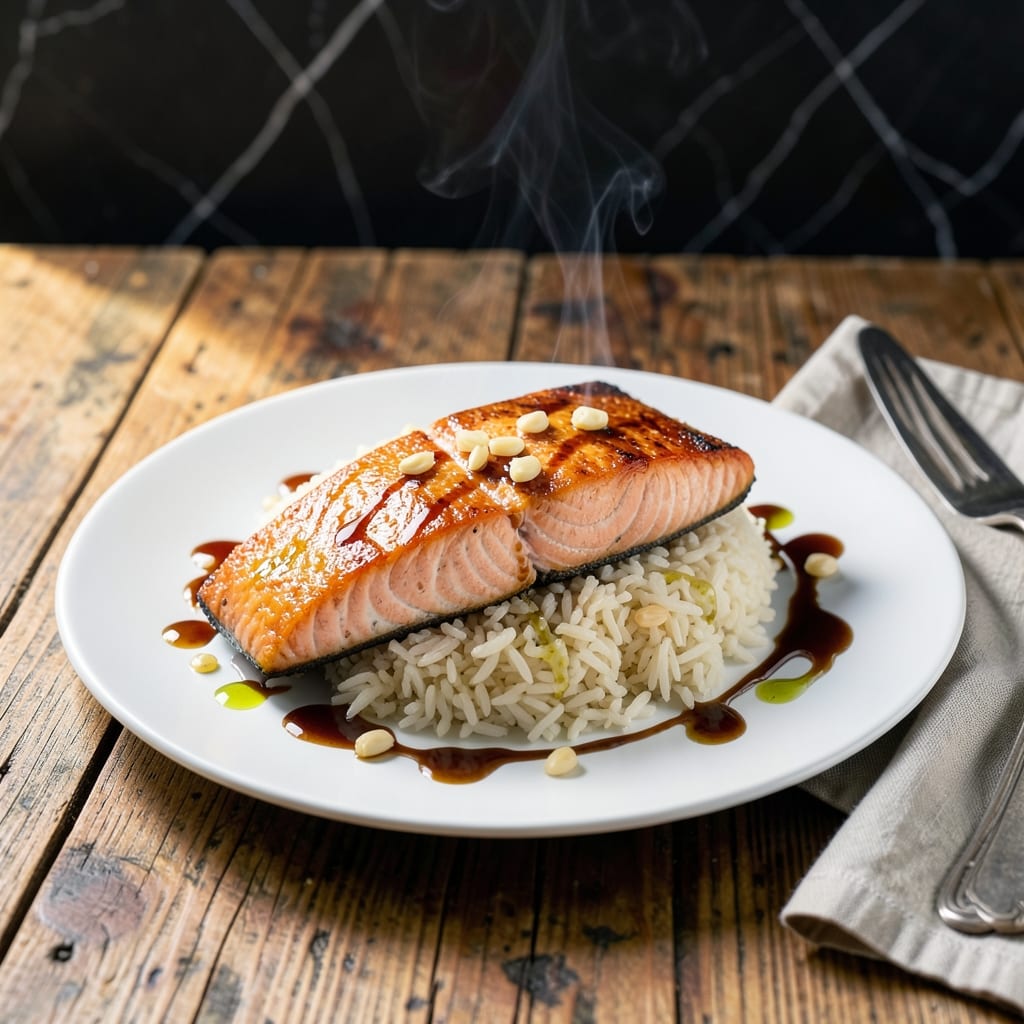
This method delivers flaky salmon and perfectly cooked rice with almost no effort. I developed it for busy weeknights when I needed a hands-off meal that still tasted impressive.
The secret is timing and layering. Frozen salmon cooks gently on top of rice, steaming in its own moisture while the rice absorbs flavor from the fish and any added seasonings.
You’ll end up with tender, moist salmon that breaks apart easily and rice that’s never dry or mushy. The entire dish comes together in one appliance, making cleanup just as simple as the cooking process.
It’s a foolproof way to get a healthy, restaurant-quality meal on the table with minimal active time. The results speak for themselves.
Ingredients for Frozen Salmon Rice Cooker
One appliance, minimal prep, maximum flavor with these simple ingredients.
| Ingredient | Amount | Notes |
|---|---|---|
| Frozen Salmon Fillets 🐟 | 1 ½ lb | Skin-on or skinless, thawed slightly |
| White Rice 🍚 | 2 cups | Jasmine or long-grain preferred |
| Water 💧 | 2 ½ cups | For cooking rice |
| Soy Sauce 🫒 | 2 tbsp | Low-sodium for control |
| Olive Oil 🫒 | 1 tbsp | For drizzling on salmon |
| Garlic Cloves 🧄 | 3 cloves | Minced or pressed |
| Fresh Ginger 🌿 | 1 tbsp | Grated or minced |
| Green Onions 🧅 | 3 whole | Thinly sliced for garnish |
| Lemon 🍋 | 1 whole | Sliced for serving |
| Salt 🧂 | 1 tsp | Divided for rice and salmon |
| Black Pepper 🌶️ | ½ tsp | Freshly ground preferred |
| Sesame Oil 🫒 | 1 tsp | Toasted, for finishing |
| Sesame Seeds 🌾 | 1 tsp | Toasted, for garnish |
The salmon is the star here. Wild-caught frozen fillets from Trader Joe’s or Costco are my go-to—they thaw just enough during cooking to stay moist. Look for fillets around 6 oz each so they cook evenly. The rice? Jasmine or long-grain white absorbs the salmon’s flavor best, but basmati works too. Avoid brown rice—it doesn’t cook in time.
No fresh ginger? Ground ginger at half the amount works in a pinch. Out of soy sauce? Coconut aminos bring a similar saltiness. The green onions can be swapped for chives or even thinly sliced red onion. Lemon is key for brightness, but lime works too. If you’re missing sesame oil, a drizzle of extra olive oil with a pinch of toasted sesame seeds adds the same nutty note.
Leftovers keep for 3-4 days in the fridge, but the salmon is best eaten fresh. The rice soaks up the flavors overnight, so it’s still great reheated. Not freezer-friendly—salmon gets mushy when thawed. Pack extras for lunch the next day (it’s even better cold).
Why You’ll Love This Recipe
- One Pot Wonder: I just dump frozen salmon, rice, water, and soy sauce in the cooker—no thawing, no fuss.
- Umami Boost: The soy sauce soaks into the rice while the salmon steams, making every bite ridiculously flavorful.
- Weeknight Hero: Between us, this is my go-to for busy evenings when I need dinner ready in 30 minutes flat.
- Budget Keeper: Frozen salmon stays fresh longer, and a little goes a long way paired with rice.
Step-by-Step Instructions for Salmon and Rice
Here’s how I make this foolproof meal with perfectly flaky salmon every time.
Step 1: Start the Rice in Your Cooker
Rinse the 2 cups white rice under cold water until the water runs clear—this removes excess starch so your grains stay separate. Add the drained rice to your rice cooker along with the 2.5 cups water and ½ tsp salt.
Start the cooker on its standard white rice setting. Most cookers take about 20 minutes to finish, which gives you plenty of time to prep the salmon. I always close the lid immediately and resist the urge to peek—each lift releases steam and can affect cooking time.
Step 2: Season and Prepare the Salmon
While the rice cooks, lightly thaw the 1.5 lb frozen salmon fillets under cool running water for 3-5 minutes just until they’re pliable enough to handle. Pat them completely dry with paper towels—this ensures the seasoning sticks and helps achieve that flaky texture.
Drizzle both sides of the fillets with the 1 tbsp olive oil, then season with the remaining ½ tsp salt and all of the 0.5 tsp black pepper. Rub the seasoning in gently so it adheres well. Let the salmon sit at room temperature while you prep the remaining ingredients.
Step 3: Create the Aromatic Sauce Base
In a small bowl, combine the 2 tbsp soy sauce, minced 3 cloves garlic cloves, and grated 1 tbsp fresh ginger. This simple mixture packs a flavor punch that complements the salmon beautifully without overpowering it.
I like to press the garlic and ginger through a fine grater to get the smoothest texture. The soy sauce should be low-sodium so you can control the saltiness. Set this mixture aside until the rice is nearly done—you’ll add it to the cooker during the final cooking phase.
Step 4: Add Salmon and Finish Cooking
When your rice cooker switches to “keep warm” (usually after 18-20 minutes), open the lid and gently place the salmon fillets on top of the rice. Spoon the garlic-ginger-soy mixture evenly over the fillets, letting some drip down into the rice.
Close the lid and let everything steam together for 12-15 minutes. The salmon is done when it flakes easily with a fork and reaches an internal temperature of 145°F. This gentle steam cooking method ensures the fish stays moist and tender.
Step 5: Garnish and Serve
Once the salmon is cooked, carefully transfer the fillets to a serving platter. Drizzle with the 1 tsp sesame oil and sprinkle with the 1 tsp sesame seeds. The sesame oil adds a nutty aroma that takes this dish to the next level.
Fluff the rice with a fork and transfer to serving bowls. Garnish each portion with thinly sliced 3 whole green onions and serve with lemon wedges on the side. The bright acidity from the lemon cuts through the richness perfectly, and the green onions add a fresh, crisp finish to each bite.
Pro Tips For Making Frozen Salmon Rice Cooker
- Thaw First: I learned this the hard way—put the frozen salmon in cold water for 10-15 minutes before cooking, or it’ll steam unevenly in the rice cooker.
- Layer Smart: Place the salmon on top of the rice and water mix, not buried, so it cooks through without turning mushy.
- Skip the Overflow: Use 1.5 cups water for 1 cup rice max—any more and the salmon poaches in a sad, watery mess.
- Oil the Fillets: Brush the salmon with olive oil before cooking—keeps it from sticking and adds a silky finish the rice cooker can’t do alone.
Dietary Considerations for This Recipe
Pescatarian Perfect
This dish fits perfectly into a pescatarian diet, providing high-quality protein from salmon without any meat. I love how it delivers all the nutrients of fish while being incredibly easy to prepare in one appliance. 💪
Gluten-Free Friendly
With naturally gluten-free ingredients like salmon, rice, and fresh herbs, this recipe works for most gluten-sensitive diets. Just verify your soy sauce is labeled gluten-free—Tamari makes an excellent substitute.
Dairy-Free Delight
There’s no dairy in this recipe, making it ideal for lactose-intolerant cooks. The salmon provides healthy fats, while the rice offers complex carbs without any milk-based ingredients.
Low-Carb Option
For a lower-carb version, I swap white rice for cauliflower rice. Use 2 cups frozen cauliflower rice and adjust water to ½ cup. The salmon cooks the same way, just with a lighter base.
Allergen Awareness
The main allergens here are fish and soy. For soy-free versions, replace soy sauce with coconut aminos. Always check labels if cooking for guests with allergies.
Heart-Healthy Choice
Salmon is rich in omega-3 fatty acids, making this a heart-healthy meal. The rice cooker method preserves more nutrients than frying, and you control the sodium by using low-sodium soy sauce.
Nutrition Facts
Frequently Asked Questions
Do I need to thaw the salmon completely first?
No, just run under cool water for 3-5 minutes until pliable. This prevents overcooking while ensuring even seasoning. The rice cooker’s steam will finish the thawing process perfectly.
Can I use brown rice instead?
I don’t recommend it. Brown rice needs 40-45 minutes to cook, which would overcook the salmon. Stick to white rice for this method to get both components just right.
How do I know when the salmon is done?
It’s ready when it flakes easily with a fork and reaches 145°F internally. This usually takes 12-15 minutes of steaming in the cooker after adding it to the rice.
What if my rice cooker doesn’t have a keep warm function?
Start checking the rice at 18 minutes. Once most water is absorbed, add the salmon and sauce, then cook for another 12-15 minutes with the lid closed.

- Ground Beef Rice and Beans Recipe: Slow-Simmered Savory Harmony - October 17, 2026
- Guyanese Fried Rice Recipe: Caribbean Spice With Wok-Charred Aromatics - October 17, 2026
- Hakka Thunder Tea Rice Recipe: Wok-Charred Herbal Infusion - October 17, 2026