
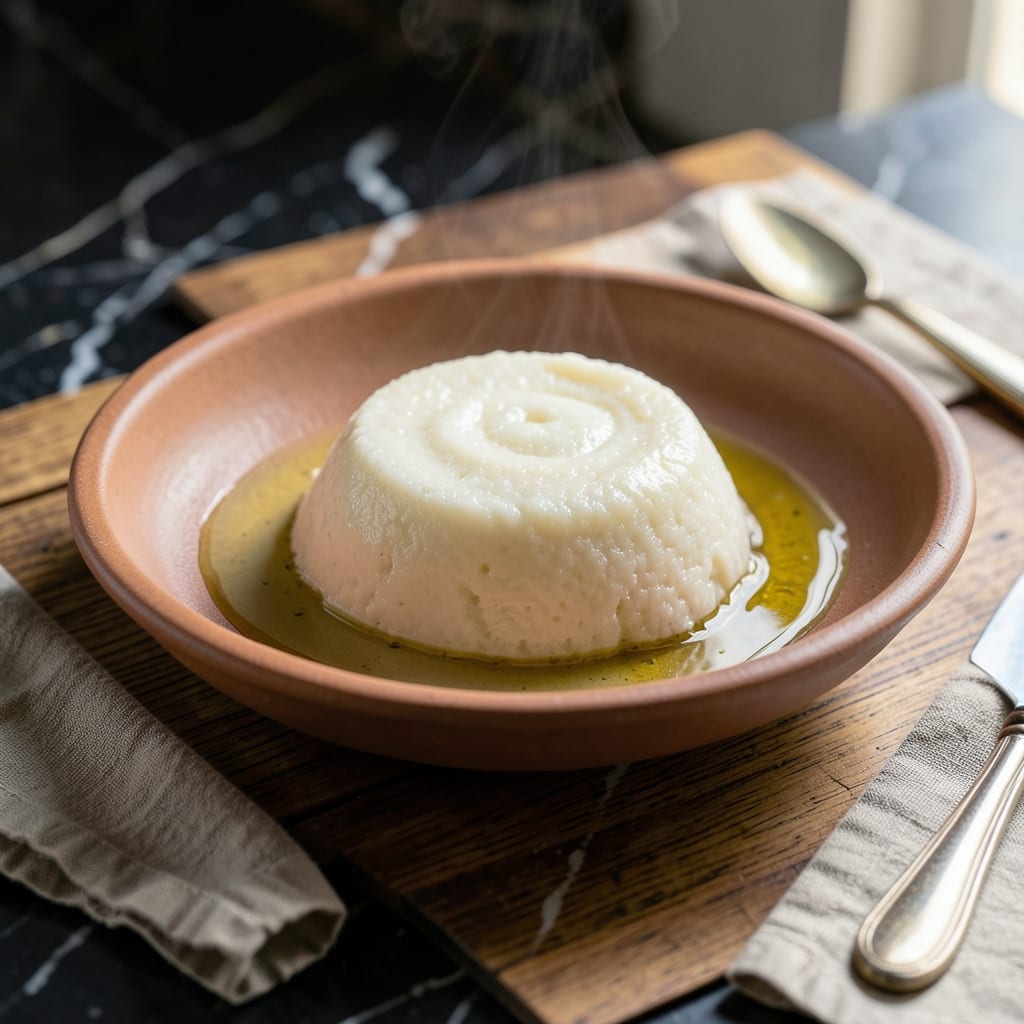
This traditional West African dish brings authentic flavors to your table with a smooth, stretchy texture that’s perfect for soaking up soups and stews. I’ve perfected this method to ensure it stays true to its roots while being accessible for home cooks.
The key lies in using the right ratio of rice flour to water and cooking it to just the right consistency. This version maintains the authentic swallow starch quality that makes fufu so beloved across West Africa.
You’ll achieve a dough-like ball that’s soft, slightly sticky, and holds its shape when formed. The process requires patience, but the result is worth every minute of effort.
Serve warm alongside your favorite African soups for a truly authentic dining experience.
Ingredients for Fufu Rice
Five simple ingredients create this stretchy, authentic West African staple at home.
| Ingredient | Amount | Notes |
|---|---|---|
| Rice Flour 🌾 | 2 cups | White rice flour preferred |
| Water 💧 | 2 ½ cups | Divided for cooking |
| Salt 🧂 | ½ tsp | Adjust to taste |
| Neutral Oil 🫒 | 1 tbsp | For greasing hands |
| Warm Water 💧 | ½ cup | For adjusting consistency |
Rice flour is the foundation here—Bob’s Red Mill or Asian markets have it. Avoid almond or coconut flour; they won’t give you the right texture. The water amount isn’t set in stone (the good stuff, not the pre-measured kind). I usually grab my flour from Whole Foods bulk section when I’m restocking, but any well-stocked grocery store should carry it.
No rice flour? Tapioca starch at a 1:1 ratio works in a pinch, but the flavor changes slightly. If your dough feels too stiff, add warm water 1 tbsp at a time. The salt can be eyeballed, but don’t skip it entirely. Some recipes call for a bit of cornstarch, but I’ve found it makes the fufu too gummy (don’t skip this part).
Fufu is best served fresh but keeps 2-3 days in the fridge. Store in an airtight container with a damp cloth on top to prevent drying. Reheat by steaming or microwaving with a splash of water (worth the extra minute).
Why You’ll Love This Recipe
- One Bowl Wonder: I love that it comes together with just rice flour, water, and a pinch of salt—no fancy tools or hours of kneading.
- Mildly Addictive: The neutral oil gives it this subtle richness that makes it impossible to stop at just one piece.
- Pairs With Anything: Honestly, it’s my blank canvas for stews, soups, or even spicy peanut sauce.
- Budget Stretch: A bag of rice flour makes a ton, and leftovers keep well for days—my wallet thanks me.
Step-by-Step Instructions for Fufu Rice
Here’s the authentic method that delivers the perfect smooth, stretchy texture every time.
Step 1: Combine and Heat the Base Mixture
In a medium saucepan, whisk together the 2 cups rice flour and 0.5 tsp salt to break up any lumps. This ensures even distribution so you don’t end up with salty pockets in your finished product.
Gradually pour in 2.5 cups water while whisking constantly until completely smooth. The mixture should look like thin pancake batter with no visible lumps. Place the saucepan over medium heat and cook, stirring frequently with a wooden spoon, until the mixture thickens to a pudding-like consistency.
Step 2: Develop the Stretchy Dough
Once the mixture thickens and starts to pull away from the sides of the pan (after about 5-7 minutes), reduce heat to low. Continue stirring constantly for another 3-5 minutes until it forms a cohesive ball of dough that pulls away from the pan completely.
The dough should be glossy and stretchy, not sticky. If it seems too dry, add 1-2 tablespoons of the 0.5 cup warm water and stir well. If it’s too sticky, cook for another 2-3 minutes to evaporate excess moisture. You’ll know it’s ready when you can pull the spoon through and see the bottom of the pan.
Step 3: Knead the Dough to Perfect Consistency
Lightly grease your hands with the 1 tbsp neutral oil – this prevents sticking. Transfer the hot dough to a clean surface. I use a silicone mat for easy cleanup. Let it cool for 1-2 minutes until comfortable to handle, but work quickly while it’s still warm.
Knead the dough vigorously for 5-7 minutes until it becomes smooth, elastic, and slightly tacky but not sticky. The warmth of your hands and the kneading process develop the stretchy texture that’s characteristic of authentic fufu. If at any point it becomes too stiff, dip your fingers in the warm water and continue kneading.
Step 4: Shape and Rest the Final Product
Divide the dough into 4 equal portions (since this serves 4). Roll each portion between your palms to form smooth balls. The surface should be slightly glossy with no cracks – if you see cracks, the dough needs more kneading.
Place the balls on a clean surface and cover with a damp towel. Let them rest for 5 minutes to allow the texture to set. This resting period makes the fufu easier to handle and enhances the final consistency. Serve warm with your favorite soup or stew, using your fingers to pinch off small portions.
Pro Tips For Making Fufu Rice
- Heat the Water First: Always start with warm water—around 110°F—because cold water makes the rice flour clump and turns your fufu lumpy. I learned this the hard way after stirring for 10 minutes trying to break up stubborn bits.
- Use Fine Rice Flour: Skip the coarse stuff. Fine rice flour blends smoothly and gives that authentic, stretchy texture fufu is known for. The cheaper brands often have a gritty finish that ruins the dish.
- Don’t Over-Knead: Once the dough comes together, stop mixing. Overworking it makes the fufu tough and gummy instead of soft and pliable.
- Oil Your Hands: Rub a little neutral oil on your palms before shaping the fufu—it keeps the dough from sticking and makes the balls smooth. Sounds simple, but it saves a ton of frustration.
Common Mistakes When Making This Dish
Wrong Flour Choice
Using anything besides rice flour will ruin your texture. Almond or coconut flour creates a crumbly mess instead of that authentic stretchy swallow. I learned this the hard way during my first few attempts. Stick to Bob’s Red Mill or an Asian market brand. 💡
Skipping the Salt
Even though it’s just 0.5 tsp, salt enhances the rice flavor and balances the dish. Without it, your fufu will taste flat. Adjust to your preference, but don’t omit it entirely.
Water Ratio Errors
Too much water makes a sticky, unworkable mess. Too little creates dry, crumbly dough. Start with 2.5 cups as the base, then adjust with the reserved 0.5 cup warm water as needed. Add it 1 tbsp at a time if needed.
Insufficient Cooking Time
Rushing the cooking phase results in raw-tasting fufu. Cook until the mixture pulls completely away from the pan and forms a cohesive ball—this takes 8-12 minutes total. Don’t be tempted to remove it early.
Not Kneading Enough
The kneading step develops the elastic texture that makes fufu special. Work the dough for the full 5-7 minutes until smooth and stretchy. If it cracks when shaping, knead it longer. 💪
Letting It Cool Too Much
Once the dough is ready, work with it while still warm. If it cools completely, it becomes stiff and difficult to knead. Let it cool just until comfortable to handle—about 1-2 minutes—then start kneading immediately.
Nutrition Facts
Frequently Asked Questions
Can I use regular flour instead of rice flour?
No, regular flour won’t give you the right texture. Rice flour is essential for that smooth, stretchy consistency. Tapioca starch can work in a pinch, but the flavor will differ slightly.
How do I know when the dough is ready?
It should pull away from the pan completely and form a glossy, cohesive ball. You’ll see the bottom of the pan when you pull a spoon through it. This usually takes 8-12 minutes total.
Why is my fufu cracking when I shape it?
Cracking means the dough needs more kneading. Work it for the full 5-7 minutes until smooth and elastic. If it’s still cracking, add a little warm water and knead again.
Can I make fufu ahead of time?
Yes, it keeps for 2-3 days in the fridge. Store in an airtight container with a damp cloth on top to prevent drying. Reheat by steaming or microwaving with a splash of water.

- Jollof Rice Sauce Recipe: West African Tomato and Spice Infusion - September 25, 2026
- Japanese Rice Soup Recipe: Umami-Rich Comfort in a Bowl - September 25, 2026
- Homemade Cream Of Rice Recipe: Silk-Smooth Breakfast in Minutes - September 25, 2026