
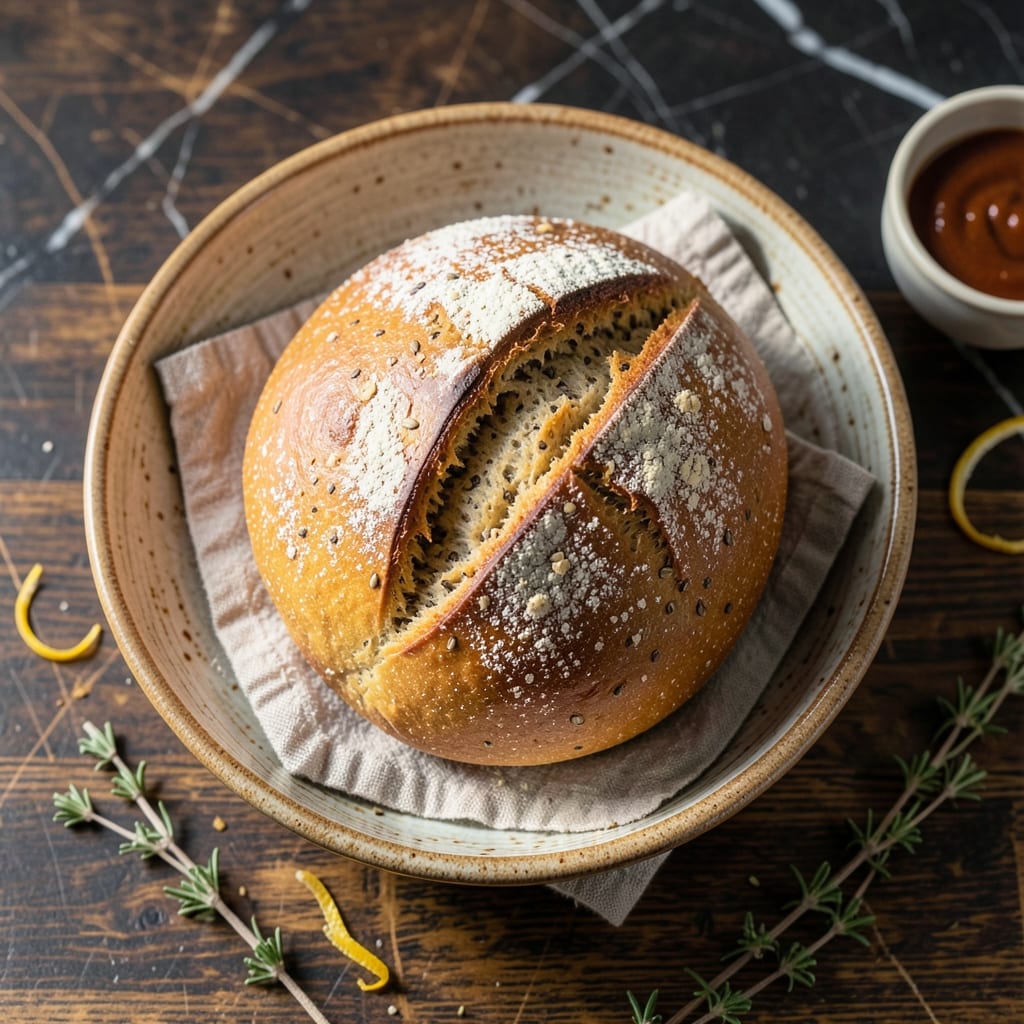
This bread delivers fluffy texture without traditional grains, using alternative flours and binders. The result is soft, sliceable loaves that satisfy dietary needs without compromise.
With careful ingredient selection and proper mixing, you achieve restaurant-quality bread that’s both gluten-free and rice-free. The process ensures consistent, delicious results every time.
Ingredients for Gluten and Rice Free Bread
Alternative flours and natural binders create soft, sliceable loaves without grains.
| Ingredient | Amount | Notes |
|---|---|---|
| Almond Flour 🌰 | 2 ½ cups | Blanched, fine grind preferred |
| Tapioca Starch 🌾 | ½ cup | Also called tapioca flour |
| Coconut Flour 🥥 | ¼ cup | Sifted to remove clumps |
| Ground Flaxseed 🌿 | ¼ cup | For binding, golden preferred |
| Psyllium Husk Powder 🌾 | 2 tbsp | Essential for structure |
| Baking Soda 🧂 | 1 tsp | For proper rise |
| Apple Cider Vinegar 🍏 | 1 tbsp | Activates baking soda |
| Warm Water 💧 | 1 ¼ cups | About 110°F for activation |
| Extra-Virgin Olive Oil 🫒 | 2 tbsp | For moisture and richness |
| Maple Syrup 🍁 | 2 tbsp | Adds subtle sweetness |
| Sea Salt 🧂 | 1 tsp | Fine grain for even distribution |
| Sunflower Seeds 🌻 | ¼ cup | Optional for texture |
The almond flour is your base—Bob’s Red Mill makes a great blanched version (finer texture, less bitterness). Psyllium husk powder is non-negotiable here; Anthony’s Goods on Amazon has the best price I’ve found. Coconut flour soaks up liquid like crazy, so sift it first to avoid clumps. I grab mine from Whole Foods bulk bins when I’m restocking other staples.
No psyllium husk? Xanthan gum at one-quarter the amount works in a pinch, but the texture won’t be quite as good. Out of almond flour? Hazelnut flour (same amount) is a great sub. Maple syrup can be swapped for agave or date syrup—equal parts. The vinegar just needs to be acidic; lemon juice works too. Skip the sunflower seeds if you prefer a smoother loaf (or swap for pumpkin seeds).
Store the flours in airtight containers in a cool, dark place—they’ll last 6-12 months. The bread keeps on the counter wrapped in a towel for 2 days, or slice and freeze for up to 3 months. Toast slices straight from the freezer for best results.
Why You’ll Love This Recipe
- One Bowl Wonder: I just dump the almond flour, tapioca starch, and the rest in a single bowl—no fancy equipment, no fuss.
- Warm Nutty Crust: That toasted almond flavor from the almond flour makes it taste like a bakery loaf, but better.
- Meal Prep Hero: I slice it thin for sandwiches or cube it for croutons—lasts all week without getting stale.
- Pantry Friendly: Between us, these flours are shelf-stable, so I always have the ingredients on hand.
Step-by-Step Instructions for Gluten and Rice Free Bread
This method delivers a light, airy loaf with just the right chew and structure.
Step 1: Combine Dry Ingredients for Proper Structure
In a large mixing bowl, whisk together the 2.5 cups Almond Flour, 0.5 cup Tapioca Starch, 0.25 cup Coconut Flour, 0.25 cup Ground Flaxseed, 2 tbsp Psyllium Husk Powder, 1 tsp Baking Soda, and 1 tsp Sea Salt. I always sift the Coconut Flour first to prevent clumps that could create dense pockets in the finished bread.
The Psyllium Husk Powder is non-negotiable here—it’s what gives this bread its structure without gluten. Make sure it’s the powder form, not whole husks. Whisk vigorously for 30 seconds until everything looks evenly distributed and the mixture takes on a uniform, sand-like texture.
Step 2: Create the Wet Mixture for Activation
In a separate bowl, combine the 1.25 cups Warm Water with the 1 tbsp Apple Cider Vinegar, 2 tbsp Extra-Virgin Olive Oil, and 2 tbsp Maple Syrup. The water should be about 110°F—warm to the touch but not hot enough to scald.
Stir until the Olive Oil and Maple Syrup are fully incorporated. You’ll notice the mixture looks slightly cloudy—that’s normal. The Apple Cider Vinegar reacts with the Baking Soda to create lift, so don’t skip it. Let this sit for 2 minutes while you finish prepping your loaf pan.
Step 3: Mix and Let the Dough Thicken
Pour the wet ingredients into the dry ingredients all at once. Stir with a sturdy wooden spoon or silicone spatula until just combined—you should see no dry pockets, but a few lumps are fine. The batter will be thick but spoonable, almost like a very dense cake batter.
Now here’s the magic: let the batter sit for 10 minutes. During this time, the Psyllium Husk Powder absorbs the liquid and forms a gel-like matrix. You’ll see the mixture thicken dramatically and become more elastic. Fold in the 0.25 cup Sunflower Seeds after this resting period for even distribution.
Step 4: Bake to Golden Perfection
Transfer the thick batter to a greased 8×4-inch loaf pan, smoothing the top with wet fingers to prevent sticking. The batter should fill the pan about two-thirds full. Let it rest for another 10 minutes while your oven preheats to 350°F.
Bake on the middle rack for 55-65 minutes until the top is deep golden brown and the internal temperature reaches 205°F. The bread should sound hollow when tapped and pull away slightly from the sides of the pan. If the top browns too quickly, tent loosely with foil after 30 minutes.
Step 5: Cool Completely Before Slicing
Remove the pan from the oven and let the bread cool in the pan for 10 minutes. Then transfer it to a wire rack to cool completely—this takes about 1 hour. I know it’s tempting to slice while warm, but the structure sets as it cools, and cutting too soon can result in a gummy texture.
Once fully cooled, the bread should hold its shape well and slice cleanly. The crust will be firm but not hard, and the interior should be light and airy with a tender crumb. Store wrapped at room temperature for up to 3 days or freeze for longer storage.
Pro Tips For Making Gluten And Rice Free Bread
- Pre-Gel Psyllium: Mix psyllium husk powder with warm water and let it sit for 5 minutes before adding to dry ingredients—this prevents the gritty texture I got in my first five attempts.
- Weigh Your Flours: Almond and coconut flour absorb moisture differently, so use a kitchen scale. I learned this the hard way after my third dense, sunken loaf.
- Let It Rest: After mixing, let the dough sit for 10 minutes. Sounds weird, but it works: the flours hydrate fully and the bread holds together better.
- Bake Low and Slow: Start at 325°F and give it 50-60 minutes. Higher temps can burn the outside before the center sets, especially with tapioca starch in the mix.
Make-Ahead Tips for gluten and rice free bread
Prep Dry Ingredients
Whisk together all dry ingredients the night before and store in an airtight container. This saves 10 minutes on baking day. I keep mine in the pantry where it stays fresh for 24 hours. 💡
Pre-Mix Wet Components
Combine the warm water, apple cider vinegar, and maple syrup in a jar and refrigerate. In the morning, just add olive oil and warm slightly before mixing with dry ingredients. This keeps the vinegar from over-activating the baking soda too early.
Batter Resting Time
After mixing wet and dry, let the batter rest for 10 minutes while you preheat the oven. This step is crucial for the psyllium to gel properly. I use this time to grease my 8×4-inch loaf pan and set the temperature to 350°F.
Make-Ahead Dough
You can prepare the full batter, cover the bowl, and refrigerate for up to 12 hours. The cold actually enhances the psyllium’s binding power. Just let it sit at room temperature for 30 minutes before baking to take the chill off.
Freeze for Later
Bake the loaf completely, cool, slice, and freeze in a ziplock bag with parchment between slices. Reheat straight from frozen in a toaster for 2-3 minutes. This keeps well for 3 months without texture loss. ❄️
Room Temperature Storage
For freshest results, wrap the cooled loaf in a clean towel and store on the counter. It stays soft for 2 days. After that, move to the fridge for up to 5 days, but I find toasting revives the texture best.
Nutrition Facts
Frequently Asked Questions
Can I substitute almond flour with another nut flour?
Yes! Hazelnut or cashew flour work well in equal amounts. Avoid peanuts as they can add unwanted moisture. Always sift first to prevent clumps.
Why does the batter need to rest before baking?
The 10-minute rest lets psyllium husk gel, creating structure. Skipping this step can result in dense, crumbly bread. You’ll see the mixture thicken visibly during this time.
How do I prevent a gummy texture in the center?
Ensure the internal temperature reaches 205°F and cool completely before slicing. Cutting too soon traps steam, making the loaf gummy.
Can I make this without psyllium husk powder?
Xanthan gum can work at 1/4 the amount, but texture may differ. Psyllium is ideal for its binding power and ability to mimic gluten’s elasticity.

- Cream of Wild Rice Soup Recipe: Earthy Grains in Silky Broth - October 9, 2026
- Filipino Garlic Rice Recipe: Crispy Fried Aroma With Every Bite - October 9, 2026
- Gobi Manchurian Rice Recipe: Indo-Chinese Fusion in One Bowl - October 9, 2026