
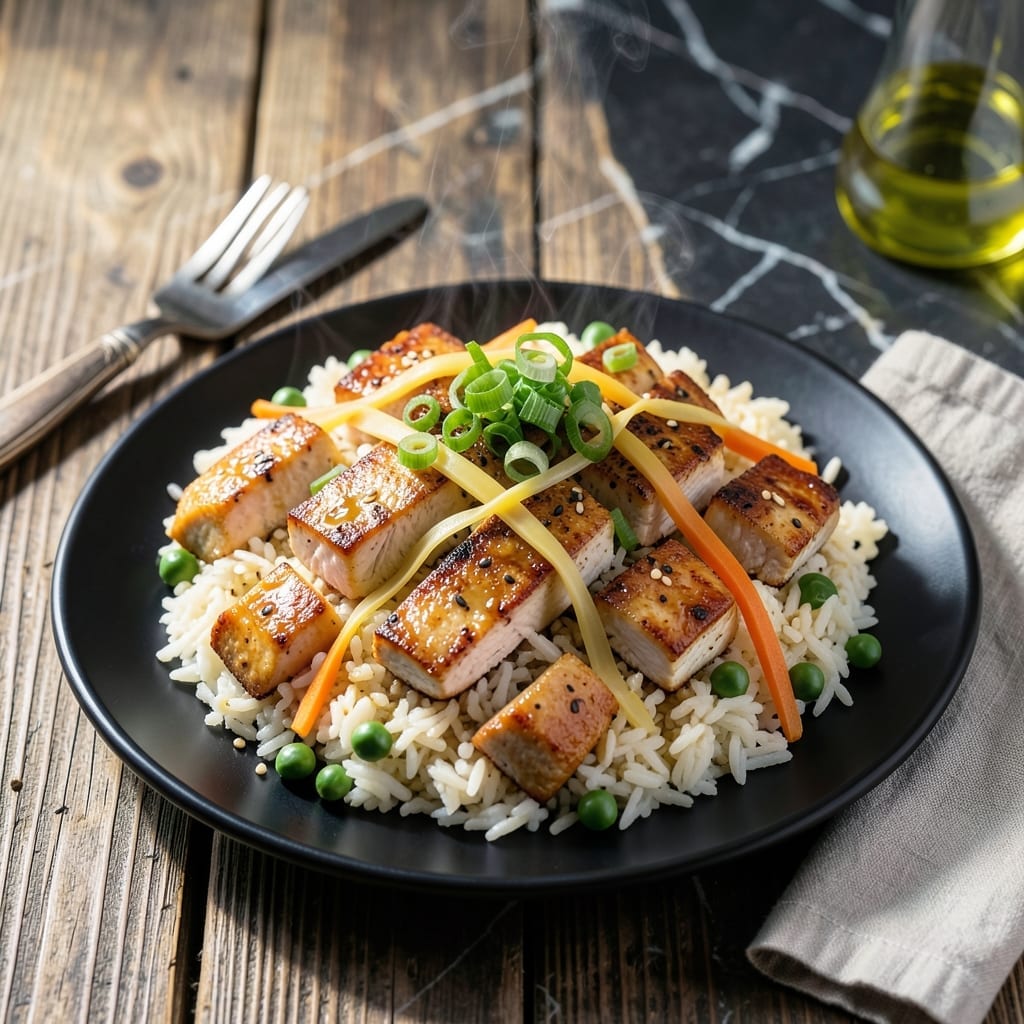
This gluten free chicken fried rice delivers the classic flavors you love without the worry of hidden gluten. The key lies in using naturally gluten-free ingredients and a dedicated wok for safe preparation.
I’ve perfected this version with tender chicken, crisp vegetables, and a savory sauce that coats every grain of rice. The high-heat wok-tossing technique ensures that authentic texture and depth of flavor.
You’ll achieve restaurant-quality results with no gluten and no compromise on taste. Each bite offers a balance of savory, sweet, and umami notes that make this dish irresistibly satisfying.
Ready in under 30 minutes, it’s a quick, reliable option for any weeknight meal. Let’s get started with this foolproof method.
Ingredients for Gluten Free Chicken Fried Rice
Naturally gluten-free ingredients deliver authentic wok-tossed flavor with no compromise on taste or texture.
| Ingredient | Amount | Notes |
|---|---|---|
| Boneless Skinless Chicken Breast 🍗 | 1 ½ lb | Cut into small uniform cubes |
| Cooked White Rice 🍚 | 4 cups | Day-old, chilled preferred |
| Large Eggs 🥚 | 3 whole | Lightly beaten for scrambling |
| Carrots 🥕 | 2 whole | Julienned or finely diced |
| Green Onions 🧅 | 4 whole | Thinly sliced, whites and greens separated |
| Frozen Peas 🌱 | 1 cup | Thawed under cold water |
| Tamari Soy Sauce 🫒 | 3 tbsp | Certified gluten-free for safety |
| Sesame Oil 🫒 | 1 tbsp | Toasted for authentic flavor |
| Vegetable Oil 🫒 | 3 tbsp | High smoke point for wok frying |
| Garlic Cloves 🧄 | 3 cloves | Minced for maximum flavor |
| Fresh Ginger 🌿 | 1 tbsp | Finely grated or minced |
| Diamond Crystal Kosher Salt 🧂 | 1 tsp | Adjust to taste at finish |
| Ground White Pepper 🌶️ | ½ tsp | Authentic wok seasoning choice |
| Rice Vinegar 🍶 | 1 tbsp | Mild acidity for balance |
The chicken is the foundation—boneless skinless chicken breast stays tender and cooks evenly at high heat. For gluten-free safety, tamari soy sauce is non-negotiable (regular soy sauce often contains wheat). Whole Foods and Trader Joe’s carry reliable certified gluten-free brands. Day-old rice is essential (fresh rice turns mushy)—jasmine or long-grain white work best. A well-seasoned carbon steel wok prevents sticking without non-stick coatings.
No tamari? Coconut aminos work in a pinch (sweeter, so reduce by one-third). Chicken thighs can replace breast for juicier texture. Short on veggies? Bell peppers or zucchini add nice crunch. The sesame oil must be toasted—regular sesame oil lacks depth. For extra umami, add a dash of gluten-free fish sauce (like Red Boat brand). Skip the msg—this has plenty of flavor without it.
Store cooked rice in the fridge for up to 3 days before using. Leftovers keep 4-5 days refrigerated, but the rice absorbs moisture—reheat in a dry skillet to restore texture. Freeze portions for up to 3 months (thaw before reheating). Always use a clean wok and utensils to prevent cross-contamination with gluten.
Why You’ll Love This Recipe
- I’ll be real: it’s my go-to for potlucks because it stretches a pound of chicken into a hearty spread.
- One Pan Meal: It’s all in one skillet—chicken, rice, veggies, and eggs—so cleanup’s a breeze.
- Umami Bomb: The soy-free seasoning and crispy chicken bits make it ridiculously good without the gluten.
- Feeds the Crowd: I’ll be real: it’s my go-to for potlucks because it stretches a pound of chicken into a hearty spread.
Step-by-Step Instructions for Gluten Free Chicken Fried Rice
Master the wok technique and achieve perfectly textured rice with vibrant, crisp vegetables.
Step 1: Velouté the Aromatics and Protein
Heat 1 tablespoon vegetable oil in a wok over high heat until shimmering. Add the 1.5 lb boneless skinless chicken breast cubes and stir-fry for 3-4 minutes until opaque and lightly browned. The chicken should release easily from the wok surface when ready.
Push the chicken to one side, then add the minced garlic cloves and finely grated fresh ginger to the empty space. Stir-fry for 30 seconds until fragrant but not browned—burnt garlic imparts bitterness that’s impossible to correct later. Remove the chicken and aromatics to a plate and set aside.
Step 2: Scramble the Eggs to Silky Perfection
Add another 1 tablespoon vegetable oil to the wok and return to high heat. Pour in the 3 whole lightly beaten large eggs and let them set for 10 seconds before gently scrambling with a spatula. The eggs should form soft, delicate curds—avoid overworking them into small, rubbery pieces.
Cook until just set but still slightly moist, about 30-45 seconds total. Transfer the eggs to the plate with the chicken, leaving as much oil as possible in the wok for the next step. This layered cooking approach builds complexity in the final dish.
Step 3: Stir-Fry Vegetables for Optimal Texture
Add the remaining 1 tablespoon vegetable oil to the wok. Introduce the julienned carrots and stir-fry for 2 minutes until they begin to soften but retain a slight crunch. The carrots should brighten in color and develop a subtle sheen from the oil.
Add the thawed frozen peas and the white portions of the thinly sliced green onions. Stir-fry for an additional 1-2 minutes until the peas are heated through and the onions become translucent. The vegetables should maintain their distinct textures rather than melting into a uniform mush.
Step 4: Combine All Elements with Sauce
Return the chicken and eggs to the wok along with the 4 cups cooked white rice. Break up any clumps in the rice with your spatula as you add it. The chilled rice should sizzle audibly when it hits the hot wok surface—a sign you’ve achieved the proper temperature for authentic wok hei.
Drizzle the 3 tbsp tamari soy sauce, 1 tbsp sesame oil, 1 tbsp rice vinegar, 1 tsp diamond crystal kosher salt, and 0.5 tsp ground white pepper evenly over the mixture. Stir-fry for 2-3 minutes until everything is thoroughly combined and heated through. The rice grains should be distinct and coated with a glossy sheen from the sauce.
Step 5: Finish and Garnish with Precision
Taste and adjust seasoning if needed—the tamari provides saltiness, but the diamond crystal kosher salt may require a final tweak. Remove from heat and stir in the green portions of the green onions, reserving a pinch for garnish. The residual heat will slightly wilt the greens while preserving their vibrant color.
Transfer to a serving platter and garnish with the reserved green onion slices. The ideal texture features distinct chicken pieces, fluffy egg curds, and vegetables with a slight bite, all bound together by the savory, slightly glossy sauce. Serve immediately while the contrast between hot and room-temperature elements is most pronounced.
Pro Tips For Making Gluten Free Chicken Fried Rice
- Chill the Rice: Use day-old, cold rice—it fries up fluffier and won’t turn mushy. I learned this the hard way after making sad, sticky fried rice more than once.
- Velvet the Chicken: Toss the chicken breast with 1 teaspoon cornstarch before cooking. Sounds weird, but it keeps the pieces tender and stops them from drying out in the wok.
- Skip Fresh Rice: Resist the urge to use just-cooked rice, even if you’re in a hurry. Fresh rice steams instead of frying, and your dish will end up gummy instead of light.
- Eggs Last: Push the chicken and veggies to one side, then scramble the eggs in the empty space. This way, they stay soft and distinct instead of disappearing into the rice.
Wine and Beer Pairings for gluten free chicken fried rice
Crisp White Wines
A dry Riesling from Washington state offers citrus notes that cut through the savory depth of your meal. I love how its bright acidity refreshes the palate between bites. Look for Chateau Ste. Michelle for reliable quality. 🍷
Light Red Options
For red wine lovers, try a chilled Pinot Noir from Oregon’s Willamette Valley. Its light body and red fruit flavors won’t overpower the dish. Eyrie Vineyards makes an excellent gluten-free option.
Asian-Inspired Beers
A Sapporo or Asahi Super Dry lager provides crisp, clean flavors that complement the umami notes. These Japanese beers are naturally gluten-free and widely available. 🍺
Wheat-Free Craft Beers
Glutenberg from Canada makes dedicated gluten-free beers with complex flavors. Their blonde ale has enough body to stand up to the dish’s richness. I keep a six-pack in my fridge for occasions like this.
Sparkling Pairings
A dry prosecco from Italy offers effervescent contrast to the dish’s texture. The bubbles cleanse your palate between bites of the flavorful rice. La Marca is my go-to for consistent quality.
Non-Alcoholic Choice
For a non-alcoholic option, Lyres Amaretti provides nutty, slightly sweet notes that pair beautifully. Serve it chilled in a wine glass for a special touch.
Nutrition Facts
Frequently Asked Questions
Can I use regular soy sauce instead of tamari?
No, regular soy sauce often contains wheat, which isn’t gluten-free. Tamari is fermented from soybeans only, making it safe. For best results, always check the label for certification.
What if I don’t have a wok?
A large skillet with high sides works as a substitute. Use high heat and cook in batches to avoid steaming the ingredients. The texture may vary slightly but will still be delicious.
How do I prevent the rice from getting mushy?
Use day-old, chilled rice and break up clumps before cooking. Cook on high heat and stir-fry quickly. Fresh rice has too much moisture and will turn mushy.
Can I add other vegetables?
Bell peppers, zucchini, or broccoli work well. Dice them uniformly for even cooking, and add them in Step 3 with the carrots. Adjust cooking time slightly if needed.

- Jollof Rice Sauce Recipe: West African Tomato and Spice Infusion - September 25, 2026
- Japanese Rice Soup Recipe: Umami-Rich Comfort in a Bowl - September 25, 2026
- Homemade Cream Of Rice Recipe: Silk-Smooth Breakfast in Minutes - September 25, 2026