
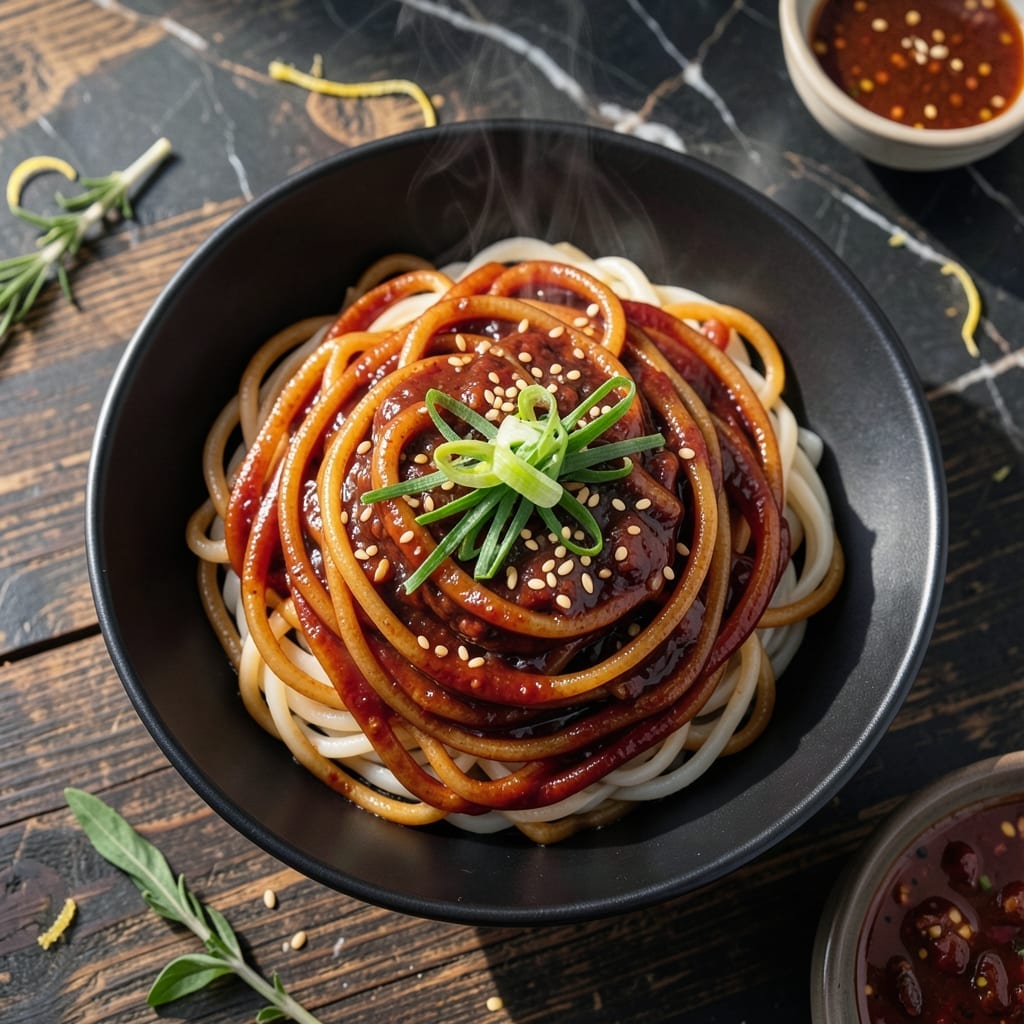
This spicy Korean stir-fry delivers bold flavors with minimal effort. The gochujang sauce brings heat and depth, while rice noodles soak up every bit of that rich, savory glaze. It’s a dish that proves quick meals don’t have to sacrifice complexity.
Ready in under 20 minutes, this vegan-friendly creation balances sweet, spicy, and umami notes perfectly. The key is cooking the noodles just until tender, then tossing them in the sauce while still hot for maximum flavor absorption.
Ingredients for Gochujang Rice Noodle
Bold Korean flavors come from simple pantry staples and fresh produce. Nothing exotic here.
| Ingredient | Amount | Notes |
|---|---|---|
| Rice Noodles 🍜 | 8 oz | Flat wide variety preferred |
| Gochujang Paste 🌶️ | 3 tbsp | Korean chili paste essential |
| Soy Sauce 🫒 | 3 tbsp | Low-sodium or tamari for gluten-free |
| Maple Syrup 🍁 | 2 tbsp | Balances spicy heat naturally |
| Rice Vinegar 💧 | 1 tbsp | Adds necessary tanginess |
| Sesame Oil 🫒 | 1 tbsp | Toasted variety for depth |
| Garlic Cloves 🧄 | 4 cloves | Minced for maximum flavor |
| Fresh Ginger 🌿 | 1 tbsp | Grated, for zesty kick |
| Red Bell Pepper 🌶️ | 1 whole | Thinly sliced for crunch |
| Carrot 🥕 | 1 whole | Julienned for texture contrast |
| Green Onions 🧅 | 3 whole | Thinly sliced for garnish |
| Sesame Seeds 🌾 | 1 tbsp | Toasted for nutty finish |
| Vegetable Broth 💧 | ½ cup | Low-sodium preferred for control |
| Cornstarch 🌾 | 1 tsp | Thickens sauce slightly |
The gochujang paste is non-negotiable for authentic flavor. H Mart or Korean markets carry the best selection, but Whole Foods and Amazon stock solid options too. Look for vibrant red color and a slightly sweet, fermented aroma. Rice noodles are widely available in the Asian aisle—choose flat wide noodles for that classic stir-fry texture. For the soy sauce, San-J tamari is a reliable gluten-free choice.
No gochujang? Sriracha mixed with miso paste (2:1 ratio) works in a pinch, though the flavor profile won’t be identical. Agave nectar or date syrup can stand in for maple syrup. Missing rice vinegar? Apple cider vinegar at half the amount. For extra protein without breaking the vegan rule, toss in cubed extra-firm tofu or sliced shiitake mushrooms. The cornstarch slurry can be skipped if you prefer a lighter sauce.
Leftover sauce keeps in an airtight container for up to 1 week. Rice noodles are best cooked fresh, but the dish reheats surprisingly well—store in the fridge for 3-4 days. Sprinkle a little water when reheating to revive the noodles. Freezing isn’t recommended as it can make the noodles mushy.
Why You’ll Love This Recipe
- One Pot Wonder: I just toss the rice noodles with gochujang, soy sauce, and a splash of maple syrup—no fancy techniques, no stress.
- Sweet & Spicy Fix: The gochujang brings the heat while the maple syrup and rice vinegar balance it into this ridiculously good combo.
- Meal Prep Hero: I make a big batch on Sunday and it keeps beautifully for lunches all week.
- Budget Stretcher: Rice noodles and a spoonful of gochujang go a long way, and I’m not breaking the bank for flavor.
Step-by-Step Instructions for Gochujang Rice Noodles
This method delivers perfectly balanced spicy, sweet, and tangy flavors in every bite.
Step 1: Prepare and Soak the Rice Noodles
Place the 8 oz rice noodles in a large bowl and cover completely with hot water. Let them soak for 8-10 minutes until they’re pliable but still slightly firm—they’ll finish cooking in the pan.
I check them at the 8-minute mark by bending a strand. If it snaps, it needs more time. If it bends but has a white core, it’s ready. Drain immediately and rinse under cold water to stop the cooking process. This prevents them from becoming mushy later.
Step 2: Create the Gochujang Sauce Base
In a small bowl, whisk together the 3 tbsp gochujang paste, 3 tbsp soy sauce, 2 tbsp maple syrup, 1 tbsp rice vinegar, and 1 tbsp sesame oil until smooth. The mixture will be thick and glossy.
Add the 4 cloves minced garlic cloves and 1 tbsp grated fresh ginger, stirring to distribute evenly. In a separate small bowl, mix the 1 tsp cornstarch with 0.5 cup vegetable broth until fully dissolved—this slurry will thicken your sauce perfectly without clumping.
Step 3: Stir-Fry the Vegetables
Heat a large skillet or wok over medium-high heat. Add the drained rice noodles, thinly sliced red bell pepper, and julienned carrot. Stir-fry for 2-3 minutes until the vegetables begin to soften slightly but retain their crispness.
The noodles should start to absorb some of the heat and take on a slightly translucent appearance. Watch for the peppers to brighten in color—that’s your visual cue they’re cooking properly. Don’t overcrowd the pan; work in batches if needed to ensure even cooking.
Step 4: Combine and Finish the Dish
Pour the gochujang sauce mixture over the noodles and vegetables. Stir well to coat everything evenly, then add the cornstarch slurry. Cook for an additional 1-2 minutes, stirring constantly, until the sauce thickens and clings to the noodles.
Remove from heat and stir in thinly sliced green onions. The residual heat will soften them slightly while keeping their fresh, oniony bite. Taste and adjust seasoning if needed—though the sauce is typically well-balanced as written.
Transfer to serving bowls and sprinkle with 1 tbsp sesame seeds for a nutty finish and visual appeal. Serve immediately while hot, as the noodles continue to absorb the sauce as they sit.
Pro Tips For Making Gochujang Rice Noodle
- Soak Noodles First: Cover rice noodles in warm water for 8-10 minutes before cooking—I learned this the hard way after ending up with stubborn, chewy clumps that resisted the sauce.
- Bloom the Gochujang: Heat the gochujang paste in the pan with a splash of oil for 30 seconds before adding liquids; it deepens the flavor and prevents that raw, bitter edge.
- Balance the Sauce: Taste as you go and adjust with rice vinegar for acidity or maple syrup for sweetness—gochujang can overpower, and the noodles need that bright contrast.
- Reserve Noodle Water: Keep a cup of the noodle soaking water; a splash or two loosens the sauce perfectly when it clings too thick to the strands.
Wine and Beer Pairings for These Flavors
Beer Pairings
A crisp Korean lager like Hite or OB Beer cleanses your palate from the gochujang heat while complementing the dish’s savory notes. I also love Sapporo for its light body and slight sweetness that balances the spice. 🍺
Light Ales
A wheat beer such as Hoegaarden or Blue Moon offers citrusy notes that cut through the richness. The effervescence lifts the dish’s bold flavors without overpowering them.
Wine Options
For white wine lovers, an off-dry Riesling from Germany or Washington State provides the perfect contrast to the spicy heat. The slight sweetness and bright acidity refresh your palate between bites.
Rosé Choices
A chilled Provence rosé with its crisp acidity and red fruit notes pairs surprisingly well. Look for options with 12-13% ABV for balance. I find Whispering Angel particularly refreshing with this dish.
Non-Alcoholic
Try a ginger beer like Fever-Tree for a spicy kick that matches the gochujang. The carbonation and ginger’s warmth create a perfect harmony with the dish’s flavors. ✨
Nutrition Facts
Frequently Asked Questions
Can I use a different type of noodle?
Yes, but rice noodles work best for texture. Udon or soba noodles can substitute in a pinch. Avoid thin vermicelli as they can become mushy.
How do I adjust the spice level?
Start with 1 tbsp gochujang for mild heat, then add more to taste. For extra kick, include a pinch of red pepper flakes. The maple syrup balances the spice.
Can I make this ahead of time?
Cook the sauce and chop veggies up to 2 days ahead. Soak and cook noodles just before serving to prevent mushiness. Leftovers keep 3-4 days refrigerated.
What if my sauce is too thick?
Thin it with 1-2 tbsp water or vegetable broth. Stir well while heating to reach your desired consistency. The cornstarch slurry is optional if you prefer a lighter sauce.

- Cream of Wild Rice Soup Recipe: Earthy Grains in Silky Broth - October 9, 2026
- Filipino Garlic Rice Recipe: Crispy Fried Aroma With Every Bite - October 9, 2026
- Gobi Manchurian Rice Recipe: Indo-Chinese Fusion in One Bowl - October 9, 2026