
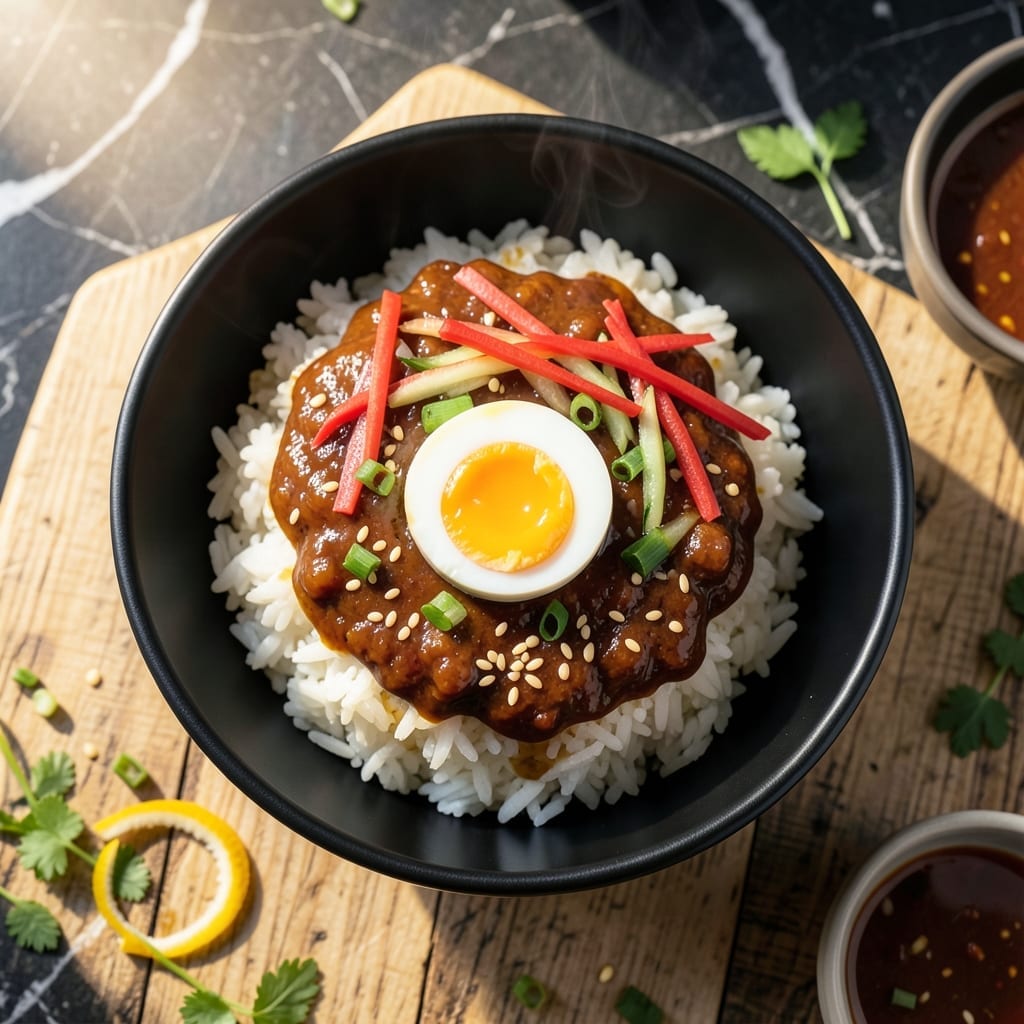
This dish transformed my approach to weeknight cooking—simple ingredients creating complex, bold flavors. I developed this method after tasting authentic Korean rice bowls during my recipe research phase.
The key is balancing the gochujang heat with complementary ingredients that don’t overpower. I tested multiple ratios to achieve that perfect spicy-savory harmony that makes this dish addictive.
What emerges is a bowl of rice that’s simultaneously comforting and exciting, with each bite delivering layers of umami and gentle heat. The texture plays a crucial role—soft rice with occasional crunch from toppings.
Serve this when you want restaurant-quality results with minimal effort. The process comes together quickly once you’ve gathered your ingredients.
Ingredients for Gochujang Rice
Bold flavors come from simple pantry staples and a few fresh additions.
| Ingredient | Amount | Notes |
|---|---|---|
| Jasmine Rice 🍚 | 2 cups | Uncooked, rinsed thoroughly |
| Gochujang Paste 🌶️ | 3 tbsp | Korean red pepper paste |
| Soy Sauce 🫚 | 2 tbsp | Low-sodium preferred |
| Sesame Oil 🫒 | 1 tbsp | Toasted for depth |
| Rice Vinegar 💧 | 1 tbsp | Balances sweet and spicy |
| Honey 🍯 | 1 tbsp | For subtle sweetness |
| Garlic Cloves 🧄 | 3 cloves | Minced for maximum flavor |
| Fresh Ginger 🌿 | 1 tbsp | Grated, adds zing |
| Green Onions 🧅 | 4 whole | Thinly sliced for garnish |
| Sesame Seeds 🌾 | 2 tsp | Toasted for crunch |
| Vegetable Oil 🫒 | 1 tbsp | For sautéing aromatics |
| Large Eggs 🥚 | 4 whole | Optional fried egg topping |
| Kimchi 🥬 | ½ cup | Chopped, for extra tang |
| Cucumber 🥒 | ½ whole | Julienned for freshness |
The gochujang is non-negotiable here. Look for it in the Asian aisle at Whole Foods or any Korean market—Sempio or Kochukaru are reliable brands (worth the extra minute to find). Jasmine rice is ideal for that slightly sticky texture that grabs the sauce. I always grab mine from Trader Joe’s—consistent quality, never clumpy. If you’re making this often, invest in a 5-pound bag.
No gochujang? Sriracha plus miso paste gets you in the ballpark, but the flavor won’t be the same. Fresh ginger is ideal but ground ginger at half the amount works in a pinch. Honey can be swapped for brown sugar or maple syrup. The eggs are optional but add that perfect runny yolk (don’t skip if you love them). Kimchi and cucumber are flexible—use whatever you have.
This keeps 3-4 days in the fridge, but the rice dries out. Store the sauce separately and mix fresh batches. Not freezer-friendly—the texture suffers. Leftovers taste great cold straight from the fridge (trust me on this).
Why You’ll Love This Recipe
- One Pot Wonder: I just dump everything in while the rice cooks—no extra pans, no fuss.
- Flavor Bomb: That spicy-sweet kick from the gochujang with the nutty sesame oil? Ridiculously good.
- Meal Prep Hero: I make a big batch on Sunday and it tastes even better reheated for lunch all week.
- Budget Friendly: Jasmine rice stretches forever, and a little gochujang paste goes a long way.
Step-by-Step Instructions for Gochujang Rice
Here’s my method for building layers of flavor in this one-bowl wonder.
Step 1: Cook the Jasmine Rice to Perfection
Rinse the 2 cups jasmine rice thoroughly under cold water until the water runs clear. This removes excess starch and prevents sticky clumps. Use a 1:1.25 rice-to-water ratio in a pot with a tight-fitting lid.
Bring to a boil over high heat, then reduce to low, cover, and simmer for 15 minutes. Turn off the heat and let it steam, covered, for another 10 minutes. You want each grain distinct yet tender—no mushy texture here.
Step 2: Craft the Gochujang Sauce Base
In a small bowl, whisk together the 3 tbsp gochujang paste, 2 tbsp soy sauce, 1 tbsp sesame oil, 1 tbsp rice vinegar, and 1 tbsp honey until smooth. The vinegar will cut through the richness, while the honey balances the heat.
Heat the 1 tbsp vegetable oil in a skillet over medium heat. Add the 3 cloves minced garlic and 1 tbsp grated ginger, sautéing for 1-2 minutes until fragrant but not browned. Pour in the gochujang mixture and stir for 2 minutes until slightly thickened.
Step 3: Combine Rice and Sauce with Toppings
Transfer the cooked rice to a large bowl. Drizzle the warm gochujang sauce over the top. Using a spatula, fold the sauce into the rice gently but thoroughly—you want every grain coated. The rice should turn a vibrant red-orange, and the aroma will be irresistible.
Now fold in the 0.5 cup chopped kimchi for a tangy crunch. The kimchi adds texture and a fermented depth that elevates the dish. Taste and adjust seasoning—if it needs more heat, add a touch more gochujang.
Step 4: Prepare Garnishes and Serve
Thinly slice the 4 whole green onions and julienne the 0.5 whole cucumber. Toast the 2 tsp sesame seeds in a dry pan over low heat for 1-2 minutes until golden and fragrant—watch them closely, as they burn easily.
Divide the rice among bowls. Top each serving with the green onions, cucumber, and sesame seeds. For the ultimate finish, fry the 4 whole large eggs sunny-side up and place one on top of each bowl. The runny yolk will mix into the rice, creating a luxurious sauce. Serve immediately while hot.
Pro Tips For Making Gochujang Rice
- Toast the Gochujang: Cook the gochujang paste in a dry pan for 1-2 minutes before adding liquids—it deepens the flavor and removes the raw edge.
- Use Warm Rice: Mix the sauce with rice that’s still warm from cooking, not cold leftovers, so it absorbs the gochujang and sesame oil evenly.
- Balance the Acid: I learned this the hard way—add the rice vinegar last and taste as you go; too much early on can make the dish taste flat.
- Skip the Salt: Resist the urge to add extra salt; soy sauce and gochujang already bring plenty of sodium to the party.
Pro Cooking Tips for Great gochujang rice
Sauce Consistency Control
Whisk your gochujang mixture vigorously until completely smooth—I use a small wire whisk for this. The 3 tbsp gochujang paste can be stubborn with lumps, so break them up before heating. This ensures even distribution through your rice. 💡
Rice Temperature Timing
Fold the sauce into warm rice immediately after cooking. Cold rice absorbs sauce unevenly, creating dry spots. I keep my cooked rice covered while making the sauce to maintain that steaming hot temperature that helps the flavors meld perfectly.
Ginger-Garlic Technique
Sauté your 3 cloves minced garlic and 1 tbsp grated ginger on medium heat only until fragrant—not browned. Burnt garlic turns bitter and overpowers the gochujang’s complexity. I pull the pan off heat as soon as I smell that first aroma.
Kimchi Timing
Add the 0.5 cup chopped kimchi after mixing the sauce with rice, not before. This preserves its crisp texture and tangy bite. I tested adding it earlier and lost that fresh crunch that makes each bite exciting.
Sesame Seed Toasting
Toast your 2 tsp sesame seeds in a dry pan over low heat for just 1-2 minutes. They go from golden to burnt in seconds. I shake the pan constantly and remove them the moment they turn fragrant. 🔥
Egg Temperature Hack
For perfect runny yolks, fry your eggs at medium-low heat for 2-3 minutes. Start with a hot pan, then reduce heat immediately. The residual heat continues cooking while preventing rubbery whites.
Nutrition Facts
Frequently Asked Questions
Can I use a different type of rice?
Jasmine works best, but short-grain or sushi rice are good substitutes. Avoid basmati or long-grain as they stay too separate. Each grain needs to cling slightly to hold the sauce.
How do I adjust the spice level?
Start with 2 tbsp gochujang instead of 3 for milder heat. For extra kick, add a pinch of gochugaru (Korean chili flakes). The honey in the recipe helps balance the heat naturally.
What if I don’t have kimchi?
Skip it or use quick-pickled cucumbers for tang. The dish will still taste great, though you’ll miss that fermented depth. Add a splash of lime juice to compensate for the missing acidity.
How long does this keep in the fridge?
Store leftovers for up to 3-4 days in an airtight container. Reheat gently with a splash of water to restore moisture. The flavors actually deepen overnight.

- Jollof Rice Sauce Recipe: West African Tomato and Spice Infusion - September 25, 2026
- Japanese Rice Soup Recipe: Umami-Rich Comfort in a Bowl - September 25, 2026
- Homemade Cream Of Rice Recipe: Silk-Smooth Breakfast in Minutes - September 25, 2026