
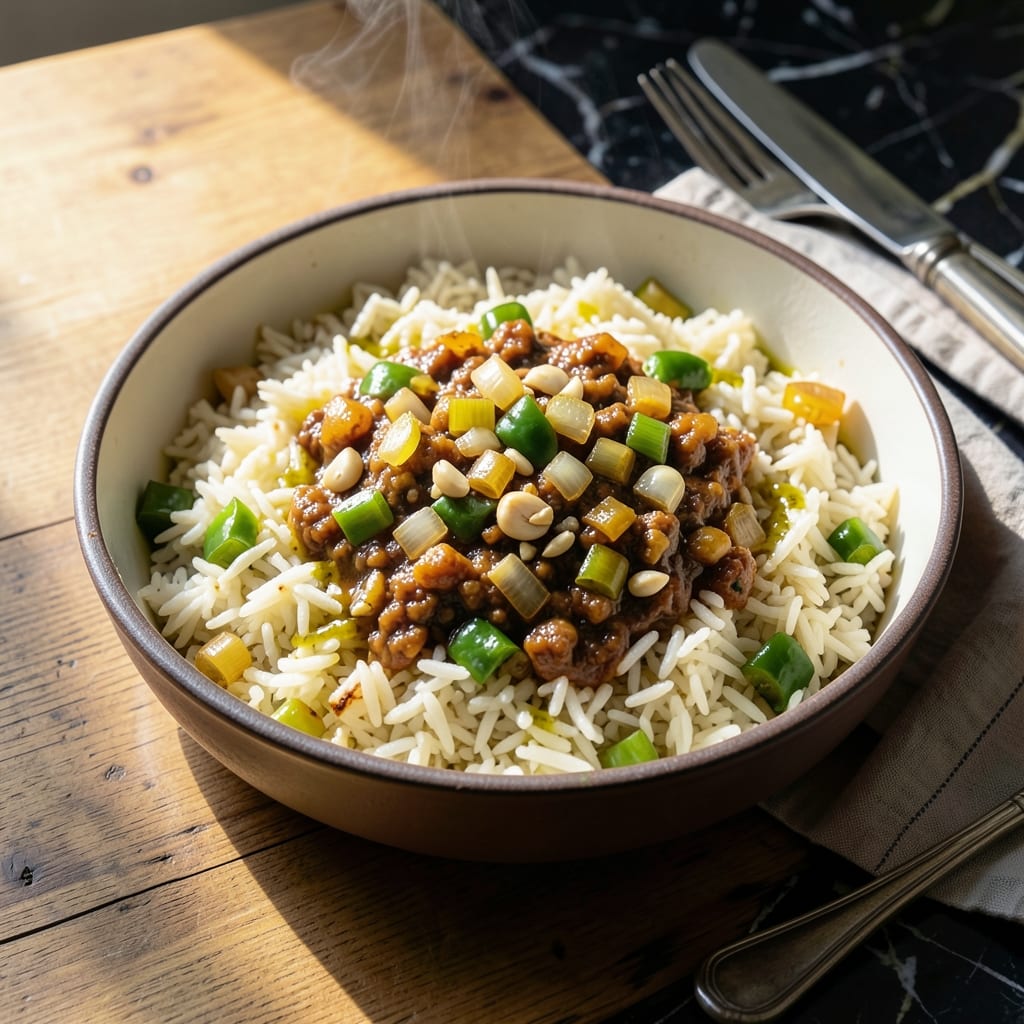
This traditional white rice takes on deep, authentic flavor with the addition of Goya sofrito, creating a dish that’s been a Latin kitchen staple for generations.
The method is simple: long-grain rice simmers with sofrito, water, and a touch of salt until every grain is fluffy and infused. It pairs perfectly with beans, meats, or vegetables.
Ingredients for Goya White Rice
Traditional long-grain rice meets sofrito for authentic Latin flavor in every bite.
| Ingredient | Amount | Notes |
|---|---|---|
| Long-Grain White Rice 🍚 | 2 cups | Rinsed until water runs clear |
| Goya Sofrito 🫑 | 2 tbsp | Culinary base for authentic flavor |
| Water 💧 | 4 cups | For cooking rice |
| Olive Oil 🫒 | 2 tbsp | For sautéing sofrito |
| Salt 🧂 | 1 tsp | Adjust to taste preference |
| Garlic Cloves 🧄 | 3 cloves | Minced for extra flavor |
| Onion 🧅 | ½ whole | Finely diced for base |
| Green Bell Pepper 🌶️ | ½ whole | Finely diced for color |
| Tomato Sauce 🍅 | 2 tbsp | For depth of flavor |
| Dried Oregano 🌿 | ½ tsp | For aromatic touch |
| Ground Cumin 🌿 | ¼ tsp | For earthy warm notes |
| Bay Leaf 🍃 | 1 whole | Removed after cooking |
The rice is the foundation—long-grain white rice gives you that light, fluffy texture. Goya sofrito is non-negotiable here; it’s the heart of the dish. You’ll find it in the Latin foods aisle at most supermarkets, or grab it at Walmart or Target. If you’re making a big batch, Costco sells it in larger cans. Look for the bright green label—it’s the original.
No sofrito on hand? Blend one-third each onion, bell pepper, and garlic in a food processor with a little tomato sauce—it’s not the same but works. Out of tomato sauce? Ketchup in a pinch (don’t judge). Fresh oregano can replace dried at a 1:1 ratio, but dried is more concentrated. The cumin and bay leaf add depth, but you can skip them if you’re keeping it simple.
Cooked rice keeps in the fridge for 4-5 days—reheat with a splash of water to fluff it back up. Freeze for up to 3 months, though the texture changes slightly. Store sofrito in the fridge once opened and use within 2 weeks.
Why You’ll Love This Recipe
- 5-Minute Prep: I dump everything in one pot—rice, sofrito, water—and walk away. Honestly, it doesn’t get simpler.
- Sofrito Magic: That first bite with the garlic and peppers from the Goya sofrito? Ridiculously good.
- Pairs With Anything: I serve it under black beans, next to grilled chicken, or even with fried eggs for breakfast.
- Stretches for Days: One batch feeds us for two meals, and the leftovers reheat like a dream. Between us, it’s my budget’s best friend.
Step-by-Step Instructions for Sofrito-Infused White Rice
This method delivers authentic Latin flavor with perfectly fluffy grains every time.
Step 1: Prepare and Sauté the Aromatic Base
Heat the 2 tbsp Olive Oil in a caldero or heavy pot over medium heat. Add the 0.5 whole Onion (finely diced), 0.5 whole Green Bell Pepper (finely diced), and the 3 cloves Garlic Cloves (minced). Sauté for 3-4 minutes until the vegetables soften and the onion becomes translucent.
Next, stir in the 2 tbsp Goya Sofrito and cook for 1-2 minutes until the mixture becomes fragrant. This step builds the flavor foundation, so don’t rush it. The sofrito should sizzle gently but not brown. Add the 2 tbsp Tomato Sauce, 0.5 tsp Dried Oregano, and 0.25 tsp Ground Cumin, stirring to combine all the aromatics.
Step 2: Toast the Rice for Nutty Depth
Add the 2 cups Long-Grain White Rice (rinsed until water runs clear) to the pot. Stir constantly for 2-3 minutes to toast the grains. You’ll notice the rice turning slightly opaque and the aroma becoming more pronounced—a sign the starches are activating.
This toasting step is crucial for preventing stickiness and adding a subtle nutty flavor. Keep the heat at medium to avoid burning the rice or the sofrito mixture. The grains should be well coated with the oil and aromatic base, with no dry spots remaining.
Step 3: Add Liquids and Seasonings
Pour in the 4 cups Water and add the 1 tsp Salt and 1 whole Bay Leaf. Stir well to distribute all the ingredients evenly. The water should come to a gentle boil almost immediately due to the hot pot.
As the mixture heats, you’ll see small bubbles forming around the edges first, then spreading across the surface. This is your signal that it’s time to reduce the heat. The liquid should look slightly cloudy from the rice starch, and the bay leaf will begin to infuse its subtle earthiness into the cooking rice.
Step 4: Simmer Until Perfectly Cooked
Once boiling, reduce the heat to low, cover the pot tightly with a lid, and let it simmer undisturbed for 20 minutes. Resist the urge to peek—every time you lift the lid, you release precious steam that’s essential for even cooking.
After 20 minutes, all the water should be absorbed and the rice should be tender with individual grains that separate easily. If you notice any water remaining on the surface or the rice isn’t quite done, cook for an additional 2-3 minutes with the lid on. The bay leaf should be removed and discarded at this point.
Step 5: Rest and Fluff for Perfect Texture
Turn off the heat and let the rice sit covered for 5 minutes. This resting period allows the grains to absorb any remaining moisture and steam to finish the cooking process evenly throughout the pot.
Finally, fluff the rice gently with a fork, breaking up any clumps and redistributing the aromatic sofrito mixture throughout. The grains should be separate, moist, and infused with the vibrant flavors of the sofrito, garlic, and spices. Serve immediately while hot and fragrant.
Pro Tips For Making Goya White Rice
- Toast the Rice: Heat the rice in olive oil for 2-3 minutes before adding liquid—I learned this the hard way, but it removes the raw starch taste and gives the grains a nutty depth.
- Bloom the Sofrito: Cook the Goya Sofrito in oil for 1-2 minutes until fragrant; sounds weird, but it works to wake up the flavors before the water goes in.
- Skip the Rinse: Resist the urge to rinse the rice—Goya’s long-grain is pre-washed, and the extra starch actually helps create that slightly sticky texture we want.
- Use Hot Water: Pour in boiling water instead of cold to cut the cooking time by 5 minutes and guarantee even absorption—I was skeptical until I tried it.
Creative Variations of This goya white rice
Coconut Rice Fusion
Swap 2 cups water for 1 can (13.5 oz) coconut milk and 1 ½ cups water for a tropical twist. The creamy coconut pairs beautifully with sofrito’s savory depth. Add ½ tsp turmeric for golden color and a hint of earthiness. 🌴
Spanish-Inspired Saffron
Infuse your rice with ½ tsp saffron threads soaked in ¼ cup warm water. This adds a luxurious aroma and golden hue. I like to finish with a sprinkle of smoked paprika for extra warmth.
Vegetable Medley
Stir in ½ cup diced carrots and ½ cup peas when adding water. The veggies soften perfectly by the time the rice cooks. For extra flavor, toss in 1 diced tomato with the sofrito.
Spicy Kick
Add 1 chopped jalapeño with the onions or a pinch of cayenne pepper to the water. For a milder heat, use ½ tsp red pepper flakes. The spice balances the sofrito’s richness wonderfully.
Herb-Infused
Fresh herbs elevate this dish—stir in 2 tbsp chopped cilantro or 1 tbsp fresh parsley after cooking. For a citrusy note, add zest of 1 lime to the water. 🌿
Cheesy Delight
Mix in ½ cup shredded queso fresco or cotija cheese after fluffing the rice. The salty cheese contrasts the sofrito’s sweetness. This version is a family favorite in my household.
Nutrition Facts
Frequently Asked Questions
Can I use a different rice variety?
Stick with long-grain white rice for best results. Jasmine or basmati work but may need 1-2 minutes less cooking time. Avoid instant rice as it turns mushy.
What if my rice turns out sticky?
You likely skipped toasting the rice or lifted the lid during cooking. Next time, toast grains for 2-3 minutes and keep lid on until done. Stirring after adding water causes stickiness.
How do I make it vegetarian?
This recipe is already vegetarian! For vegan, ensure sofrito contains no animal products. Check labels as some brands add lard.
Can I make this in a rice cooker?
Yes! Sauté aromatics first, then transfer to cooker with rice and water. Use the standard 1:2 rice-to-water ratio and cook as usual.

- Ground Beef Rice and Beans Recipe: Slow-Simmered Savory Harmony - October 17, 2026
- Guyanese Fried Rice Recipe: Caribbean Spice With Wok-Charred Aromatics - October 17, 2026
- Hakka Thunder Tea Rice Recipe: Wok-Charred Herbal Infusion - October 17, 2026