
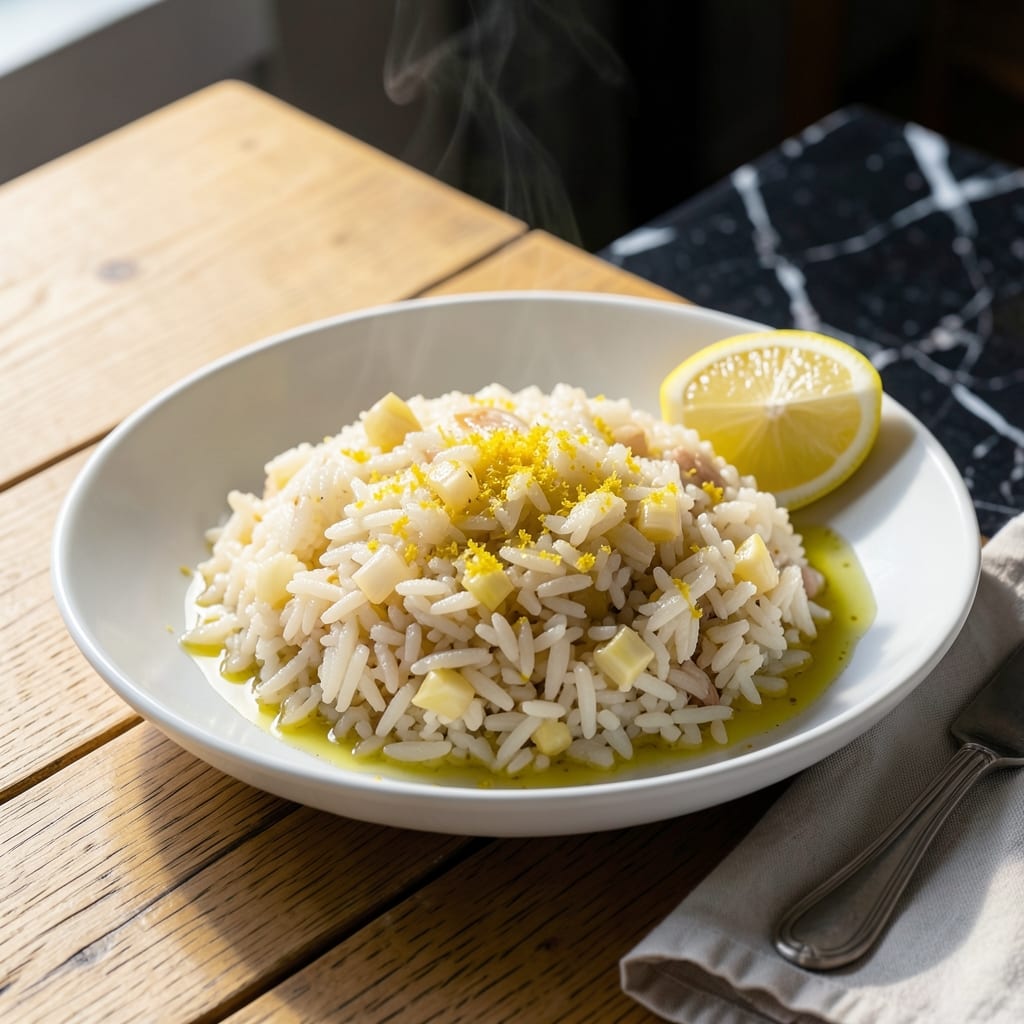
This Greek-inspired rice pilaf transforms simple ingredients into a bright, citrus-infused side dish that complements any meal.
Long-grain rice absorbs a tangy lemon broth, creating fluffy grains with a subtle zesty finish. The technique ensures each bite bursts with Mediterranean flavor without overpowering the main course.
Ingredients for Greek Lemon Rice Pilaf
Bright Mediterranean flavors shine through these carefully selected staples for a vibrant side dish.
| Ingredient | Amount | Notes |
|---|---|---|
| Long-Grain White Rice 🍚 | 1 ½ cups | Rinsed until water runs clear |
| Chicken Broth 🥣 | 3 cups | Vegetable broth for strict vegetarians |
| Fresh Lemon Juice 🍋 | ¼ cup | About 2-3 lemons, freshly squeezed |
| Lemon Zest 🍋 | 1 tbsp | From 1-2 lemons, finely grated |
| Unsalted Butter 🧈 | 2 tbsp | Or olive oil for dairy-free |
| Yellow Onion 🧅 | 1 whole | Finely diced, medium size |
| Garlic Cloves 🧄 | 3 cloves | Minced or pressed |
| Dried Oregano 🍃 | 1 tsp | Mediterranean variety preferred |
| Ground Black Pepper 🌶️ | ½ tsp | Freshly ground for best flavor |
| Kosher Salt 🧂 | 1 tsp | Diamond Crystal preferred, adjust to taste |
| Fresh Parsley 🌿 | ¼ cup | Chopped, for garnish |
| Bay Leaf 🍃 | 1 whole | Dried, removed before serving |
The rice is critical here. Long-grain varieties like basmati or jasmine absorb the citrus-infused broth beautifully without turning mushy. Whole Foods or Trader Joe’s carry excellent organic options. For the broth, low-sodium vegetable broth works perfectly for strict vegetarians, but chicken broth adds depth if dietary restrictions allow. Always rinse the rice—this removes excess starch for fluffier grains.
Short on fresh lemons? Bottled lemon juice at half the amount works in a pinch (though fresh is always better). No oregano? Fresh thyme or marjoram can substitute at the same quantity. For a richer dish, swap the butter for extra-virgin olive oil—use a high-quality brand like California Olive Ranch. The onion and garlic can be prepped ahead and stored together in the fridge for up to 24 hours.
This pilaf tastes even better the next day as the flavors meld. Store leftovers in an airtight container in the fridge for up to 4 days. Reheat in the microwave with a splash of water or broth to restore moisture. For make-ahead, cook the rice al dente, spread on a tray to cool quickly, then refrigerate before finishing with lemon and herbs.
Why You’ll Love This Recipe
- One Pot Wonder: I love that everything cooks together – rice, broth, and lemon – with zero extra pans to wash.
- Bright and Zesty: The lemon juice and zest make the rice taste fresh and vibrant, not heavy like some pilafs.
- Pairs with Anything: I serve it with grilled chicken, fish, or even just roasted veggies for a quick meal.
- Budget Stretcher: A pound of rice and a few pantry staples feed my family for days without breaking the bank.
Step-by-Step Instructions for Greek Lemon Rice Pilaf
Master this technique for perfectly fluffy grains with vibrant citrus notes every time.
Step 1: Sauté Aromatics in Butter
Melt the 2 tablespoons unsalted butter in a large saucepan over medium heat. Add the finely diced yellow onion and cook for 4-5 minutes, stirring frequently, until it becomes translucent and starts to soften.
Add the 3 cloves minced garlic cloves, 1 teaspoon dried oregano, 1 teaspoon kosher salt, and 0.5 teaspoon ground black pepper. Sauté for 1 minute until fragrant—this builds the flavor foundation. Watch carefully to prevent the garlic from burning.
Step 2: Toast the Rice with Lemon Zest
Stir in the 1.5 cups long-grain white rice and 1 tablespoon lemon zest. Toast the rice in the butter and aromatics for 2-3 minutes until the grains become slightly translucent at the edges and you detect a nutty aroma.
This toasting step is crucial—it enhances the rice’s natural flavor and prevents a starchy final texture. The lemon zest should release its oils, infusing the grains with bright citrus essence that will carry through the cooking process.
Step 3: Deglaze and Simmer with Broth
Pour in the 0.25 cup fresh lemon juice and scrape up any browned bits from the bottom of the pan. Then add the 3 cups chicken broth and 1 whole bay leaf. Bring the mixture to a boil over medium-high heat.
Once boiling, reduce the heat to low, cover the saucepan, and simmer for 18-20 minutes. The liquid should be mostly absorbed and the rice should be tender with no chalky center when tasted.
Step 4: Rest and Finish with Fresh Parsley
Remove the saucepan from heat and let it sit, covered, for 10 minutes. This resting period allows the steam to finish cooking the rice evenly and prevents a gummy texture.
Discard the bay leaf, then gently fluff the rice with a fork. Stir in the 0.25 cup chopped fresh parsley just before serving to preserve its vibrant color and fresh herbal note. The parsley adds a final bright contrast to the rich, citrusy grains.
Pro Tips For Making Greek Lemon Rice Pilaf
- Toast the Rice: Cook the rice in butter for 2-3 minutes before adding liquid—this adds a nutty depth that balances the lemon’s brightness.
- Use Fresh Zest: Skip the dried stuff; fresh lemon zest (about 1 tablespoon) releases oils that dried just can’t match, and it actually changes the outcome.
- Resist the Stir: Once the broth is in, don’t stir—it breaks the grains and turns the pilaf mushy. I learned this the hard way after ruining three batches.
- Warm the Broth: Pouring cold broth over hot rice slows cooking and can leave you with uneven texture—heat it first, about 160°F, to keep things moving smoothly.
Storing and Reheating greek lemon rice pilaf
Refrigerator Storage
Let your pilaf cool for no more than 2 hours before transferring to airtight containers. Store in the fridge at 40°F or below for up to 4 days. The lemon flavors actually deepen overnight as they meld with the rice. ❄️
Freezer Storage
For longer storage, freeze in quart-sized freezer bags for up to 3 months. Press out excess air and lay flat to save space. Thaw overnight in the fridge before reheating to maintain the best texture.
Stovetop Reheating
My preferred method: warm in a saucepan over medium-low heat with 2 tbsp water or broth. Stir occasionally for 5-7 minutes until heated through. This prevents drying while restoring the fluffy texture.
Microwave Reheating
Place individual portions in a microwave-safe dish with a damp paper towel. Heat on 50% power for 2-3 minutes, stir, then continue in 30-second intervals until reaching 165°F. 🔥
Reviving Leftovers
If the rice seems dry after storage, sprinkle 1-2 tsp water over the portion before reheating. Gently fluff with a fork after warming to restore its light, separate grains. The lemon zest will still shine through.
Nutrition Facts
Frequently Asked Questions
Can I use brown rice instead of white?
Yes, but adjust the broth to 4 cups and simmer for 40-45 minutes. Brown rice needs more liquid and time to soften properly.
Why toast the rice first?
Toasting enhances the nutty flavor and prevents a mushy texture. It also helps the grains absorb the lemon broth more evenly for consistent results.
Can I make this ahead for a party?
Cook the rice al dente, cool quickly on a tray, then refrigerate. Finish with parsley and lemon just before serving to keep it fresh.
What if my rice is still crunchy after cooking?
Add 1/4 cup more broth or water, cover, and simmer for 5-10 minutes longer. Let it rest off heat to finish absorbing moisture.

- Ground Beef Rice and Beans Recipe: Slow-Simmered Savory Harmony - October 17, 2026
- Guyanese Fried Rice Recipe: Caribbean Spice With Wok-Charred Aromatics - October 17, 2026
- Hakka Thunder Tea Rice Recipe: Wok-Charred Herbal Infusion - October 17, 2026